
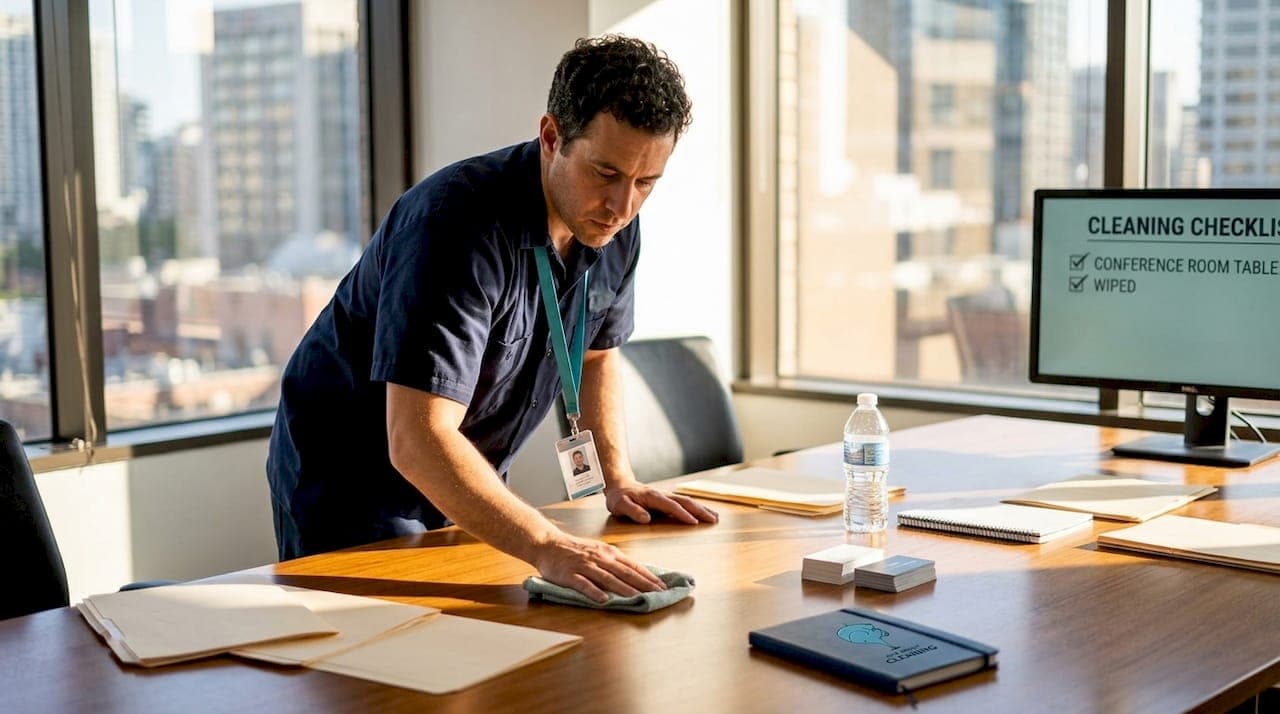
Enhanced cleaning by professionally trained staff reduces healthcare-associated infections by 23% and delivers a return on investment of three to four times the outlay. Yet many business owners and facility managers across Australia still treat cleaning as a low-skill task that any willing pair of hands can handle. That assumption carries real risk. From compliance failures to rising sick leave and reputational damage, the gap between trained professional cleaners and general staff is wider than most realise. This guide lays out the evidence, the standards, and the practical business case for investing in properly trained cleaning professionals.
Table of Contents
- Understanding the true impact of trained cleaners
- What separates trained cleaners from general staff
- Eco-friendly and health-focused cleaning: more than a trend
- Making the business case: ROI of hiring trained cleaners
- Partnering with the right cleaning professionals
- Frequently asked questions
Key Takeaways
| Point | Details |
|---|---|
| Certified expertise matters | Trained cleaners deliver measurable safety, compliance, and productivity benefits for Australian facilities. |
| Eco cleaning is now standard | Modern businesses value cleaning that prioritises both health and environmental responsibility. |
| See strong ROI | Investing in professional cleaners saves money through reduced absenteeism and higher workplace performance. |
| Compliance is simplified | Professionals ensure your cleaning practices meet Australian industry regulations and best practices. |
Understanding the true impact of trained cleaners
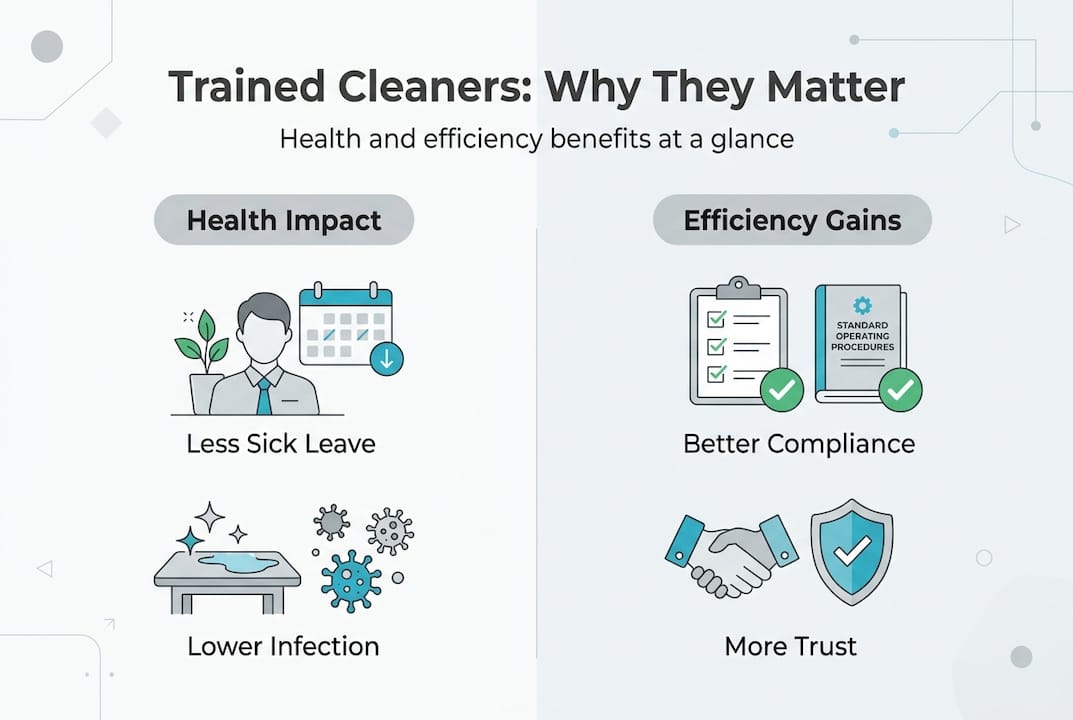
Many people think cleaning is simple, but the data tells a more impactful story. When expert cleaning is part of your routine operations, the effects ripple through your entire workforce. Absenteeism drops, productivity climbs, and your facility meets the compliance benchmarks that protect you legally and reputationally.
Research confirms that professional cleaning reduces sick leave by 8 to 14%, cuts infection risk significantly, and can save up to $642,010 per 1,000 patients in healthcare settings alone. For commercial and office environments, the productivity gains from higher quality cleaning reach up to 15%. These are not marginal improvements. They represent real dollars saved and real hours recovered.
Understanding the routine cleaning benefits for your facility is the first step toward making an informed decision. The benefits of cleaner training extend well beyond a tidy appearance. Trained cleaners follow documented procedures, use the right products for each surface type, and reduce the likelihood of incidents that expose your business to liability.
| Outcome | Untrained/in-house staff | Professionally trained cleaners |
|---|---|---|
| Sick leave reduction | Minimal to none | 8 to 14% reduction |
| Infection risk | Higher, inconsistent | Significantly lower |
| Compliance adherence | Variable | Consistent and documented |
| Productivity impact | Neutral or negative | Up to 15% improvement |
| Liability exposure | Higher | Substantially reduced |
"Regulated cleaning is a specialist skillset. Assuming anyone can do it to a professional standard is one of the most common and costly mistakes facility managers make."
Pro Tip: Before engaging any cleaning provider, ask for documented training records and evidence of compliance with Safe Work Australia protocols. This single step filters out providers who cannot meet your duty of care obligations.
What separates trained cleaners from general staff
Now that the benefits are clear, let's break down what truly sets trained professionals apart from general cleaners. The difference is not simply about effort or attitude. It comes down to certified knowledge, structured methodology, and accountability.
Trained cleaners outperform untrained teams due to their skill base, formal certification, and the lower liability risk they represent for your organisation. They follow setting cleaning standards that are documented, auditable, and aligned with industry benchmarks. This matters enormously when you are managing a healthcare facility, childcare centre, or food-handling environment where hygiene failures carry serious consequences.
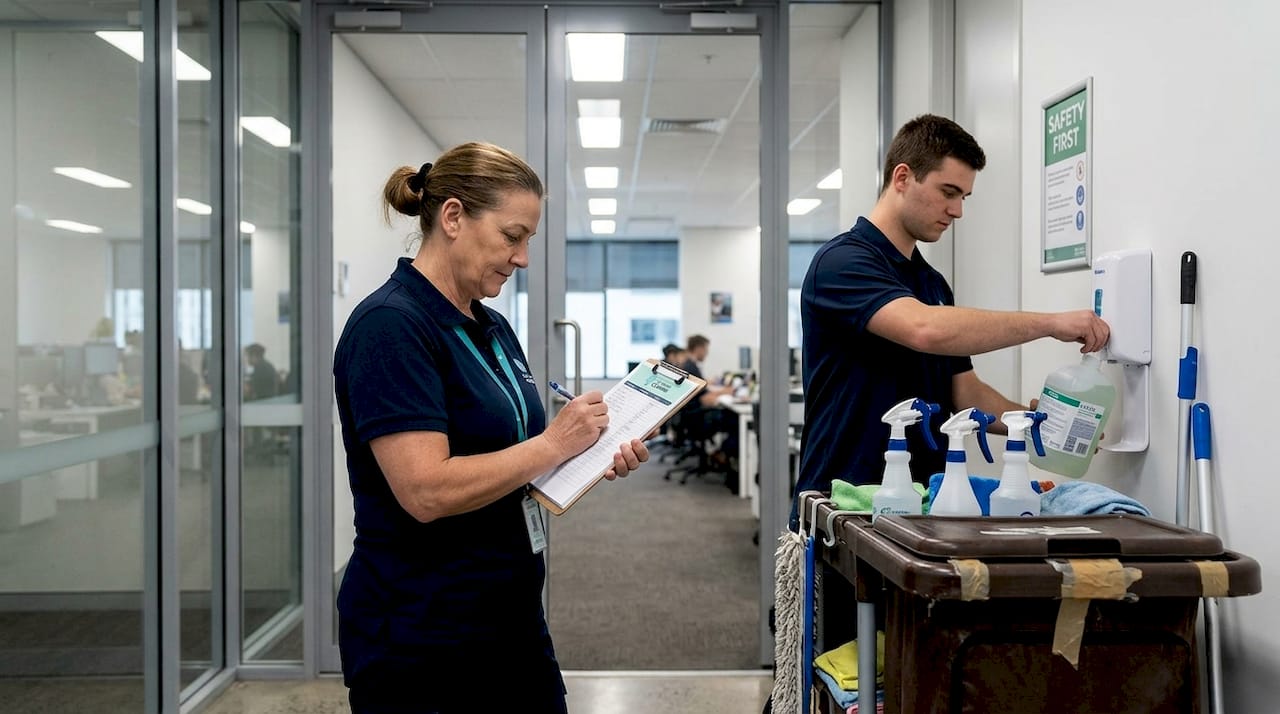
One of the most important technical practices is the clean-then-disinfect sequence. Best practices include clean-then-disinfect and colour-coding equipment by zone to prevent cross-contamination between bathrooms, kitchens, and general work areas. This is standard practice for trained professionals and largely absent from ad hoc cleaning arrangements.
The cleaning sector training landscape in Australia has matured considerably, with formal pathways now available through registered training organisations. Understanding the office cleaning standards relevant to your sector helps you ask the right questions when evaluating providers.
Key certifications and what they mean for your facility:
- Certificate III in Cleaning Operations (CPP30316): The baseline qualification for professional cleaners in Australia, covering safe chemical handling, equipment use, and workplace health and safety.
- ISSA Cleaning Industry Management Standard (CIMS): An internationally recognised framework for cleaning management quality and consistency.
- Safe Work Method Statements (SWMS): Required documentation for high-risk cleaning tasks, demonstrating that risks have been identified and controlled.
- WHS induction and site-specific training: Ensures cleaners understand the unique hazards of your facility before they begin work.
- Colour-coded equipment protocols: Prevents cross-contamination between zones, a non-negotiable in healthcare, food service, and childcare settings.
| Attribute | General/in-house staff | Trained professional cleaners |
|---|---|---|
| Certification | Rarely held | Certificate III or equivalent |
| Colour-coding compliance | Uncommon | Standard practice |
| SWMS documentation | Typically absent | Provided and maintained |
| Chemical safety knowledge | Basic at best | Formally trained |
| Audit readiness | Low | High |
Eco-friendly and health-focused cleaning: more than a trend
With skill and protocol, trained cleaners do more than fight dirt. They address health and the environment head-on in ways few realise. This is increasingly important as Australian businesses face growing expectations from tenants, clients, and regulators around environmental responsibility.
Trained cleaners enable eco-friendly services that modern businesses and tenants actively demand. They are equipped to implement low-impact chemical programmes, minimise waste, and adapt quickly when health codes or pandemic-driven protocols change. This agility is something general staff simply cannot replicate without formal training.
Visible, professional cleaning routines also build trust. When building users see trained staff following structured procedures, it signals that management takes hygiene seriously. That reassurance has tangible value, particularly in shared workplaces, strata buildings, and hospitality venues.
For a deeper look at the evidence behind sustainable cleaning choices, the eco-friendly cleaning facts relevant to Australian businesses are worth reviewing. Similarly, home cleaning best practices show how these principles apply equally in residential settings.
Typical eco-friendly initiatives delivered by trained cleaning professionals:
- Biodegradable and plant-based cleaning chemicals that reduce chemical load in waterways
- Microfibre technology that captures more particles with less product and less water
- Energy-conscious equipment such as low-wattage vacuums and cold-water cleaning systems
- Waste segregation and recycling protocols integrated into the cleaning routine
- Reduced single-use plastic through concentrated product dispensing systems
Statistic callout: Routine expert cleaning reduces sick leave by up to 14%, a figure that translates directly into lower payroll costs and higher operational continuity for your business.
Pro Tip: When evaluating a cleaning provider's environmental credentials, ask for their product safety data sheets and waste management plan. Genuine eco-friendly providers will have these documents ready without hesitation.
Making the business case: ROI of hiring trained cleaners
With the evidence and standards outlined, it's time to connect the dots. Here's how the numbers stack up when you invest in expertise.
The financial case for trained cleaners is grounded in three areas: reduced medical and absenteeism costs, productivity gains, and compliance risk reduction. Professional cleaning yields 3 to 4x ROI and reduces absenteeism significantly across industries. When you factor in the cost of a single WHS incident or a regulatory non-compliance finding, the investment in trained professionals looks even more compelling.
A well-structured office cleaning workflow built around trained staff also reduces the frequency and cost of reactive deep cleans. Understanding maintenance cleaning importance helps facility managers plan budgets more accurately and avoid the expensive disruption of emergency remediation. When issues do escalate, having a clear deep cleaning process in place ensures rapid, compliant resolution.
"Each dollar invested in professional cleaning returns three to four dollars in value for businesses through reduced absenteeism, lower health costs, and improved staff productivity."
Top 5 reasons why hiring trained cleaners is a sound investment:
- Sick leave reduction of 8 to 14%: Fewer ill staff means lower payroll costs and fewer disruptions to your operations.
- Productivity gains of up to 15%: A clean, hygienic environment supports focus, morale, and output across your team.
- Compliance risk reduction: Trained cleaners follow documented WHS and SWMS protocols, protecting you from regulatory penalties.
- Infection control savings: In healthcare and high-traffic settings, expert cleaning can save hundreds of thousands of dollars in infection-related costs.
- Asset protection: Correct cleaning methods extend the life of flooring, fixtures, and equipment, reducing capital replacement costs over time.
Pro Tip: Track your sick leave rates and any workplace incident reports for three months before engaging a professional cleaning service, then compare the same metrics three months after. The difference will give you a clear, internal benchmark for the ROI your business is achieving.
Partnering with the right cleaning professionals
Once you recognise the value, choosing the right partner becomes the next logical step. The evidence is clear: trained, certified cleaners deliver measurable health, productivity, and financial benefits that general or in-house arrangements simply cannot match.
Choosing a certified, sustainably minded cleaning service is an investment in your people and your property. At Just About Cleaning, we bring over 15 years of experience delivering compliant, eco-friendly cleaning solutions to commercial and residential clients across Australia. Our trained onsite crews follow documented procedures aligned with Safe Work Australia standards, and our ESG commitments mean you can trust that our methods are as kind to the environment as they are effective. Whether you manage an office, a healthcare facility, a childcare centre, or a strata building, we have the expertise and the processes to keep your space genuinely clean, safe, and compliant.
Frequently asked questions
What certifications should professional cleaners in Australia have?
Look for providers holding Certificate III in Cleaning Operations and ISSA credentials, with current WHS induction records and Safe Work Method Statements for all high-risk tasks.
How do trained cleaners improve workplace productivity?
By systematically reducing cross-contamination and lowering sick leave by up to 14%, trained cleaners create healthier environments that support staff focus and raise overall productivity by as much as 15%.
What are eco-friendly cleaning practices?
Trained professionals use biodegradable chemicals and microfibre technology, apply colour-coded zone systems to prevent cross-contamination, and avoid harsh chemical formulations that harm indoor air quality and waterways.
Do trained cleaners help meet Australian regulatory requirements?
Yes. Trained cleaners follow Safe Work Australia protocols and maintain the documentation required for WHS compliance, significantly lowering your legal and safety risk exposure.