
TL;DR:
- Selecting the right cleaning service depends on facility size, industry standards, and sustainability goals.
- Different service types, like routine cleaning or deep cleaning, serve distinct purposes and frequencies.
- Eco-friendly providers should use certified, non-toxic products and sustainable equipment to support health and environmental standards.
Choosing the right cleaning service for your business is harder than it sounds. With so many options available, from routine office maintenance to specialised medical facility cleaning, Australian business owners and facility managers often struggle to know where to start. Add sustainability goals, compliance requirements, and varying hygiene standards into the mix, and the decision becomes even more complex. This guide walks you through how to assess your needs, understand the main service types, compare your options, and make a confident, informed choice that supports both your business and the environment.
Table of Contents
- How to assess your cleaning needs
- Overview of common cleaning service types
- Routine cleaning vs deep cleaning: what's the difference?
- Specialised cleaning services for unique requirements
- Choosing an eco-friendly cleaning service
- Our perspective: why service type selection is a strategic decision
- Ready to find the right cleaning solution for your business?
- Frequently asked questions
Key Takeaways
| Point | Details |
|---|---|
| Match service to need | Identify your facility’s requirements to select the most effective cleaning type. |
| Understand cleaning types | Routine, deep, and specialised services each serve distinct business needs. |
| Eco-friendly is rising | Sustainable cleaning options support health and compliance and are preferred by many today. |
| Compliance is crucial | Ensure your cleaning provider meets local Australian standards and uses trained staff. |
How to assess your cleaning needs
Before you contact a single cleaning provider, it pays to understand exactly what your facility requires. The right service depends on a range of factors that are specific to your premises, your industry, and the people who use your space every day.
Start by considering the basics:
- Facility size and layout: A large warehouse has very different needs from a compact retail shopfront.
- Building type and usage: Office spaces, healthcare facilities, childcare centres, and hospitality venues each carry distinct hygiene expectations.
- Foot traffic volume: High-traffic areas accumulate bacteria and contaminants faster, requiring more frequent attention.
- Industry regulations: Sectors like food service, healthcare, and education are subject to strict Australian hygiene standards that cleaning must support.
- Sustainability commitments: If your business has ESG (Environmental, Social and Governance) goals, your cleaning provider should align with those values.
Routine cleaning and maintenance are essential for healthier facilities, particularly in environments where staff and customers interact daily. Neglecting this can affect air quality, surface contamination levels, and overall staff wellbeing.
It is also worth exploring eco-friendly cleaning options early in your decision-making process, as many providers now offer green alternatives without compromising on results.
"Visible cleanliness is only part of the picture. A truly hygienic facility also addresses air quality, surface bacteria, and cross-contamination risks that are invisible to the naked eye."
Pro Tip: When assessing your needs, walk through your facility at peak and off-peak times. Note which areas attract the most use, where spills or mess accumulate, and which surfaces are touched most frequently. This practical audit will help you brief any cleaning provider with confidence.
Overview of common cleaning service types
Once you know what your facility needs, it helps to understand the main categories of cleaning services available to Australian businesses. Distinct categories of cleaning services are tailored for specific business and facility needs, so matching the right type to your situation is essential.
Here is a quick overview of the most common service types:
- Commercial cleaning: Designed for workplaces, retail spaces, warehouses, and public-facing environments. Typically involves trained crews, industrial-grade equipment, and compliance with workplace health and safety standards.
- Residential cleaning: Focused on private homes and apartments, with an emphasis on personal comfort, home cleaning practices, and flexible scheduling.
- Routine or maintenance cleaning: Regular, scheduled cleaning to maintain everyday hygiene. Usually daily or weekly.
- Deep cleaning: Thorough, less frequent cleaning that targets areas not covered in routine visits.
- Specialised cleaning: Targeted services for specific surfaces, materials, or environments, such as carpets, windows, or medical facilities.
- End-of-lease cleaning: A one-off, intensive clean required when vacating a commercial or residential property.
| Service type | Best for | Frequency | Key benefits |
|---|---|---|---|
| Routine maintenance | Offices, retail, schools | Daily or weekly | Consistent hygiene, staff wellbeing |
| Deep cleaning | Healthcare, food service | Quarterly or bi-annually | Compliance, thorough disinfection |
| Specialised cleaning | Carpets, windows, medical | As needed | Targeted results, expert technique |
| End-of-lease cleaning | Vacating tenants | Once-off | Bond recovery, property condition |
| Residential cleaning | Private homes | Weekly or fortnightly | Comfort, convenience, health |
Understanding these distinctions helps you avoid paying for services you do not need, while ensuring critical hygiene requirements are fully covered.
Routine cleaning vs deep cleaning: what's the difference?
Among the main types, two are often confused but serve very different purposes: routine and deep cleaning. Knowing when to use each one is key to maintaining a compliant and healthy facility.
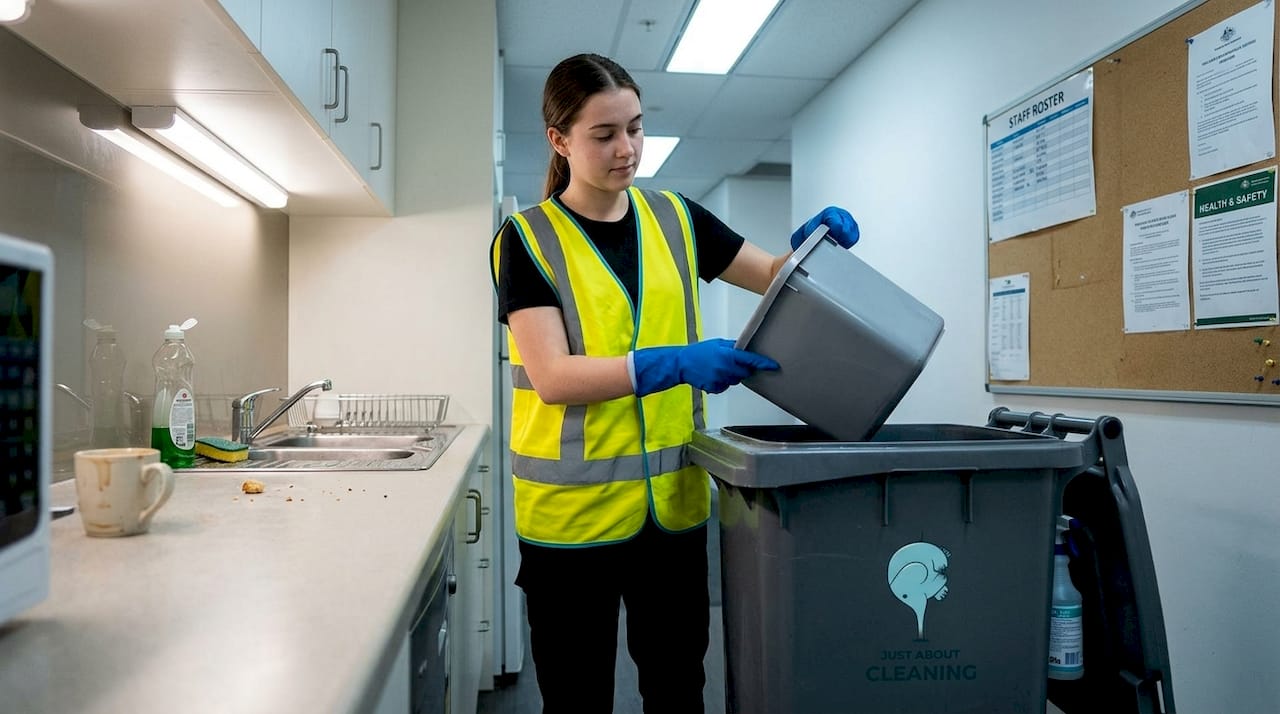
Routine cleaning covers the day-to-day or week-to-week tasks that keep your premises presentable and safe. Think vacuuming, mopping, surface wiping, restroom sanitation, and rubbish removal. It focuses on high-traffic zones and visible areas.
Deep cleaning goes further. It targets grout lines, behind appliances, air vents, upholstery, and other areas that routine visits do not reach. Deep cleaning is essential for compliance and thorough disinfection, while routine cleaning maintains everyday hygiene between those sessions.
| Feature | Routine cleaning | Deep cleaning |
|---|---|---|
| Scope | Surface-level, high-traffic areas | Full facility, hard-to-reach areas |
| Frequency | Daily to weekly | Quarterly to bi-annually |
| Cost | Lower per visit | Higher per session |
| Best for | Ongoing maintenance | Compliance, post-event, seasonal |
When should you choose each?
- Choose routine cleaning when you need consistent, visible hygiene maintained across your premises every week.
- Choose deep cleaning when preparing for an audit, after a renovation, following a high-attendance event, or to meet healthcare or food safety regulations.
- Schedule both together when your facility operates in a regulated industry and must meet both day-to-day and compliance-level standards.
- Prioritise deep cleaning if your premises have not been professionally cleaned in several months, or if maintenance cleaning benefits have not been realised through a consistent programme.
Pro Tip: The most effective approach is to combine both. Use routine cleaning to maintain standards daily, and schedule deep cleaning at least twice a year to address compliance requirements and areas that accumulate hidden contamination.
Specialised cleaning services for unique requirements
Beyond regular options, certain premises require targeted, expert-led cleaning solutions. Specialised cleaning is necessary for certain materials, safety standards, or highly regulated environments, and attempting to manage these with general cleaning methods can create compliance risks or cause damage.
Here are five specialised services worth knowing about:
- Carpet and upholstery cleaning: Uses hot water extraction or dry cleaning methods to remove embedded dirt, allergens, and stains from soft furnishings. Particularly important for offices and hospitality venues.
- Window and facade cleaning: Requires specialised equipment for multi-storey buildings and must comply with height safety regulations in Australia.
- High-pressure cleaning: Ideal for warehouses, car parks, loading docks, and outdoor areas where heavy grime, oil, or organic matter accumulates.
- Medical and clinical facility cleaning: Follows strict infection control protocols and uses hospital-grade disinfectants. Required for GP clinics, dental practices, aged care facilities, and hospitals.
- Hazardous waste and biohazard cleaning: Managed by trained professionals with appropriate personal protective equipment and disposal procedures, often required after incidents or in industrial settings.
Review office cleaning standards if you are unsure whether your premises require a specialised approach, particularly if you operate in healthcare, education, or food production.
"Using a general cleaning service in a regulated environment is not just ineffective, it can expose your business to legal liability and put the health of staff and clients at serious risk."
Always confirm that your provider holds the relevant licences, training, and insurance for any specialised work they undertake on your premises.
Choosing an eco-friendly cleaning service
With more businesses prioritising sustainability, let's look at what makes a cleaning service genuinely eco-friendly. Australian businesses increasingly prefer eco-friendly options to support health and corporate responsibility, and the cleaning industry has responded with a growing range of green solutions.
When evaluating eco-friendly cleaning strategies, look for these features in a provider:
- Biodegradable and non-toxic products: Cleaning agents that break down safely without harming waterways or indoor air quality.
- Recognised eco-certifications: Providers certified by bodies such as GECA (Good Environmental Choice Australia) demonstrate a verified commitment to sustainability.
- Water-efficient equipment: Machines and methods that minimise water use without reducing cleaning effectiveness.
- Reduced single-use plastics: Providers who use refillable containers and reusable materials rather than disposable products.
- Transparent reporting: A reputable provider should be able to share a summary of the products and methods they use on your premises.
Key benefits of choosing eco-friendly cleaning include improved indoor air quality for staff, reduced chemical exposure for cleaners and building occupants, alignment with your ESG reporting obligations, and a positive signal to clients and stakeholders about your environmental values.
Pro Tip: Ask any prospective cleaning provider for a written summary of the products they use and whether those products carry recognised environmental certification. A provider who cannot answer this question clearly may not be as green as they claim.
Our perspective: why service type selection is a strategic decision
Most businesses treat cleaning as a procurement exercise. They compare prices, check a few reviews, and sign a contract. We think that approach misses the point entirely.
The type of cleaning service you choose directly affects your compliance standing, your staff's health, and the impression your premises makes on every visitor who walks through the door. A facility that looks clean but harbours surface bacteria or poor air quality is not actually clean. It is a liability.
After more than 15 years working with businesses across Australia, we have seen the consequences of mismatched service selection. Healthcare providers using residential-grade cleaning products. Warehouses relying on routine surface cleans when high-pressure cleaning is what the space genuinely requires. Offices skipping deep cleaning for years, then facing compliance issues during audits.
The uncomfortable truth is that the cheapest option rarely accounts for the full cost. When a facility fails a health inspection or a staff member raises a complaint about hygiene, the cost of remediation far exceeds what a proper cleaning programme would have cost from the start.
Choosing the right service type is not about spending more. It is about spending correctly. Match the service to the actual requirements of your facility, factor in your compliance obligations, and treat sustainability as a non-negotiable rather than an afterthought.
Ready to find the right cleaning solution for your business?
Understanding the different types of cleaning services is the first step. Putting that knowledge into practice with a provider you can trust is what makes the real difference for your facility.
At Just About Cleaning Australia, we work with business owners and facility managers across the country to design cleaning programmes that match their exact needs, whether that is routine office maintenance, medical-grade disinfection, or a fully eco-friendly service aligned with your sustainability commitments. With over 15 years of industry experience and trained onsite crews, we deliver consistent, compliant results across commercial and residential environments. Visit justaboutcleaning.com.au to learn more or request a quote tailored to your facility.
Frequently asked questions
What is the difference between commercial and residential cleaning?
Commercial and residential cleaning differ in their approach, equipment, and hygiene requirements. Commercial cleaning targets workplaces and public areas with higher traffic and often stricter standards, while residential cleaning focuses on private homes with different hygiene and equipment needs.
How often should deep cleaning be scheduled for businesses?
Deep cleaning frequency should be determined by compliance requirements and facility use. It is typically recommended quarterly or semi-annually, depending on business type, regulations, and traffic levels.
What certifications should an eco-friendly cleaning company have in Australia?
Certifications ensure cleaning companies meet environmental safety and sustainability standards. Look for Australian or state-based eco certifications, including GECA (Good Environmental Choice Australia) or similar recognised marks.
When should I consider a specialised cleaning service?
Specialised cleaning is necessary for regulated environments and those requiring technical expertise. Choose it for environments with unique needs such as healthcare, hazardous materials, or areas with technical equipment.
How can I check if a cleaning service follows Australian standards?
Compliance and training documentation is key to ensuring Australian cleaning standards are followed. Ask for documentation of compliance, staff training records, and references to confirm standards are consistently met.
Recommended
- Eco-friendly cleaning for Australian businesses: key facts
- Office cleaning standards explained for Australian businesses 2026
- Office hygiene maintenance guide for Australian businesses
- Why maintenance cleaning matters for Australian facilities
- Move Out Cleaning Service: What to Expect - Florida Cleaning Crew