
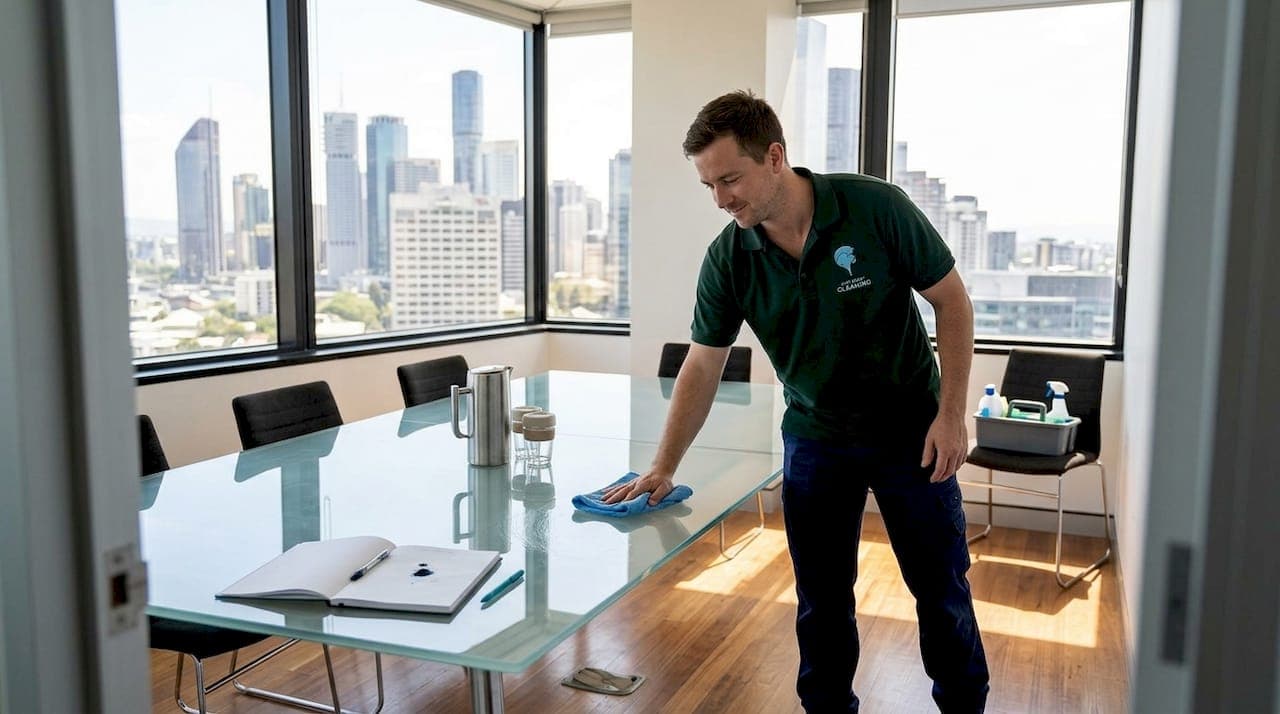
TL;DR:
- Sustainable cleaning reduces chemical use and environmental impact without compromising hygiene.
- Microfibre tools and precise dosing are highly effective and cost-efficient for various sectors.
- Implementing a culture shift with leadership support ensures long-lasting sustainable cleaning practices.
Many Australian business owners still believe that effective cleaning requires strong, heavy-duty chemicals. The reality is quite different. Microfibre cloths remove 99%+ of microbes while cutting chemical use by up to 99%. This guide covers what sustainable cleaning actually means, how it compares to traditional methods, which tools deliver the best results, and how to roll it out across your specific sector. Whether you manage a healthcare facility, a school, or a hospitality venue, you can maintain full compliance and hygiene standards without relying on harsh chemical products.
Table of Contents
- What are sustainable cleaning practices?
- Eco-friendly vs traditional cleaning: What's the real impact?
- Tools and techniques that make the biggest difference
- Implementing sustainable cleaning across different business sectors
- A smarter approach most businesses overlook
- Get support for your sustainable cleaning journey
- Frequently asked questions
Key Takeaways
| Point | Details |
|---|---|
| Proven hygiene results | Sustainable cleaning matches traditional methods in microbial reduction across business settings. |
| Lower environmental footprint | Eco-friendly cleaning cuts CO2 emissions and chemical use by over 50% in major studies. |
| Practical, affordable tools | Microfibre and reusable equipment maximise health and cost benefits for Australian workplaces. |
| Tailored for any sector | Protocols can be adapted for healthcare, hospitality, retail, or education, improving compliance and safety. |
| Long-term savings | Reduced chemical and waste expenses quickly balance out any upfront investments. |
What are sustainable cleaning practices?
Sustainable cleaning is a structured approach to maintaining hygiene while minimising environmental harm, resource consumption, and chemical exposure. It is not a compromise on cleanliness. It is a smarter way to achieve the same or better results using better tools, more precise methods, and products with a lower environmental footprint.
At its core, sustainable cleaning rests on several key principles:
- Microfibre technology: Microfibre cloths and mops use mechanical action to lift and trap microbes, reducing the need for chemical disinfectants. The fibres are finer than a human hair and create a physical scrubbing effect at a microscopic level.
- Low-impact detergents: Biodegradable and plant-based cleaning agents break down safely without leaving toxic residues in waterways or on surfaces.
- Resource efficiency: Using the right amount of water and product, no more, ensures cleaning is effective without waste.
- Waste reduction: Reusable tools replace single-use disposables, cutting landfill contributions significantly.
- Lifecycle thinking: This means considering the full environmental cost of a product from manufacture to disposal.
Two terms come up often in this space. CO2e (carbon dioxide equivalent) is a standard unit for measuring greenhouse gas emissions across different gases. LCA (life cycle analysis) is a method for assessing the total environmental impact of a product or process across its entire life, from raw material extraction through to end of life.
"Green cleaning protocols reduce CO2e by 49.6 to 53.3% and chemical emissions by 83%, while delivering equivalent microbial reduction to traditional methods."
For Australian businesses, understanding these metrics matters because regulators, clients, and ESG (environmental, social, and governance) reporting frameworks increasingly ask for this kind of data. Sustainable cleaning is no longer just a values statement. It is a measurable, reportable business practice.
You can explore more eco-friendly cleaning facts to understand how these principles apply to local compliance requirements. The evidence from microfibre cleaning research confirms that these tools are not just environmentally sound, they are hygienically superior in many real-world settings.
Eco-friendly vs traditional cleaning: What's the real impact?
The most persistent myth in facility management is that traditional chemical-heavy cleaning is more effective. The data does not support this. Research comparing eco and traditional protocols shows that green methods match traditional cleaning for microbial reduction while cutting global warming potential (GWP) by approximately 50%.
Here is a direct comparison of the two approaches:
| Factor | Traditional cleaning | Eco-friendly cleaning |
|---|---|---|
| Microbial reduction | High | Equivalent |
| CO2e emissions | Baseline | Reduced by ~50% |
| Chemical use | High | Reduced by up to 83% |
| Water consumption | High | Reduced by up to 75% |
| Waste generated | High (disposables) | Low (reusables) |
| Staff health risk | Higher (VOC exposure) | Lower |
Traditional cleaning products often contain volatile organic compounds (VOCs), which are airborne chemicals released during use that can irritate airways, trigger asthma, and cause long-term respiratory issues in staff. This is a genuine workplace health and safety concern, particularly in enclosed spaces like offices, aged care facilities, and school classrooms.
Eco-friendly protocols address this directly. By switching to lower-emission cleaning methods, businesses reduce staff exposure to harmful chemicals without any reduction in surface hygiene outcomes.
Key findings from current research include:
- Equivalent microbial reduction across both protocols, meaning hygiene is not sacrificed
- 83% lower chemical emissions with green cleaning methods
- 50% reduction in GWP, which directly supports ESG reporting goals
- Reduced sick days linked to lower VOC exposure in the workplace
For businesses exploring the range of cleaning service types available, understanding these differences helps you choose a provider whose methods align with your compliance and sustainability goals. There is also strong evidence that green cleaning reduces sick days across various workplace settings, which has a direct impact on productivity and staff wellbeing.
Tools and techniques that make the biggest difference
Knowing the environmental case for sustainable cleaning is one thing. Knowing exactly which tools to use is another. The good news is that the most effective sustainable cleaning tools are also the most practical ones.
Microfibre cloths and mops are the single most impactful switch any business can make. Microfibre reduces chemicals by up to 99% and water use by 75%, and a quality microfibre cloth lasts 500 or more washes. That is a significant reduction in both cost and waste over time.
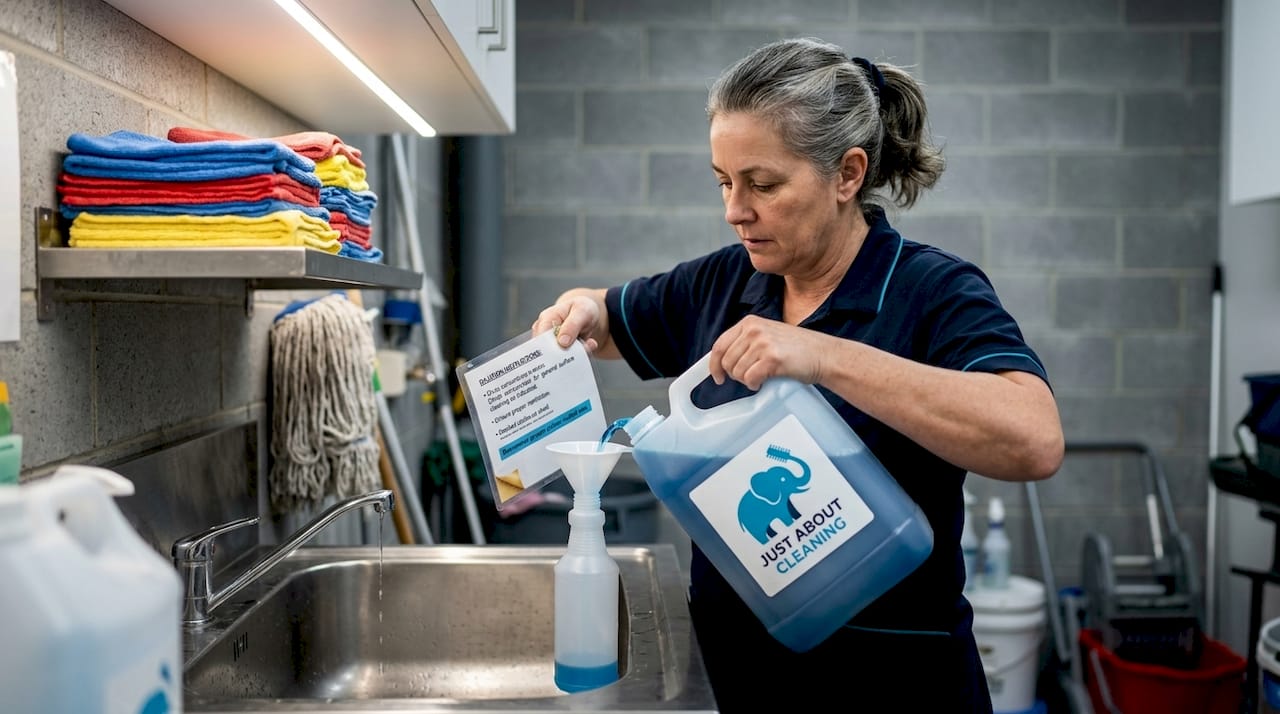
Here is a practical breakdown of the most effective tools and their impact:
| Tool | Key benefit | Sustainability impact |
|---|---|---|
| Microfibre cloths | 99%+ microbe removal | 99% less chemical use |
| Microfibre mops | Mechanical floor cleaning | 75% less water use |
| Dosing systems | Precise chemical dilution | Reduces waste and cost |
| Reusable spray bottles | Replaces single-use plastics | Cuts plastic waste |
| HEPA vacuum filters | Traps fine particles | Improves indoor air quality |
To get the best results from these tools, follow this workflow:
- Assess the area before cleaning to identify high-touch surfaces and contamination risk zones.
- Use colour-coded microfibre to prevent cross-contamination between zones (e.g., bathrooms vs. kitchens).
- Follow correct dilution ratios for any cleaning agents used. Over-diluting reduces effectiveness; under-diluting wastes product and increases chemical load.
- Launder microfibre correctly at the recommended temperature to maintain performance across all 500+ wash cycles.
- Conduct routine hygiene audits to verify that protocols are being followed and surfaces are meeting required standards.
Pro Tip: In compliance-heavy sectors like healthcare and childcare, invest in commercial-grade microfibre rather than consumer products. The fibre density and durability are significantly higher, which matters when you need consistent results across hundreds of wash cycles.
For a detailed breakdown of surface-by-surface protocols, the office hygiene guide covers practical steps for Australian workplaces. Understanding why trained cleaners matter is also critical, because even the best tools deliver poor results without proper technique.
Implementing sustainable cleaning across different business sectors
Sustainable cleaning is not a one-size-fits-all programme. Each sector has its own compliance requirements, risk profile, and operational constraints. Getting the rollout right means tailoring your approach.
Healthcare and aged care require the strictest protocols. The good news is that reusable tools outperform disposables with 50% or more in environmental savings while matching hygiene outcomes. Colour-coded microfibre, documented cleaning schedules, and regular ATP testing (a rapid method for measuring surface contamination) are all standard requirements in this sector.
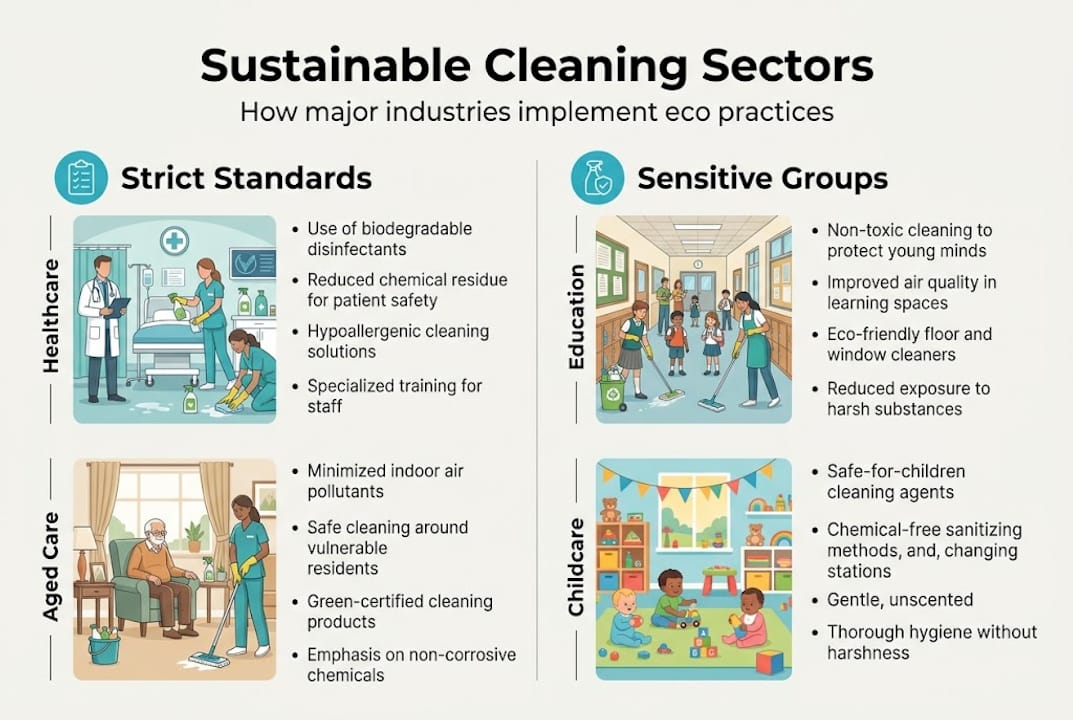
Education facilities benefit from lower VOC products because children are more sensitive to chemical exposure than adults. Scheduling cleaning outside school hours and using fragrance-free, biodegradable products reduces the risk of respiratory irritation in students and staff.
Hospitality venues face high-frequency cleaning demands across kitchens, bathrooms, and guest areas. Reusable microfibre systems with proper laundering schedules reduce ongoing consumable costs while keeping surfaces consistently clean.
Across all sectors, a successful rollout depends on:
- Clear written protocols that specify products, dilution ratios, frequencies, and responsibilities
- Staff training that explains not just the how but the why, building genuine buy-in
- Team leader involvement in the change process to manage resistance and model correct behaviour
- Tracking and reporting to demonstrate compliance during audits and support ESG documentation
Pro Tip: Involve your team leaders early in the planning stage. When frontline staff understand the health and environmental reasons behind a protocol change, adoption rates improve significantly and errors decrease.
For sector-specific guidance on high-traffic retail environments, retail cleaning strategies offer practical frameworks that translate well to other customer-facing businesses.
A smarter approach most businesses overlook
Most businesses approach sustainable cleaning as a compliance exercise. They swap out a few products, update a checklist, and consider the job done. This misses the most powerful lever available.
The businesses that see lasting results treat sustainable cleaning as a culture shift, not a product swap. When staff understand why microfibre outperforms disposable wipes, they handle tools more carefully, launder them correctly, and flag problems early. When team leaders track results and share them with their crews, motivation stays high and standards hold over time.
We have seen this pattern repeatedly across different sectors. The organisations that invest in explanation and measurement get far better outcomes than those that simply mandate a new product list. Leadership buy-in is not optional. It is the difference between a programme that lasts and one that quietly reverts to old habits within six months.
The evidence supports this too. Ongoing measurement and feedback loops are what sustain the 50% emissions reductions that research documents. Without them, even the best tools underperform. Build the culture first, and the compliance outcomes follow naturally.
Get support for your sustainable cleaning journey
Making the shift to sustainable cleaning across your Australian business is straightforward when you have the right support behind you.
Just About Cleaning works with businesses across healthcare, education, hospitality, and retail to design and implement cleaning programmes that meet Australian compliance standards while reducing environmental impact. Our trained crews understand sector-specific requirements and use proven eco-friendly methods backed by current research. Whether you need a full audit, staff training support, or an ongoing cleaning contract, we can help you build a programme that delivers measurable results. For practical starting points, explore our eco-friendly cleaning tips and take the first step today.
Frequently asked questions
How do sustainable cleaning practices reduce chemicals without compromising hygiene?
Sustainable cleaning uses microfibre technology and precise chemical dosing to remove microbes as effectively as traditional methods while cutting chemical use by up to 99%. The mechanical action of microfibre fibres does most of the work, reducing reliance on disinfectants.
Is sustainable cleaning really effective in high-risk areas like healthcare?
Yes. Studies confirm that green protocols match traditional cleaning for microbial reduction in healthcare settings, while delivering 50% or more in environmental savings. Reusable microfibre systems are well-suited to compliance-focused environments.
What's the easiest change to start with for a business?
Switching to microfibre cloths and mops delivers immediate impact, reducing chemical use by up to 99% and water consumption by 75% while maintaining hygiene standards. It is the most cost-effective first step for any business.
Does sustainable cleaning cost more to implement?
Upfront costs for quality microfibre tools may be higher, but 500+ wash durability and reduced chemical and water consumption quickly offset the initial investment. Most businesses see a net saving within the first year.