
TL;DR:
- Professional cleaning ensures compliance, safety, and efficiency beyond basic maintenance.
- Investing in certified, eco-friendly services reduces illness, prolongs asset life, and enhances reputation.
- Treat cleaning as a strategic function to improve staff health, regulatory standing, and operational resilience.
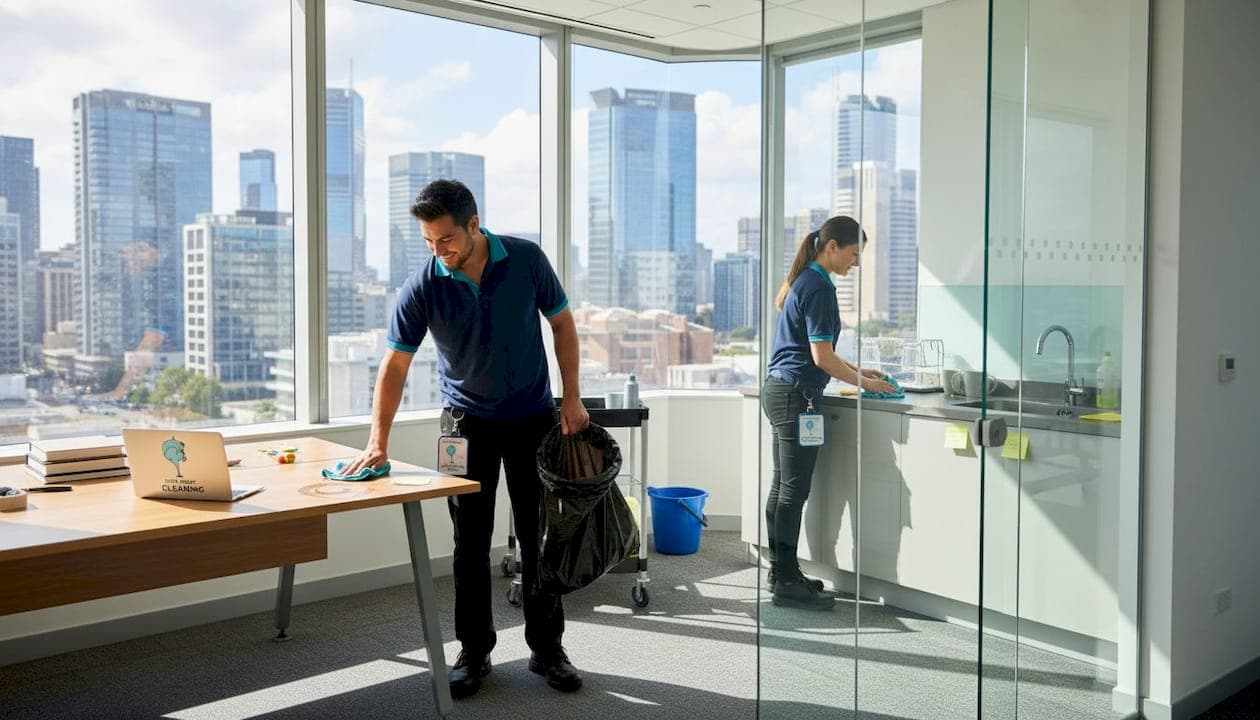
Many Australian businesses assume that a quick daily wipe-down or a part-time cleaning roster is enough to keep their facilities safe and compliant. It isn't. The hidden costs of inadequate cleaning, from staff sick days to regulatory penalties and reputational damage, add up faster than most managers realise. Professional cleaners bring far more than mops and buckets to the job. They bring certifications, industry-grade equipment, documented protocols, and accountability that in-house arrangements simply cannot match. This guide breaks down what truly separates professional cleaning from basic maintenance, and why that difference matters for your operations, your people, and your bottom line.
Table of Contents
- The difference professional cleaners make
- Key benefits for businesses and facilities
- Eco-friendly practices and their growing importance
- Costs, value, and ROI of professional cleaning
- What most businesses miss with cleaning decisions
- Partner with professionals for seamless cleaning results
- Frequently asked questions
Key Takeaways
| Point | Details |
|---|---|
| Better health compliance | Professional cleaners help Australian businesses meet health regulations and reduce infection rates. |
| Operational efficiency | Specialised cleaning services minimise downtime and boost workplace productivity. |
| Eco-friendly cleaning value | Sustainable cleaning methods protect both people and the environment without sacrificing results. |
| Long-term cost savings | Investing in professionals saves on future repairs and boosts asset longevity. |
The difference professional cleaners make
Basic cleaning and professional cleaning are not the same thing, even if both involve similar tools on the surface. The real gap lies in training, accountability, and measurable outcomes.
In-house or casual cleaning staff typically follow a general checklist with limited supervision. Professional cleaners, by contrast, operate under documented quality standards, use industry-grade products, and are trained in safe chemical handling, cross-contamination prevention, and sector-specific hygiene protocols. That distinction matters enormously in healthcare facilities, childcare centres, and food service environments where a missed touchpoint can trigger a compliance breach.
Here is a side-by-side comparison to make the difference clear:
| Factor | In-house cleaning | Professional service |
|---|---|---|
| Training | Basic, informal | Certified, ongoing |
| Equipment | Consumer-grade | Commercial-grade |
| Accountability | Limited | Documented and audited |
| Compliance knowledge | Variable | Industry-specific |
| Response to incidents | Reactive | Proactive protocols |
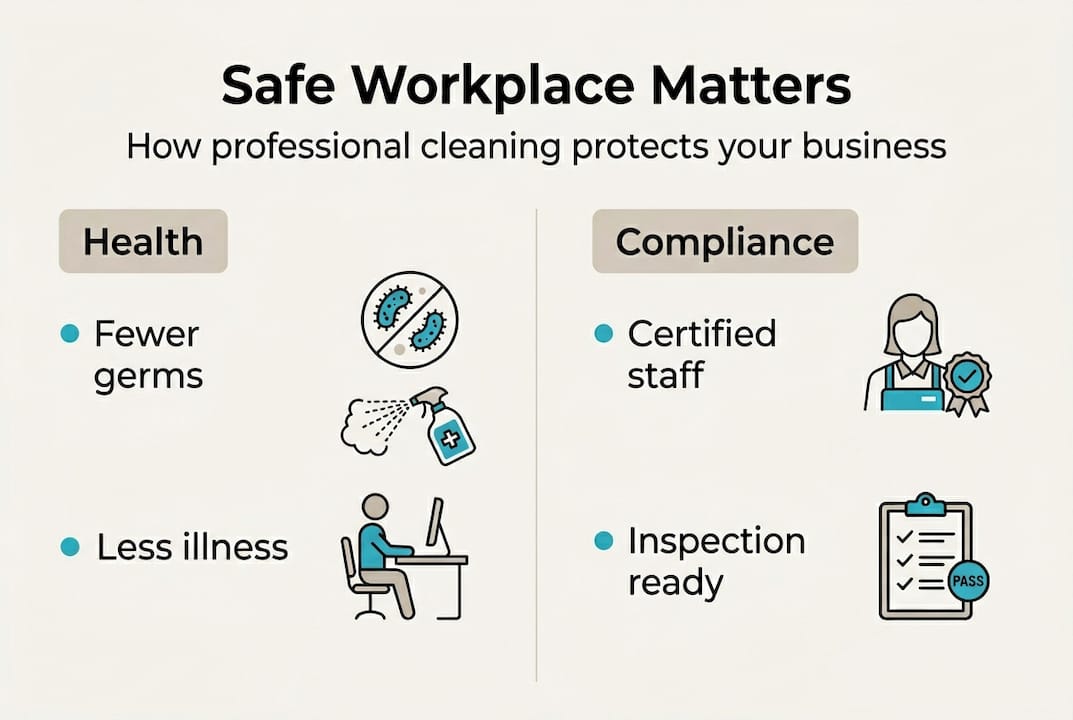
The performance gap is not just anecdotal. Cleaning standards compliance directly links professional protocols to 34% fewer workplace infections, a figure that carries real weight for any facility manager trying to reduce operational risk.
Key qualities that separate professional cleaners from basic alternatives include:
- Verified certifications in safe chemical handling and hygiene protocols
- Sector-specific knowledge for healthcare, education, hospitality, and retail
- Consistent scheduling with service reports and quality audits
- Rapid response to spills, contamination events, or compliance requirements
- Eco-friendly product selection aligned with workplace safety standards
When you factor in trained cleaners and efficiency, the argument for professional services becomes even clearer. Trained crews complete tasks faster, more thoroughly, and with fewer errors than untrained staff.
Pro Tip: Before hiring a professional cleaner, ask for their certification documentation, a sample service report, and references from a facility in your industry. These three items reveal more about quality than any sales pitch.
Key benefits for businesses and facilities
The case for professional cleaning goes well beyond aesthetics. The benefits touch every layer of your operation, from staff health to regulatory standing and client perception.
A professionally cleaned workplace is a safer one. Routine facility cleaning reduces facility-acquired illness by up to 34%, which translates directly into fewer sick days, lower absenteeism costs, and a more productive workforce. Staff who work in clean, well-maintained environments also report higher morale and greater confidence in their employer's commitment to their wellbeing.
For regulated industries, the stakes are even higher. Healthcare facilities, food service businesses, and childcare centres must meet strict hygiene standards set by state and federal authorities. A professional cleaning provider understands these requirements and builds them into every service visit, reducing your exposure to compliance failures and the fines or closures that follow.
The benefits extend to your brand as well. Clients, visitors, and auditors form immediate impressions based on the cleanliness of your space. A spotless facility signals professionalism, care, and operational discipline.
| Facility type | Key cleaning benefit |
|---|---|
| Healthcare | Infection control, regulatory compliance |
| Office | Reduced absenteeism, improved morale |
| Retail | Positive customer experience, hygiene assurance |
| Childcare | Child safety, mandatory compliance standards |
| Hospitality | Guest satisfaction, food safety compliance |
Core operational benefits include:
- Consistent hygiene across all areas, including high-touch surfaces
- Reduced risk of cross-contamination in shared spaces
- Compliance with Work Health and Safety (WHS) obligations
- Improved air quality through proper ventilation and dust management
- A professional appearance that supports your brand reputation
For facilities that want to go further, exploring healthy living cleaning practices offers additional guidance on maintaining standards between scheduled professional visits.
Eco-friendly practices and their growing importance
Today's clients, staff, and regulators expect more than a clean space. They expect that cleanliness to be achieved responsibly. Eco-friendly cleaning has moved from a niche preference to a mainstream expectation for Australian businesses.
Modern professional cleaners use biodegradable detergents, concentrated formulas that reduce plastic waste, microfibre technology that cuts chemical use by up to 80%, and water-efficient equipment. These are not compromises. They deliver the same or better hygiene outcomes than traditional chemical-heavy approaches, with significantly less environmental impact.
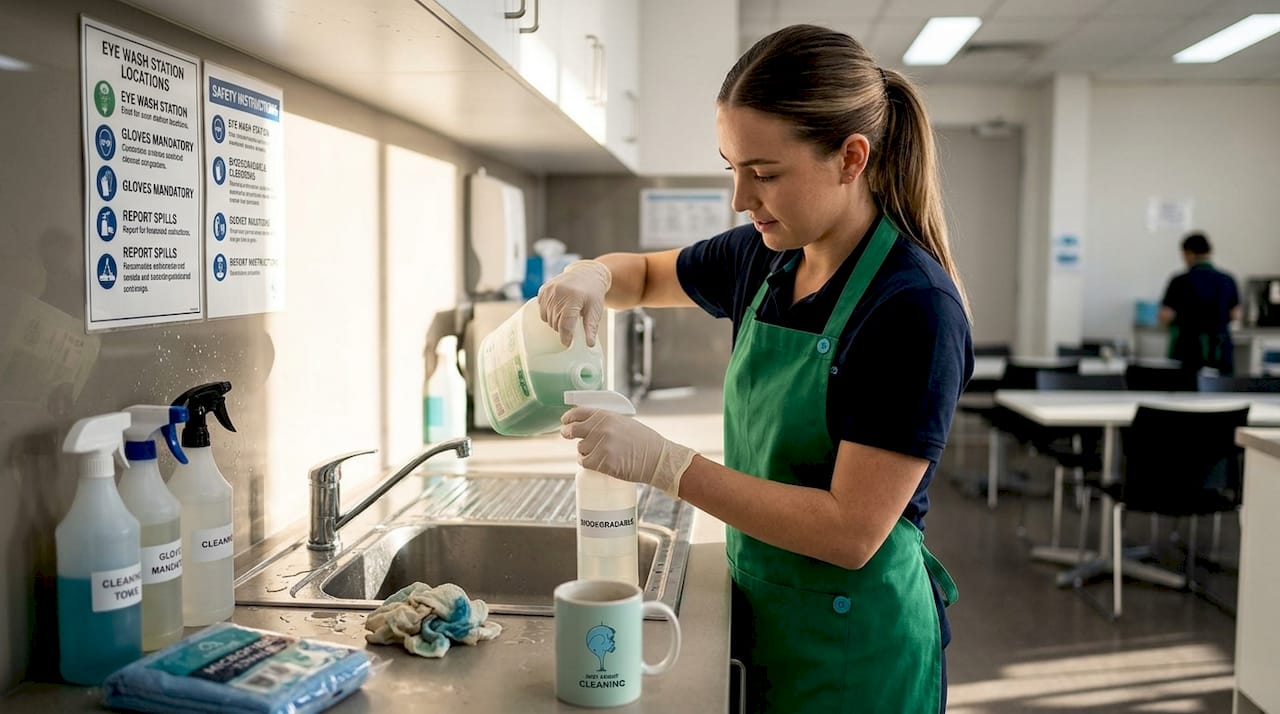
As one industry insight notes, eco-friendly cleaning lessens environmental impact without sacrificing workplace hygiene. That balance is exactly what businesses need when they are trying to meet ESG (Environmental, Social and Governance) commitments while maintaining rigorous cleanliness standards.
Here is how to evaluate whether your cleaning provider is genuinely committed to sustainability:
- Ask for a product list. Reputable providers can name their cleaning agents and explain why they were chosen.
- Check for certifications. Look for products with recognised eco-labels such as Good Environmental Choice Australia (GECA).
- Review their waste management approach. How do they handle chemical disposal and packaging?
- Ask about water usage. Efficient cleaning methods use less water without reducing effectiveness.
- Request an ESG or sustainability statement. Established providers will have one.
"Switching to a professional cleaning partner with verified eco-friendly practices is one of the most straightforward ways a business can reduce its environmental footprint without disrupting daily operations."
Pro Tip: Ask your cleaning provider whether their products are safe for use around people with chemical sensitivities. This is especially important for healthcare and childcare facilities where vulnerable individuals are present daily.
Beyond environmental responsibility, eco-friendly cleaning also protects your staff and visitors from exposure to harsh chemicals, reducing the risk of respiratory irritation, skin reactions, and long-term health concerns. It is a practical benefit, not just a marketing position.
Costs, value, and ROI of professional cleaning
Cost is often the first objection raised when businesses consider upgrading from in-house to professional cleaning. It is a fair question, but the full financial picture is rarely what it first appears.
The direct cost of a professional cleaning contract is visible and easy to measure. What is harder to see are the indirect costs of not investing in professional cleaning: staff sick days, compliance fines, accelerated wear on flooring and fixtures, and the reputational damage that follows a hygiene incident. Professional cleaning services provide long-term value that extends well beyond the upfront contract price.
Consider the numbers:
| Cost category | In-house cleaning | Professional service |
|---|---|---|
| Labour and supervision | High (ongoing management) | Included in contract |
| Equipment and supplies | Ongoing purchase costs | Provided by cleaner |
| Compliance risk | High without specialist knowledge | Managed by provider |
| Asset lifespan | Shorter due to improper care | Extended with correct methods |
| Sick day costs | Higher due to inadequate hygiene | Reduced through consistent standards |
Key financial benefits of professional cleaning include:
- Fewer lost workdays through reduced illness transmission
- Extended asset life for carpets, hard floors, and fixtures
- Avoided compliance costs including fines and remediation
- Predictable budgeting with fixed contract pricing
"Prevention is always cheaper than remediation. A facility that invests in consistent professional cleaning avoids the far greater cost of a hygiene incident or regulatory breach."
For practical guidance on maintaining office hygiene between scheduled cleans, there are straightforward steps that complement a professional service and protect your investment further. The ROI of professional cleaning is not a soft benefit. It is measurable, documented, and significant.
What most businesses miss with cleaning decisions
After more than 15 years working across commercial, healthcare, and industrial facilities, we have observed a consistent pattern: businesses that underinvest in cleaning do so because they measure the wrong things. They see the weekly invoice and miss the monthly cost of avoidable sick leave, the annual cost of premature floor replacement, and the incalculable cost of a compliance failure that makes the news.
The businesses that get this right treat cleaning as a strategic function, not a maintenance line item. They understand that a clean facility is a direct expression of their operational standards and their duty of care to staff and visitors.
The shift in thinking is straightforward. Stop asking "what is the cheapest way to keep this space clean?" and start asking "what cleaning investment protects our people, our assets, and our reputation most effectively?" That reframe changes every decision that follows.
When you view cleaning and compliance through this lens, the value of a professional, accountable cleaning partner becomes obvious. The businesses that make this shift consistently outperform those that don't, not just in hygiene metrics, but in staff retention, client satisfaction, and operational resilience.
Partner with professionals for seamless cleaning results
If the insights in this article have prompted you to reconsider your current cleaning arrangements, you are already thinking like a strategic facilities manager.
At Just About Cleaning, we bring over 15 years of experience delivering compliant, eco-friendly, and thoroughly reliable cleaning services across healthcare, commercial, industrial, and retail environments in Australia. Our trained onsite crews follow documented protocols, use sustainable products, and are accountable to the standards your facility demands. Whether you need daily service, specialist deep cleaning, or a tailored programme for a regulated environment, we have the expertise to deliver it consistently. Reach out today to discuss a cleaning solution built around your specific operational needs.
Frequently asked questions
What qualifications should professional cleaners have in Australia?
Certified cleaners ensure compliance with Australian health and safety standards through recognised industry training and certification in safe chemical handling. Experience with sector-specific hygiene protocols, such as those required in healthcare or food service, is equally important.
How often should businesses schedule professional cleaning?
High-traffic areas such as reception zones, bathrooms, and kitchens require daily service, while lower-use spaces may be maintained effectively on a weekly schedule. Routine professional cleaning is critical for maintaining healthy environments, and frequency should be guided by industry regulations and actual usage patterns.
Are eco-friendly cleaning services effective in commercial settings?
Yes. Modern eco-friendly cleaning products achieve strong hygiene outcomes without relying on harsh chemicals, making them suitable for sensitive environments including healthcare and childcare facilities. Eco-friendly options sustain hygiene and help the environment simultaneously.
Can professional cleaning help reduce workplace absenteeism?
Absolutely. Facilities with higher cleaning standards show reduced illness and absenteeism because consistent disinfection of high-touch surfaces limits the spread of pathogens. The result is a healthier workforce and lower costs associated with unplanned leave.