
Many facility managers view maintenance cleaning as a routine cost centre rather than the strategic risk management tool it actually is. This oversight can lead to compliance failures, increased workplace incidents, and hidden operational costs that erode profitability. Understanding how maintenance cleaning aligns with WHS obligations transforms it from a checkbox activity into a competitive advantage. This article reveals why maintenance cleaning is essential for Australian businesses, how it reduces risks and costs, and provides practical frameworks for implementing effective programs that deliver measurable results through documented procedures and verified outcomes.
Table of Contents
- Key takeaways
- Understanding maintenance cleaning as risk management
- Core benefits of regular maintenance cleaning for business operations
- How to implement effective maintenance cleaning programs
- Comparing maintenance cleaning methods and selecting the right service provider
- Why choose Just About Cleaning for your maintenance needs
- Why maintenance cleaning: frequently asked questions
Key Takeaways
| Point | Details |
|---|---|
| Cleaning as risk management | Viewing maintenance cleaning as risk management reduces compliance failures and hidden costs. |
| SOPs and KPIs alignment | Documented SOPs, KPIs and audits align cleaning with WHS obligations and improve transparency. |
| ISSA audits measure effectiveness | ISSA audits provide objective evidence of soil removal efficiency and surface hygiene. |
| ATP verified SLAs | Service level agreements with ATP verification formalise proof that cleaning tasks meet defined standards. |
Understanding maintenance cleaning as risk management
Maintenance cleaning functions as critical infrastructure for managing workplace risks rather than simply maintaining appearances. For Australian facilities, this means documented SOPs and cleaning KPIs that align directly with workplace health and safety legislation. When implemented properly, maintenance cleaning reduces exposure to biological hazards, prevents slip and fall incidents, and creates environments that support employee wellbeing.
The connection between cleaning and risk management becomes clear when examining compliance requirements. WHS standards mandate that employers provide safe working environments, and inadequate cleaning directly undermines this obligation. Facilities that treat cleaning as optional or inconsistent face increased liability exposure when incidents occur. Documented cleaning procedures create an audit trail demonstrating due diligence in meeting safety obligations.
Beyond compliance, maintenance cleaning delivers measurable operational benefits:
- Reduced absenteeism through lower pathogen transmission in shared spaces
- Decreased workplace injury rates by eliminating hazards like spills and debris
- Extended equipment lifespan through regular removal of corrosive contaminants
- Improved indoor air quality by controlling dust and allergen accumulation
Implementing professional cleaning best practices requires more than scheduling cleaners. It demands structured approaches using ISSA audit frameworks that measure cleaning effectiveness objectively. These audits evaluate factors like soil removal efficiency, surface hygiene levels, and procedural consistency. Facilities achieving high ISSA scores demonstrate superior risk control compared to those relying on subjective assessments.
Vendor accountability strengthens risk management further. Service level agreements incorporating ATP verification provide objective proof that cleaning meets specified standards. This data-driven approach removes ambiguity about whether cleaning has occurred effectively. When vendors know their work will be verified scientifically, performance consistency improves dramatically.
"Maintenance cleaning is risk management infrastructure aligning with WHS and boosting productivity via documented SOPs and KPIs like ISSA audits."
The shift from viewing cleaning as a cost to recognising it as risk infrastructure changes investment decisions. Facilities allocating sufficient resources to maintenance cleaning experience fewer disruptions, lower insurance premiums, and stronger reputations for safety. This strategic perspective positions cleaning as essential rather than discretionary.
Core benefits of regular maintenance cleaning for business operations
Consistent maintenance cleaning generates tangible operational advantages that extend beyond surface cleanliness. Australian businesses implementing regular cleaning schedules report measurable improvements across multiple performance indicators. These benefits compound over time, creating competitive advantages in industries where margins are tight and reputation matters.
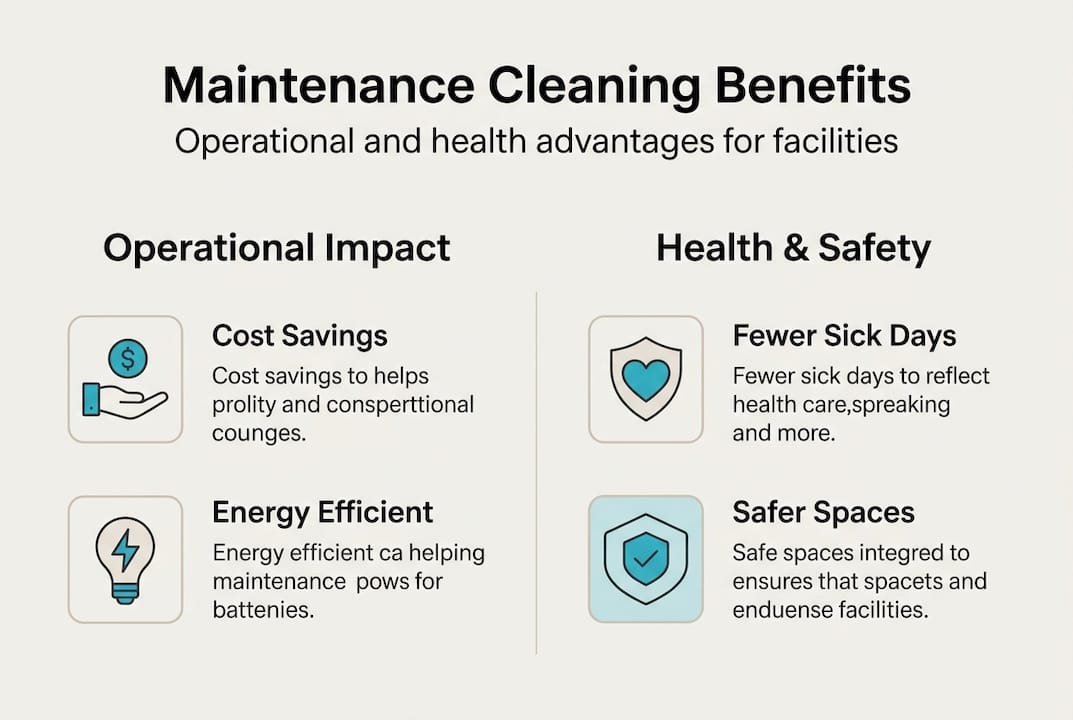
Employee health represents the most immediate benefit. Maintenance cleaning reduces absenteeism by controlling pathogen spread in high-touch areas like door handles, shared equipment, and communal spaces. Facilities with robust cleaning programs experience fewer seasonal illness outbreaks, translating to consistent staffing levels and uninterrupted operations. The cost savings from reduced sick leave often exceed cleaning program expenses.

Workplace morale improves noticeably in well-maintained environments. Employees interpret cleanliness as evidence that management values their wellbeing. This perception strengthens engagement and reduces turnover in competitive labour markets. Clean facilities also make stronger impressions on clients and visitors, enhancing brand perception and supporting business development efforts.
The operational benefits of maintenance cleaning follow a clear sequence:
- Initial cleaning establishes baseline hygiene standards across all facility areas
- Regular maintenance prevents soil accumulation and pathogen colonisation
- Consistent protocols ensure uniform quality regardless of staff changes
- Ongoing monitoring identifies performance gaps before they become problems
- Data collection enables continuous improvement through evidence-based adjustments
Compliance advantages emerge as facilities document their cleaning activities systematically. Industries with strict hygiene requirements like healthcare, food service, and childcare face regular inspections. Facilities maintaining detailed cleaning logs and verification records navigate audits confidently. This documentation also protects against liability claims by demonstrating proactive risk management.
Cost savings accumulate through multiple channels. Preventive cleaning extends the functional life of flooring, fixtures, and equipment by removing abrasive particles and corrosive substances. Carpets last longer when vacuumed regularly rather than deep cleaned occasionally. Hard surfaces maintain their finish when properly maintained. These extended replacement cycles reduce capital expenditure requirements significantly.
Pro Tip: Calculate your facility's cleaning ROI by tracking absenteeism rates, equipment replacement frequency, and compliance incident costs before and after implementing structured maintenance programs. Most facilities discover that maintenance cleaning services deliver returns exceeding 300% through combined savings.
Energy efficiency improves in clean facilities. HVAC systems operate more effectively when filters and vents remain unobstructed by dust. Lighting performs better when fixtures are clean. These operational efficiencies reduce utility costs while supporting environmental sustainability goals. Facilities pursuing green building certifications find that documented cleaning programs contribute to certification requirements.
How to implement effective maintenance cleaning programs
Establishing maintenance cleaning programs requires systematic planning rather than ad hoc scheduling. Australian facilities achieving consistent results follow structured implementation frameworks that define responsibilities, measure outcomes, and enable continuous improvement. These frameworks transform cleaning from reactive firefighting into proactive management.
Documented standard operating procedures form the foundation. SOPs specify exactly how each cleaning task should be performed, what products to use, and what quality standards to achieve. This documentation ensures consistency across different shifts and staff members. New cleaners can be trained effectively using clear procedures rather than relying on informal knowledge transfer.
Measurable KPIs convert subjective assessments into objective performance tracking. Effective cleaning KPIs include:
- Task completion rates measuring adherence to scheduled activities
- Quality scores from ISSA audits or similar inspection frameworks
- ATP readings verifying surface hygiene levels
- Response times for addressing reported cleaning issues
- Supply usage efficiency indicating appropriate product application
These metrics enable data-driven management decisions. Facilities tracking KPIs identify patterns like recurring problem areas, optimal cleaning frequencies, or training needs. This evidence base supports resource allocation decisions and vendor performance evaluations.
| Implementation phase | Key activities | Success metrics |
|---|---|---|
| Assessment | Audit current conditions, identify gaps | Baseline cleanliness scores, risk areas mapped |
| Planning | Develop SOPs, set KPIs, allocate resources | Complete documentation, approved budgets |
| Execution | Train staff, implement schedules, begin monitoring | Tasks completed on schedule, initial quality scores |
| Verification | Conduct ATP testing, perform audits | ATP readings meet targets, audit scores improve |
| Optimisation | Analyse data, adjust procedures, refine standards | Consistent performance, reduced incidents |
Implementing maintenance cleaning programs demands clear vendor agreements when outsourcing. Service level agreements should specify cleaning frequencies, quality standards, verification methods, and remediation procedures for performance failures. Including ATP verification in SLAs provides objective performance measurement that protects both parties. Vendors appreciate clear expectations, and facilities gain enforceable quality guarantees.
Regular review cycles keep programs aligned with facility needs. Quarterly assessments examine whether cleaning frequencies remain appropriate as usage patterns change. Annual reviews evaluate whether SOPs reflect current best practices and available technologies. This continuous improvement approach prevents programs from becoming outdated or ineffective.
Pro Tip: Start ATP verification in high-risk areas like food preparation surfaces, healthcare touch points, or childcare facilities before expanding to general areas. This phased approach builds expertise while focusing resources where verification delivers maximum risk reduction.
Technology integration enhances program effectiveness. Digital checklists ensure tasks are completed and documented in real time. Automated scheduling systems prevent missed cleanings. Data analytics platforms identify trends and predict maintenance needs. These tools reduce administrative burden while improving accountability and transparency.
Stakeholder engagement ensures program sustainability. Facility users who understand cleaning schedules and standards become program advocates rather than obstacles. Regular communication about cleaning activities, performance results, and continuous improvements builds trust and cooperation across the organisation.
Comparing maintenance cleaning methods and selecting the right service provider
Maintenance cleaning encompasses diverse approaches suited to different facility types, contamination levels, and operational requirements. Understanding these methods enables facility managers to match cleaning strategies with specific needs rather than applying one-size-fits-all solutions. Australian facilities benefit from selecting approaches that balance effectiveness, efficiency, and environmental impact.
Manual cleaning remains fundamental for detailed work and irregular surfaces. Trained cleaners using appropriate tools and products achieve thorough results in complex environments. This method excels in areas requiring attention to detail like medical facilities, laboratories, or heritage buildings. Manual cleaning adapts easily to unique situations and allows immediate quality assessment.
Automated equipment increases productivity in large open areas. Ride-on scrubbers, robotic vacuums, and mechanical sweepers cover extensive floor space efficiently. These systems deliver consistent results with reduced labour requirements. Automated cleaning suits warehouses, retail spaces, and educational facilities where uniform surfaces predominate. Initial equipment investment is offset by long-term labour savings.
Chemical cleaning systems leverage specialised products for specific contamination types. Enzymatic cleaners break down organic soils. Disinfectants eliminate pathogens. Degreasers remove oil-based contaminants. Selecting appropriate chemicals for each application maximises effectiveness while minimising environmental impact. Green cleaning products meeting environmental standards align with ESG commitments without sacrificing performance.
| Provider evaluation criteria | Why it matters | What to verify |
|---|---|---|
| Industry certifications | Demonstrates professional standards and training | ISSA certification, industry memberships |
| Insurance coverage | Protects against liability from cleaning incidents | Current certificates, adequate coverage limits |
| SLA terms | Defines service expectations and remediation | Clear quality standards, response times |
| Verification methods | Provides objective performance measurement | ATP testing protocols, audit frequency |
| Environmental practices | Supports sustainability goals | Green product usage, waste management |
| References | Confirms reliable service delivery | Similar facility types, long-term relationships |
Selecting service providers requires evaluating multiple factors beyond price. Certifications indicate professional training and industry knowledge. Professional cleaning services with documented quality systems deliver more consistent results than providers relying on informal approaches. Insurance coverage protects facilities from liability when cleaning activities cause damage or injury.
SLA terms define the relationship foundation. Effective agreements specify:
- Cleaning frequencies for each area and surface type
- Quality standards using measurable criteria like ATP thresholds
- Verification procedures including audit schedules and testing protocols
- Remediation requirements when standards are not met
- Communication protocols for reporting issues and requesting adjustments
ATP verification transforms subjective quality assessments into objective measurements. This technology detects organic residue on surfaces, indicating whether cleaning has effectively removed contaminants. Vendor SLAs with ATP verification create accountability by establishing clear pass/fail criteria. Facilities using ATP testing report higher satisfaction with cleaning outcomes because ambiguity is eliminated.
Cost evaluation extends beyond hourly rates. Total cost of ownership includes product expenses, equipment depreciation, supervision requirements, and quality assurance activities. Providers offering comprehensive services may deliver better value than lowest-price options requiring extensive facility oversight. Comparing proposals on a total-cost basis reveals true economic differences.
Trial periods reduce selection risk. Engaging providers for limited terms allows performance assessment before long-term commitments. Facilities should conduct ATP testing and quality audits during trials to verify that promised standards are delivered consistently. Successful trials build confidence in provider capabilities and relationship dynamics.
Why choose Just About Cleaning for your maintenance needs
Implementing the maintenance cleaning strategies outlined in this article requires partners who understand risk management, compliance requirements, and operational excellence. Just About Cleaning brings over 15 years of experience delivering professional cleaning services across Australian facilities in healthcare, education, hospitality, retail, and industrial sectors. Our approach aligns cleaning activities with your WHS obligations through documented SOPs, measurable KPIs, and verified outcomes.
We employ ATP verification as standard practice, providing objective proof that our cleaning meets specified hygiene standards. Our trained crews follow industry-leading protocols developed through ISSA frameworks, ensuring consistent quality regardless of facility complexity. With comprehensive insurance coverage and transparent SLA terms, we deliver the reliability and accountability facility managers need to focus on core operations rather than cleaning oversight.
Why maintenance cleaning: frequently asked questions
What is the difference between maintenance cleaning and deep cleaning?
Maintenance cleaning involves regular, scheduled activities that prevent soil accumulation and maintain baseline hygiene standards. Deep cleaning addresses heavy contamination or neglected areas through intensive procedures. Most facilities need consistent maintenance cleaning supplemented by periodic deep cleaning in high-use areas.
How often should maintenance cleaning be performed in commercial settings?
Cleaning frequency depends on facility usage, contamination risk, and compliance requirements. High-traffic areas typically need daily attention, while low-use spaces may require weekly maintenance. Healthcare and food service facilities often need multiple daily cleanings in critical areas. Conducting initial assessments and monitoring ATP levels helps determine optimal frequencies.
Why is ATP verification important in cleaning quality checks?
ATP testing measures organic residue on surfaces, providing objective evidence of cleaning effectiveness. Unlike visual inspection, ATP verification detects contamination invisible to the eye. This technology enables data-driven quality assurance, removes ambiguity from vendor performance evaluations, and supports compliance documentation with quantifiable hygiene measurements.
Can maintenance cleaning improve workplace safety?
Regular maintenance cleaning directly enhances safety by removing slip hazards, controlling pathogen transmission, and eliminating debris that could cause injuries. Documented cleaning programs demonstrate WHS compliance and reduce liability exposure. Facilities with robust maintenance cleaning report fewer workplace incidents and lower workers' compensation costs.
What qualifications should professional cleaning providers have?
Reputable providers hold industry certifications like ISSA credentials, maintain comprehensive insurance coverage, and demonstrate documented quality systems. Look for providers with experience in your facility type, references from similar organisations, and willingness to include ATP verification in service agreements. Environmental certifications indicate commitment to sustainable practices.
How do I measure return on investment for maintenance cleaning programs?
ROI measurement tracks multiple factors including reduced absenteeism, extended asset lifespan, fewer compliance incidents, and decreased repair costs. Compare these benefits against program expenses including labour, products, equipment, and verification activities. Most facilities discover that comprehensive maintenance cleaning delivers returns exceeding 300% through combined operational improvements and risk reduction.