

TL;DR:
- Proper cleaning documentation is essential for demonstrating compliance, safety, and operational consistency in Australian facilities. Digital record-keeping enhances accuracy, accessibility, and audit readiness, reducing legal and reputational risks. Well-maintained records also build organizational memory and trust, supporting long-term resilience and client confidence.
A spotless surface can hide a world of risk. Many business owners and property managers assume that if their facility looks clean, they are meeting their compliance obligations. That assumption is where costly mistakes begin. Understanding why cleaning documentation is important is not just about ticking regulatory boxes. It is about protecting your people, your property, and your reputation. Proper records are the difference between demonstrating that cleaning occurred correctly and simply hoping it did. This guide explains what documentation you need, why it matters legally, and how to use it to your advantage.
Table of Contents
- Understanding commercial cleaning documentation and its role
- How documentation proves cleaning compliance and avoids risks
- Cleaning verification and its importance for Australian businesses
- Modern tools and best practices to enhance cleaning documentation
- Applying cleaning documentation practices to property management and business operations
- The overlooked impact of cleaning documentation on business resilience and trust
- Choose a trusted commercial cleaning partner for compliant, documented services
- Frequently asked questions
Key Takeaways
| Point | Details |
|---|---|
| Documentation supports compliance | Accurate records are essential to prove cleaning meets legal and safety requirements. |
| Digital tools improve accuracy | Mobile checklists and QR codes reduce errors and create instant audit trails. |
| Verification prevents contamination | Routine checks confirm cleaning effectiveness and prevent costly quality issues. |
| Documentation builds trust | Clear records enhance reputation and client confidence in cleaning services. |
| Professional help reduces risks | Partnering with compliant cleaning providers eases audit pressures and improves standards. |
Understanding commercial cleaning documentation and its role
Cleaning documentation is the formal record of every cleaning activity carried out in your facility. It covers far more than a simple sign-off sheet on the back of a toilet door. In Australian commercial settings, this documentation forms the backbone of your compliance framework, your safety culture, and your ability to respond to incidents with credible evidence.
Commercial cleaning audits in Australia assess documentation including training records, risk assessments, incident reports, and chemical management. Auditors are not just looking at whether your floors are polished. They are checking whether your team received certified training, whether chemical safety data sheets are current, and whether risks were properly identified and controlled before work began.
The core documents you should have in place include:
- Staff training records: Certificates, induction logs, and competency assessments for every cleaner on site
- Risk assessment reports: Documented hazard identification before cleaning in high-risk areas such as kitchens, laboratories, or industrial spaces
- Chemical safety data sheets (SDS): Up-to-date information on every cleaning product used, as required under Australian workplace health and safety legislation
- Cleaning schedules and checklists: Detailed task lists showing what was cleaned, when, by whom, and to what standard
- Incident and near-miss reports: Records of any accidents, spills, or contamination events during cleaning activities
- Audit findings and corrective action logs: Documentation of previous inspection results and the steps taken to address any issues
These records support cleaning compliance for safer Australian facilities by creating a traceable chain of evidence from action to outcome. Without them, even the cleanest facility can fail an audit.
How documentation proves cleaning compliance and avoids risks
Looks can be deceiving. A facility that appears spotless may still have gaps in chemical handling procedures, untrained staff, or undocumented near-misses that represent serious liability exposure. Thorough documentation fills that gap by providing proof that cleaning was carried out correctly, safely, and consistently.
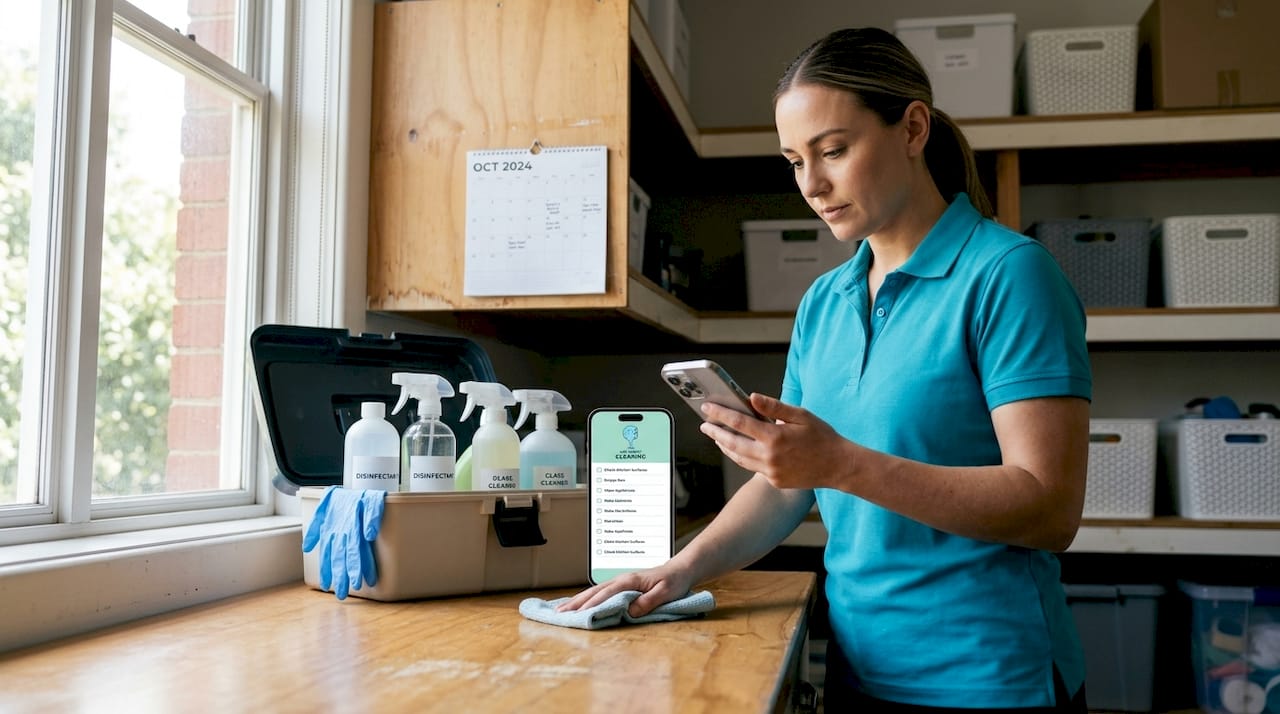
When auditors arrive, they rely on detailed, traceable records, not just visual inspection. Auditors in GMP cleanrooms, for example, review logs, signatures, timestamps, and disinfectant traceability. Incomplete records risk formal audit findings regardless of how clean the space appears. This principle applies equally to commercial offices, healthcare facilities, childcare centres, and food-processing environments.
The consequences of poor documentation are significant:
- WHS penalties: Under Australian Work Health and Safety legislation, missing or inadequate records can attract substantial fines and enforcement action
- Rejected insurance claims: Insurers may deny claims related to cleaning-related incidents if there is no documented evidence that safe procedures were followed
- Audit failures: Regulatory bodies can issue non-compliance notices, suspend operations, or require costly remediation
- Reputational damage: A failed audit or a contamination incident that becomes public can erode client trust quickly and permanently
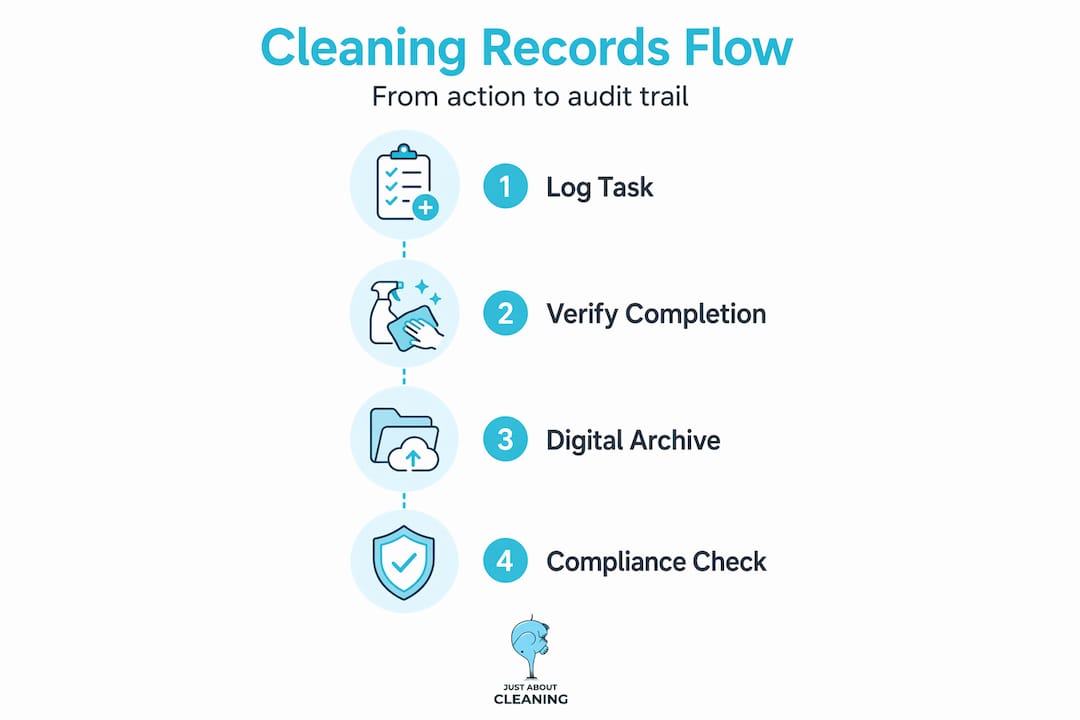
Understanding how cleaning audits drive compliance helps you appreciate that documentation is your primary defence. It links each cleaning action to a verifiable outcome and demonstrates that your organisation takes hygiene and safety seriously.
Pro Tip: Replace paper sign-off sheets with digital logs and QR code check-ins. Staff scan a code when they begin and finish a task, generating a real-time, timestamped audit trail. This approach eliminates illegible handwriting, lost forms, and after-the-fact falsification of records.
Cleaning verification and its importance for Australian businesses
Cleaning verification is a specific, documented process that confirms cleaning was performed correctly and meets the required standard before a space is returned to use. It is distinct from validation, which tests whether a cleaning process can achieve the required result. Verification confirms that it did achieve that result on a given occasion.
Cleaning verification reduces deviations and line stoppages by providing defensible evidence for batch release, turning cleaning into an auditable process. In manufacturing, healthcare, and food service, this distinction carries serious weight. In a commercial office or retail environment, the same principle applies at a practical level: verification prevents cross-contamination, rework, and disruptions caused by cleaning that was assumed to be complete but was not.
A sound verification process follows these steps:
- Pre-operational checks: Confirm the correct cleaning agents, dilutions, and equipment are prepared before work begins
- Visual inspection: A supervisor or designated staff member checks the area during or immediately after cleaning
- Targeted inspection: High-risk surfaces such as food contact areas, shared workstations, or bathroom fixtures receive closer attention using tools like ATP testing where applicable
- Sign-off: An authorised person formally approves the cleaned space as ready for use
- Record keeping: All findings, approvals, and any corrective actions are logged with time, date, and the name of the person responsible
Verification is not an optional quality check. It is the documented proof that your cleaning programme is working as intended, every single time.
Maintaining verification records supports the cleaning standards and safety obligations that Australian businesses across all sectors must meet. It also builds a data set that allows you to identify recurring problem areas and improve your cleaning protocols over time.
Modern tools and best practices to enhance cleaning documentation
The days of clipboard-and-pen cleaning records are not gone, but they are becoming a liability. Paper-based systems are prone to errors, difficult to retrieve during audits, and offer no real-time visibility for property managers or business owners. Digital tools have changed what is possible and raised the bar for what auditors expect.
Switching to digital QR code check-ins and mobile checklists eliminates friction and generates instant audit trails, improving compliance scores. When a cleaner scans a QR code at the start of a task and completes a digital checklist on their phone, the system automatically records who did what, when, and where. Photos can be attached. Supervisors receive alerts for missed tasks. Managers can review records remotely without waiting for physical forms to be collected and filed.
| Feature | Paper-based documentation | Digital documentation |
|---|---|---|
| Accessibility | Filed manually, often off-site | Instant access from any device |
| Accuracy | Prone to handwriting errors | Structured fields reduce errors |
| Audit readiness | Requires manual retrieval | Searchable, exportable records |
| Real-time visibility | Not possible | Live dashboards and alerts |
| Tamper resistance | Low | Timestamped and user-attributed |
| Cost | Low upfront, high in lost time | Moderate upfront, lower long-term |
Best practices for maintaining documentation in any system include:
- Standardise your checklists: Every task should have a consistent format so nothing is left to interpretation
- Train staff on the "why": Cleaners who understand the purpose of documentation complete records more accurately and consistently
- Conduct internal spot audits: Review a sample of records weekly to catch gaps before an external auditor does
- Keep SDS files current: Chemical manufacturers update safety data sheets regularly, and using outdated versions is a compliance risk in itself
- Archive records appropriately: Australian WHS regulations require records to be kept for specified periods; digital systems make archiving straightforward
Pro Tip: Set automatic reminders in your digital system for recurring documentation tasks such as SDS reviews, staff training renewals, and scheduled deep-clean sign-offs. This keeps your cleaning audits and digital tools working together rather than creating separate administrative burdens.
Applying cleaning documentation practices to property management and business operations
For property managers, cleaning documentation is not just about satisfying a cleaning contractor's requirements. It is a practical tool for managing risk, demonstrating value to tenants, and maintaining the long-term condition of a property. Well-maintained cleaning records benefit both property management businesses and their clients by ensuring compliance and demonstrating value.
The benefits of diligent documentation in a property management context are concrete:
- Audit readiness: When a council inspector, health authority, or insurance assessor visits, you can produce a complete history of cleaning activities within minutes
- Client and tenant trust: Documented cleaning schedules show tenants and clients that hygiene is managed proactively, not reactively
- Evidence in disputes: If a tenant or visitor claims a slip or injury related to cleaning, your records can demonstrate that procedures were followed correctly
- Environmental accountability: Documentation of chemical usage, waste disposal, and eco-friendly product choices supports your environmental responsibilities and any ESG reporting obligations
- Protocol improvement: Reviewing records over time reveals patterns such as areas that consistently require rework, allowing you to adjust cleaning frequencies or methods before problems escalate
These principles extend naturally to warehouse cleaning compliance and other large-format commercial environments where the scale and complexity of operations make informal record-keeping especially risky.
The overlooked impact of cleaning documentation on business resilience and trust
Most businesses treat cleaning documentation as a compliance obligation. Fill in the form, file it away, move on. After 15 years working across Australian commercial, industrial, and healthcare environments, we have seen what happens when that attitude dominates. Documentation becomes inconsistent, records disappear when staff turn over, and organisations are caught exposed during audits they thought they were prepared for.
Here is the perspective that changes things: documentation is not paperwork. It is organisational memory. When a senior cleaner leaves, their knowledge of your facility's high-risk areas, preferred chemical dilutions, and seasonal cleaning challenges does not have to leave with them. It is captured in the records they kept. That continuity protects your business.
Well-documented cleaning practices also shape culture. When staff know that their work is being recorded and reviewed, the standard of that work rises. Not because they fear scrutiny, but because documentation makes expectations explicit. There is no ambiguity about what "clean" means when there is a checklist attached to every task and a sign-off required before a room is released.
The reputational value is equally important but rarely discussed. A single contamination incident, a failed WHS inspection, or a media report about hygiene failures can cause client losses that take years to recover from. Businesses with complete, consistent documentation records recover faster from these events because they can demonstrate that their systems are sound and the incident was an anomaly rather than a pattern.
Consider cleaning compliance not as a burden imposed on your business from outside but as a framework that makes your operations more predictable, your people more confident, and your clients more loyal. That is the competitive advantage most businesses never extract from their documentation programme.
Choose a trusted commercial cleaning partner for compliant, documented services
Putting documentation practices into place requires more than good intentions. It requires a cleaning partner who builds compliance into their operations from day one, not one who treats paperwork as an afterthought.
At Just About Cleaning Australia, documentation and compliance are part of every service we deliver. Our trained crews follow structured checklists, maintain accurate records, and operate in line with Australian workplace health and safety requirements across every sector we service. Whether you manage a commercial office, a healthcare facility, or a large property portfolio, we provide the transparency and audit readiness that your business needs. Explore our trusted commercial cleaning services and discover why businesses across Australia rely on us for documented, verifiable, and consistent results. You can also read more about our approach to cleaning compliance insights and property management cleaning value.
Frequently asked questions
What types of cleaning documentation are essential for Australian businesses?
Key documents include training records, chemical safety data sheets, risk assessments, cleaning checklists, incident reports, and audit trails. Commercial cleaning audits in Australia assess all of these categories to confirm legal and safety compliance.
How does cleaning documentation help during WHS audits?
It provides verified evidence that health and safety procedures were followed correctly, supporting compliance and reducing penalties. Poor record-keeping can result in WHS penalties or rejected insurance claims, making accurate records a financial safeguard as much as a regulatory one.
Why is digital documentation preferred over paper forms?
Digital tools reduce friction, enable real-time updates, and create automatic audit trails that improve accuracy and compliance scores. Switching to digital check-ins and mobile checklists eliminates the errors and retrieval difficulties that paper systems create.
What is cleaning verification and why is it important?
Cleaning verification is the documented confirmation that cleaning was performed correctly and meets the required standard before a space is returned to use. Cleaning verification reduces deviations and provides defensible evidence for safe operations, preventing contamination and disruptions.
How does good cleaning documentation benefit property managers?
It ensures compliance, builds tenant trust, provides evidence during audits, and supports consistent hygiene standards across a property portfolio. Well-maintained cleaning records demonstrate value to clients and protect property managers during disputes or inspections.