
TL;DR:
- Preventative cleaning is a structured, proactive system that uses risk assessment, documentation, and inspections to prevent hygiene failures and safety incidents. It differs from routine cleaning by focusing on planning, monitoring, and targeted protocols based on surface risk levels. Effective programs rely on ownership, consistent procedures, and regular evaluation to deliver measurable safety and hygiene improvements.
Preventative cleaning is one of those terms that gets used loosely in facilities management, yet the gap between understanding it conceptually and applying it operationally can cost you significantly. Most cleaning programmes address visible dirt and react to complaints. Preventative cleaning works differently. It is a structured, planned approach designed to stop hygiene problems, surface degradation, and safety incidents before they occur. This guide breaks down what preventative cleaning genuinely involves, how it differs from routine and reactive cleaning, and how to build a programme that delivers measurable results for your facility.
Table of Contents
- Key takeaways
- What is preventative cleaning, really?
- The components of an effective preventative programme
- Benefits of preventative cleaning for facilities
- How to implement preventative cleaning in your facility
- My take on what actually makes these programmes succeed
- How Just About Cleaning supports preventative programmes
- FAQ
Key takeaways
| Point | Details |
|---|---|
| Prevention over reaction | Preventative cleaning uses planning and monitoring to stop hygiene problems before they occur, not after. |
| Clean first, always | Cleaning must precede sanitising or disinfecting, or chemical treatments lose effectiveness against germs. |
| Risk-based scheduling | Tailor cleaning frequency to space risk levels to avoid over-servicing low-risk areas and under-servicing high-risk zones. |
| Documentation is non-negotiable | Documented procedures, inspection logs, and corrective action records are what separate consistent programmes from inconsistent ones. |
| Routine and periodic work together | Combining daily baseline cleaning with scheduled periodic restorative cycles is the foundation of an effective preventative programme. |
What is preventative cleaning, really?
Most facilities run a cleaning schedule. Staff wipe surfaces, vacuum floors, empty bins, and mop bathrooms at set intervals. That is routine cleaning, and it handles visible dirt and basic hygiene. Preventative cleaning goes further. It is a planned system that integrates routine cleaning with risk-based priorities, documented procedures, regular inspections, and corrective feedback loops to reduce the likelihood of hygiene failure, surface deterioration, and safety incidents.
The distinction matters because routine cleaning is reactive to what you can see. Preventative cleaning anticipates what will happen if specific surfaces, frequency levels, and products are not managed correctly. Think of a high-traffic reception area where door handles, desks, and shared touchpoints accumulate contaminants faster than a storage room. A preventative approach schedules those surfaces differently and monitors them consistently.
Understanding the terminology also helps. Cleaning removes dirt physically using soap, detergent, and scrubbing, which eliminates most germs in the process. Sanitising reduces germs to safe levels. Disinfecting kills most germs using stronger chemical solutions. Critically, both sanitising and disinfecting require surfaces to be cleaned first. Dirt and organic material block chemical disinfectants from working. Preventative cleaning keeps this sequence front of mind across your entire facility.
- Routine cleaning addresses visible contamination on a regular schedule
- Preventative cleaning uses documented risk assessments and monitoring systems to prevent hygiene and surface failures
- Reactive cleaning responds after an incident, spill, or complaint has already occurred
- Periodic cleaning handles deeper restorative tasks on less frequent schedules, complementing daily routines
Pro Tip: When briefing cleaning staff or contractors, define these terms explicitly in your specifications. Conflating "routine" with "preventative" leads to programmes that look thorough on paper but fail in practice.
The components of an effective preventative programme
Preventative cleaning is not about cleaning more often. Effective preventive maintenance is defined more by planning, monitoring, and process consistency than frequency alone. A facility manager who doubles the cleaning schedule without improving documentation, role clarity, or inspection quality will see limited improvement.
An effective preventative cleaning programme contains four operational pillars:
- Documented procedures and schedules. Every area should have a written cleaning specification that details tasks, frequency, products, and quality standards. Without this, consistency depends entirely on individual staff knowledge, which erodes quickly with turnover.
- Risk-based area classification. High-risk zones such as healthcare treatment rooms, childcare facilities, commercial kitchens, and high-traffic reception areas require higher frequency and more rigorous protocols. Low-risk storage or administrative areas need less. Tailoring cleaning by risk level prevents both over-servicing and under-servicing.
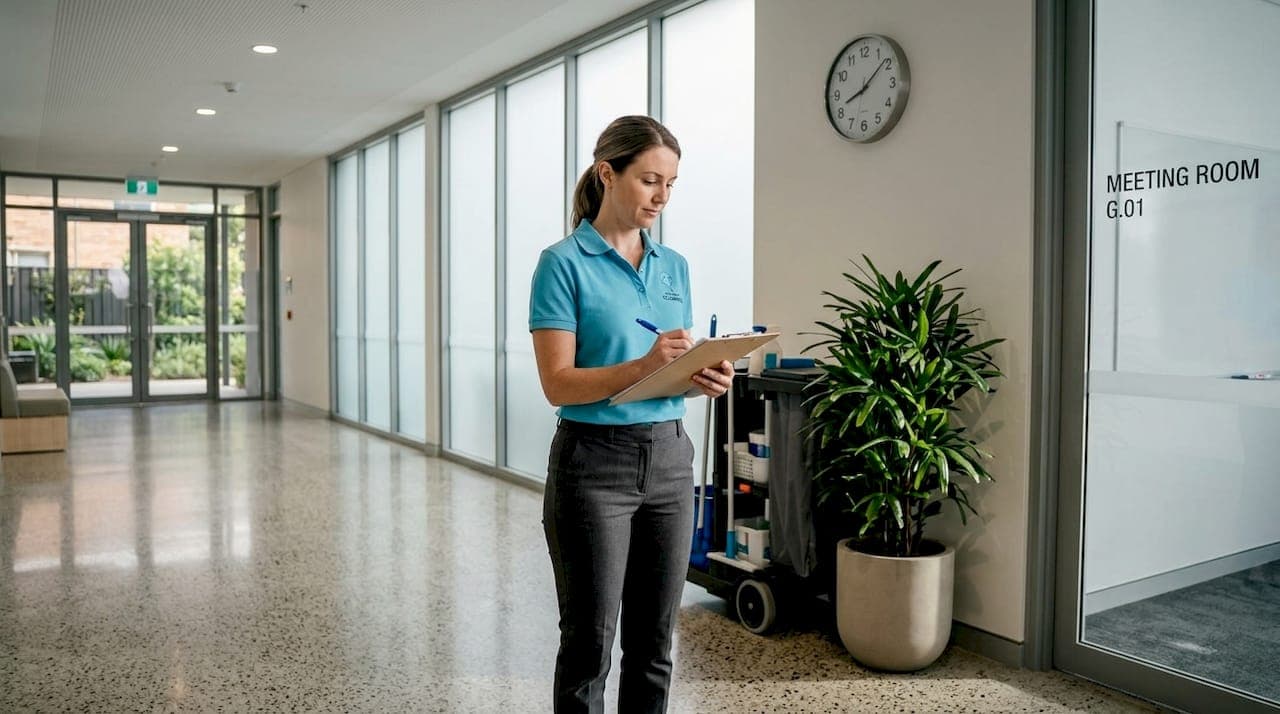
- Monitored execution with inspections. Cleaning tasks being completed is not the same as cleaning tasks being completed correctly. Regular inspections, whether by a supervisor, quality auditor, or self-assessment log, identify early signs of residue build-up, moisture, or missed surfaces before they become compliance or safety issues. Routine inspections help prevent safety and quality degradation across the programme.
- Corrective action loops. When inspections identify a problem, there must be a defined process for addressing it. Who is notified? What is the remediation task? How is it recorded? Programmes without this mechanism allow the same failures to recur.
Pro Tip: Build your inspection checklists to match the risk classification of each zone. A healthcare facility's checklist for treatment areas should look nothing like its checklist for administrative corridors.
The table below illustrates how cleaning priorities and documentation requirements differ across common facility zones:
| Zone type | Risk level | Cleaning frequency | Inspection priority |
|---|---|---|---|
| Healthcare treatment rooms | Very high | Multiple times daily | Daily sign-off required |
| Childcare rooms and bathrooms | High | Daily and after use | Daily supervisor check |
| Commercial kitchen surfaces | High | After each service period | Shift inspection log |
| Office workstations and shared areas | Medium | Daily | Weekly audit |
| Storage rooms and plant areas | Low | Weekly or fortnightly | Monthly check |
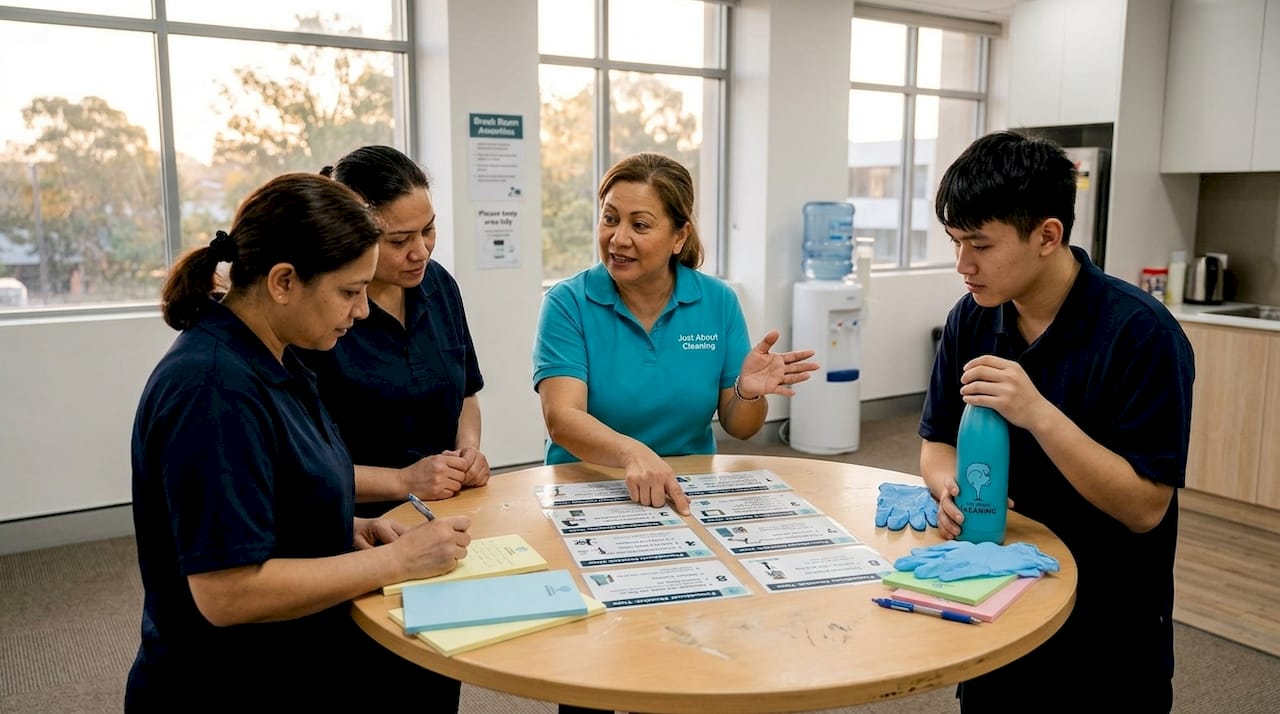
Consistent training and clear documentation underpin sustained preventative cleaning success, particularly when staff turnover is high. Facilities that rely on institutional knowledge passed informally from one worker to the next find their standards degrade over time. Written specifications and regular refresher training prevent this.
Benefits of preventative cleaning for facilities
The case for preventative cleaning is both a hygiene argument and a financial one. Facilities that move from purely reactive cleaning to a structured preventative model typically see gains across four key areas.
Reduced illness transmission. High-touch surfaces should be cleaned at least daily, with some zones such as reception and customer service areas potentially requiring twice-daily cleaning during higher-risk periods. Targeting these surfaces consistently, rather than cleaning all areas uniformly, reduces transmission risk where it is highest. This directly benefits staff absenteeism and occupant wellbeing.
Extended asset life. Floors, fixtures, and fittings deteriorate faster without planned maintenance cleaning. Residue build-up on hard floors degrades surface coatings. Moisture left on surfaces promotes corrosion. Grease accumulation in commercial settings creates both hygiene and fire risks. Preventative maintenance cleaning schedules protect these assets, reducing capital replacement costs over time.
Lower labour and chemical costs. This point surprises many facility managers. Integrating routine and periodic cleaning cycles based on risk level avoids the expensive reactive deep cleans that become necessary when routine cleaning is insufficient. Over-cleaning low-risk areas wastes labour hours and chemical product. Under-cleaning high-risk areas drives up the cost of emergency remediation.
Improved safety and compliance. Moisture, residue, and surface degradation are leading contributors to workplace slip and fall incidents. Planned cleaning addresses these hazards proactively. For facilities operating under strict regulatory requirements, such as healthcare, food service, and childcare, documented preventative cleaning programmes also support compliance audits and demonstrate duty of care.
- Reduced staff absenteeism due to lower illness transmission
- Longer floor and fixture lifespan from planned restorative maintenance
- Fewer emergency or reactive deep clean costs
- Stronger audit and compliance documentation
- Lower risk of slip and fall incidents from moisture or residue management
How to implement preventative cleaning in your facility
Whether you are building a programme from scratch or improving an existing one, the implementation process follows a clear sequence. Start with an honest audit of where you are now.
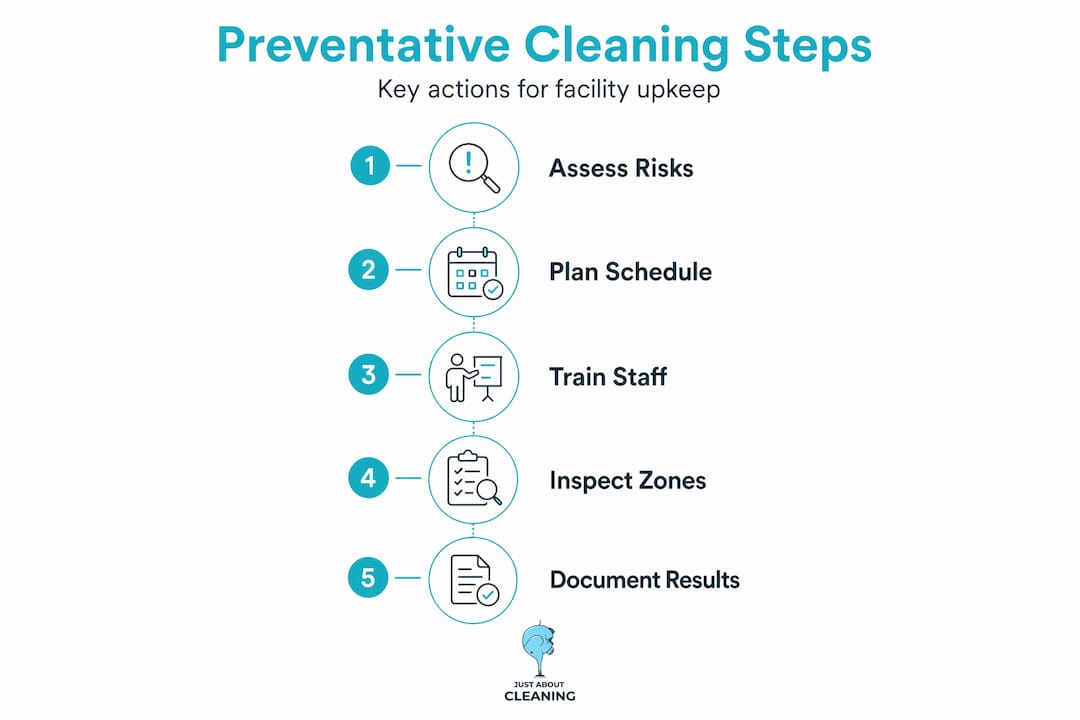
- Assess your current cleaning schedule. Map every area of your facility against its current cleaning frequency, assigned tasks, and products used. Identify gaps, inconsistencies, and areas that are either over-serviced or under-serviced relative to their risk level.
- Develop documented cleaning specifications. For each zone, write a specification that covers what tasks are performed, how often, by whom, with which products, and to what standard. These become your operational baseline and your training reference.
- Classify spaces by risk. Group areas into high, medium, and low-risk categories based on occupant vulnerability, surface contact frequency, and regulatory requirements. This informs scheduling decisions without guesswork.
- Train staff on the clean-first approach. The clean-first principle is foundational. Staff who apply disinfectants over uncleaned surfaces are wasting product and creating a false sense of hygiene compliance. Training must reinforce cleaning sequence, not just task completion.
- Implement inspection and sign-off protocols. Even a simple daily checklist signed by the responsible team member creates accountability. Build in a weekly or fortnightly supervisor review for medium and high-risk areas.
- Establish corrective action procedures. Define what happens when an inspection identifies a deficiency. Document the finding, assign the corrective task, and record the outcome. This loop is what turns a static schedule into a live, improving programme.
For facilities with limited internal cleaning management capacity, partnering with a professional cleaning service that provides structured preventative programmes, including monitoring and reporting, can close these gaps without the overhead of building internal systems from the ground up. You can also review practical guidance on hygiene practices for property managers to support your planning process.
My take on what actually makes these programmes succeed
I have seen well-resourced cleaning programmes fail and lean ones perform consistently above expectations. The difference is rarely budget.
The most common failure pattern I observe is treating preventative cleaning as a frequency question. "We increased to daily cleaning" is not a preventative strategy. It is a cost increase with no defined outcome measure. Real preventative programmes are built on control, not volume. Documented procedures, role ownership, and inspection accountability are what create consistency, not adding more cleaning days to the roster.
The second pattern worth flagging is documentation that exists on paper but does not reflect what is actually happening on the floor. I have reviewed cleaning programmes where the written specification was excellent and the actual execution bore little resemblance to it. The gap comes from insufficient onboarding, no inspection process, and no corrective mechanism. Standards only stay high when there is a system that catches and addresses drift.
Cultural buy-in from cleaning staff is also underestimated. When staff understand why certain protocols exist, particularly in high-risk environments, they are far more likely to follow them accurately. A five-minute explanation of why the clean-first sequence matters produces better outcomes than a policy document no one reads.
The most successful programmes I have encountered share one quality: someone owns them. Not just manages them, but actively monitors outcomes, responds to inspection findings, and updates procedures when facility use changes. That ownership is what separates a functioning preventative programme from a printed schedule gathering dust.
— David
How Just About Cleaning supports preventative programmes
When your facility needs a preventative cleaning programme that is properly structured, documented, and consistently delivered, the expertise you partner with matters.
Just About Cleaning has worked with facilities across Australia for over 15 years, delivering cleaning programmes in healthcare, education, hospitality, childcare, retail, and commercial settings. Their approach is built on trained onsite crews, documented procedures aligned with industry standards, and quality monitoring processes that support ongoing compliance. Rather than a one-size-fits-all schedule, Just About Cleaning develops programmes tailored to your facility's risk profile, use patterns, and regulatory requirements. If you are looking to implement or strengthen your preventative cleaning approach, the team at Just About Cleaning can provide a consultation and customised programme that aligns with your operational goals.
FAQ
What is preventative cleaning?
Preventative cleaning is a structured, planned cleaning system that uses risk-based scheduling, documented procedures, inspections, and corrective action processes to prevent hygiene failures, surface deterioration, and safety incidents before they occur.
How does preventative cleaning differ from routine cleaning?
Routine cleaning addresses visible dirt on a set schedule. Preventative cleaning goes further by incorporating risk assessments, inspection protocols, and documented quality standards to maintain consistent hygiene outcomes across the entire facility.
Why is cleaning done before sanitising or disinfecting?
The CDC confirms that cleaning removes dirt and organic material that would otherwise block chemical disinfectants from working effectively. Sanitising or disinfecting an uncleaned surface does not deliver reliable germ reduction.
How often should high-touch surfaces be cleaned?
NIH guidance recommends cleaning high-touch surfaces at least daily, with high-contact zones such as reception areas potentially requiring twice-daily cleaning during periods of elevated transmission risk.
What should a preventative cleaning checklist include?
A preventative cleaning checklist should cover task descriptions by zone, cleaning frequency, assigned responsibility, product specifications, and a sign-off field for completed inspections and any corrective actions taken.