
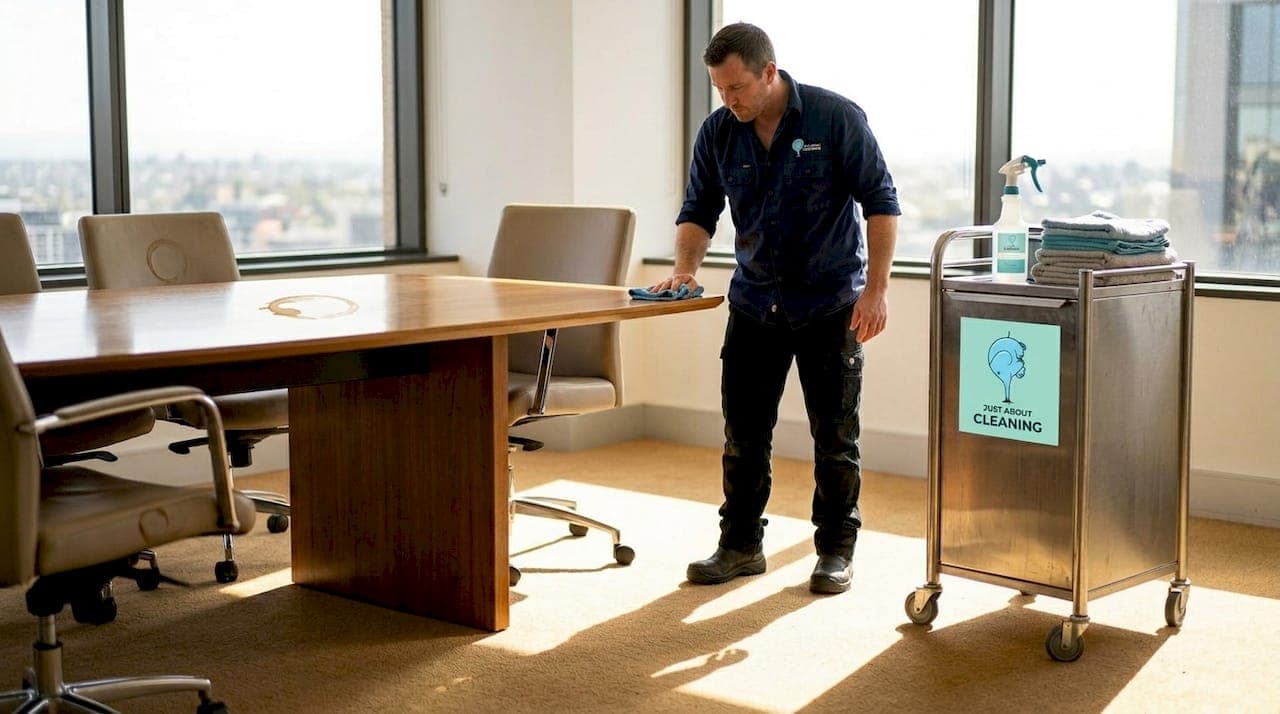
TL;DR:
- Deep cleaning targets hidden contaminants that routine cleaning misses, ensuring higher hygiene standards.
- It involves a systematic process using professional equipment to disinfect high-risk areas.
- Regular deep cleaning enhances safety, compliance, staff wellbeing, and customer trust.
Many Australian businesses assume their regular cleaning schedule is keeping their workplace safe. It is a reasonable assumption, but it overlooks a critical gap. Surface-level cleaning removes visible mess, yet harmful bacteria, viruses, and allergens continue to accumulate in overlooked areas like air vents, behind equipment, and on high-contact surfaces. With infection prevention standards becoming more stringent across industries, organisations in healthcare, hospitality, education, and retail are under increasing pressure to demonstrate genuine hygiene compliance. This guide explains what deep cleaning truly involves, how it differs from routine maintenance, and why it delivers measurable benefits for your workplace.
Table of Contents
- Defining deep cleaning for Australian businesses
- Core components of a commercial deep clean
- How deep cleaning differs from regular cleaning
- Practical benefits of deep cleaning for organisations
- Our take: Why deep cleaning is reshaping the standards for Australian workplaces
- Take the next step to a healthier workplace
- Frequently asked questions
Key Takeaways
| Point | Details |
|---|---|
| Deep cleaning defined | Deep cleaning targets hidden germs and stubborn dirt beyond what regular cleaning covers. |
| Improved workplace safety | Deep cleans help Australian businesses reduce illness and safeguard staff and visitors. |
| Compliance standards | Many sectors require or benefit from deep cleaning to meet health and industry regulations. |
| Long-term savings | Fewer sick days and better reputation mean deep cleaning is a smart business investment. |
Defining deep cleaning for Australian businesses
With the need for higher hygiene now clear, it is vital to understand what deep cleaning actually involves. Deep cleaning is a thorough, systematic process that goes well beyond the daily or weekly tasks your regular cleaning crew performs. Where routine cleaning addresses visible dirt, spills, and surface dust, deep cleaning targets the embedded contaminants that accumulate over time in hard-to-reach and frequently ignored areas.
These overlooked areas include air conditioning vents, the undersides of furniture, grout lines in tiled surfaces, behind kitchen appliances, and the interiors of bins and storage units. Deep cleaning addresses high-risk areas and pathogens not targeted in routine cleans, which is why it is considered an essential layer of hygiene management for commercial environments.
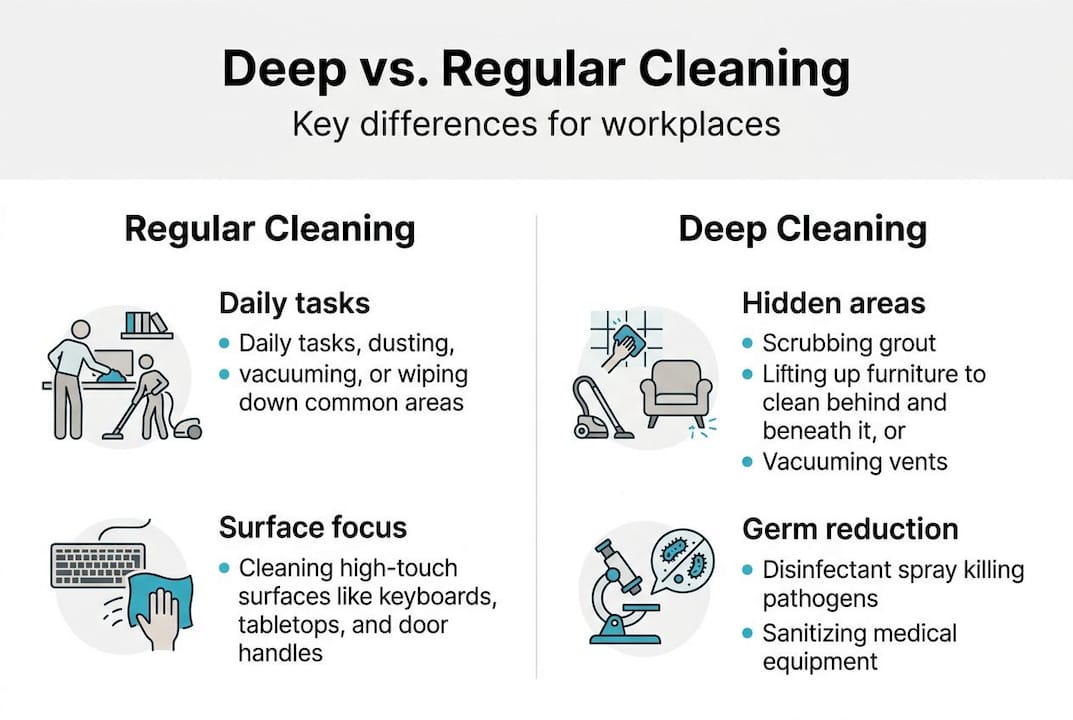
Different sectors have unique deep cleaning requirements. Understanding the types of cleaning services available helps organisations match the right approach to their specific setting.
Key sectors that require regular deep cleaning include:
- Healthcare: Hospitals, clinics, and aged care facilities where pathogen control is critical
- Hospitality: Hotels, restaurants, and cafes where food safety and guest experience depend on hygiene
- Education: Schools and childcare centres where children are particularly vulnerable to illness
- Retail: High-traffic stores where surfaces are touched by hundreds of customers daily
| Feature | Regular cleaning | Deep cleaning |
|---|---|---|
| Frequency | Daily or weekly | Monthly, quarterly, or as needed |
| Target areas | Visible surfaces | Hidden, high-risk, and embedded zones |
| Methods used | Mopping, wiping, vacuuming | Steam cleaning, disinfection, degreasing |
| Outcome | Tidy appearance | Pathogen reduction and hygiene compliance |
| Staffing | General cleaning crew | Trained specialists with professional equipment |
This distinction matters because a workplace that looks clean is not necessarily a safe one. Genuine hygiene requires both layers working together.
Core components of a commercial deep clean
Knowing what deep cleaning is, businesses often ask what exactly happens during a commercial deep clean. The process is structured, methodical, and tailored to the specific environment being treated.
A professional commercial deep clean typically follows these steps:
- Initial inspection: The cleaning team assesses the space, identifying high-risk zones, areas of heavy soiling, and any compliance requirements specific to the industry.
- Dry dusting and debris removal: Ceilings, vents, light fittings, and wall surfaces are cleared of accumulated dust before any wet cleaning begins.
- Sanitising surfaces: All hard surfaces, including benchtops, shelving, and equipment exteriors, are treated with appropriate sanitising agents.
- Disinfection of high-contact points: Door handles, lift buttons, light switches, keyboards, and shared equipment receive targeted disinfection treatment.
- Deep scrubbing: Floors, grout, and tiled areas are scrubbed using professional-grade machines rather than standard mops.
- Specialised area treatment: Kitchens receive degreasing, bathrooms receive descaling and sanitation, and healthcare areas receive steam or chemical disinfection.
- Waste removal and final inspection: All waste is removed correctly, and a final walkthrough confirms every area meets the required standard.
Professional deep cleaning includes disinfection of high-contact points and use of specialised equipment, which is what separates it from tasks that general staff can perform in-house.
The tools matter enormously. Industrial steam cleaners, HEPA-filter vacuums, and hospital-grade disinfectants achieve results that standard cleaning products simply cannot replicate. Organisations should also ensure their provider operates in line with Safe Work Australia guidelines for infection prevention.
"A deep clean is not just about appearance. It is about eliminating the risks your staff and customers cannot see."
Using a structured deep clean checklist ensures nothing is missed across complex commercial spaces. For a full breakdown of the process, the deep cleaning process guide provides sector-specific detail.
Pro Tip: Schedule deep cleans outside business hours, such as overnight or on weekends, to avoid disrupting staff and customers while still maintaining a consistent hygiene programme.
How deep cleaning differs from regular cleaning
To help you decide when you need a deep clean rather than routine cleaning, let us compare the two directly. Many facility managers make the mistake of treating these as interchangeable. They are not.
Regular cleaning is maintenance. It keeps your space presentable and removes the obvious mess that accumulates each day. Deep cleaning is remediation and prevention. It targets what regular cleaning cannot reach and resets the hygiene baseline of your entire facility.
Deep cleaning aims for higher hygiene standards and risk reduction, unlike regular maintenance cleans, which focus primarily on appearance and daily tidiness.
| Scenario | Recommended approach |
|---|---|
| Daily office maintenance | Regular cleaning |
| Post-illness outbreak | Immediate deep clean |
| Pre-audit or inspection | Deep clean plus documentation |
| Seasonal changeover | Scheduled deep clean |
| New tenancy or fit-out | Full deep clean before occupation |
| High-traffic event | Deep clean post-event |
Situations that specifically call for a deep clean include:
- Following a confirmed illness or infectious outbreak in the workplace
- Before or after a major event, renovation, or construction activity
- At the start of a new tenancy or lease period
- When regulatory audits or accreditation inspections are approaching
- Seasonally, to address allergen and mould build-up
From a cost perspective, deep cleaning requires a greater investment than routine cleaning. However, the cost of not doing it, including illness-related absenteeism, failed audits, and reputational damage, consistently outweighs the upfront expense. Reviewing Australian cleaning standards helps organisations understand what level of hygiene their industry requires. For further context on environmental cleaning details in non-healthcare settings, state health authorities provide clear guidance.
Practical benefits of deep cleaning for organisations
Having seen the key differences, it is important to note the return on investment and the broader advantages deep cleaning provides to Australian organisations.
The most immediate benefit is a measurable reduction in workplace illness. When bacteria and viruses are allowed to accumulate on surfaces and in ventilation systems, they spread rapidly through shared spaces. Businesses report increased staff attendance and fewer customer complaints after deep cleaning initiatives, which directly translates to lower absenteeism costs and improved productivity.
| Benefit | Impact on business |
|---|---|
| Reduced sick days | Lower absenteeism costs, higher output |
| Regulatory compliance | Fewer fines, successful audits |
| Improved staff morale | Higher retention and engagement |
| Better customer perception | Stronger reviews and repeat business |
| Longer asset lifespan | Reduced maintenance and replacement costs |
Compliance is another significant driver. Many Australian industries, including healthcare, food service, and childcare, operate under strict hygiene regulations. Failing to meet these standards can result in fines, licence suspensions, or reputational damage that takes years to recover from. Understanding office cleaning standards helps businesses stay ahead of these requirements.
Customer and staff trust is equally valuable. A visibly clean environment signals professionalism and care. In hospitality and retail especially, cleanliness directly influences purchasing decisions and return visits. Research into cleaner workplaces consistently shows that hygiene ranks among the top factors affecting customer satisfaction.
The office hygiene benefits extend beyond health, contributing to a more positive culture where staff feel valued and safe.
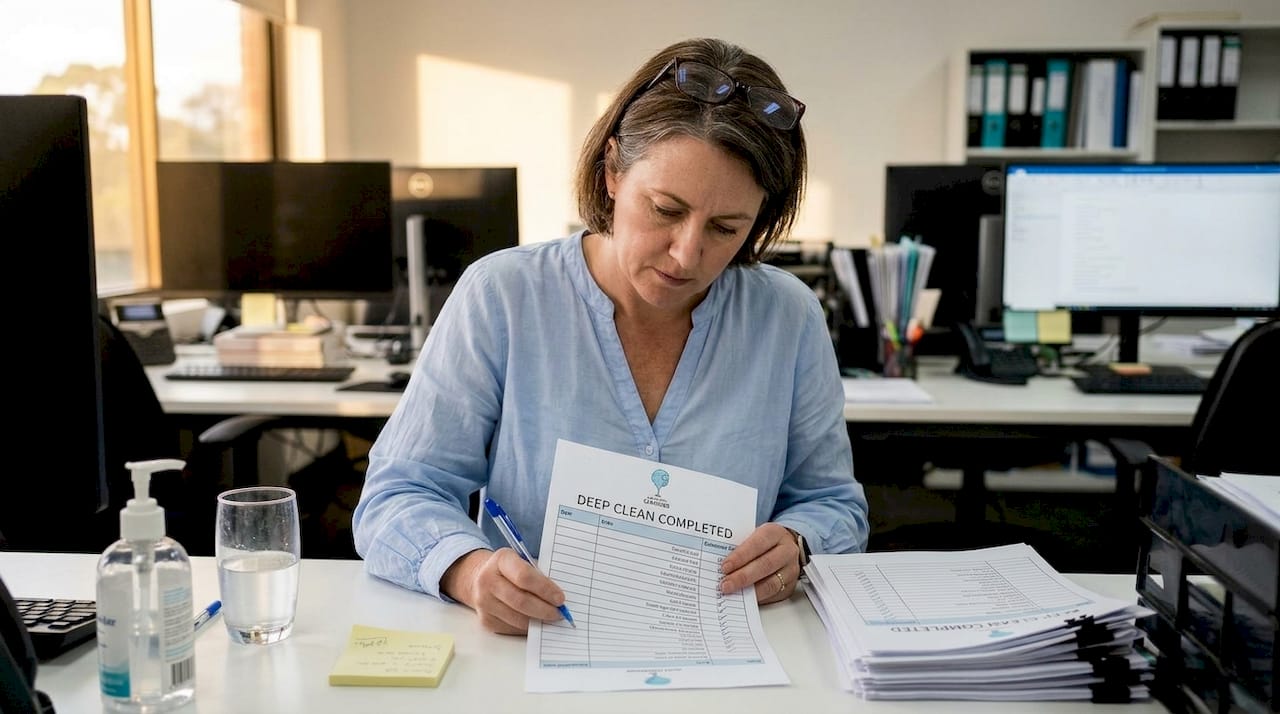
Pro Tip: After each deep clean, send a brief communication to staff and customers confirming what was completed. This simple step reinforces confidence in your hygiene standards and demonstrates accountability.
Our take: Why deep cleaning is reshaping the standards for Australian workplaces
After examining the practical advantages, a deeper industry perspective brings new clarity to why deep cleaning has shifted from an occasional extra to a genuine business necessity.
Over the past several years, workplace hygiene expectations have changed permanently. The post-pandemic period did not simply raise awareness temporarily. It reset what staff, customers, and regulators consider acceptable. Organisations that treat deep cleaning as a reactive measure, something done only when a problem arises, are already behind.
What we consistently observe is that businesses adopting deep cleaning as a scheduled, documented practice gain a competitive edge. They pass audits with less stress, retain staff more effectively, and build customer loyalty faster. Superficial cleaning no longer satisfies stakeholders who now expect visible, verifiable hygiene efforts.
The organisations leading their sectors are those investing in practical cleaning strategies that are proactive rather than reactive. Deep cleaning is not an overhead. It is an investment in your people, your reputation, and your long-term compliance position.
Take the next step to a healthier workplace
Now that you understand the value of deep cleaning, the logical next step is ensuring your workplace benefits from it consistently and professionally.
At Just About Cleaning, we bring over 15 years of experience delivering commercial deep cleaning solutions across healthcare, education, hospitality, retail, and more. Our trained crews use professional-grade equipment and eco-friendly products to meet the hygiene standards your industry demands. Whether you need a one-off deep clean or a scheduled programme tailored to your sector, we provide reliable, documented, and compliant cleaning services across Australia. Contact us today to discuss a solution built around your specific needs.
Frequently asked questions
How often should deep cleaning be scheduled in commercial settings?
Most businesses benefit from quarterly deep cleans, but high-risk sectors like healthcare may require monthly or more frequent scheduling. Regular deep cleaning reduces risks and supports ongoing compliance.
Is deep cleaning mandatory for Australian businesses?
While not always legally required, deep cleaning is essential for meeting health, safety, and audit standards in many industries. Deep cleaning supports compliance with workplace safety requirements across regulated sectors.
What areas are most critical during a commercial deep clean?
High-contact points, kitchens, bathrooms, air vents, and staff common areas are top priorities for effective deep cleaning. These zones accumulate the highest concentrations of pathogens and contaminants over time.
Does deep cleaning disrupt normal business operations?
Professional providers schedule deep cleaning after hours or on weekends to minimise disruptions. Strategically scheduled cleans ensure your business continues operating without interruption.