
TL;DR:
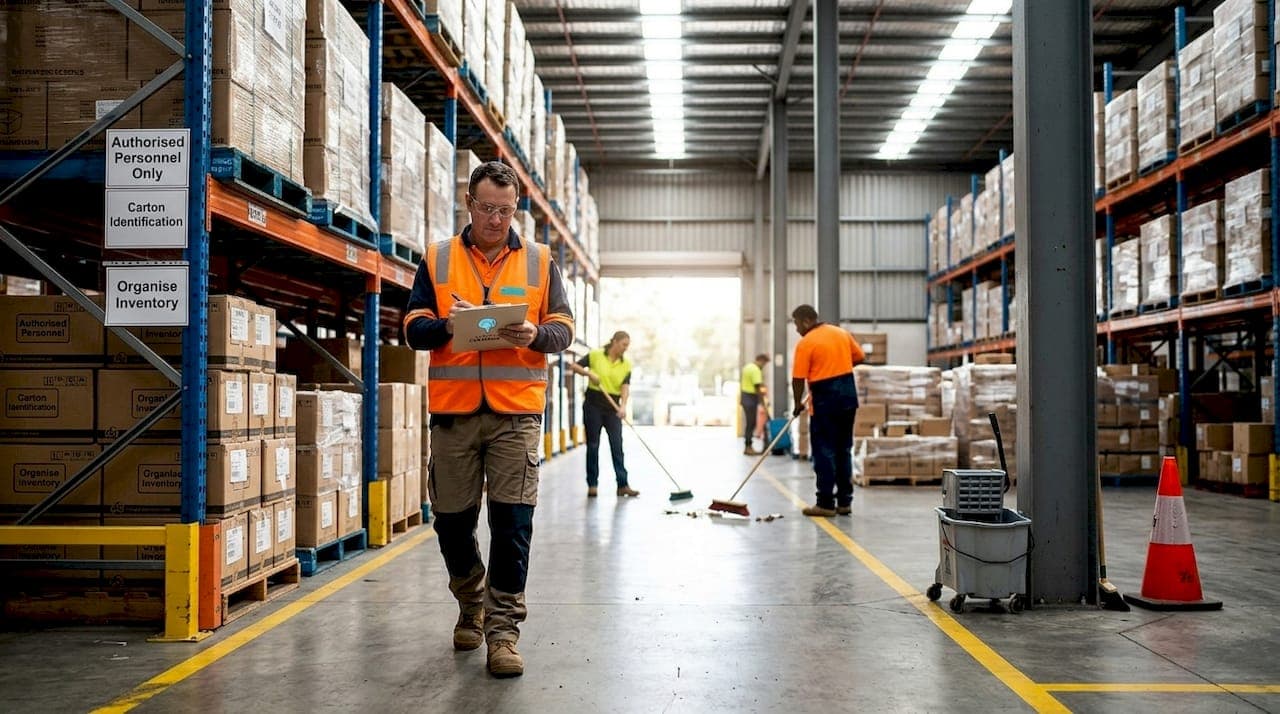
- Australian warehouse cleaning compliance is driven by risk management, not fixed schedules.
- Regular hazard assessments, documentation, and adherence to multiple regulations are essential.
- Professional cleaning services enhance safety, ensure compliance, and provide necessary documentation.
Many warehouse managers assume a standard cleaning checklist is enough to keep their facility compliant. It is not. Australian workplace health and safety law does not prescribe a fixed cleaning schedule. Instead, it places an ongoing duty of care on you to manage hazards proactively, based on your specific operational risks. A missed spill, a blocked emergency exit, or accumulated dust can expose your business to serious legal liability and put workers at risk. This guide cuts through the confusion and gives you a clear, practical picture of what Australian warehouse cleaning compliance actually demands, and what you need to do to meet it.
Table of Contents
- Understanding warehouse cleaning requirements in Australia
- Key standards and regulations shaping warehouse cleaning
- Practical cleaning tasks every warehouse must tackle
- When to use professional cleaning services
- Hard truths: why warehouse cleaning compliance falls through the cracks
- Professional warehouse cleaning made easy
- Frequently asked questions
Key Takeaways
| Point | Details |
|---|---|
| Legal compliance focus | Australian warehouse cleaning is about continuous safety, not fixed schedules. |
| Know your standards | Both national and state guidelines affect what and how warehouses must clean. |
| Task-based cleaning | Cleaning plans depend on actual warehouse risks and operations, not generic checklists. |
| Specialists for high risk | Professional help is critical for complex or compliance-heavy cleaning tasks. |
| Good records matter | Keeping cleaning logs and SWMS improves your audit-readiness and safety culture. |
Understanding warehouse cleaning requirements in Australia
Australian warehouses operate under a legal framework that prioritises outcomes over rigid routines. The Work Health and Safety Act 2011 (WHS Act 2011) places a primary duty of care on businesses to ensure, so far as is reasonably practicable, that the workplace is safe and without risks to health. Cleanliness is a direct part of that duty. WHS regulations under Safe Work Australia model laws focus on housekeeping and safety risk prevention, not on telling you exactly how often to mop the floor.
This distinction matters. Compliance is not about ticking a box every Tuesday. It is about identifying the hazards present in your warehouse, assessing the risk they create, and cleaning at a frequency and standard that controls those risks. A food distribution warehouse will have very different obligations to a furniture storage facility, even though both fall under the same WHS Act.
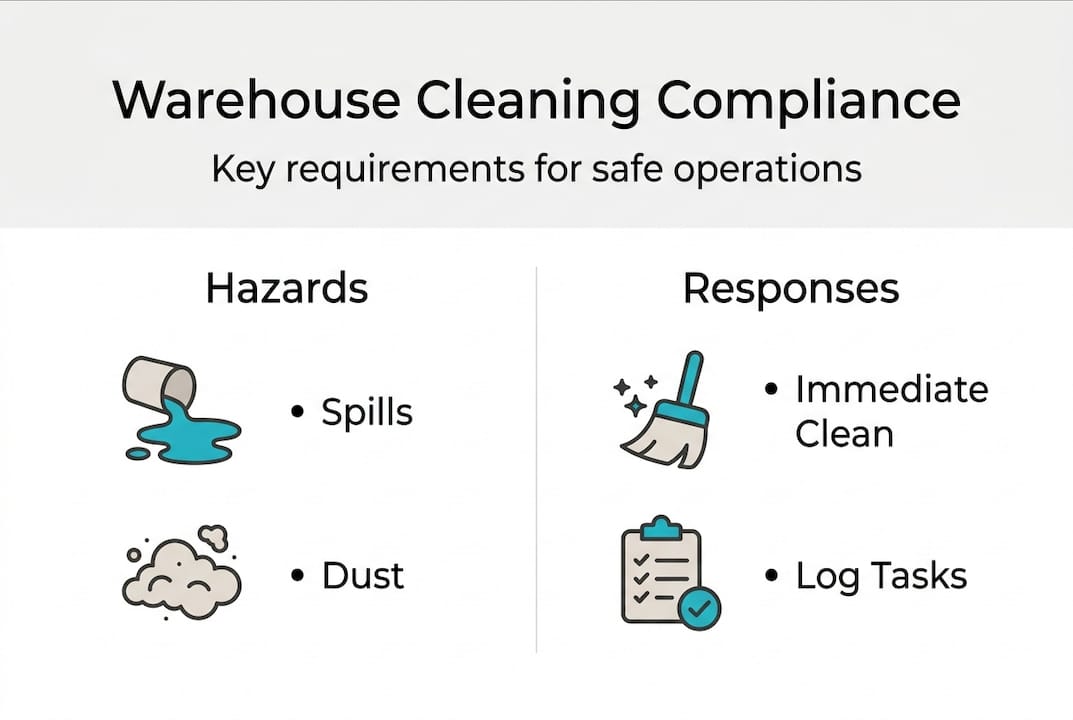
Safe Work Australia housekeeping guidelines make clear that poor housekeeping is a leading contributor to slips, trips, falls, and dust-related illness. These are not minor incidents. Australia's workplace injury rate sits at 3.5%, a figure that underscores just how much proactive cleaning matters in high-traffic environments like warehouses.
Here is a snapshot of the core hazard categories that cleaning directly addresses:
- Slip and trip hazards: Wet floors, debris on walkways, and uneven surfaces
- Dust and airborne particles: Accumulated dust on racking, vents, and beams
- Chemical spills: Residue from forklifts, cleaning agents, or stored goods
- Blocked emergency routes: Pallets, waste, or equipment obstructing exits
- Pest entry points: Waste accumulation that attracts rodents and insects
| Hazard type | Cleaning response | Frequency |
|---|---|---|
| Floor spills | Immediate clean-up | As they occur |
| Walkway debris | Sweep and clear | Daily |
| Dust on racking | Wipe and vacuum | Weekly or as needed |
| Emergency exit access | Inspect and clear | Daily |
| Waste disposal areas | Empty and sanitise | Daily or per shift |
Understanding office cleaning standards can also provide useful context for how structured cleaning programmes translate into measurable compliance outcomes. The principles of cleaning and compliance apply across commercial environments, including warehouses.
Key standards and regulations shaping warehouse cleaning
Warehouse cleaning does not sit under a single piece of legislation. Several overlapping frameworks shape your obligations, and understanding which applies where is essential for genuine compliance.
At the federal level, the WHS Act 2011 and its associated regulations cover all warehouse environments across most Australian states and territories. This is your baseline. It establishes the duty of care, requires risk management processes, and mandates Safe Work Method Statements (SWMS) for high-risk work, which includes certain cleaning tasks involving chemicals, heights, or confined spaces.
The National Construction Code (NCC) adds another layer, particularly around fire safety. Warehouse environments must align with NCC fire safety, maintain clear hydrant access, and follow state guidelines for dust and pallet racking. Blocked sprinkler systems or obstructed hydrant access points are not just a cleaning failure. They are a code violation.
State-based regulators add further specificity. SafeWork NSW and WorkSafe Victoria both publish guidance on dust management, pallet racking safety, and forklift operating zones. These safe warehouse guidelines often go into greater operational detail than federal standards.
Here is a comparison of the key frameworks:
| Framework | Jurisdiction | Cleaning relevance |
|---|---|---|
| WHS Act 2011 | National | General duty, SWMS, risk management |
| National Construction Code | National | Fire safety, hydrant access, emergency egress |
| SafeWork NSW guidelines | New South Wales | Dust, racking, pallet storage |
| WorkSafe Victoria guidelines | Victoria | Warehouse layout, forklift zones, housekeeping |
Your compliance checklist should address each of these layers. The steps below outline what that looks like in practice:
- Conduct a site-specific hazard assessment to identify cleaning-related risks
- Document your cleaning programme with task descriptions, frequencies, and responsible staff
- Prepare SWMS for any high-risk cleaning tasks involving chemicals or elevated work
- Ensure all cleaning activities support clear emergency egress and hydrant access
- Review state-specific guidelines relevant to your location and industry
"Compliance is not a one-time event. It is an ongoing process of identifying hazards, controlling risks, and documenting your actions."
Building quality cleaning standards into your warehouse operations from the outset makes regulatory reviews far less stressful. Pairing this with eco-friendly cleaning requirements also positions your business well for ESG reporting and client expectations.
Practical cleaning tasks every warehouse must tackle
Knowing the legal framework is one thing. Translating it into daily operations is another. The good news is that most compliance-critical cleaning tasks are straightforward. The challenge is consistency and documentation.
There is no specific cleaning frequency mandated under Australian law. Your general duty is to ensure a clean, safe environment based on operational risk. That means your cleaning schedule should reflect what actually happens in your warehouse, not a generic template.
Daily tasks that are non-negotiable:
- Sweep all walkways and clear any debris or packaging waste
- Address spills immediately, using appropriate containment and clean-up materials
- Inspect and clear all emergency exits, fire doors, and hydrant access points
- Empty waste bins and remove rubbish from loading dock areas
- Wipe down high-touch surfaces in amenities and lunchrooms
Weekly checks that prevent bigger problems:
- Dust racking systems, shelving uprights, and beam surfaces
- Inspect pallet storage areas for waste accumulation or pest activity
- Clean forklift charging stations and equipment storage zones
- Check ventilation grilles and air handling units for dust build-up
- Review lighting fixtures for dust accumulation that reduces visibility
Periodic deep cleaning tasks:
- High-pressure wash of loading docks and exterior hardstand areas
- Full vent and roof gutter cleaning to prevent blockages
- Internal floor scrubbing using industrial equipment
- Cleaning of roof beams and structural steel where dust settles
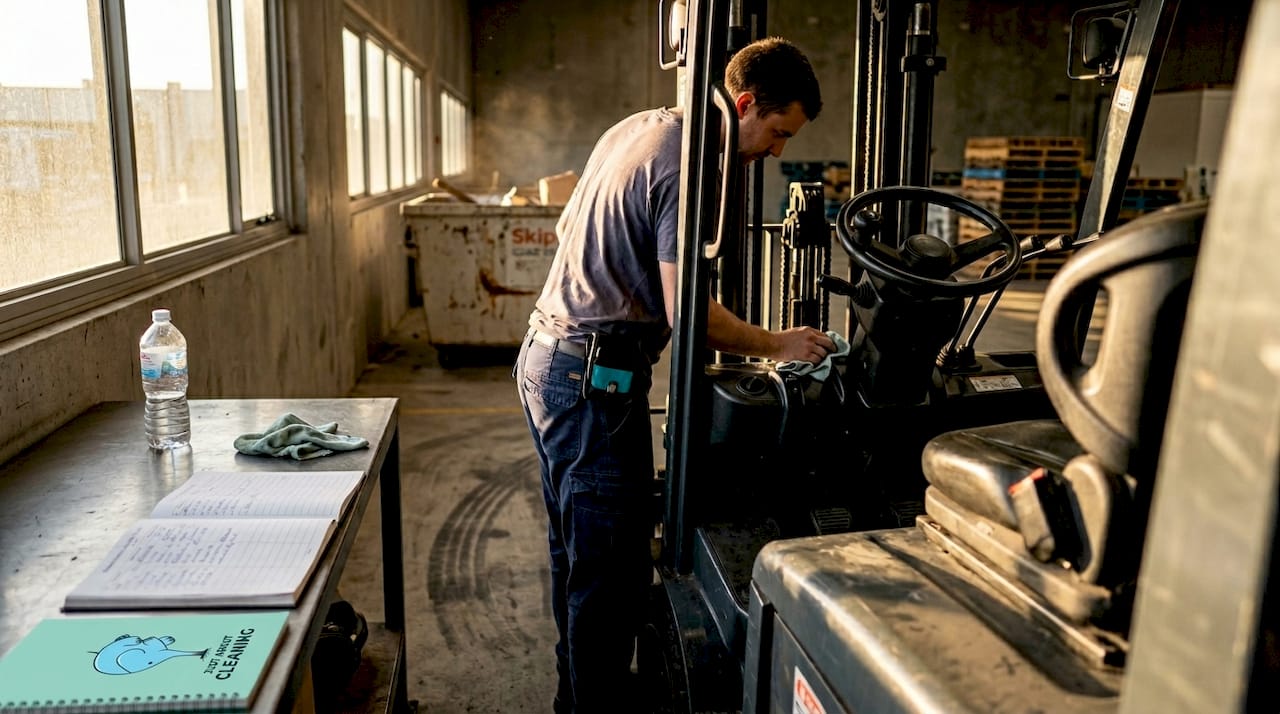
Pro Tip: Keep a cleaning log that records who completed each task, when, and any issues identified. This log becomes your primary evidence of due diligence during a WorkSafe inspection or insurance audit.
The maintenance cleaning benefits of a consistent schedule go beyond compliance. Regular cleaning reduces equipment wear, improves air quality, and keeps your team focused on productive work. Strong hygiene maintenance practices also reduce absenteeism, which is a real cost saving for warehouse operations running on tight margins.
When to use professional cleaning services
In-house cleaning works well for daily and weekly tasks. But there are situations where relying solely on your own team creates genuine compliance risk. Knowing when to bring in professionals is part of managing your warehouse responsibly.
Size is the first factor. A 5,000 square metre distribution centre cannot be adequately cleaned by a small internal team alongside their regular duties. The sheer volume of floor space, racking, and equipment makes thoroughness almost impossible without dedicated resources and industrial-grade equipment.
Risk complexity is the second. Outsourcing cleaning is advised for tasks requiring specialised equipment or training. High-level dust removal from roof beams, chemical spill remediation, and pressure washing of contaminated dock areas all fall into this category. Attempting these without the right training or equipment can create new hazards rather than resolve existing ones.
Here is when professional cleaning becomes essential:
- Your warehouse handles hazardous materials, food products, or pharmaceuticals requiring certified cleaning standards
- You have experienced a significant spill, pest infestation, or contamination event
- An upcoming WorkSafe inspection or client audit requires documented, verifiable cleaning records
- Your team lacks the training or equipment to safely complete high-risk cleaning tasks
- Your facility operates 24 hours and cleaning must occur without disrupting operations
"A professional cleaning partner does not just clean. They provide the documentation, accountability, and expertise that protect your business when it matters most."
The DIY risk is real. Without a properly prepared SWMS for high-risk cleaning tasks, you are exposed to WHS Act penalties. Without documented records, you have no defence during an audit. Professional cleaners who specialise in warehouse environments bring both the physical work and the paperwork.
Pro Tip: When engaging a cleaning contractor, ask for their SWMS documentation, public liability insurance certificate, and evidence of staff training. These are non-negotiable for compliance purposes.
Investing in deep cleaning compliance through a professional service is far less costly than a WorkSafe improvement notice or a workers compensation claim. A commercial hygiene cleaning guide can also help you benchmark what a professional standard looks like before you engage a provider.
Hard truths: why warehouse cleaning compliance falls through the cracks
After working with warehouse operations across Australia, we have seen the same pattern repeat. Cleaning compliance fails not because managers are careless, but because cleaning gets treated as an afterthought rather than a core operational function.
The most common pitfall is the tickbox mentality. A cleaning roster gets created, tasks get signed off, and everyone assumes compliance is handled. But if no one is accountable for quality, documentation is inconsistent, and issues go unreported, that roster is just paper.
Unclear accountability is the second failure point. When cleaning is everyone's responsibility, it often becomes no one's. High-performing warehouse managers assign specific cleaning ownership to specific roles and build it into shift handover processes.
The managers who genuinely stay compliant treat cleaning as part of their cleaning workflow efficiency strategy. They integrate cleaning into the rhythm of operations, not as a separate burden. They review cleaning logs the same way they review production reports. That cultural shift is what separates warehouses that pass audits from those that scramble before them.
Professional warehouse cleaning made easy
Maintaining a compliant, safe warehouse is a significant responsibility. The regulatory landscape is layered, the risks are real, and the documentation requirements are demanding. A professional cleaning partner takes the pressure off your team and ensures nothing falls through the cracks.
At Just About Cleaning, we specialise in warehouse and commercial cleaning across Australia, with over 15 years of experience supporting businesses to meet WHS obligations. Our trained crews arrive with the right equipment, documented SWMS, and a cleaning programme tailored to your facility's specific risk profile. We help you stay audit-ready, protect your team, and maintain a standard that reflects well on your business every single day.
Frequently asked questions
How often should a warehouse be cleaned under Australian law?
There is no fixed cleaning schedule under Australian law. Warehouses must maintain cleanliness based on operational risk and safety hazards, as guided by Safe Work Australia.
Do I need a Safe Work Method Statement (SWMS) for warehouse cleaning?
Yes. The WHS Act 2011 requires SWMS for high-risk cleaning tasks, including those involving chemicals, elevated work, or confined spaces.
Which standards cover warehouse fire safety cleaning?
Warehouse fire safety cleaning must align with the NCC fire safety requirements to ensure clear hydrant access and compliance with emergency planning obligations.
What are common compliance gaps in warehouse cleaning?
Missed tasks, poor documentation, obstructed emergency routes, and unaddressed dust accumulation are the most frequent issues identified during WorkSafe inspections and insurance audits.
When should professional cleaning services be engaged?
Outsource cleaning tasks that require specialised equipment or present elevated risk to workers, particularly for high-level dust removal, chemical spill clean-up, and pre-audit deep cleaning.
Recommended
- Office cleaning standards explained for Australian businesses 2026
- Master the deep cleaning process: compliant workplaces
- How to clean commercial offices for hygienic workplaces
- How cleaning standards boost compliance and safety: 34% fewer infections
- Commercial Drain Cleaning: Prevent Disruption and Stay Compliant
- Detailed cleaning guide for builders: post-construction success