
TL;DR:
- Regular, structured cleaning routines are essential for workplace hygiene, safety, and morale.
- In-house cleaning often costs more and involves hidden expenses compared to hiring professional services.
- Adapting cleaning checklists to specific office needs ensures optimal infection control and compliance.
A poorly maintained office doesn't just look untidy. It creates real risks: higher staff sick days, potential WHS liability, and a workspace that quietly undermines team morale. Research consistently shows that cleanliness directly affects productivity and employee confidence, yet many Australian businesses still rely on ad hoc routines that miss critical tasks. Whether you manage a small city office or a multi-floor commercial building, having a structured, expert-backed checklist changes everything. This guide walks you through every level of office cleaning, from daily essentials to monthly deep cleans, compliance requirements, and cost decisions, so you can maintain a genuinely hygienic workplace.
Table of Contents
- Daily cleaning essentials for Australian offices
- Weekly and monthly cleaning checklist breakdown
- How to clean safely: Products, protocols and compliance
- Office cleaning compliance: WHS, safety, and legal obligations
- Cost comparison: In-house vs professional office cleaning
- A fresh perspective: One checklist doesn't fit all offices
- Professional help for spotless offices
- Frequently asked questions
Key Takeaways
| Point | Details |
|---|---|
| Daily hygiene matters | Consistent daily cleaning of bins, high-touch points, and washrooms keeps staff safe and productive. |
| Schedule deep cleans | Monthly tasks like carpet steam and vent dusting maintain long-term office hygiene and asset value. |
| Comply with WHS rules | Adhering to WHS standards prevents fines, liability, and illness. |
| Weigh cleaning costs | Professional cleaning often costs less than in-house options and reduces operational risk. |
| Customise your checklist | Adapt cleaning lists to your specific office environment for reliable outcomes. |
Daily cleaning essentials for Australian offices
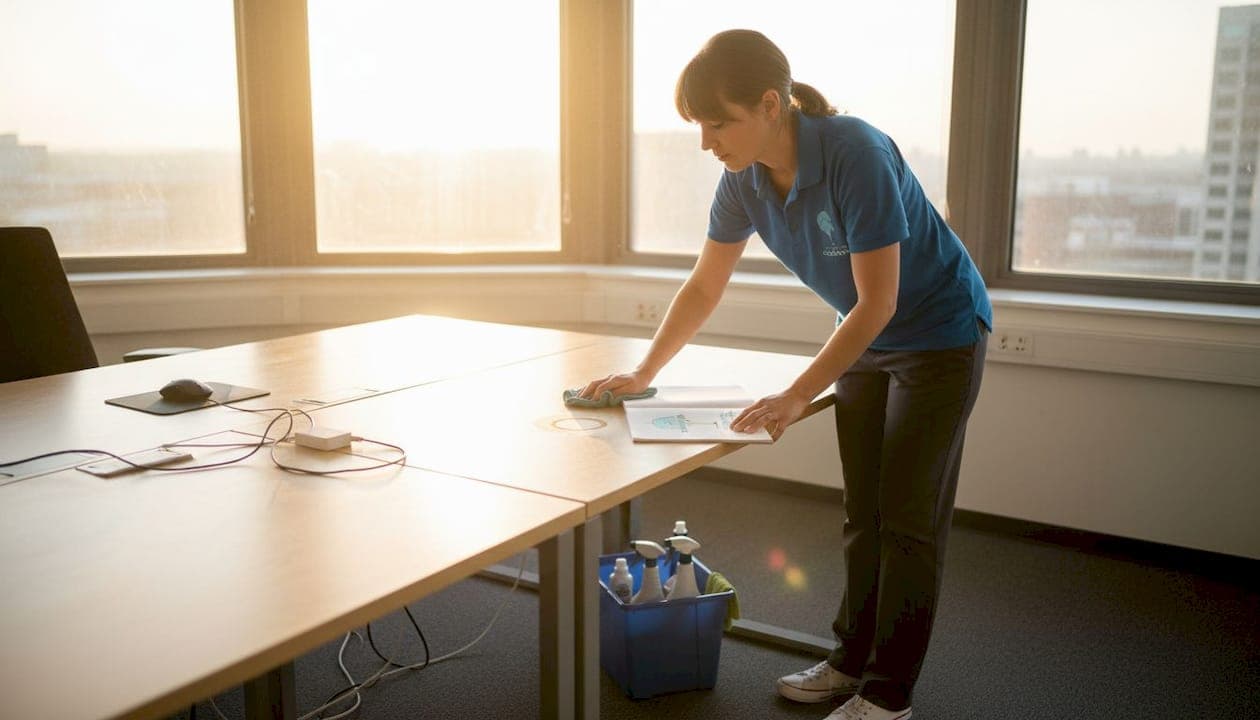
The foundation of any effective office cleaning programme is a reliable daily routine. Without it, germ loads accumulate rapidly on the surfaces your team touches most. High-touch surfaces, waste removal, and floor maintenance in high-traffic areas are the core focus of daily cleaning to prevent germ spread and maintain hygiene. Getting this right every single day is non-negotiable.
Here are the daily tasks that should appear on every office cleaning checklist:
- Empty all bins in workstations, kitchens, and restrooms
- Disinfect high-touch surfaces: door handles, light switches, lift buttons, phones, and keyboards
- Spot-clean floors in entry areas, corridors, and kitchens
- Sanitise restrooms: toilets, basins, taps, dispensers, and floors
- Wipe down kitchen benches, sinks, and appliance exteriors
- Clean glass entry doors and reception surfaces
- Restock consumables: soap, paper towels, and toilet paper
The technique matters just as much as the task list. Always follow the clean-then-disinfect sequence: remove visible dirt and debris first, then apply disinfectant and allow the correct contact time. Skipping the cleaning step means disinfectant can't work effectively, as organic matter neutralises its action.
Scheduling matters too. High-traffic areas like restrooms and kitchens benefit from a midday check in addition to the morning clean. This is especially important in offices with more than 20 staff. Building hygienic office cleaning routines around peak usage times reduces the risk of cross-contamination significantly.
"A clean workspace signals to your team that their health and comfort matter. That message is communicated every single morning before anyone sits down."
Pro Tip: Don't overlook areas below desk height. Chair bases, cable trays, and the undersides of desks harbour dust and bacteria that standard wipe-downs miss. Add these to a rotating daily spot-check schedule to stay ahead.
For teams managing multiple floors or zones, reviewing your office cleaning workflow tips can help you sequence tasks efficiently and avoid doubling up on effort.
Weekly and monthly cleaning checklist breakdown
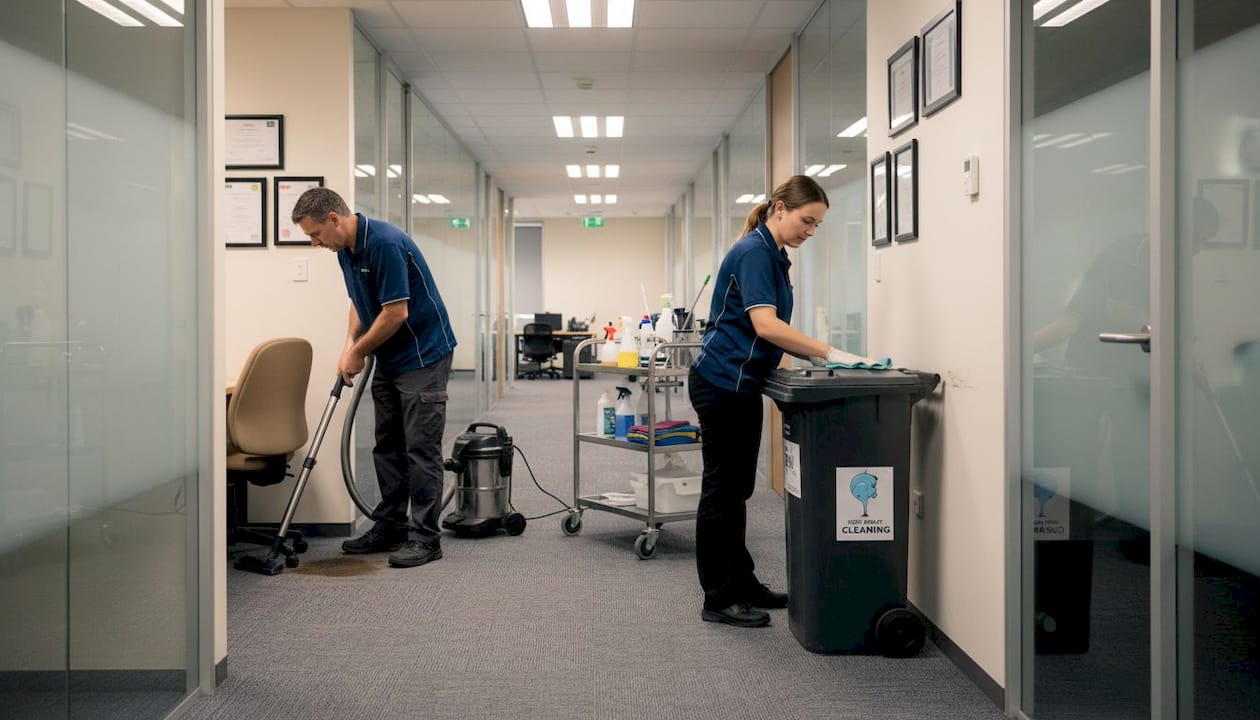
Daily cleaning keeps your office presentable and hygienic. But it's the weekly and monthly tasks that protect your assets, preserve air quality, and prevent the kind of build-up that becomes expensive to fix. Monthly tasks cover deep cleans like carpet shampooing, vent dusting, high-level surfaces, and equipment deep sanitisation for asset preservation.
Here's a clear breakdown of what belongs on each schedule:
| Task | Weekly | Monthly |
|---|---|---|
| Vacuum all carpeted areas | ✓ | |
| Mop hard floors thoroughly | ✓ | |
| Wipe internal glass and partitions | ✓ | |
| Clean microwave and fridge interiors | ✓ | |
| Dust blinds and window sills | ✓ | |
| Steam clean or shampoo carpets | ✓ | |
| Clean and inspect air vents and ducts | ✓ | |
| Sanitise air purifiers and filters | ✓ | |
| High-level dusting (ceiling fans, tops of cabinets) | ✓ | |
| Deep sanitise all appliances | ✓ | |
| Wash bins and bin surrounds | ✓ |
To assign and manage these tasks effectively, follow this approach:
- Create a responsibility matrix: assign each task to a specific person or contractor role
- Use a digital checklist tool so completions are logged and visible to management
- Schedule monthly tasks on a fixed calendar date to prevent them from being pushed back
- Review the checklist quarterly to adjust for seasonal changes or office layout updates
- Document all completions for WHS and insurance purposes
Understanding deep cleaning processes helps you set realistic expectations for time and resource allocation. The deep cleaning benefits extend beyond appearance, including improved indoor air quality and longer asset lifespan.
Pro Tip: Carpet steam cleaning every month in high-traffic zones, rather than every quarter, can reduce replacement costs by up to 30% over five years. Treat it as a maintenance investment, not a luxury.
How to clean safely: Products, protocols and compliance
Maintaining quality goes beyond what you clean. It's also about how you clean, and with which products. Using the wrong cloth in the wrong area, or applying disinfectant without the correct contact time, can spread contamination rather than eliminate it.
Colour-coded microfibre cloths, Australian-registered disinfectants, a clean-then-disinfect sequence, and top-to-bottom cleaning are all essential to avoid cross-contamination. Here's a quick reference for colour coding:
| Cloth colour | Area of use | Product focus |
|---|---|---|
| Blue | General surfaces, desks, reception | Multi-surface disinfectant |
| Red | Toilets and urinals | Toilet-grade disinfectant |
| Yellow | Sinks, basins, and bathroom surfaces | Bathroom cleaner |
| Green | Kitchen and food prep areas | Food-safe sanitiser |
Beyond colour coding, there are several compliance requirements every cleaning team must follow:
- Safety Data Sheets (SDS) must be accessible for every chemical product used on site
- Contact times must be observed: most disinfectants require 30 to 60 seconds of wet contact to be effective
- PPE including gloves and eye protection must be worn when handling concentrated chemicals
- Top-to-bottom cleaning prevents dust and debris from falling onto already-cleaned surfaces
- Ventilation must be adequate when using aerosol or solvent-based products
When selecting products, prioritise those registered with the Australian Pesticides and Veterinary Medicines Authority (APVMA) for disinfectant claims. Understanding office cleaning standards in 2026 is critical for staying compliant, particularly in sectors like healthcare or childcare.
For day-to-day guidance, a solid office hygiene maintenance approach keeps protocols consistent across staff changes. If sustainability is a priority for your organisation, exploring eco-friendly cleaning options can reduce chemical exposure while maintaining hygiene outcomes.
Office cleaning compliance: WHS, safety, and legal obligations
Even the best cleaning routine can lead to problems if safety and compliance aren't at the forefront. Under Australian law, office cleaning is directly tied to your duty of care obligations. WHS compliance requires SWMS, hazard controls, PPE, and proper documentation, with cleaning firmly linked to duty of care under the WHS Act.
Key safety protocols every facility manager should have in place include:
- Safe Work Method Statements (SWMS) for any high-risk cleaning tasks, including working at heights or using industrial chemicals
- Hazard identification registers updated whenever new products or equipment are introduced
- Emergency procedures for chemical spills, including access to eyewash stations and spill kits
- Regular PPE audits to ensure gloves, masks, and protective eyewear are available and in good condition
- Incident reporting logs documenting any cleaning-related near misses or injuries
ATP (adenosine triphosphate) testing is one of the most reliable ways to verify surface cleanliness beyond what the eye can see. Many compliant facilities now use ATP testing monthly to validate their cleaning outcomes and provide documented evidence for audits.
"Workplace health and safety legislation in Australia places a positive duty on employers to maintain a safe working environment. That includes the hygiene and condition of the physical workspace."
Non-compliance carries serious consequences. Fines under the WHS Act can reach hundreds of thousands of dollars for businesses that fail to demonstrate adequate hazard control. Beyond financial penalties, liability for staff illness linked to a poorly maintained environment can result in significant legal exposure.
For teams managing broader facility operations, reviewing warehouse cleaning compliance requirements offers useful parallels. Staying current with cleaning compliance in 2026 ensures your documentation and procedures reflect the latest regulatory expectations.
Cost comparison: In-house vs professional office cleaning
With safety in place, the next practical decision is how to secure the best value when structuring your cleaning operations. The cost difference between in-house and contracted cleaning is often larger than facility managers expect once all variables are accounted for.
Professional cleaning costs $40 to $65 per hour, or roughly $25,000 to $37,000 per year for a 500sqm office cleaned weekly. In-house arrangements typically run 40 to 50% more once you factor in superannuation, leave entitlements, insurance, equipment, and training.
| Cost factor | Professional contractor | In-house staff |
|---|---|---|
| Hourly rate | $40 to $65 | $28 to $38 (base wage) |
| Superannuation | Included | Additional 11.5% |
| Annual leave and sick leave | Included | Additional 17.5% loading |
| Equipment and consumables | Included | $3,000 to $8,000/year |
| Training and compliance | Included | $1,500 to $4,000/year |
| Insurance and liability | Contractor's responsibility | Business's responsibility |
Hidden costs are where in-house arrangements tend to blow out. Replacing equipment, covering absences, and managing WHS compliance for cleaning staff all add up quickly.
"We switched to a professional cleaning contractor after two years of managing in-house. The cost was actually lower, and we no longer had to deal with staff call-ins or equipment breakdowns."
To decide which model suits your operation, work through this checklist:
- Calculate your true in-house cost including all on-costs and equipment
- Get at least three quotes from licensed commercial cleaning contractors
- Assess the compliance support each contractor provides
- Consider reliability: what happens when a cleaner is sick?
- Review contract flexibility: can the scope scale up or down with your needs?
A fresh perspective: One checklist doesn't fit all offices
After more than 15 years working across commercial environments, we've seen one pattern repeat itself: businesses implement a checklist, follow it faithfully, and still end up with hygiene gaps. The reason is almost always the same. The checklist wasn't designed for their specific environment.
A hot-desking office with 80 staff rotating through 40 workstations carries a completely different contamination risk profile than a traditional assigned-desk layout. A medical administration office has different disinfection requirements than a retail back office. Treating them identically is where well-intentioned cleaning programmes fall short.
Smart facility managers treat their checklist as a living document. They review it when headcount changes, when the office layout shifts, or when a new industry standard is published. They ask: does this checklist reflect our actual risk? Does it account for the surfaces our people touch most?
The businesses that maintain the cleanest, most compliant workplaces aren't necessarily the ones with the longest checklists. They're the ones who review and adapt their approach regularly, and who understand that a checklist is a starting point, not a final answer.
Professional help for spotless offices
Managing every element of this checklist in-house is a significant operational commitment. For many facility managers and business owners, partnering with a specialist cleaning provider is the most reliable way to maintain consistent standards without the administrative burden.
At Just About Cleaning, we bring over 15 years of experience delivering compliant, tailored office cleaning solutions across Australia. Our trained crews follow documented protocols aligned with WHS requirements, use Australian-registered products, and provide the kind of reliability that in-house arrangements often can't match. Whether you need daily maintenance, monthly deep cleans, or a fully managed programme, we can build a solution around your specific workspace and budget.
Frequently asked questions
What should be included in a daily office cleaning checklist?
Everyday office cleaning should include bin emptying, wiping high-touch surfaces, spot-cleaning floors, and sanitising restrooms and kitchen areas to prevent germ spread.
How often should carpets and vents be professionally cleaned in offices?
Carpets and vents should be deep cleaned monthly to prevent mould, dust build-up, and preserve indoor air quality in commercial environments.
Why are colour-coded cloths and registered disinfectants important?
Colour-coded microfibre cloths reduce cross-contamination between areas, and registered disinfectants ensure proper germ removal in line with Australian standards.
What are the legal risks if WHS office cleaning protocols aren't followed?
Failure to document and control cleaning can lead to significant fines, liability for staff illness, and business disruption under the WHS Act duty of care obligations.