
TL;DR:
- Proper spill response plans and regular training are essential to prevent costly incidents in industrial facilities.
- Using HEPA and microfibre tools improves dust control, air quality, and worker safety.
- Hygiene zoning, color coding, and a safety culture ensure contamination prevention and audit compliance.
Industrial cleaning in Australia carries real weight. A poorly managed spill, a dusty extraction vent, or an unmarked contamination zone can trigger not just a WorkSafe incident but costly shutdowns, failed audits, and serious harm to workers. Facility managers in manufacturing, warehousing, and processing environments face relentless pressure to keep operations moving while maintaining hygiene standards that satisfy both regulators and clients. This article lays out practical, evidence-backed strategies to help you sharpen your cleaning protocols, protect your people, and stay ahead of compliance requirements.
Table of Contents
- Establishing robust spill response and training
- Optimising dust control with HEPA and microfibre systems
- Preventing cross-contamination with hygiene zoning and colour coding
- Cutting costs with industrial wipes and modern cleaning solutions
- Aligning cleaning routines with compliance and efficiency standards
- Our take: What many managers overlook about industrial cleaning success
- Next steps: Professional support for industrial cleaning success
- Frequently asked questions
Key Takeaways
| Point | Details |
|---|---|
| Prevent accidents fast | Spill response kits and staff training are essential for safe, compliant floors. |
| Cut airborne risks | HEPA vacuums and microfibre tools keep dust and respiratory hazards in check. |
| Stop cross-contamination | Colour coding and strict zone protocols protect product quality and staff health. |
| Save money upgrading tools | Modern wipes can drastically reduce rework and operational costs. |
| Document everything | Routine audits and digital checklists keep you ready for compliance checks year-round. |
Establishing robust spill response and training
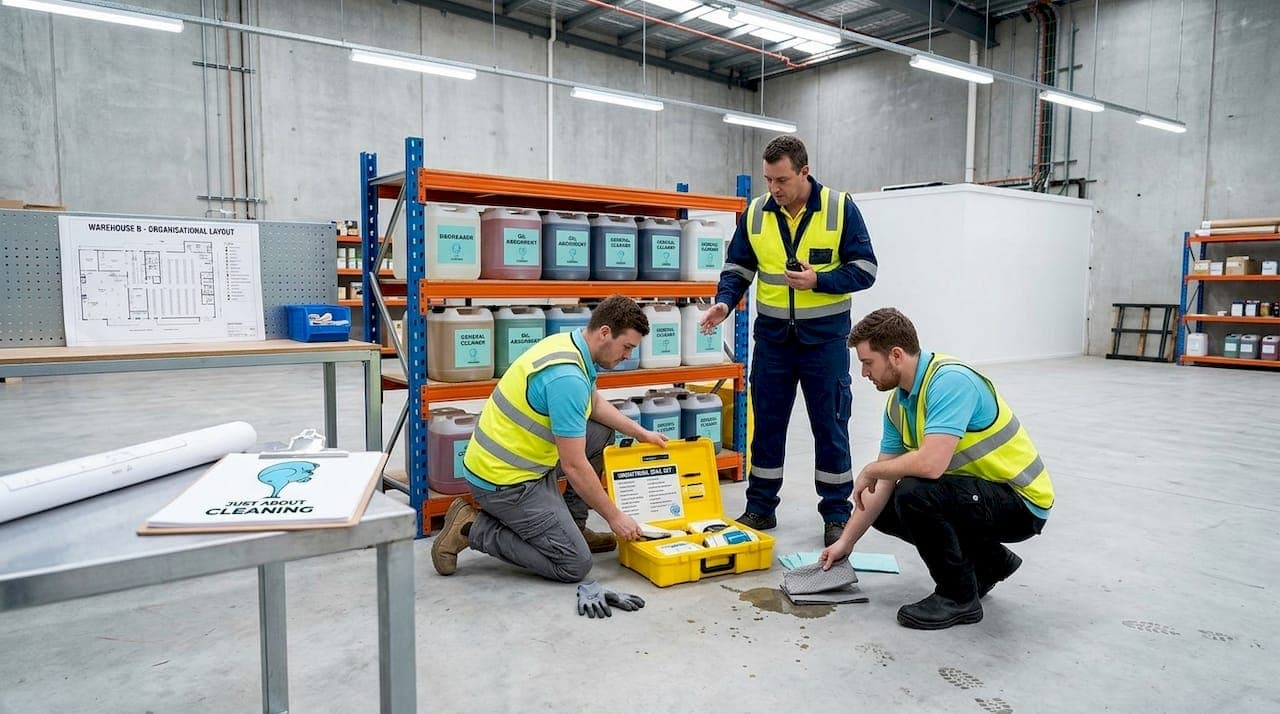
Spills are one of the most immediate and costly hazards in any industrial facility. From chemical leaks to oil residues and food-grade liquids, the range of spill types demands a structured, pre-planned response rather than an improvised one. The first step is identifying your high-risk spill zones. These are typically areas near machinery, loading bays, chemical storage, and production lines where liquids are frequently handled. Once mapped, these zones should have dedicated spill response kits positioned within arm's reach, not stored in a storeroom three corridors away.
Spill response kits and plans are essential for immediate containment in industrial settings to prevent slips and contamination. Each kit should be matched to the type of liquid most likely to spill in that zone. A solvent-heavy manufacturing floor needs absorbents rated for hydrocarbons, while a food processing area requires food-safe neutralisers and disposable equipment.
Training is just as critical as the physical kit. Every worker on the floor, not just the cleaning crew, should know the basic containment steps. This matters because the first person to notice a spill is usually the one operating the nearest machine, not a dedicated cleaner. Consider running quarterly spill response drills so the response becomes instinctive. These drills also highlight gaps in your kit placement or signage that might otherwise go unnoticed until an incident occurs.
Key actions for immediate spill risk management include:
- Post clear spill response instructions at each designated zone
- Ensure PPE including gloves, goggles, and chemical-resistant footwear is stored with each kit
- Label disposal bins for contaminated absorbents separately from general waste
- Assign a named spill warden for each shift so accountability is never ambiguous
- Review and restock kits after every incident or drill
When you standardise your approach for office cleaning for hygiene, the same principle of preparation over reaction applies equally to heavy industrial floors.
"The facilities that handle spills fastest are never the ones with the biggest budgets. They're the ones with the clearest plans and the most regularly trained teams."
Pro Tip: Schedule a spill response drill at the start of each quarter, rotating which shift participates. This keeps all teams equally prepared and surfaces equipment issues before a real event does.
Optimising dust control with HEPA and microfibre systems
Beyond spills, dust and airborne particles are a silent but persistent risk in industrial environments. Sawdust, metal filings, chemical residues, and fine particulate matter from production processes can accumulate rapidly. Standard vacuum cleaners and dry dusters are simply inadequate for this scale of work. They often redistribute fine particles back into the air rather than capturing them, creating a false sense of cleanliness while actually increasing respiratory exposure.
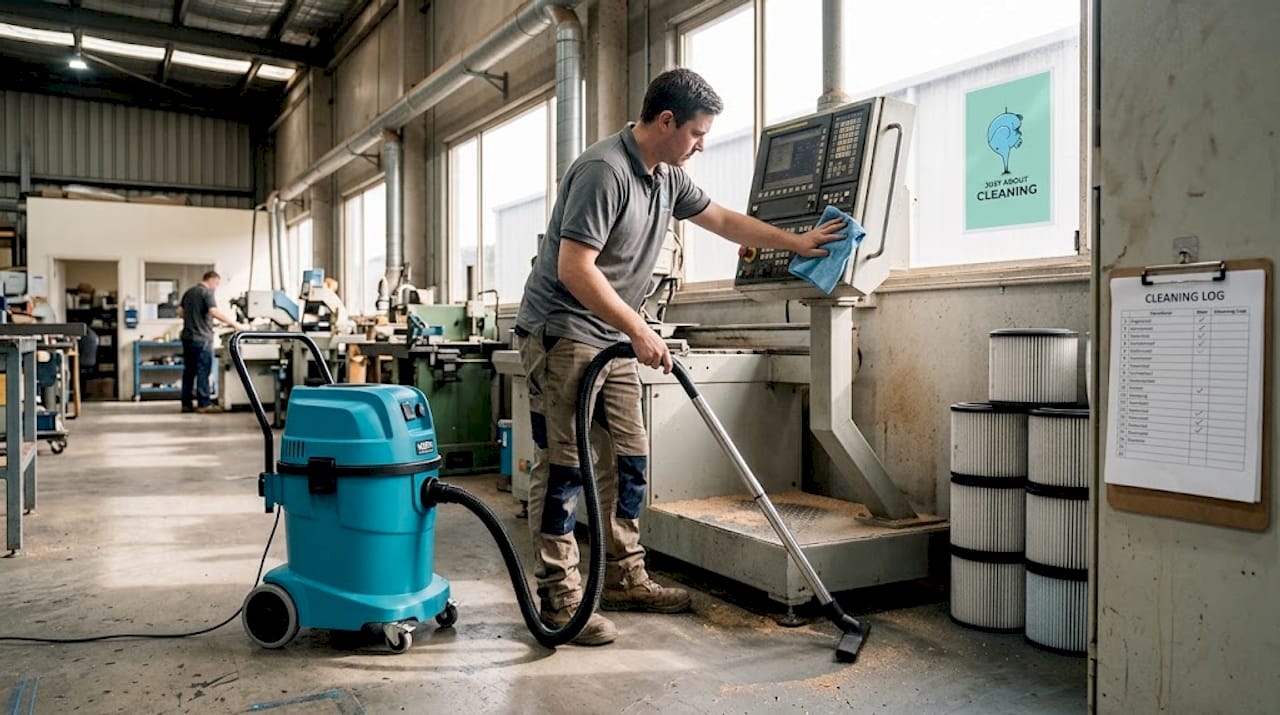
HEPA vacuums and microfibre tools dramatically outperform standard equipment in dust control and air quality protection. HEPA (High Efficiency Particulate Air) filters capture particles as small as 0.3 microns with 99.97% efficiency, making them the standard for environments where fine dust poses a health risk.
Here is a comparison of dust removal methods commonly used in Australian industrial facilities:
| Cleaning method | Particle capture rate | Air quality impact | Typical cost |
|---|---|---|---|
| Standard vacuum | 60 to 70% | Moderate, some re-dispersal | Low |
| HEPA vacuum | 99.97% | High, minimal re-dispersal | Moderate to high |
| Microfibre cloth | 99% (surface) | High, traps rather than spreads | Low |
| Traditional duster | 40 to 50% | Poor, spreads particles | Very low |
Implementing a structured dust reduction protocol involves these steps:
- Map dust generation points across your facility, including grinding stations, conveyor joints, HVAC outlets, and storage racks.
- Schedule HEPA vacuuming of high-risk zones at least once per shift, not just at end-of-day.
- Issue microfibre cloths to machine operators for regular surface wipe-downs between production runs.
- Inspect and replace HEPA filters according to the manufacturer's guidance, typically every three to six months under heavy industrial use.
- Monitor air quality with particulate counters at quarterly intervals to verify your protocol is working.
Part of deep cleaning for compliance in industrial settings is ensuring your dust control systems are documented and verifiable, not just informally maintained.
Pro Tip: Keep a filter replacement log attached directly to each HEPA unit. It removes ambiguity, supports audits, and makes it easy for any cleaner on any shift to see when the filter was last changed.
Preventing cross-contamination with hygiene zoning and colour coding
Once you have spill and dust protocols in place, the next challenge is stopping contaminants from migrating between different areas of your facility. In manufacturing and food processing environments especially, a pathogen or chemical residue carried from one zone to another on a mop head or cloth can compromise product quality, trigger regulatory action, and endanger workers.
Hygiene zoning means physically and procedurally separating your facility into distinct cleaning areas, each with its own dedicated tools and protocols. Hygiene zoning and colour-coded tools prevent cross-contamination in manufacturing by ensuring that equipment used in high-risk zones never enters low-risk areas. This is not a suggestion for larger facilities. It is a baseline requirement for any site that handles food, pharmaceuticals, or hazardous chemicals.
Colour coding typically follows an industry-standard system, though you can adapt it to your site's specific needs:
| Colour | Designated zone | Example use |
|---|---|---|
| Red | High-risk contamination areas | Chemical storage, waste handling |
| Blue | General production areas | Assembly lines, packaging |
| Green | Food-safe or food-contact zones | Food processing, canteens |
| Yellow | Sanitary areas | Washrooms, change rooms |
| White | Clean rooms or sterile zones | Pharmaceutical, medical manufacturing |
Reinforcing these zones requires more than a colour chart on the wall. Physical barriers, floor markings, and zonal entry checklists all contribute to a system that workers follow instinctively. When combined with regular supervision and visible signage, optimise cleaning workflow outcomes improve measurably across both time and quality.
Steps to implement a colour-coded cleaning plan:
- Conduct a full zone risk assessment before assigning colours to areas
- Purchase colour-matched mops, buckets, cloths, and brushes for each zone
- Brief all staff, including non-cleaning personnel, on the zoning system
- Post zone maps at entry points and in cleaning supply rooms
- Conduct monthly audits to check that tools have not migrated between zones
Facilities that implement rigorous zoning report measurable reductions in internal contamination incidents. While exact figures vary by sector, well-documented zoning protocols are a standard expectation during food safety and ISO compliance audits in Australia.
Cutting costs with industrial wipes and modern cleaning solutions
Upgrading your cleaning materials is often resisted on cost grounds, but the data tells a different story. Industrial-grade wipes, for instance, are engineered for specific surface types and contaminants, delivering faster cleaning times and reducing the need for rework on machinery or components.
A compelling example comes from an assembly line case study where industrial wipes reduced rework rate from 1.2% to 0.3%, generating annual savings of RMB 780,000. The mechanism was straightforward: standard cloths were leaving residues that caused product defects, while industrial wipes with the correct solvent formulation removed contaminants cleanly and consistently. The return on the wipe upgrade paid for itself within the first production quarter.
Here is a before-and-after comparison relevant to Australian industrial sites considering a similar upgrade:
| Metric | Before upgrade | After upgrade |
|---|---|---|
| Rework rate | 1.2% | 0.3% |
| Cleaning time per station | 18 minutes | 11 minutes |
| Product defect complaints | 14 per month | 4 per month |
| Annual material waste cost | High | Reduced by est. 60% |
When sourcing industrial wipes or new cleaning materials, consider:
- Compatibility with your specific surface materials and chemicals used on site
- Whether the wipe is lint-free, as lint can cause defects in precision manufacturing
- Disposal requirements, particularly for chemically saturated wipes
- Supplier reliability and the availability of product safety data sheets
- Whether eco-friendly or biodegradable options align with your ESG commitments
"The benefits of deep cleaning extend beyond hygiene. When the right materials are matched to the right tasks, the savings in rework, downtime, and product loss often exceed the cost of the upgrade many times over."
Aligning cleaning routines with compliance and efficiency standards
Tools, products, and zones only deliver results if they sit inside a well-structured daily routine. For industrial facilities, that means aligning cleaning cycles with production schedules rather than running them in parallel or, worse, in conflict with operations. The 5S methodology, which stands for Sort, Set in order, Shine, Standardise, and Sustain, provides a proven framework for integrating cleaning into everyday workflow rather than treating it as a separate activity.
5S methodology helps align cleaning with production cycles for efficiency while generating the documentation required for compliance audits. In practice, the "Shine" phase of 5S is where cleaning standards are defined and scheduled. The "Standardise" phase is where those standards are written into verifiable procedures.
Steps to integrate cleaning cycles into daily operations:
- Map your production schedule and identify the natural break points where cleaning can occur without halting output.
- Assign cleaning tasks to specific roles and shifts rather than leaving them as general responsibilities.
- Create written cleaning procedures for each zone that specify the tools, products, frequency, and acceptance criteria.
- Train staff on these procedures with sign-off records kept on file for audit purposes.
- Review and update procedures after any incident, equipment change, or audit finding.
Recordkeeping is not optional in a compliance-focused environment. Cleaning logs, incident records, and product safety data sheets all form part of the paper trail that inspectors and auditors review. Digital checklists, accessed via tablet or phone, make this considerably easier and reduce the risk of incomplete records. For further guidance on cleaning standards guidance and quality cleaning benchmarks, these resources provide relevant frameworks applicable to Australian industrial settings.
Pro Tip: Use digital checklist software that timestamps each completed task and captures the worker's name. This creates an automatic audit trail that is far more reliable than a paper sign-off sheet, and it takes less time for your team to complete.
Our take: What many managers overlook about industrial cleaning success
After working across industrial and commercial sites in Australia for over 15 years, the pattern is consistent. Facilities that struggle with cleaning compliance rarely fail because of a shortage of equipment or budget. They fail because their cleaning plan is rigid, their workers are disengaged, and there is no feedback loop to identify what is going wrong before an auditor or an incident does.
The most overlooked factor in industrial cleaning success is culture. When cleaning is seen as someone else's job, the system breaks down at the first pressure point. Production deadlines, short staffing, and equipment breakdowns all push cleaning to the side when it has not been embedded into the operational culture of the facility.
The organisations that consistently pass audits and maintain safe environments are the ones where line managers, not just cleaning supervisors, treat hygiene as part of their KPIs. They run cross-department audits where team members from production walk through and review cleaning standards in adjacent zones. This approach builds accountability, surfaces risks that specialists might normalise over time, and generates the kind of achieving high compliance outcomes that become self-sustaining rather than dependent on external pressure.
"The hardest thing to change in a facility is not the equipment or the product. It is the assumption that cleaning will get done without clear ownership, visible standards, and regular measurement."
Data-driven feedback loops matter too. If you are not tracking defect rates, incident counts, and audit outcomes against your cleaning schedule, you cannot know whether your protocols are working. Even a simple monthly review of these metrics, compared against cleaning logs, will reveal patterns that no amount of training can replace.
Pro Tip: Run a cross-department cleaning audit once per quarter. Pair a team member from production with a member of the cleaning crew and have them inspect each other's zones. Fresh eyes consistently find issues that routine inspection misses.
Next steps: Professional support for industrial cleaning success
Implementing everything covered in this article is achievable, but it takes time, expertise, and ongoing commitment. For many facility managers, partnering with a professional cleaning provider accelerates that process considerably.
At Just About Cleaning Australia, our experienced teams work directly with industrial and commercial clients to develop custom cleaning protocols, implement compliant zoning systems, and deliver consistent results across demanding environments. We bring over 15 years of experience, trained onsite crews, and eco-friendly practices aligned with ESG principles to every engagement. Whether you need a full audit of your current cleaning programme, specialist support for a warehouse or manufacturing site, or a flexible service arrangement that fits around your production schedule, our industrial cleaning specialists are ready to assist. Reach out today for a tailored consultation and workflow assessment specific to your facility's needs.
Frequently asked questions
How often should industrial floors be cleaned?
Industrial floors should be cleaned daily in high-traffic or production zones, and immediately after any spill, to prevent slips and maintain compliance with Australian workplace safety standards. Regular floor cleaning is a baseline requirement, not a periodic task.
What are the benefits of using HEPA filters in industrial settings?
HEPA vacuums trap fine particles at 99.97% efficiency, significantly improving air quality and reducing respiratory risks for workers exposed to dust and fine particulate matter. HEPA-based dust control is the recognised best practice for industrial environments.
How does colour coding in cleaning tools prevent contamination?
Colour-coded tools ensure that mops, cloths, and buckets used in high-risk zones are never used elsewhere, physically preventing the transfer of pathogens and chemical residues between areas. Colour-coded hygiene systems are a standard expectation in food processing and pharmaceutical manufacturing compliance audits.
What cleaning methods help pass compliance audits?
Documented cleaning routines, zone-specific procedures, completed checklists, and consistent recordkeeping are the foundations of audit readiness in Australian industrial facilities. 5S-aligned cleaning systems provide both the structure and the paper trail that auditors require.
Is it cost-effective to upgrade to industrial wipes?
Switching to industrial-grade wipes can reduce rework rates dramatically, with documented case studies showing a drop from 1.2% to 0.3% rework and significant annual savings, making the upgrade cost-effective in most production environments.
Recommended
- Master the deep cleaning process: compliant workplaces
- How to clean commercial offices for hygienic workplaces
- Warehouse cleaning requirements: ensure compliance and safety
- How cleaning standards boost compliance and safety: 34% fewer infections
- 6 Expert Commercial Stone Care Tips for Facility Managers