
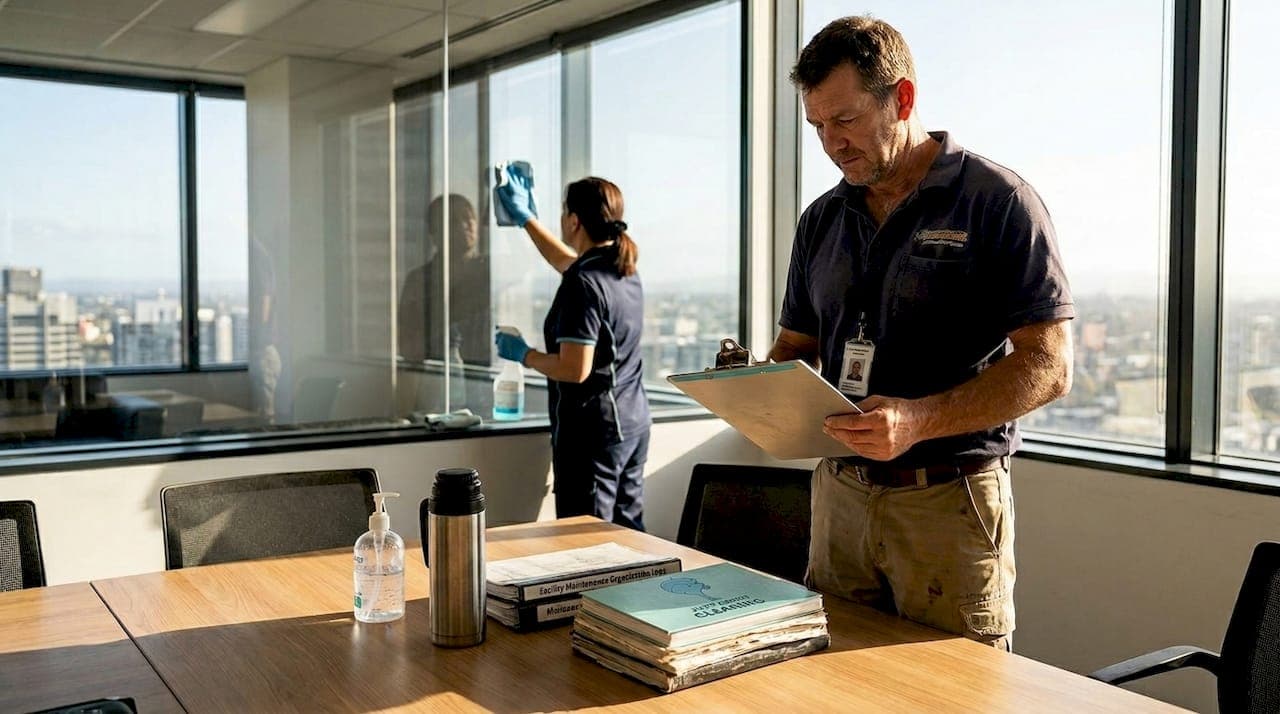
TL;DR:
- Australian cleaning standards are tightening, with benchmarks like 95% audit pass rates by 2026.
- Meeting standards involves documented processes, regular audits, sector-specific protocols, and continual improvement.
- Exceeding standards requires fostering a cleaning culture, ongoing staff training, and thorough documentation.
Cleaning standards in Australia are tightening, and 2026 is bringing sharper audit benchmarks, stricter Work Health and Safety obligations, and rising expectations from clients across every sector. For business owners and facility managers, falling short is no longer just an operational inconvenience. It carries real consequences: failed audits, regulatory penalties, damaged reputation, and increased health risks for staff and visitors. This article walks you through the key criteria that define top cleaning standards in Australia right now, the frameworks you need to know, and the practical steps to not just meet those benchmarks but consistently exceed them.
Table of Contents
- Key criteria: What defines top cleaning standards in 2026?
- Routine vs deep cleaning: Setting and surpassing industry benchmarks
- Australian standards: Flooring, textiles and surface hygiene compliance
- WHS and high-risk cleaning: Chemical safety and sector-specific protocols
- The real-world challenge: Why exceeding cleaning standards isn't just about the checklist
- Next steps: How to ensure compliance and cleaning excellence
- Frequently asked questions
Key Takeaways
| Point | Details |
|---|---|
| Benchmark clarity | Top cleaning standards in 2026 are defined by clear audit scores and regulatory frameworks. |
| Routine vs deep cleaning | Regular deep-clean cycles are essential to meet and maintain compliance, not just daily routines. |
| Standards by area | Different surfaces, floors, and environments in Australia require tailored standards and frequencies. |
| Safety and high-risk protocols | WHS laws and special environments demand extra protocols for chemicals, hazardous dusts, and infection risks. |
| Culture of compliance | Going beyond checklists drives better business outcomes and improves workplace health and audit performance. |
Key criteria: What defines top cleaning standards in 2026?
Before you can improve your cleaning programme, you need to understand what "top standard" actually means in measurable terms. It is not simply about surfaces looking clean. It is about documented processes, consistent audit performance, and alignment with recognised frameworks.
The ISSA Clean Standard is the leading global benchmark for professional cleaning excellence, used in Australia with targets of 95%+ audit pass rates for high-touch surfaces, floors, and environmental standards. Alongside this, AS/NZS 3733 governs textile floor covering maintenance, and Work Health and Safety (WHS) legislation sets the floor for chemical handling, hazardous dust control, and safe workflows. Understanding how these frameworks interact is the starting point for any serious compliance effort. You can also explore office cleaning standards for sector-specific guidance.
Here is a snapshot of key benchmarks to measure your operation against:
| Benchmark | Standard or source | Target or requirement |
|---|---|---|
| Audit pass rate (high-touch surfaces) | ISSA Clean Standard | 95% or higher |
| Silica dust exposure limit | WHS regulations | 0.05 mg/m³ |
| Carpet hot-water extraction frequency | AS/NZS 3733:2018 | Quarterly to semi-annually |
| Chemical labelling | GHS/WHS | Mandatory on all products |
| Safety Data Sheet (SDS) access | WHS | Onsite at all times |
The core measurable criteria for top-tier cleaning include:
- Audit scores: Regular internal and third-party audits with documented results
- Surface hygiene: Verified through ATP (adenosine triphosphate) testing on high-contact points
- Compliance documentation: Signed checklists, chemical registers, and maintenance logs
- Staff training records: Evidence of induction and ongoing competency checks
- Continual improvement plans: Scheduled reviews, not just annual pass/fail assessments
Pro Tip: Treat audits as a continual improvement tool, not a once-a-year event. Facilities that run monthly internal spot checks consistently outperform those that only prepare when an official audit is imminent. The types of cleaning services you use should each have their own measurable criteria built into your programme.
Routine vs deep cleaning: Setting and surpassing industry benchmarks
Now that we have defined the core criteria, let us look at the types of cleaning required to meet and exceed those standards.
Routine cleaning, sometimes called maintenance cleaning, keeps a facility presentable and hygienic on a day-to-day or weekly basis. Deep cleaning, often referred to as a "reset" clean, goes further. Deep cleaning targets invisible buildup in vents, grout, and behind fixtures that routine cleaning simply cannot reach, and the methods required vary significantly by sector.
| Factor | Routine cleaning | Deep cleaning |
|---|---|---|
| Frequency | Daily to weekly | Quarterly, post-event, or post-renovation |
| Focus areas | Surfaces, floors, bins, amenities | HVAC, grout, upholstery, behind equipment |
| Methods | Mopping, wiping, vacuuming | Steam, hot-water extraction, chemical treatment |
| Compliance trigger | Ongoing WHS obligations | AS/NZS 3733, sector-specific protocols |
| Documentation | Daily sign-off sheets | Detailed scope-of-work records |
"Deep cleaning is not a luxury for high-traffic or high-risk environments. It is the mechanism by which invisible contamination is removed before it becomes a health or compliance issue. Routine cleaning maintains; deep cleaning resets."
Signs that routine cleaning is no longer sufficient include:
- Persistent odours despite regular cleaning
- Visible grout discolouration or build-up in wet areas
- Increased staff sick days or complaints about air quality
- Audit scores dropping below 90% on surface hygiene checks
- Post-renovation dust or residue visible on surfaces
Understanding the deep cleaning process helps facility managers schedule resets at the right intervals. For residential environments, home cleaning best practices follow a similar logic, with routine upkeep supported by periodic thorough cleans.
Pro Tip: Align your deep cleaning schedule with your audit cycle. Completing a deep clean two to four weeks before a scheduled audit gives surfaces time to stabilise and gives your team time to address any gaps identified during the reset process.
Australian standards: Flooring, textiles and surface hygiene compliance
Understanding the difference between deep and routine cleaning also means knowing where and how to apply official Australian standards.
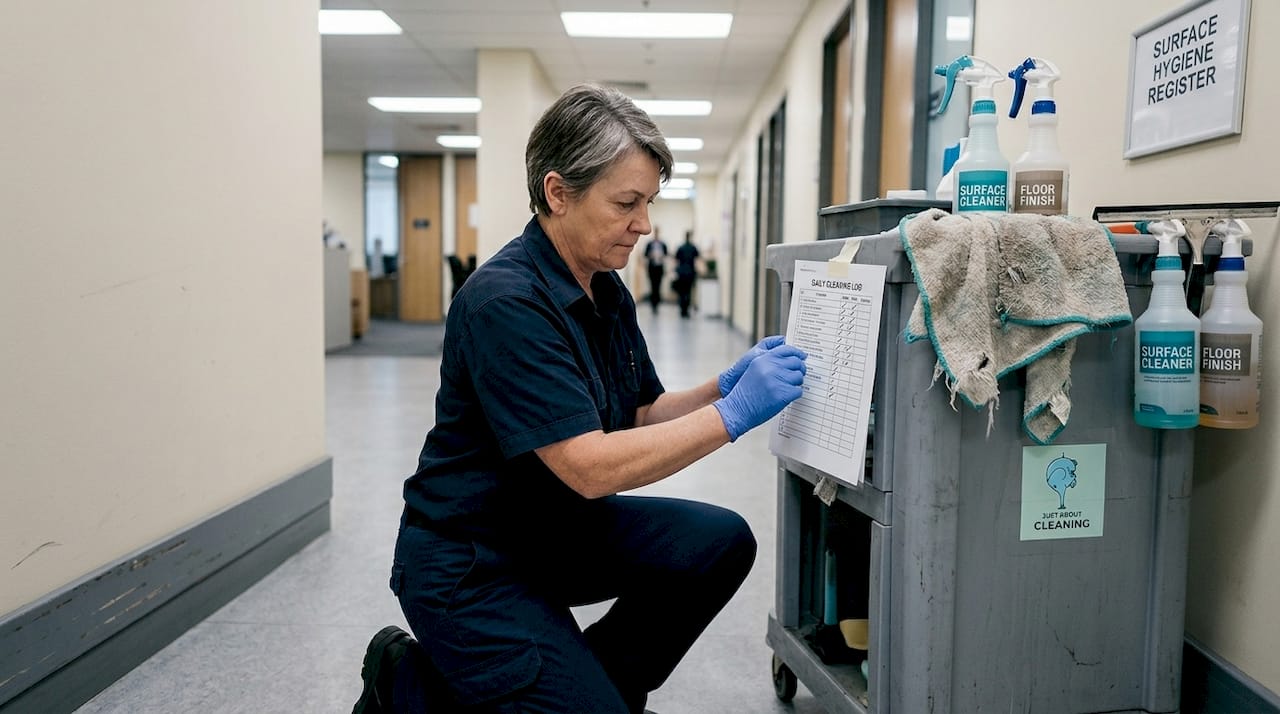
AS/NZS 3733:2018 is the Australian standard for textile floor coverings maintenance, recommending hot-water extraction quarterly to semi-annually based on traffic levels. For high-traffic commercial environments such as retail floors, office corridors, and healthcare waiting areas, quarterly extraction is the minimum expectation. Lower-traffic areas may extend to a six-month cycle, but this must be documented and justifiable.
Here are the steps to align your cleaning schedule with AS/NZS 3733 and broader surface hygiene requirements:
- Map your floor types and traffic zones. Identify which areas carry the heaviest footfall and require the most frequent attention.
- Set extraction frequencies by zone. High-traffic zones: quarterly. Moderate traffic: every four to five months. Low traffic: semi-annually.
- Select compliant methods. Hot-water extraction is the benchmark method. Dry cleaning methods may supplement but should not replace extraction for compliance purposes.
- Schedule interim maintenance. Between extractions, use encapsulation or bonnet cleaning to maintain appearance and hygiene.
- Document every service. Record the date, method, products used, and the technician's name for every cleaning event.
- Review and adjust annually. Traffic patterns change. Your schedule should reflect current conditions, not last year's assumptions.
For broader surface hygiene, office hygiene maintenance guidance covers high-touch points such as door handles, lift buttons, and shared equipment. Industrial environments have additional obligations, which are outlined in warehouse cleaning requirements.
Pro Tip: Documenting your cleaning schedules and methods is not just good practice. It is your primary evidence during an audit. A well-maintained log can be the difference between a pass and a costly re-inspection.
WHS and high-risk cleaning: Chemical safety and sector-specific protocols
Alongside routine and surface-specific standards, safety and sector compliance are critical for Australian operations in 2026.
WHS regulations require SDS libraries for all chemicals onsite, GHS labelling on every product, HEPA vacuums for dust control where silica exposure is a risk (the legal limit is 0.05 mg/m³), and clean-then-disinfect workflows as standard practice. These are not optional enhancements. They are legal obligations.
High-risk environments require additional layers of protocol:
- Healthcare facilities: Zone-based cleaning to prevent cross-contamination, sporicidal disinfectants for spore-forming pathogens, and ATP verification after every terminal clean
- PC2 laboratories: Strict compliance with AS 2243 zoning requirements, decontamination procedures before waste removal, and sporicidal agents as standard
- Post-renovation sites: Wet methods for silica dust suppression, HEPA vacuuming of all surfaces, and air quality checks before reoccupation
- Childcare centres: Non-toxic, TGA-listed disinfectants, frequent high-touch cleaning cycles, and documented nappy change area protocols
- Gyms and fitness facilities: Antimicrobial surface treatment for equipment, locker room wet area protocols, and air handling maintenance
"Compliance failures in high-risk environments carry serious consequences. Regulatory bodies in Australia have the authority to issue improvement notices, prohibition notices, and significant financial penalties under WHS legislation. In healthcare settings, a single contamination incident can trigger an investigation affecting the entire facility's operating licence."
For operations looking to align chemical use with environmental obligations, eco-friendly cleaning requirements for Australian businesses provide practical guidance on selecting compliant, lower-impact products.
Pro Tip: Run a brief internal spot audit every four to six weeks. Focus on SDS accessibility, label compliance, and HEPA filter maintenance. These are the three areas most commonly flagged during official WHS inspections.
The real-world challenge: Why exceeding cleaning standards isn't just about the checklist
Having explored the practical pathways to meeting standards, here is the real value that comes from going above and beyond regulations.
After more than 15 years working across commercial and residential cleaning in Australia, we have observed a consistent pattern: businesses that treat cleaning compliance as a minimum threshold tend to stay there. They pass audits, but only just. They fix problems when they are found, not before. And they lose staff because cleaning is treated as low-priority work rather than a professional discipline.
The businesses that consistently outperform their peers do something different. They make cleaning a cultural priority. Training is ongoing, not just at induction. Cleaning staff are empowered to flag issues and suggest improvements. Documentation is maintained because the team understands its value, not because a manager is watching.
The unexpected gains from this approach are significant. Staff morale improves when their work environment is consistently clean. Retention rates among cleaning personnel increase when they feel their role is respected. And audit performance lifts because the team is genuinely engaged, not just going through the motions. Explore how best practices for home cleaning reflect the same principle: consistency and care produce results that checklists alone cannot guarantee.
Compliance is the floor, not the ceiling.
Next steps: How to ensure compliance and cleaning excellence
If you are ready to turn these insights into compliant action, here is where to find the right help.
Meeting Australia's 2026 cleaning standards requires more than good intentions. It takes trained personnel, documented processes, sector-specific knowledge, and a commitment to continual improvement. That is a significant operational investment, and it is one that professional cleaning partners are equipped to support.
Just About Cleaning brings over 15 years of experience across commercial, industrial, healthcare, and residential environments. Our trained onsite crews operate in line with ISSA benchmarks, AS/NZS standards, and WHS obligations, and we maintain full documentation to support your audit readiness. Whether you need a compliance review, a scheduled deep clean, or an ongoing maintenance programme, we can build a solution that fits your facility and your standards. Reach out today to discuss how we can help you exceed the benchmarks, not just meet them.
Frequently asked questions
What is the ISSA Clean Standard pass rate for 2026?
The ISSA Clean Standard targets a pass rate of 95% or higher for audit checks on high-touch surfaces, floors, and environmental hygiene indicators.
How often should carpets be deep cleaned under Australian standards?
AS/NZS 3733:2018 recommends hot-water extraction every three to six months for textile floor coverings, with frequency determined by traffic volume and sector requirements.
What are the WHS rules for cleaning chemicals in 2026?
WHS regulations require all cleaning chemicals to carry GHS-compliant labels and Safety Data Sheets (SDS) to be kept accessible onsite at all times during cleaning operations.
What extra cleaning standards apply to healthcare and PC2 labs?
Healthcare and laboratory environments must comply with AS 2243 zoning requirements, use sporicidal disinfectants, conduct ATP surface verification after terminal cleans, and follow strict decontamination procedures before waste removal.