
TL;DR:
- Office hygiene extends beyond visible cleanliness to include air quality, ventilation, and carpet maintenance, which are vital for health and productivity. Poor hygiene practices lead to increased fatigue, illness, and social tensions, negatively impacting business outcomes such as absenteeism and morale. Implementing structured, proactive strategies, including regular deep cleaning, proper policies, and professional support, is essential for maintaining a healthy, efficient workplace environment.
Most office managers associate hygiene with a clean kitchen bench or an emptied bin. The role of hygiene in offices is far broader than that. Poor ventilation quietly raises CO2 levels until your team loses focus. Carpet fibres trap allergens that trigger respiratory complaints. Personal hygiene tensions erode team morale in ways that never make it onto a risk register. This guide cuts through the surface-level thinking and gives you a clear picture of what office hygiene actually encompasses, why it matters to your bottom line, and what you can do about it today.
Table of Contents
- Key takeaways
- The role of hygiene in offices: what it actually covers
- How poor hygiene affects health and productivity
- Occupational hygiene: proactive strategies beyond cleaning
- Practical hygiene maintenance for Australian offices
- Benefits of prioritising hygiene for business outcomes
- My perspective on hygiene as a strategic asset
- How Just About Cleaning supports office hygiene
- FAQ
Key takeaways
| Point | Details |
|---|---|
| Hygiene goes beyond visible cleanliness | Air quality, ventilation, and carpet hygiene are just as critical as surface sanitisation. |
| Poor hygiene directly reduces productivity | CO2 buildup and indoor pollutants cause brain fog and fatigue, not just illness. |
| Occupational hygiene is preventive | Applying the hierarchy of controls tackles hidden hazards before they affect staff health. |
| Carpet hygiene is often underestimated | Regular deep cleaning of carpets removes allergens and bacteria that surface cleaning misses. |
| Hygiene supports business outcomes | Strong hygiene practices lower absenteeism, protect your employer brand, and support compliance. |
The role of hygiene in offices: what it actually covers
When people ask what is office hygiene, the honest answer is that it covers three overlapping dimensions: personal hygiene, environmental cleanliness, and occupational hygiene. Most office cleaning programmes address environmental cleanliness reasonably well. The other two dimensions are frequently neglected.
Personal hygiene refers to the standards individual employees maintain, from handwashing frequency to respiratory etiquette. Environmental hygiene covers the physical workspace: surfaces, floors, air, water points, and waste. Occupational hygiene is the preventive discipline concerned with identifying, assessing, and controlling workplace hazards that affect long-term health, many of which are invisible.
The full scope of environmental hygiene includes:
- Surface and touchpoint cleaning (desks, keyboards, door handles, lift buttons)
- Indoor air quality and ventilation management
- Carpet and upholstery hygiene, which traps particulate matter, bacteria, and allergens
- Waste management, including food waste from kitchens and common areas
- Water hygiene at sinks, taps, and drinking stations
- Toilet and bathroom sanitation
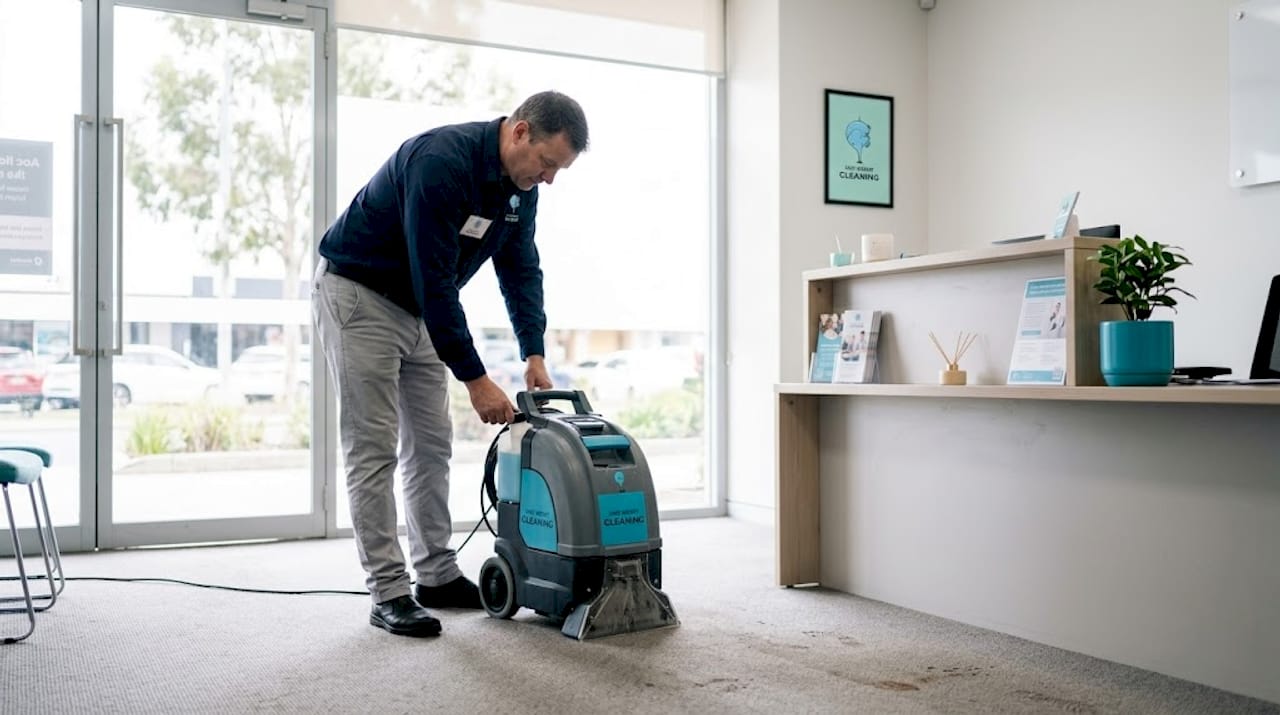
The role of carpet hygiene in workplaces deserves special mention. Office carpets act as a filter for the broader environment, collecting dust, skin cells, food particles, and biological debris over time. Without regular deep cleaning, that material becomes a reservoir for allergens and bacteria. You can read more about this in a practical carpet hygiene guide that outlines maintenance schedules for busy office environments.
Pro Tip: Schedule carpet cleaning separately from your standard office clean. Vacuuming removes surface debris, but hot-water extraction or dry-compound methods are needed quarterly to address what lives deeper in the pile.
How poor hygiene affects health and productivity
The impact of hygiene on employee health is not limited to seasonal illnesses. The more persistent and costly effects are often cognitive rather than clinical.
"Sealed-room offices with low ventilation accumulate dust, VOCs, and CO2, which impair alertness and increase illness risk." Source
That matters for productivity because brain fog and chronic fatigue do not show up as sick days. They show up as slower decision-making, more errors, and reduced output across an entire team, every single day. Poor indoor air quality including elevated CO2 levels is a primary driver of these symptoms in modern offices with sealed windows and recirculated air.
Beyond cognition, the health risks span several categories. Infectious diseases spread rapidly through shared high-touch surfaces and common areas when sanitisation is irregular. Respiratory complaints increase when ventilation is poor and carpets or air conditioning filters go uncleaned. Dry air from air conditioning also lowers skin moisture and weakens barrier function, contributing to irritation and fatigue that staff may not connect to their work environment.
Then there is the social dimension. Poor personal hygiene is not just a private matter. It creates distractions, social tensions, and a breakdown in the psychological safety that productive teams depend on. When hygiene standards are inconsistent across a team, morale suffers in ways that are hard to measure but very easy to feel.
The cumulative effect on absenteeism and presenteeism is significant. Companies investing in hygiene infrastructure reduce absenteeism and operational disruptions while improving staff morale. The business case is not a difficult one to make.
Occupational hygiene: proactive strategies beyond cleaning
Occupational hygiene applies a structured, preventive framework to workplace health risks. Effective management requires continuous cycles of hazard identification, control implementation, and monitoring, not a single cleaning visit each week.
The most practical framework for Australian office managers is the hierarchy of controls, applied specifically to office hygiene risks:
- Elimination. Remove the source of the hazard entirely where possible. If a particular cleaning chemical is causing respiratory irritation, stop using it.
- Substitution. Replace hazardous materials with safer alternatives. Switch to low-VOC cleaning products and fragrance-free sanitisers for shared spaces.
- Engineering controls. Modify the physical environment to reduce exposure. Install HEPA filtration, upgrade HVAC systems, and improve natural ventilation where building design allows.
- Administrative controls. Establish policies, schedules, and training that change how people work. Handwashing protocols, food policies in shared areas, and personal hygiene guidelines all fall here.
- Personal protective equipment. The last line of defence. Relevant for cleaning staff handling chemicals, not typically a primary strategy for general office workers.
NIOSH's Total Worker Health model reinforces this sequence. It advocates eliminating hazards before reaching for PPE as a solution, because organisations that take this approach see measurable improvements in staff retention and performance.
Engineering controls deserve more attention from Australian offices than they typically receive. Managing office airflow and humidity through HVAC maintenance and HEPA filtration controls airborne pollutants more effectively than surface sanitising alone. For more on how this connects to cleaning practice, the link between cleaning and indoor air quality in Australian offices is worth reviewing.
Pro Tip: Ask your HVAC maintenance provider for a written record of filter changes and air exchange rates. If that documentation does not exist, your air quality risk is almost certainly unmanaged.
Practical hygiene maintenance for Australian offices
Good hygiene does not happen by accident. It requires structured routines, clear accountability, and the right professional support. The following covers the best hygiene practices for offices that Australian office managers should have in place.
High-touch surface and shared space cleaning
High-touch surfaces accumulate pathogens faster than any other area in an office. Door handles, light switches, keyboard surfaces, shared printers, meeting room chairs, and lift buttons should be sanitised daily, not weekly. Kitchens and bathroom surfaces need attention at least twice per day in larger offices.
Frequency comparison for key hygiene tasks:
| Task | Minimum frequency | Recommended frequency |
|---|---|---|
| High-touch surface sanitisation | Daily | Twice daily (large offices) |
| Bathroom cleaning | Daily | Twice daily |
| Carpet vacuuming | Weekly | Three times per week |
| Carpet deep cleaning | Annually | Quarterly |
| HVAC filter inspection | Annually | Every three to four months |
| Kitchen deep clean | Weekly | Daily wipe-down plus weekly deep clean |
Personal hygiene policies
Offices benefit from clear, written personal hygiene policies. These cover handwashing expectations, illness management (staying home when unwell), food storage and handling in shared kitchens, and respectful guidance on personal presentation standards. Addressing personal hygiene through policies and regular safety briefings reduces social tension and ensures the topic is handled without targeting individuals.
Provide the infrastructure staff need to follow through. Hand sanitiser stations at entry points and near shared equipment, adequate soap and paper towels in bathrooms, and clearly labelled food storage in kitchens remove the friction that causes lapses.
Professional cleaning and hygiene infrastructure
Knowing how to maintain office hygiene at a consistent standard is one thing. Executing it reliably across a busy workplace is another. Effective hygiene infrastructure reduces maintenance downtime, prevents supply shortages, and supports consistent sanitation across multiple office areas or locations.
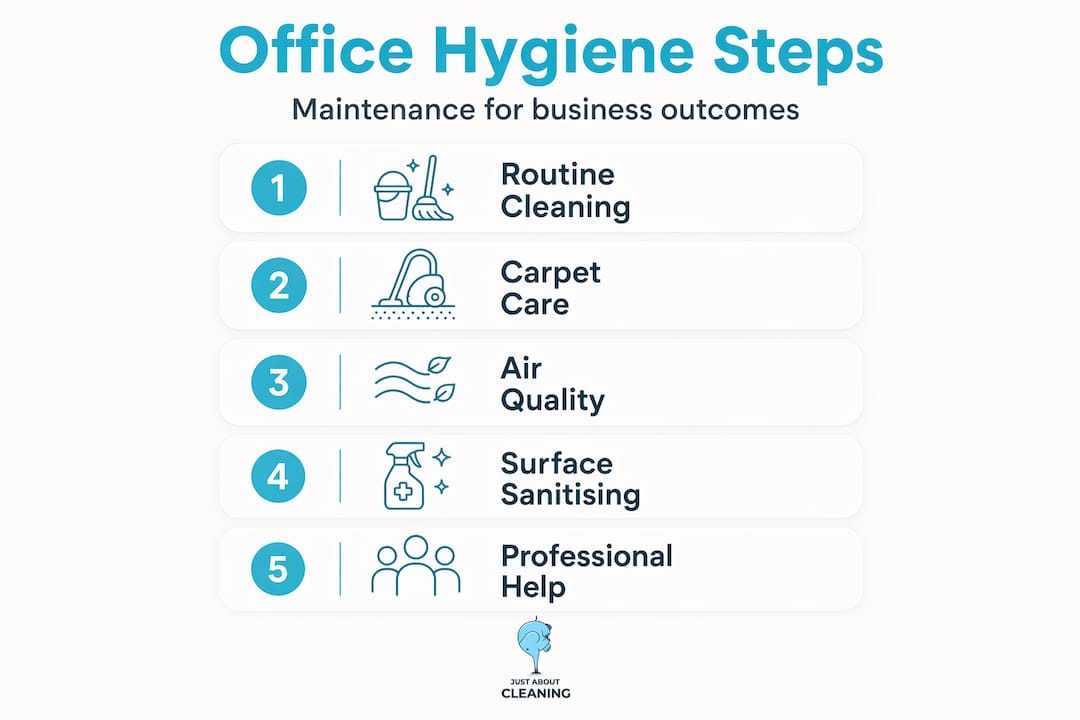
Partnering with a professional cleaning service removes the inconsistency that comes from relying on staff to manage hygiene tasks alongside their core responsibilities. It also provides access to commercial-grade equipment and products, particularly for carpet care, air quality management, and deep sanitisation. The benefits of outsourcing office cleaning for hygiene and operational efficiency are considerable for offices above a certain size.
Benefits of prioritising hygiene for business outcomes
The benefits of hygiene in workplaces extend well past a tidy reception desk. Strong office sanitation practices produce concrete business outcomes that office managers and business leaders can point to with confidence.
- Lower absenteeism. Fewer illnesses circulating through the office means fewer sick days, which directly protects output and scheduling.
- Stronger employer brand. Prospective employees and clients notice the cleanliness of an office. A well-maintained, hygienic workspace signals a well-run business.
- Regulatory compliance. Australian work health and safety legislation requires employers to provide a safe working environment. Documented hygiene practices reduce legal and reputational risk.
- Improved morale and psychological comfort. Staff who work in a clean, well-maintained environment report higher satisfaction and feel more valued by their employer.
- Operational continuity. Reducing the conditions that lead to illness outbreaks protects project timelines, client commitments, and team capacity.
Workplace hygiene is now recognised as a strategic business asset, not a support function. Organisations that treat it as such see the difference in both staff metrics and client perceptions.
My perspective on hygiene as a strategic asset
I have seen firsthand how quickly air quality and carpet hygiene drop off the priority list when budgets get reviewed. The thinking tends to be: we can see the desks are clean, so hygiene is covered. That is a costly assumption.
In my experience, the offices with the most persistent productivity complaints are rarely the ones with poor surface cleaning. They are the ones where no one has checked the HVAC filters in two years, or where carpet deep cleaning has been deferred indefinitely to save money. The symptoms appear as vague fatigue, more colds than usual, and a general sense that concentration is harder than it should be. Leadership attributes it to workload or culture. The real cause is the air people are breathing and the fibres they are walking across every day.
What I advocate for is treating hygiene as a core operational discipline with the same rigour you would apply to IT infrastructure or safety compliance. That means documented schedules, professional accountability, and regular audits of the things you cannot see. The investment is modest compared to the productivity and retention costs of getting it wrong.
— David
How Just About Cleaning supports office hygiene
Just About Cleaning brings over 15 years of experience to professional office cleaning across Australia, covering everything from daily sanitisation to deep carpet care and air quality-focused cleaning. Their trained onsite crews follow structured hygiene programmes aligned with occupational health and safety standards, so you are not just getting a clean office. You are getting a documented, consistent hygiene programme that holds up to scrutiny.
If you manage a team and want hygiene that genuinely protects health and productivity, the team at Just About Cleaning is worth speaking to. Contact them through their website to discuss a cleaning programme tailored to your workplace.
FAQ
What is office hygiene and what does it cover?
Office hygiene covers personal hygiene, environmental cleanliness, and occupational hygiene. It includes surface sanitisation, indoor air quality, ventilation, carpet care, waste management, and bathroom sanitation.
How does poor hygiene reduce office productivity?
Sealed offices with poor ventilation accumulate CO2 and pollutants that impair alertness and cause fatigue, reducing output even when staff are not visibly unwell.
What is the role of carpet hygiene in workplaces?
Carpets trap allergens, bacteria, and particulate matter that standard vacuuming does not remove. Regular deep cleaning reduces respiratory irritants and contributes to better air quality throughout the office.
How often should high-touch surfaces be cleaned?
High-touch surfaces such as door handles, keyboards, and shared equipment should be sanitised daily at a minimum, and twice daily in larger or higher-traffic offices.
What are the main business benefits of prioritising office hygiene?
Strong hygiene practices reduce absenteeism, support regulatory compliance, improve staff morale, and protect employer brand reputation, all of which contribute to operational continuity and talent retention.