
TL;DR:
- Sustainable cleaning in 2026 requires full lifecycle evaluation and strict chemical criteria.
- GECA certification and compliance with government and environmental standards are mandatory for Australian businesses.
- Implementing gradual, staff-trained practices and continuous monitoring ensures genuine sustainability and regulatory adherence.
Australian businesses are facing a significant compliance shift in 2026, and many facility managers are still scrambling to catch up. Sustainable cleaning is no longer a voluntary initiative or a marketing talking point. It is now a regulatory requirement woven into procurement standards, certification frameworks, and government contracts. Research suggests a surprising number of commercial operators have yet to update their cleaning programmes to reflect the new expectations. This guide breaks down exactly what sustainable cleaning means under 2026 standards, which regulations apply to your business, and how to build a practical programme that delivers genuine results rather than paperwork.
Table of Contents
- What makes a cleaning method sustainable in 2026?
- Key regulations and certifications for 2026
- Practical sustainable cleaning methods for commercial spaces
- Measuring success: Monitoring, reporting, and continuous improvement
- A pragmatic perspective on truly sustainable cleaning in 2026
- Take the next step with expert help
- Frequently asked questions
Key Takeaways
| Point | Details |
|---|---|
| 2026 laws require action | Australian commercial spaces must use certified sustainable cleaning to stay compliant and competitive. |
| GECA sets the bar | GECA criteria ensure products and processes meet strict environmental and health standards. |
| Practical methods deliver results | Eco cleaning matches business demands and improves airborne quality and staff wellbeing. |
| Track and improve performance | Successful programs monitor chemical use and air quality for continuous compliance. |
What makes a cleaning method sustainable in 2026?
With the importance of compliance established, it is essential to unpack what 'sustainable cleaning' actually means in 2026. The definition goes well beyond swapping one product for another. Sustainable cleaning considers the full lifecycle of every product and process used, from raw material extraction through to disposal. That includes the chemical composition of cleaning agents, how they are manufactured, how they perform on-site, and what happens when they enter waterways or landfill.
In Australia, the GECA government standards set the benchmark. GECA (Good Environmental Choice Australia) evaluates products across 39 criteria, covering biodegradability, volatile organic compound (VOC) levels, chemical exclusion lists, and aquatic toxicity limits. As the gold standard for sustainable cleaning in Australia, GECA applies strict lifecycle and chemical criteria that go far beyond a simple 'natural ingredients' label.
For facility managers, this means evaluating suppliers on several fronts:
- Biodegradability: Cleaning agents must break down safely in aquatic environments without releasing persistent pollutants.
- Low VOC formulation: Products must fall within approved VOC concentration limits to protect indoor air quality (IAQ).
- Chemical exclusion: Certain substances, including phosphates, chlorinated solvents, and microplastics, are excluded entirely.
- Packaging: Recyclable or refillable packaging is now part of the sustainability equation, not an optional extra.
Think of it this way: a product labelled 'plant-based' is not automatically compliant. The full picture matters.
| Sustainability criterion | What it means for your facility |
|---|---|
| Biodegradability | Products must break down safely within regulated timeframes |
| VOC limits | Protects staff and occupants from harmful airborne chemicals |
| Chemical exclusion | Bans known harmful substances like phosphates and microbeads |
| Aquatic toxicity limits | Prevents environmental harm via wastewater discharge |
| Lifecycle assessment | Considers production, use, and disposal across the supply chain |
Facility managers who want a solid foundation can explore eco-friendly cleaning facts to understand how these standards translate to day-to-day operations.
"Sustainability in cleaning is not about perfection. It is about making verifiable, measurable improvements across every stage of the product and service lifecycle."
Key regulations and certifications for 2026
Now that we have defined sustainability in cleaning, understanding the regulatory environment and credible certifications is the crucial next step. The 2026 landscape involves overlapping frameworks, and getting across all of them is essential to avoiding costly compliance gaps.
Sustainable cleaning is now mandatory for compliance and certification in Australia, with GECA the leading verifier for both government and private sector operators. Businesses tendering for government contracts, operating in healthcare, education, or publicly funded facilities, are now expected to demonstrate GECA-aligned procurement.
Equally significant is the NSW EPA Clean Air and Plastics Plan 2.0, which is phasing out problematic plastics and microbeads in alignment with UN Sustainable Development Goals and ESG reporting obligations. This affects the packaging and formulation of many common cleaning products still in use across Australian workplaces.
Here is a practical checklist for facility managers approaching 2026 compliance:
- Audit your current product inventory against the GECA exclusion list.
- Request formal certification documents from every cleaning supplier, not just product data sheets.
- Update procurement policies to require GECA certification as a minimum standard.
- Review your waste management procedures to align with Clean Air and Plastics Plan 2.0.
- Document all changes and retain records for audit purposes.
| Compliance pathway | Key requirement | Common pitfall |
|---|---|---|
| GECA certification | Full lifecycle and chemical compliance | Accepting 'green' labelling without documentation |
| NSW EPA Plastics Plan 2.0 | No microbeads or single-use plastic packaging | Overlooking product packaging standards |
| ESG reporting | Measurable environmental outcomes | Vague or unverifiable supplier claims |
| Government contracts | GECA-aligned procurement mandatory | Failing to update supplier agreements |
Review the current office cleaning standards 2026 to ensure your programme aligns with the latest expectations across commercial settings.
Pro Tip: When evaluating a new supplier, ask specifically for their GECA licence number and verify it directly through the GECA website. Greenwashing is widespread, and a genuine certification takes minutes to confirm.
Practical sustainable cleaning methods for commercial spaces
With understanding of standards and certifications in place, it is time to look at the hands-on methods that best achieve sustainability and compliance. The good news is that eco cleaning matches and often exceeds conventional methods for routine tasks, delivering measurable benefits for health and indoor air quality.
The most effective sustainable cleaning routines follow a structured approach:
- Microfibre systems: Replace disposable paper products and cotton cloths with colour-coded microfibre cloths and flat mops. Microfibre captures up to 99% of bacteria using water alone, dramatically reducing chemical use.
- Enzyme-based cleaners: Particularly effective in kitchens and bathrooms, enzyme cleaners break down organic matter biologically rather than chemically. They are biodegradable, low-toxicity, and highly effective at eliminating odours at the source.
- Refill stations: Installing bulk refill systems reduces single-use plastic waste by up to 80% and cuts product costs over time. Many GECA-certified suppliers now offer refill-compatible concentrated formulas.
- High-touch surface protocols: Prioritise frequent cleaning of door handles, lift buttons, shared equipment, and communal areas using certified low-VOC disinfectants. This protects occupant health without compromising air quality.
- Waste segregation: Introduce clearly labelled bins for recyclables, organics, and general waste in all cleaning and break areas. Train staff on correct disposal procedures, since contamination of recycling streams remains a common issue.
Staff training is non-negotiable. Even the best products underperform when applied incorrectly. Regular, documented training sessions ensure consistent technique and reinforce the purpose behind sustainable practices, which increases buy-in across teams.
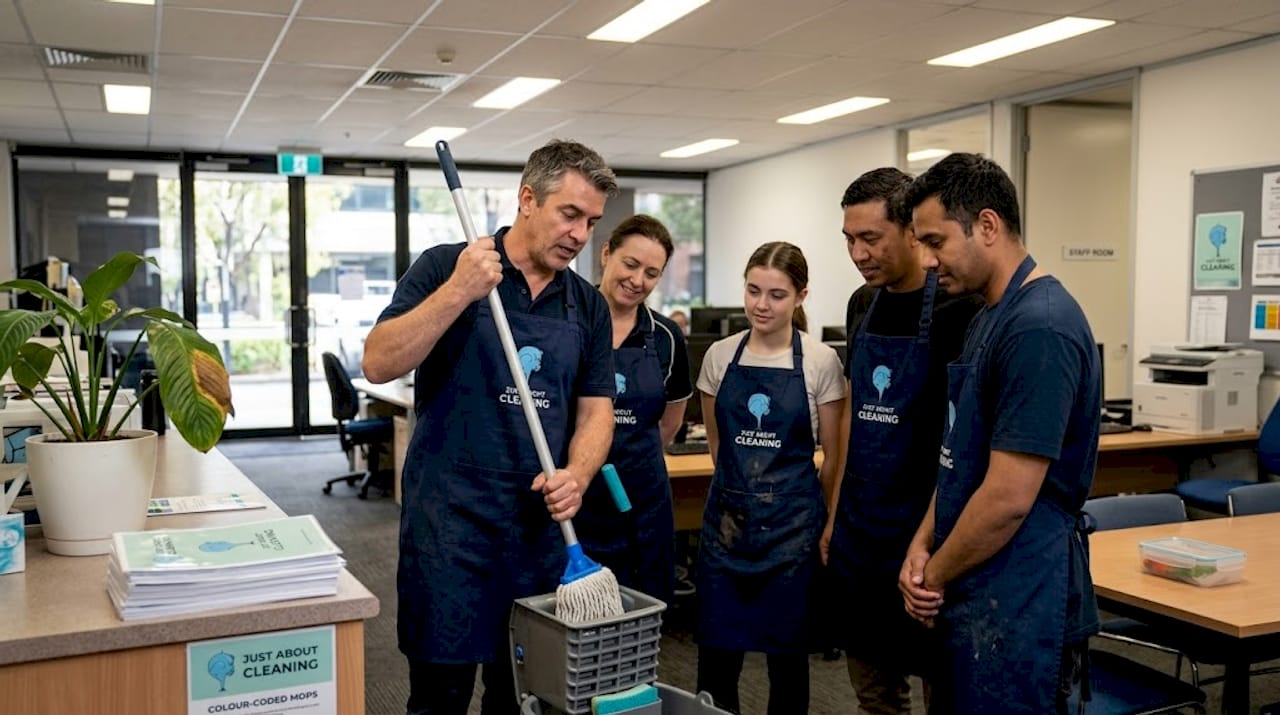
Pro Tip: Introduce sustainable cleaning practices gradually rather than all at once. Start with your highest-use areas and expand the programme as staff build confidence and competence.
For facilities wanting a deeper understanding of how green cleaning for health translates to measurable business outcomes, the evidence is clear. Lower absenteeism, fewer occupant complaints, and reduced chemical disposal costs are consistent findings across commercial settings.
Statistic callout: Workplaces that implement full sustainable cleaning programmes report a reduction in cleaning-related staff health complaints of up to 30%, according to industry benchmarking data.
Measuring success: Monitoring, reporting, and continuous improvement
Practical methods are just the start. Making sustainability stick means tracking outcomes and showing results. Without measurement, a sustainable cleaning programme is simply a collection of good intentions.
Most east coast Australian cleaners have already adopted GECA-aligned methods, with a growing focus on measurable outcomes and reporting under new regulations. If your programme is not producing documented data, it is falling behind industry expectations.
Start with these key performance indicators (KPIs):
- Chemical usage volume: Track litres of cleaning product used per square metre each month. A downward trend indicates efficiency gains.
- Waste generation: Measure kilograms of cleaning-related waste sent to landfill per reporting period.
- Indoor air quality readings: Use CO2 and VOC monitors in high-traffic zones. Benchmark against AS 1668.2 ventilation standards.
- Staff sick days: Monitor absenteeism trends quarterly as a proxy for cleaning and IAQ performance.
- Audit compliance scores: Record results from internal and external cleaning audits against your GECA-aligned standard.
| Metric | Frequency | Target benchmark |
|---|---|---|
| Chemical usage per m² | Monthly | 10% reduction year-on-year |
| Landfill waste (kg) | Monthly | Reduce by 15% per quarter |
| VOC readings (indoors) | Quarterly | Below 500 micrograms/m³ |
| Compliance audit score | Bi-annual | 90% or above |
| Staff absenteeism rate | Quarterly | Below industry average |
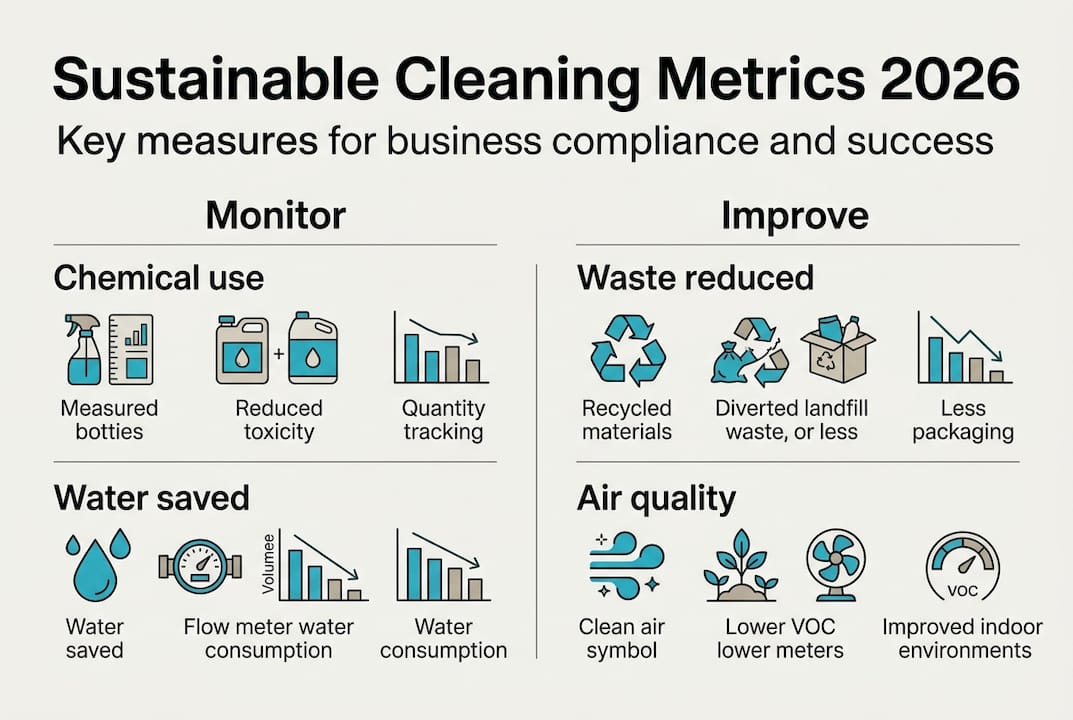
A simple reporting framework helps facility teams stay consistent. Assign a responsible person for data collection, set a monthly review date, and use a shared document or facility management platform to store results. For specific guidance on how to structure your reporting against regulatory requirements, explore compliance success metrics for Australian commercial operators.
Benchmarking against industry peers adds another layer of value. It identifies where your programme performs well and where investment is most needed. Combine this with annual supplier reviews and ongoing staff upskilling to build a programme that improves with time rather than stagnating.
A pragmatic perspective on truly sustainable cleaning in 2026
All the standards and systems matter, but the real world is messier than any compliance checklist suggests. Here is an honest look at what most guides miss.
The biggest risk we see is businesses treating sustainable cleaning as a box-ticking exercise. They collect the certifications, update the supplier list, and then return to business as usual. True sustainability requires cultural change at the facility level. That means the person restocking the cleaning trolley understands why enzyme cleaners matter, not just which bottle to grab.
You do not need to overhaul everything at once. Gradual, verifiable changes outperform rushed overhauls every time. A facility that replaces three products with certified alternatives and trains staff properly will outperform a competitor who switches their entire catalogue overnight but skips the training. Incremental progress, tracked and documented, is far more defensible in an audit.
For facilities navigating deep cleaning compliance tips, the same principle applies: build systems that your team can sustain, not just showcase during inspection periods.
Authentic sustainability is built on team buy-in, honest reporting, and the willingness to course-correct when something is not working.
Take the next step with expert help
Ready to turn guidance into results? Your next step is simpler than you think.
Navigating the 2026 compliance landscape is far more manageable when you have an experienced partner who already operates within these standards. At Just About Cleaning, we work with facility managers and business owners across Australia to design and deliver cleaning programmes that meet GECA-aligned standards, reduce environmental impact, and support your ESG reporting obligations. Our trained crews bring more than 15 years of experience across commercial, healthcare, education, and industrial sectors.
We offer tailored consultations to assess your current programme, identify compliance gaps, and implement sustainable methods that deliver measurable results. Whether you manage a single office or a multi-site portfolio, we can help you build a programme that is genuinely compliant, not just green in name.
Frequently asked questions
What is GECA certification and why is it important?
GECA is Australia's leading sustainable cleaning standard, assessing product safety, environmental impact, and lifecycle across 39 certification criteria including biodegradability and chemical limits. It is the primary verification required for 2026 compliance in government and commercial settings.
Are eco-friendly cleaning methods as effective as traditional ones?
Yes. Eco methods match or outperform conventional cleaning in routine commercial settings while delivering better indoor air quality and long-term cost savings for facility operators.
How can I avoid greenwashing when selecting products or vendors?
Always request GECA or recognised third-party certifications rather than relying on marketing claims. GECA is the key verifier that distinguishes genuine sustainability from greenwashing, and licence numbers can be confirmed directly through their website.
What ongoing reporting is needed for cleaning compliance?
Track monthly metrics including chemical use, waste reduction, and audit results to demonstrate your programme's performance. Measurable outcomes and reporting are essential under new regulations, particularly for certified cleaning operators.