
TL;DR:
- A room-by-room, top-down approach makes spring cleaning manageable and effective.
- Using HEPA vacuums and damp microfibre cloths helps improve air quality and allergen control.
- Incorporating eco-friendly cleaners and periodic deep cleaning maintains a healthy, long-lasting home environment.
Spring cleaning can feel like a mountain to climb, especially when you are staring down a full home that has accumulated months of dust, clutter, and grime. Australian homes face particular challenges: fine red dust drifting in from dry inland winds, high humidity along coastal areas encouraging mould, and the sheer size of many properties. The good news is that a structured, room-by-room approach transforms the task from overwhelming to entirely manageable. Whether you own your home or rent, the tips and practical steps in this article will help you work smarter, breathe easier, and enjoy a genuinely fresher living space by the time you are done.
Table of Contents
- Set your cleaning plan: declutter, prioritise, and gather supplies
- Dusting and allergen control: techniques for cleaner air
- Eco-friendly cleaning: safe solutions for your home and the environment
- Tackling kitchens and bathrooms: deep clean hotspots
- Outdoor tasks and differences for homeowners and renters
- Why spring cleaning is more than just surface deep
- Get a professional finish: streamlined spring cleaning in Australia
- Frequently asked questions
Key Takeaways
| Point | Details |
|---|---|
| Plan before you clean | A clear checklist and orderly approach makes tackling spring cleaning less stressful and more effective. |
| Choose the right products | Microfibre cloths, HEPA vacuums, and eco-cleaners deliver better results with less impact. |
| Deep clean problem zones | Focus on kitchens and bathrooms for hygiene and target dust and mould for healthier air. |
| Tailor for your situation | Adapt your cleaning to whether you own or rent, including bond-return essentials and outdoor jobs. |
Set your cleaning plan: declutter, prioritise, and gather supplies
Before you pick up a single cloth, walk through every room in your home with a notepad. Note the areas that bother you most, the corners that have been ignored since last year, and any surfaces that need special attention. This walkthrough gives you a realistic picture of the job ahead and stops you from getting sidetracked halfway through a room.
Once you have your notes, build a checklist divided by room and ranked by priority. Kitchens, bathrooms, and bedrooms usually come first because they affect daily health and comfort the most. Living areas and storage spaces can follow. A written checklist also gives you the satisfaction of ticking things off as you go, which keeps motivation high over a full weekend of cleaning.
Decluttering is the foundation of any effective spring clean. Sort every item you come across into four clear piles:
- Keep: Items you use regularly and genuinely need
- Donate: Good-condition items that someone else could use
- Recycle: Broken electronics, paper, cardboard, and plastics where possible
- Toss: Anything damaged, expired, or simply taking up space
With clutter cleared, gather your cleaning supplies before you begin. Stock up on microfibre cloths, a quality mop, a vacuum with strong suction, and your chosen cleaning agents. If you want to follow practical cleaning strategies that professionals use, having everything ready before you start saves significant time. As the RACV notes, DIY decluttering is manageable, but deep tasks benefit from professional help when the job grows beyond a weekend's work.
Pro Tip: Invest in labelled storage containers once you have decluttered. Clear bins with lids prevent re-cluttering and make it easy to find items next season. Pair this with cleaning best practices to keep your home in top shape year-round.
Dusting and allergen control: techniques for cleaner air
Once your plan is in place, effective dusting becomes your next top priority to keep the air clean and avoid allergies. Many Australians are surprised to learn that up to 90% of dust can be recirculated back into the air when you use the wrong technique or tool. That means a quick flick with a feather duster may actually make your air quality worse, not better.
The most effective approach combines a HEPA filter vacuum with damp microfibre cloths. HEPA vacuums trap fine particles rather than blowing them back out, making them especially valuable for households with asthma or hay fever sufferers. Damp microfibre cloths physically capture dust on contact rather than pushing it around. Together, these two tools outperform traditional dusters by a significant margin, as BHG's spring cleaning guide confirms.
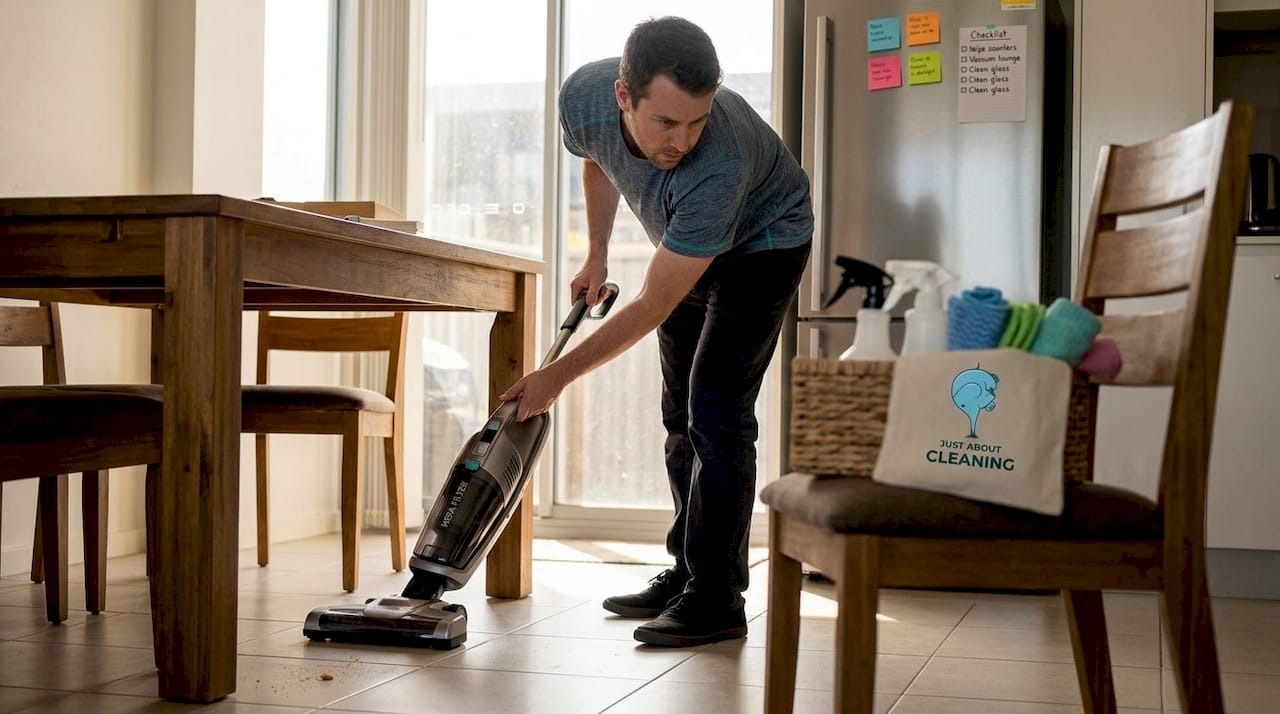
Here is a quick comparison of common dusting tools:
| Tool | Dust removal | Allergen control | Best use |
|---|---|---|---|
| HEPA vacuum | Excellent | Excellent | Carpets, upholstery, vents |
| Damp microfibre cloth | Very good | Very good | Hard surfaces, shelves, fans |
| Feather duster | Poor | Poor | Light decorative dusting only |
Pay special attention to ceiling fans, air vents, and skirting boards. These spots collect dust quietly all year and release it the moment you switch on the fan or heating. In Australian homes, eco-friendly cleaning options work well for dusting surfaces without leaving chemical residues that attract more particles over time.
Key dusting areas to prioritise:
- Ceiling fans and light fittings
- Air conditioning vents and returns
- Tops of wardrobes and bookshelves
- Skirting boards and door frames
- Behind and under large furniture
Pro Tip: Always clean from top to bottom in every room. Start with ceiling fans and work your way down to the floor. This way, any dust that falls gets captured when you vacuum last, rather than settling on surfaces you have already cleaned.
Eco-friendly cleaning: safe solutions for your home and the environment
With dust under control, the next step is choosing the right cleaners for both health and environmental benefits. There is an ongoing debate over chemical versus natural cleaners, but as RACV highlights, eco-friendly solutions are increasingly preferred by Australian households. The shift makes sense given the health risks associated with prolonged exposure to harsh chemical fumes indoors.
Natural cleaners you likely already have at home include white vinegar, baking soda, and lemon juice. White vinegar is an excellent glass cleaner and a mild disinfectant. Baking soda works as a gentle abrasive for scrubbing surfaces and as a powerful deodoriser for fridges, bins, and carpets. The benefits of natural cleaning extend beyond cost savings to reducing chemical load in your home environment.
Here is how natural and chemical cleaners compare:
| Factor | Natural cleaners | Chemical cleaners |
|---|---|---|
| Effectiveness | Good for general cleaning | Better for heavy stains and disinfection |
| Safety | Safe for children and pets | Requires ventilation and care |
| Cost | Very low | Moderate to high |
| Environmental impact | Minimal | Can be significant |
That said, there are situations where chemical cleaners are the right choice:
- Stubborn mould: Requires a registered mould remover or diluted bleach solution
- Heavy grease: Degreasers cut through built-up kitchen grime faster than natural options
- Sanitising after illness: Hospital-grade disinfectants are more reliable for killing pathogens
- Outdoor surfaces: Pressure-washing chemicals shift algae and moss more effectively
Pro Tip: Mix equal parts lemon juice and white vinegar in a spray bottle for a pleasant-smelling, effective all-purpose cleaner. The acidity cuts through grease and light stains, and the lemon scent leaves your home smelling genuinely clean.
Tackling kitchens and bathrooms: deep clean hotspots
Equipped with safer solutions, focus now shifts to the high-traffic, high-grime zones in your home. Kitchens and bathrooms accumulate the most bacteria, grease, and moisture, making them the areas where a thorough clean makes the biggest difference to your health and comfort.
For your kitchen, work through these steps in order:
- Empty and wipe down all cupboards inside and out
- Clean the oven with a suitable degreaser or baking soda paste
- Descale the kettle and clean the coffee machine
- Wipe down the rangehood filter and replace if necessary
- Scrub benchtops and tile grout with a stiff brush
- Clean the fridge, including the door seals and drip tray
- Mop the floor last, working from the back of the room to the door
For bathrooms, the priority is hygiene and moisture control. Spring cleaning in humid Australian bathrooms requires checking for mould and using moisture-wise cleaning methods. Mould is found in over 60% of humid Aussie bathrooms, making ventilation a critical part of your clean.
- Spray mould remover on grout and silicone seals and allow it to sit for 10 minutes
- Scrub tiles and grout with a firm brush
- Clean the toilet including the base, cistern, and behind the seat
- Wipe down vanity surfaces and clean the mirror
- Clear the drain of hair and soap build-up
- Ensure the exhaust fan is working and clean its cover
For kitchen and bathroom cleaning that lasts, always improve ventilation after you finish. Open windows or run the exhaust fan to reduce moisture and slow the return of mould.
Pro Tip: Let your cleaning agents sit on tough grime for at least five minutes before scrubbing. This dwell time allows the product to break down grease and bacteria, meaning you use less elbow grease and get a better result.
Outdoor tasks and differences for homeowners and renters
Not all spring cleaning ends at the door. Outdoor areas and rental requirements also demand attention, and the priorities differ significantly depending on whether you own or rent your home.
For homeowners, outdoor spring cleaning is about maintenance and prevention:
- Clear gutters of leaves and debris to prevent water damage and pest nesting
- Sweep or pressure-wash outdoor paving, driveways, and entertaining areas
- Remove garden debris and dead plants from garden beds
- Inspect fencing and gates for rust or damage after winter
- Check outdoor taps and hoses for leaks before the warmer months
- Treat timber decking with oil or sealant to protect against summer heat
For renters, the focus shifts to bond-return essentials. As Onyx Removals advises, homeowners add outdoor tasks while renters focus on bond-related areas. Property managers inspect specific spots closely, so your energy is best directed at:
- Spotless windows inside and out, including tracks and frames
- A thoroughly cleaned oven, including racks and the door glass
- Clean range hood filters and stovetop
- Mould-free bathroom tiles and grout
- Professionally cleaned carpets if required under your lease
Scheduling outdoor tasks for a cooler part of the day makes the work more comfortable and safer during Australian spring, when temperatures can rise quickly. Pest prevention is another consideration: clearing leaf litter, standing water, and garden debris removes the conditions that attract spiders, cockroaches, and mosquitoes as the warmer season begins.
Why spring cleaning is more than just surface deep
After working through the tips and tailored checklists above, it is worth stepping back to consider what spring cleaning actually achieves in the long run. Most people treat it as an annual obligation. The households that genuinely benefit treat it as an annual reset, one that sets the tone for cleaner habits over the months ahead.
The truth is, surface-level tidying does not address the underlying issues that affect your home's health and safety. Ignoring ventilation, for example, allows moisture to build up quietly in wall cavities and under floors, leading to costly structural repairs down the track. Skipping outdoor maintenance leaves gutters blocked and pest-prone. These are not dramatic failures; they are simply the result of treating spring cleaning as a cosmetic exercise rather than a whole-home assessment.
We recommend using your spring clean as an opportunity to check safety items too: test smoke alarms, inspect electrical cords for wear, and assess whether your home is as energy-efficient as it could be. Sealing draughts and cleaning air conditioning filters, for instance, can reduce your energy bills noticeably. For deep cleaning insights that go beyond the basics, a professional assessment once a year is a worthwhile investment in your home's long-term condition.
Get a professional finish: streamlined spring cleaning in Australia
If your spring clean has revealed tasks that go beyond what a weekend and a mop can handle, professional help is a practical and worthwhile option.
At Just About Cleaning, we provide tailored residential cleaning services across Australia, backed by over 15 years of experience and a commitment to eco-friendly practices. Our trained crews handle everything from deep kitchen and bathroom cleans to full property preparation for renters needing their bond back. Whether you want a one-off seasonal refresh or ongoing support to keep your home in excellent condition, our expert spring cleaners are ready to help. Contact us today to arrange an assessment and discover how straightforward a truly clean home can be.
Frequently asked questions
What is the most efficient order for spring cleaning?
Start with decluttering, then dust and vacuum from top to bottom, followed by kitchens, bathrooms, and finally outdoor areas. A room-by-room, top-down approach consistently delivers the best results.
Are natural cleaning solutions really effective?
Yes, vinegar and baking soda handle most everyday surfaces well and are safer for your household and the environment. For stubborn stains or heavy disinfection needs, a targeted chemical cleaner may still be required, as Australians increasingly prefer eco-friendly options where possible.
How can renters ensure they get their bond back after cleaning?
Concentrate on windows, ovens, and bathrooms, as these are the areas most closely inspected. Spotless windows and ovens are among the top priorities property managers check during a final inspection.
How often should deep cleaning tasks be done?
Most deep cleaning tasks, including kitchens, bathrooms, and carpets, are best done once or twice a year. Spring cleaning annually with a mid-year refresh of key areas keeps your home consistently hygienic and well-maintained.