
TL;DR:
- Specialised cleaning addresses industry-specific risks and regulatory compliance beyond regular maintenance.
- Choosing certified, experienced providers with proper documentation is essential to meet hygiene standards.
- Proactive, regular specialised cleaning ensures safety, reduces costs, and supports regulatory inspections.
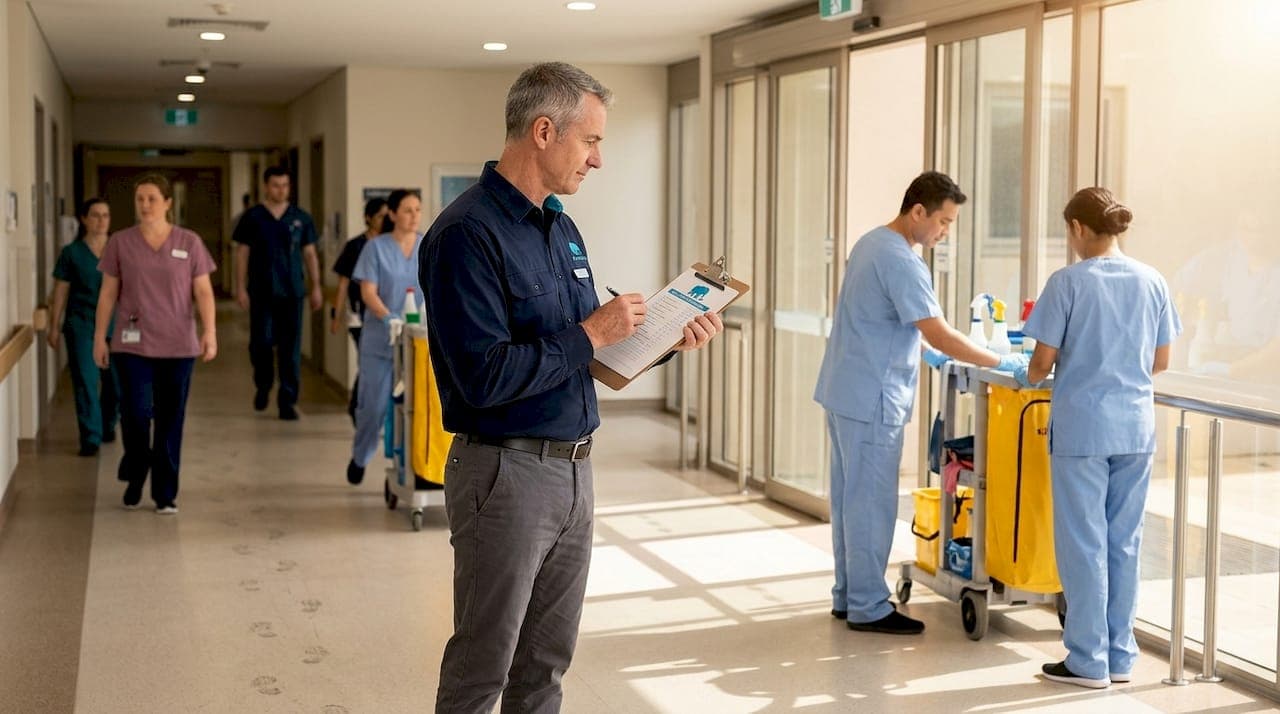
Routine cleaning keeps a facility looking presentable, but it rarely satisfies the hygiene and compliance demands placed on modern Australian workplaces. Regulatory expectations have grown sharper across healthcare, food production, education, and industrial sectors, and the gap between a daily vacuum and a genuinely compliant facility has never been wider. Many facility managers and business owners discover this gap at the worst possible moment, during an inspection or after an incident. This guide clarifies what specialised cleaning actually means, how it differs from standard routines, what it delivers for your business, and how to select a provider you can genuinely trust.
Table of Contents
- Defining specialised cleaning and where it applies
- How specialised cleaning differs from standard cleaning
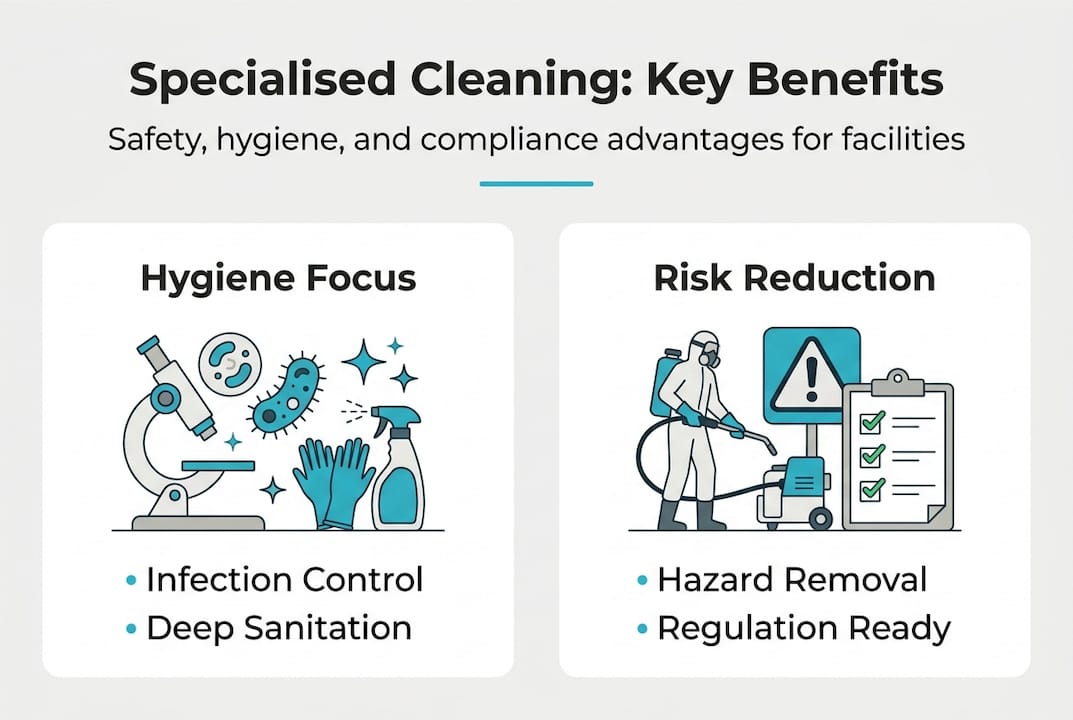
- Key benefits of specialised cleaning for facilities
- Choosing a specialised cleaning provider: What matters most
- Why specialised cleaning is more than ticking compliance boxes
- Discover trusted specialised cleaning for your business
- Frequently asked questions
Key Takeaways
| Point | Details |
|---|---|
| Customised solutions | Specialised cleaning addresses hazards and compliance that standard cleaning does not cover. |
| Regulatory compliance | Choosing the right provider helps you easily meet Australian health and safety obligations. |
| Proactive value | Investing in specialised cleaning cuts long-term risks, costs, and business disruptions. |
| Provider selection | Vet companies thoroughly for credentials and clear processes before signing a contract. |
Defining specialised cleaning and where it applies
Specialised cleaning is not simply a deeper version of your regular cleaning schedule. It refers to professional cleaning methods purposefully designed for unique facility types, specific industry risks, or regulatory compliance requirements. Where standard cleaning maintains day-to-day presentation, specialised cleaning addresses contamination risks, hazardous materials, and surface-specific protocols that require training, specialised equipment, and verified procedures.
As noted in specialised cleaning types, specialised cleaning responds to unique industry requirements and compliance obligations. This is the foundational distinction: it is purpose-built, not generic.
The main forms of specialised cleaning include:
- Biohazard and infection control cleaning: Used in healthcare settings, laboratories, and any facility exposed to bodily fluids or pathogens. Staff must follow strict biological hazard requirements set by Safe Work Australia.
- Clean room sanitation: Critical for pharmaceutical, electronics, and precision manufacturing environments where particle contamination must be controlled.
- Post-construction cleaning: Removes construction dust, debris, and chemical residues before a space becomes operational.
- Food-safe sanitation: Applied in commercial kitchens, food manufacturing plants, and hospitality facilities to meet food safety legislation.
- Scheduled deep cleaning: Periodic intensive cleans carried out in schools, gyms, aged care facilities, and offices to reset hygiene levels.
Sectors where specialised cleaning is non-negotiable include healthcare, food production, manufacturing, education, construction, and hospitality. In each case, compliance frameworks such as Safe Work Australia standards, state health regulations, or industry codes determine what is required and how often.
"Compliance in high-risk facilities is not achieved by effort alone. It requires the right method, applied correctly, by someone who understands the risk."
For facility managers, the practical takeaway is clear. If your industry carries specific hygiene risk or regulatory exposure, standard cleaning will leave gaps that could cost you far more than a cleaning upgrade.
How specialised cleaning differs from standard cleaning
Distinguishing between routine and specialised cleaning matters because using the wrong approach for your facility type can create real liability. The differences span purpose, technique, equipment, and the expertise of the people carrying out the work.
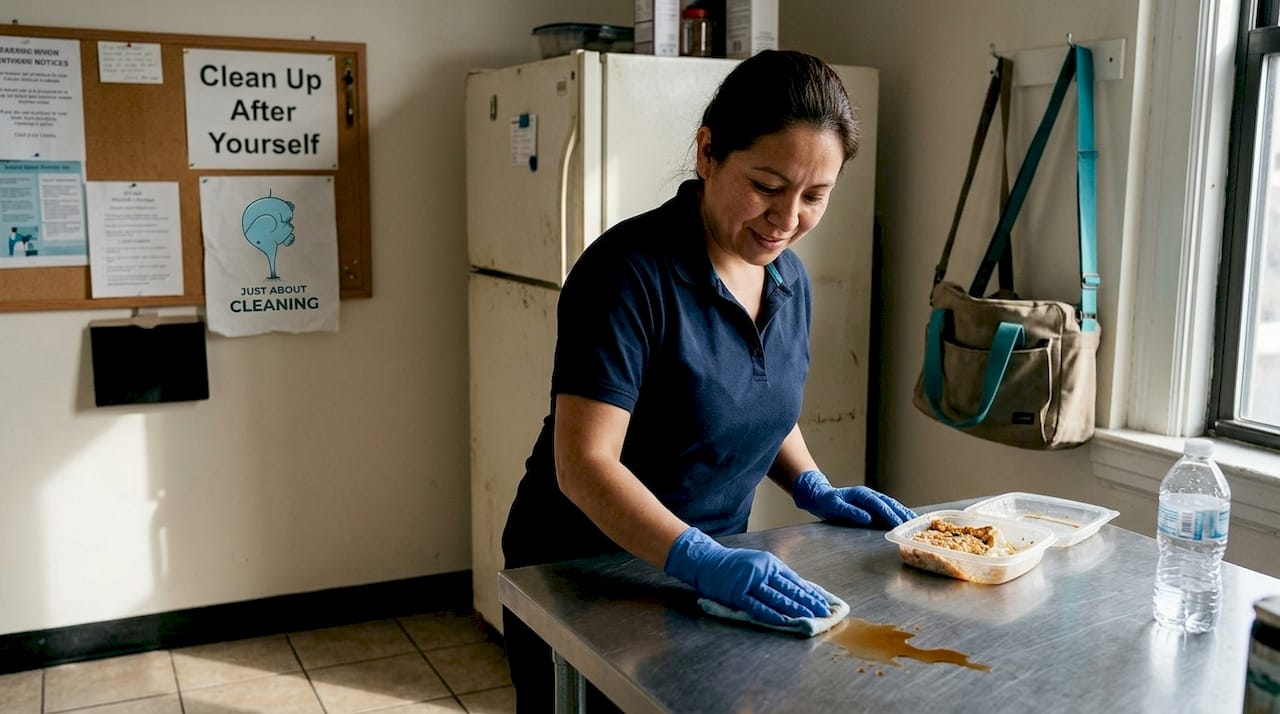
Standard cleaning tackles visible mess; specialised cleaning targets critical hygiene and compliance. That contrast captures the essential split. Routine facility cleaning maintenance is about keeping surfaces presentable between deeper interventions. Specialised cleaning is about eliminating specific risks, meeting documented standards, and producing verifiable outcomes.
Here is a direct comparison:
| Feature | Standard cleaning | Specialised cleaning |
|---|---|---|
| Primary goal | Appearance and tidiness | Hygiene, safety, and compliance |
| Frequency | Daily or weekly | Scheduled, post-incident, or regulatory-driven |
| Equipment used | Mops, vacuums, general products | Industrial machinery, PPE, specialist chemicals |
| Staff training | Basic cleaning skills | Industry-specific protocols and certifications |
| Documentation | Rarely required | Often mandatory for audits and inspections |
| Typical sectors | Any commercial space | Healthcare, food production, manufacturing, construction |
Beyond the table, it is worth highlighting a few critical practical differences:
- Specialised cleaners use personal protective equipment (PPE) appropriate to the risk, which standard cleaners are not trained or equipped to apply.
- Chemicals used in specialised cleaning are often regulated or restricted, requiring safe handling knowledge and controlled storage.
- The routine cleaning benefits that keep everyday workplaces functional are genuinely valuable, but they were never designed to carry compliance weight.
Pro Tip: Before assuming your current cleaning arrangement is sufficient, review any industry-specific regulations or Australian Standards that apply to your facility type. A quick check could prevent a costly compliance gap.
Key benefits of specialised cleaning for facilities
Facility managers who invest in specialised cleaning consistently report outcomes that go well beyond a clean floor. The benefits span hygiene, safety, regulatory standing, and even commercial reputation.
- Reduced contamination risk. Specialised techniques target pathogens, chemical residues, and biological hazards that standard cleaning leaves behind. This directly lowers the probability of staff illness, cross-contamination, and facility shutdowns.
- Demonstrated compliance. Meeting workplace hygiene compliance standards is not optional in high-risk sectors. Specialised cleaning provides documented evidence that your facility meets its obligations.
- Safer environments for staff and visitors. In settings like childcare centres, medical facilities, and aged care homes, the safety of vulnerable people depends on hygiene levels that only specialised methods can reliably achieve.
- Stronger reputation with regulatory bodies and clients. A facility with verifiable cleaning protocols signals professionalism. This matters during inspections, client site visits, and tender submissions.
- Lower long-term costs. Proactive specialised cleaning reduces the frequency of reactive, emergency cleans, which are significantly more expensive and disruptive.
As the benefits of trained cleaning staff demonstrate, facilities using trained cleaning professionals report higher efficiency and improved staff health outcomes. This is not an abstract claim. It translates to fewer sick days, reduced risk of workplace incidents, and a more productive team.
The deep cleaning advantages for Australian workplaces are particularly relevant for facilities that host clients, run regulated activities, or handle food and biological materials.
"A cleaning programme that meets compliance requirements is not an overhead. It is an operational safeguard that protects your people, your licence, and your business continuity."
Pro Tip: Keep a cleaning log with dates, methods used, and staff who carried out the work. This record is invaluable during regulatory audits and insurance assessments.
Choosing a specialised cleaning provider: What matters most
Selecting the right specialised cleaning company is one of the more consequential decisions a facility manager makes. The wrong choice can leave your compliance obligations unmet and your facility exposed.
When evaluating providers, the following criteria should be non-negotiable:
- Licensing and insurance: Your provider must carry appropriate public liability insurance and, where applicable, industry-specific licences for handling hazardous materials or working in regulated environments.
- Staff training and verification: Ask how staff are trained, how frequently training is updated, and whether workers are background-checked. This is particularly critical for healthcare and childcare settings.
- Industry-specific capability: A company experienced in office cleaning may not be equipped for food production environments. Confirm the provider has direct experience in your sector.
- Transparency in methods and pricing: Reputable providers outline exactly what is included, which products are used, and how compliance is documented. Vague contracts are a warning sign.
- References and safety record: Ask for verifiable references from facilities similar to yours. A strong safety record and low incident history indicate a mature operation.
Here is what to compare when assessing providers:
| Criteria | What to look for |
|---|---|
| Insurance | Public liability and workers' compensation confirmed in writing |
| Sector experience | Direct experience in your industry type |
| Compliance documentation | Written cleaning logs, audit-ready records |
| Staff credentials | Certified training, background checks |
| Contract clarity | Detailed scope, no hidden fees |
The provider selection criteria for specialised cleaning confirm that verified industry credentials and transparent service agreements are the foundation of effective specialised cleaning. For further independent guidance, CHOICE cleaning service tips offer a useful framework for comparing providers.
One common pitfall is choosing on price alone. The lowest quote often reflects compromises in training, insurance, or compliance rigour. Those compromises become your liability the moment something goes wrong. View Just About Cleaning services as a benchmark for what a compliant, transparent provider should look like.
Why specialised cleaning is more than ticking compliance boxes
After years of working with Australian facilities across healthcare, education, and industrial sectors, one pattern stands out. The businesses that treat specialised cleaning purely as a compliance requirement tend to manage it reactively. They respond to audits, incidents, and regulatory notices. The businesses that genuinely thrive treat it as an operational standard, not a minimum threshold.
Reactive cleaning is almost always more expensive. An unplanned deep clean following a contamination event costs significantly more than a scheduled programme, and the operational disruption can be severe. Beyond cost, there is a trust dimension. Staff notice when their workplace is genuinely maintained. Clients notice when a facility feels professionally managed. Regulatory bodies notice when documentation is current and thorough.
The shift from reactive to proactive is not complicated, but it requires intention. Scheduling regular hygienic office cleaning and deep cleans, maintaining accurate records, and partnering with a provider who understands your industry's risks are practical steps that deliver real business value. Compliance is the floor, not the ceiling.
Discover trusted specialised cleaning for your business
If your facility operates in a regulated sector or carries specific hygiene risks, the information in this article points towards one clear next step: partnering with a cleaning provider whose credentials, training, and processes are built for your environment.
Just About Cleaning Australia has spent over 15 years delivering tailored specialised cleaning for commercial and industrial facilities across Australia. Our trained onsite crews operate to compliance-focused standards, and we provide full documentation to support your audit and inspection requirements. Whether you manage a healthcare facility, food production site, or commercial office, we can assess your needs and deliver a service that meets your obligations without disruption. Contact us today to arrange a site assessment or request a compliance-focused quote.
Frequently asked questions
What does specialised cleaning include?
Specialised cleaning covers biohazard removal, infection control, post-construction cleans, food-safe sanitation, and other services tailored to unique facility risks. The specific scope depends on your industry and regulatory requirements.
How often should I schedule specialised cleaning in my facility?
Frequency depends on your facility type, risk level, and compliance obligations. High-risk environments such as healthcare or food production may require scheduled specialised cleans monthly or more often.
Does specialised cleaning help with compliance inspections?
Yes. Consistent specialised cleaning supports documented hygiene and safety standards, and a well-maintained cleaning log can serve as audit-ready evidence during regulatory inspections.
What questions should I ask a specialised cleaning provider?
Ask about their certifications, sector-specific experience, staff training programmes, compliance history, and whether they provide transparent, detailed service contracts before you sign anything.