
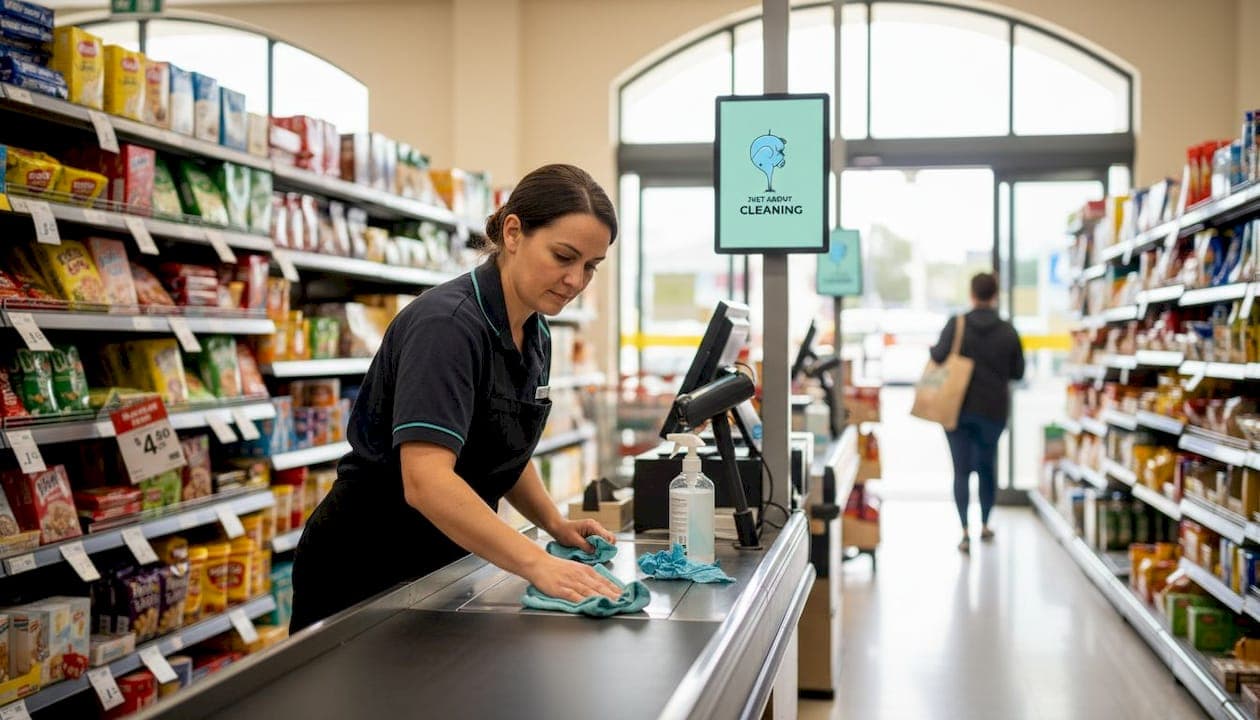
A spotless retail environment isn't just about appearances. Research shows that over 90% of Australian customers actively consider store cleanliness when deciding where to shop, directly influencing purchasing behaviour and repeat business. For retail managers across Australia, maintaining rigorous hygiene standards represents both a legal obligation and a powerful competitive advantage. This guide delivers practical, expert-backed strategies to help you implement effective cleaning protocols, ensure compliance with Australian food safety regulations, and create retail spaces that build lasting customer trust and drive measurable sales growth.
Table of Contents
- Key Takeaways
- The difference between cleaning and sanitising in retail spaces
- Targeting high-touch surfaces to prevent cross-contamination
- Using eco-friendly products and new technology for efficient cleaning
- Food safety requirements for retail meat and food businesses
- How retail hygiene influences customer trust and business performance
- How Just About Cleaning supports your retail hygiene needs
- Frequently asked questions
Key Takeaways
| Point | Details |
|---|---|
| Cleaning versus sanitising | Retail surfaces must be cleaned to remove dirt and then sanitised to kill remaining pathogens, as required by Australian regulations. |
| Target high touch surfaces | Prioritise high touch points such as entry handles, POS terminals, trolley and basket handles and restroom fixtures with frequent cleaning. |
| Colour coded cloths | Colour coding organises cleaning by area with blue for general surfaces, red for restrooms, green for food preparation and yellow for high touch points. |
| Auditable hygiene records | Document cleaning and sanitising activities to create an auditable hygiene record and train staff to apply each process correctly. |
| Staff health and temp controls | Staff health and temperature controls require excluding symptomatic staff for 48 hours after symptoms cease and keeping potentially hazardous foods between 5°C and 60°C with the 2/4 hour holding rule. |
The difference between cleaning and sanitising in retail spaces
Many retail managers use these terms interchangeably, yet understanding the distinction is fundamental to achieving genuine hygiene compliance. Cleaning removes dirt and grease using detergent and hot water, physically eliminating visible contaminants from surfaces. Sanitising goes further by reducing bacteria to safe levels through heat or chemical treatments, addressing invisible microbial threats that cleaning alone cannot eliminate.
For retail food businesses, this two-step process is non-negotiable. You must clean surfaces first to remove organic matter, then sanitise to kill remaining pathogens. Australian regulations mandate specific protocols: retail premises require separate handwashing facilities equipped with warm running water, soap, and single-use towels. These facilities cannot double as food preparation sinks.
Food handler health directly impacts your hygiene outcomes. Staff experiencing symptoms like vomiting, diarrhoea, or fever must be excluded from handling food for 48 hours after symptoms cease. This exclusion period prevents contamination and protects your customers from foodborne illness. Temperature control adds another critical layer: potentially hazardous foods must remain below 5°C or above 60°C, with the 2/4-hour rule governing safe holding times at room temperature.
Implementing retail cleaning services that understand these distinctions ensures your business meets legal requirements while protecting customer health. Your cleaning schedule should document both cleaning and sanitising activities, creating an auditable record of hygiene compliance. Train staff to recognise when each process is required, and provide appropriate products for both tasks. This systematic approach transforms hygiene from a reactive task into a proactive business advantage.
Targeting high-touch surfaces to prevent cross-contamination
Not all retail surfaces carry equal contamination risk. High-touch surfaces such as doorknobs and POS terminals require frequent cleaning using colour-coded microfibre cloths to avoid cross-contamination. These surfaces accumulate pathogens rapidly through constant customer and staff contact, making them primary vectors for illness transmission.
Prioritise these critical touchpoints in your retail space:
- Entry and exit door handles touched by every customer
- Point-of-sale terminals and payment keypads handled during transactions
- Shopping trolley and basket handles carried throughout the store
- Restroom fixtures including taps, door handles, and dispensers
- Display shelves and product packaging in high-traffic areas
- Staff break room surfaces and shared equipment
Microfibre cloths eliminate 99.9% of microbes when used correctly, but improper use transforms them into contamination spreaders. Implement a colour-coding system: blue cloths for general surfaces, red for restrooms, green for food preparation areas, and yellow for high-touch points. This visual system prevents staff from accidentally transferring bathroom bacteria to customer service counters.
Cleaning frequency matters as much as technique. High-touch surfaces need attention every two to four hours during operating hours, with increased frequency during peak shopping periods. Document cleaning times in a visible log to demonstrate compliance and create accountability among cleaning staff.
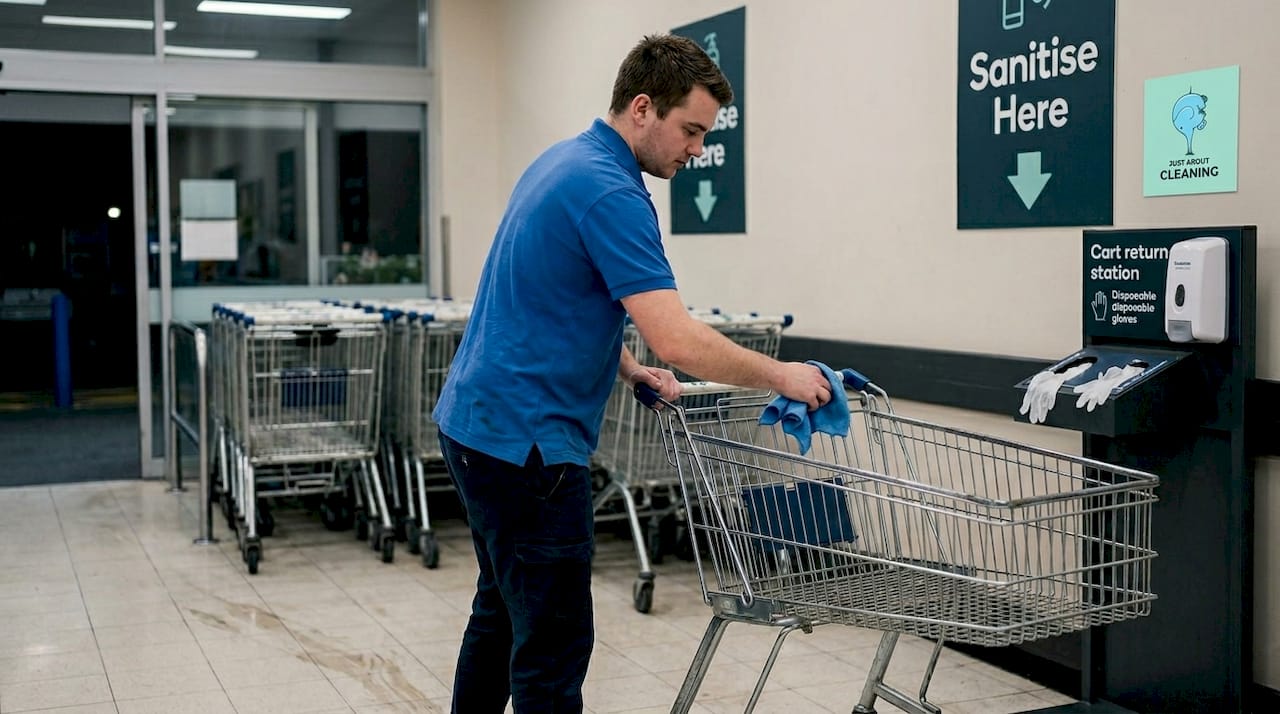
Pro Tip: Never use the same cloth across multiple surface types without washing. Even a quick wipe from a checkout counter to a door handle can transfer harmful bacteria. Keep fresh cloths readily available and establish clear protocols for cloth disposal after single-area use.
Common mistakes undermine even rigorous cleaning efforts. Overflowing rubbish bins signal neglect to customers and create actual hygiene hazards. Empty bins before they reach capacity, and clean bin exteriors as frequently as interiors. Similarly, worn or damaged surfaces harbour bacteria in cracks and crevices that cleaning cannot reach. Budget for regular surface repairs and replacements as part of your hygiene investment. Professional retail cleaning solutions incorporate these details into comprehensive maintenance programmes that protect your reputation and customer health.
Using eco-friendly products and new technology for efficient cleaning
Sustainability and hygiene are no longer competing priorities. GECA-certified products and technologies such as IoT sensors improve cleaning efficiency and sustainability simultaneously, delivering superior hygiene outcomes while reducing environmental impact. Modern retail managers can access innovations that were unimaginable a decade ago, transforming cleaning from labour-intensive routine to smart, data-driven operations.
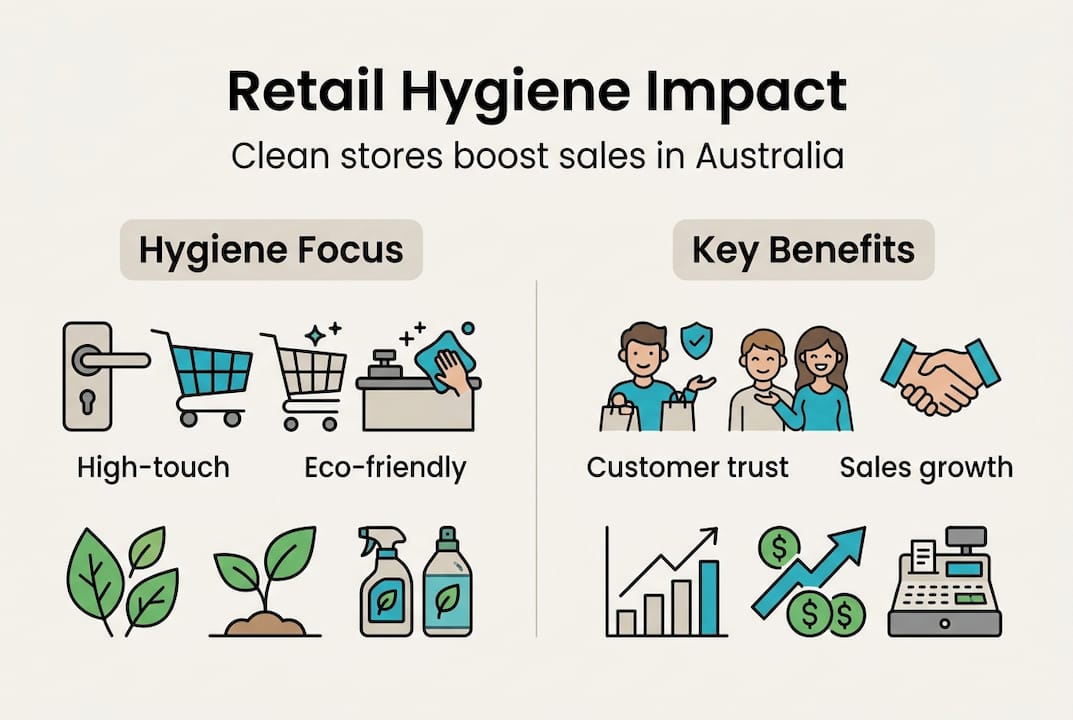
Eco-friendly cleaning products have matured beyond early formulations that sacrificed effectiveness for environmental credentials. Third-party certifications like GECA (Good Environmental Choice Australia) verify that products meet stringent performance standards while minimising ecological harm. These certified solutions eliminate harsh chemicals that can irritate staff and customers, reduce water pollution, and often cost less over time due to concentrated formulations requiring smaller quantities per application.
Technology integration amplifies cleaning effectiveness:
- IoT-enabled sensors monitor restroom usage and cleanliness in real time, alerting staff precisely when attention is needed rather than following fixed schedules
- Robotic floor cleaners operate during off-hours, delivering consistent results while freeing staff for detail work requiring human judgement
- Electrostatic sprayers apply sanitising solutions evenly across complex surfaces, reaching areas manual wiping misses while using 65% less chemical product
- UV-C disinfection devices provide chemical-free sanitisation for high-touch electronics and surfaces sensitive to moisture
These technologies deliver measurable benefits beyond cleanliness. Robotic cleaners reduce labour costs by 40% for large floor areas while improving consistency. IoT sensors decrease cleaning supply waste by 30% through demand-based deployment. Electrostatic sprayers cut application time by 75% compared to manual methods, allowing more frequent sanitisation cycles within existing labour budgets.
Pro Tip: Select products that balance effectiveness with environmental responsibility by checking for multiple certifications. GECA certification confirms environmental standards, while separate antimicrobial testing verifies sanitising capability. Products meeting both criteria deliver the complete package retail environments require.
Implementation requires upfront investment but generates rapid returns. Calculate total cost of ownership including labour savings, reduced product consumption, and decreased equipment replacement frequency. Many retailers recover technology investments within 18 to 24 months through operational efficiencies. Partner with sustainable retail cleaning specialists who understand both environmental science and practical retail operations to design systems that work for your specific space and budget.
Food safety requirements for retail meat and food businesses
Retail food businesses face the strictest hygiene regulations in the retail sector. Food safety programmes based on HACCP principles are required, with staff compliance for health, skills, and maintenance to uphold legal hygiene standards. These requirements aren't bureaucratic obstacles but essential frameworks protecting public health and your business reputation.
HACCP (Hazard Analysis Critical Control Point) programmes identify specific points in your food handling process where contamination risks exist, then establish monitoring and control measures for each point. For retail meat premises, this includes receiving, storage, preparation, display, and sale stages. You must document procedures, train staff, and maintain records proving consistent compliance.
Staff hygiene obligations extend beyond basic handwashing:
- Complete food safety training appropriate to their role before handling food
- Report any illness symptoms immediately and cease food handling
- Maintain personal cleanliness including clean uniforms and tied-back hair
- Use single-use gloves or utensils when handling ready-to-eat foods
- Wash hands after any activity that could cause contamination
- Avoid touching face, hair, or personal items while handling food
Cleaning and maintenance routines must follow Food Standards Code specifications. Document cleaning schedules, products used, and staff responsible for each task. Equipment requires regular maintenance to prevent malfunction that could compromise food safety. Refrigeration units need daily temperature checks with recorded results, and any deviation from safe ranges demands immediate corrective action.
| Food safety risk | Temperature control | Time limit | Action required |
|---|---|---|---|
| High-risk cold foods | Below 5°C | Continuous | Refrigerate immediately |
| High-risk hot foods | Above 60°C | Continuous | Keep heated or refrigerate |
| 2-hour rule | 5°C to 60°C | Under 2 hours | Safe to refrigerate and reuse |
| 4-hour rule | 5°C to 60°C | 2 to 4 hours | Must be consumed or discarded |
| Over 4 hours | 5°C to 60°C | Over 4 hours | Discard immediately |
Compliance audits assess your entire operation, from facility construction to daily practices. Retail meat premises must meet specific structural requirements: impervious floors and walls, adequate lighting, proper ventilation, and separate areas for different food handling activities. Invest in food retail cleaning compliance support to ensure your premises and practices meet evolving regulatory standards without constant management attention diverted from core retail operations.
How retail hygiene influences customer trust and business performance
Hygiene perception shapes customer behaviour more powerfully than most retail managers realise. Over 90% of customers say cleanliness influences their shopping decision, with visible cleanliness assuring 76% of shoppers and directly impacting trust and sales. This isn't about perfectionism; it's about recognising that customers make split-second judgements based on environmental cues, and cleanliness ranks among the most influential signals.
Customer perception varies significantly by retail format. 59% of Australians view local restaurants as hygienic, versus 26% for food courts, illustrating how hygiene perception varies by venue type. These statistics reveal that customers apply different standards to different retail environments, but all formats face scrutiny. Your store competes not just on product and price but on the unspoken promise of a clean, safe shopping environment.
Customers notice specific hygiene factors:
- Floor cleanliness and absence of visible debris or spills
- Restroom condition and supply availability
- Checkout area organisation and cleanliness
- Product display neatness and dust-free surfaces
- Pleasant or neutral odours versus musty or chemical smells
- Staff appearance and visible hygiene practices
"When customers walk into a visibly clean store, they unconsciously associate that cleanliness with product quality, staff professionalism, and business reliability. Conversely, even minor hygiene lapses trigger doubt about everything else you do."
The business impact extends beyond immediate sales. Clean stores generate higher customer satisfaction scores, increased dwell time, and stronger word-of-mouth recommendations. Customers spend an average of 20% more time in clean, well-maintained retail environments, directly correlating with higher transaction values. Social media amplifies both positive and negative hygiene experiences, with customers increasingly posting photos of exceptionally clean or notably dirty retail spaces.
Employee morale and retention also improve in clean work environments. Staff take pride in well-maintained spaces and feel valued when employers invest in workplace hygiene. This translates to better customer service, lower turnover costs, and stronger team performance. Understanding the impact of retail hygiene on multiple business dimensions helps justify appropriate cleaning investments and prioritise hygiene in operational planning.
How Just About Cleaning supports your retail hygiene needs
Maintaining exceptional retail hygiene standards requires expertise, consistency, and resources that stretch many retail management teams. Just About Cleaning brings over 15 years of specialised experience helping Australian retail businesses achieve hygiene excellence that drives customer trust and regulatory compliance. Our trained crews understand the unique challenges retail environments present, from managing cleaning around operating hours to addressing the specific requirements of food retail premises.
We design tailored retail cleaning services that align with your business rhythm, customer expectations, and compliance obligations. Our programmes incorporate the latest eco-friendly products and cleaning technologies, delivering superior hygiene outcomes while supporting your environmental commitments. Whether you operate a boutique store or manage multiple retail locations, our flexible service models scale to your needs. From daily maintenance cleaning to deep sanitisation programmes, we create custom solutions that protect your reputation and free your team to focus on core retail operations. Contact Just About Cleaning today to discuss how our professional retail cleaning solutions can elevate your store's hygiene standards and customer experience.
Frequently asked questions
What is the difference between cleaning and sanitising in retail?
Cleaning physically removes dirt, grease, and visible contaminants using detergent and hot water. Sanitising reduces bacteria and pathogens to safe levels using heat or chemical treatments. Both steps are essential: you must clean surfaces first to remove organic matter, then sanitise to kill remaining microbes.
How often should high-touch surfaces be cleaned in retail stores?
High-touch surfaces like door handles, POS terminals, and shopping trolleys need cleaning every two to four hours during operating hours. Increase frequency during peak shopping periods when customer contact intensifies. Using colour-coded microfibre cloths for different surface types prevents cross-contamination between areas.
What hygiene requirements must retail food handlers follow?
Food handlers must be excluded from work for 48 hours after illness symptoms cease to prevent contamination. They must wash hands thoroughly before handling food, after any contaminating activity, and when changing tasks. Handlers must use gloves or utensils when touching ready-to-eat foods and maintain personal cleanliness including clean uniforms.
Can eco-friendly cleaning products meet retail hygiene standards?
Yes, eco-friendly products with GECA certification meet stringent hygiene and environmental standards simultaneously. These certified solutions eliminate harmful chemicals while delivering effective sanitisation. Combining eco-friendly products with modern technologies like electrostatic sprayers improves efficiency and reduces chemical usage by up to 65%.
How does store cleanliness impact customer behaviour?
Over 90% of customers say store cleanliness directly influences where they choose to shop. Visible cleanliness assures 76% of shoppers and builds trust in product quality and business professionalism. Clean stores generate 20% longer customer dwell time, higher transaction values, and stronger word-of-mouth recommendations that drive repeat business.