
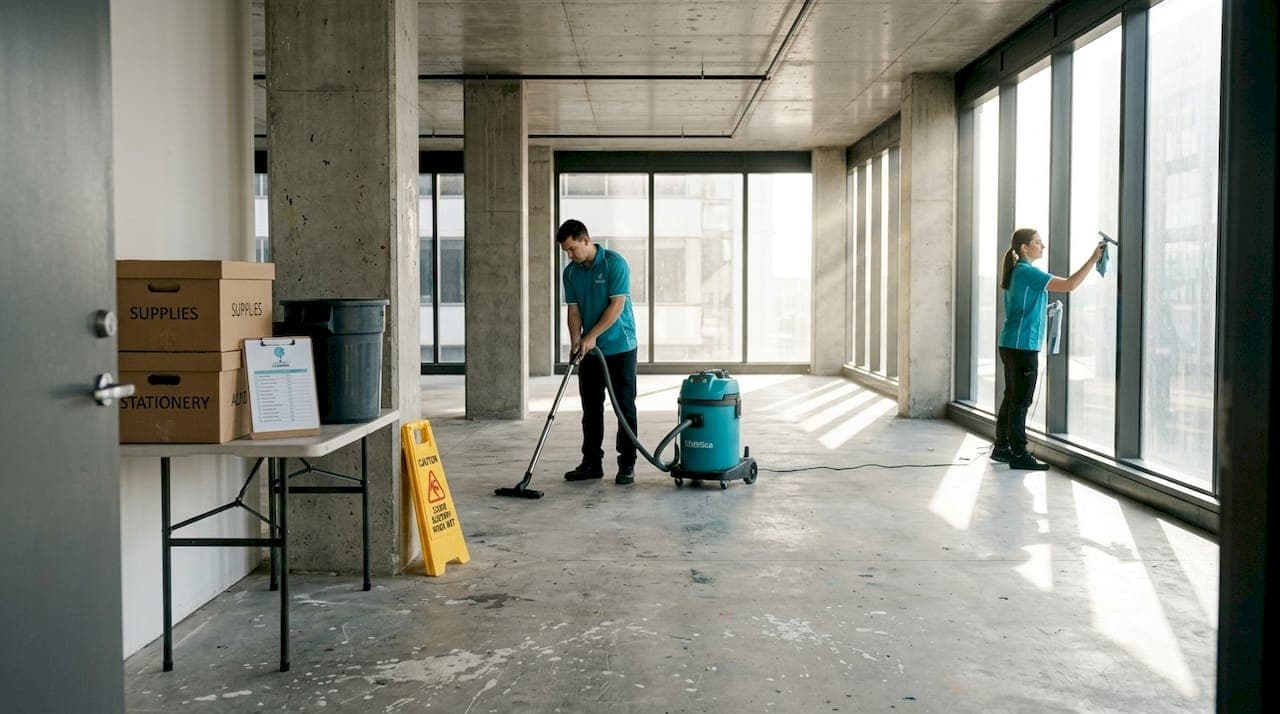
TL;DR:
- Post-construction cleaning removes hazardous debris, fine dust, and residues to ensure safety and hygiene before occupancy. It involves a structured process with specialised methods to prevent health risks like silica dust exposure and indoor air pollution. Engaging trained professionals using eco-friendly equipment guarantees a thorough, compliant, and damage-free finish for any development project.
A finished build rarely means a finished job. Once the last tradie packs up and leaves, what remains is often invisible to the untrained eye: fine silica dust settled into air vents, chemical residues on new benchtops, grout haze clouding freshly tiled floors, and construction debris tucked behind fixtures. These hidden hazards pose genuine risks to the health and safety of future occupants. Post-construction cleaning is not simply a tidiness exercise — it is a structured, specialist process that transforms a completed build into a property that is genuinely safe, hygienic, and ready for use.
Table of Contents
- What is post-construction cleaning?
- Why is post-construction cleaning important for safety and hygiene?
- Key steps and specialised methods in post-construction cleaning
- Eco-friendly and safe cleaning products: Making the right choice
- When and how to engage a post-construction cleaning professional
- What most property managers get wrong about post-construction cleaning
- Professional post-construction cleaning solutions for your property
- Frequently asked questions
Key Takeaways
| Point | Details |
|---|---|
| Essential for occupancy | Post-construction cleaning is critical before handing over any property to occupants, ensuring safety and hygiene. |
| Specialist tools required | Procedures involve HEPA vacuums, eco-friendly products, and expert techniques to remove harmful dust and residues. |
| Eco-friendly options available | Modern services rely on non-abrasive, environmentally safe products to protect new surfaces and health. |
| Professional support matters | Hiring experienced providers reduces liability, meets compliance, and delivers true move-in readiness. |
What is post-construction cleaning?
To understand the unique value of post-construction cleaning, let's start with what actually sets it apart from ordinary cleaning processes.
Post-construction cleaning is the targeted, intensive removal of construction debris, fine dust, chemical residues, and hazardous particles that accumulate during building or renovation work. It is a fundamentally different process to routine commercial or residential cleaning. Where standard cleaning addresses everyday dirt and surface grime, post-construction cleaning must contend with substances that require specialised equipment and methods to remove safely.
The process is typically structured in three distinct stages:
- Initial clean (builders' clean): Removal of bulk debris, off-cuts, packaging, plaster chunks, and large-particle dust from all surfaces and floors.
- Detailed clean: Targeted cleaning of fixtures, fittings, window frames, skirting boards, cabinetry, and all surfaces using specialist chemicals and tools. This stage addresses grout haze, paint overspray, adhesive residues, and silicone smears.
- Final inspection clean: A thorough polish and detail pass carried out immediately before property handover or occupancy. Every surface, fitting, and floor is checked and finished to a presentation standard.
Understanding why professional cleaners matter at this stage is critical. Builders and trades workers are skilled at constructing and finishing, not at deep cleaning to health and safety standards.
Post-construction cleaning relies on key methodologies including top-to-bottom cleaning to avoid recontamination, use of HEPA-filtered vacuums for fine dust such as silica, microfibre cloths, non-abrasive and eco-friendly chemicals, wet methods to suppress dust, and specialised tools for residues like paint scrapers and grout haze removers.
Skipping a professional approach here creates real risk. Fine particles left on surfaces and in ventilation systems do not simply disappear. They redistribute, contaminate indoor air, and create compliance issues. Applying cleaning best practices designed specifically for post-construction environments is the only reliable way to address these risks. For property developers and managers, engaging specialists who understand eco-friendly post-construction cleaning principles also supports broader sustainability goals.
Why is post-construction cleaning important for safety and hygiene?
Now that we have defined post-construction cleaning, it is vital to understand how it protects both occupants and property managers from unexpected problems.
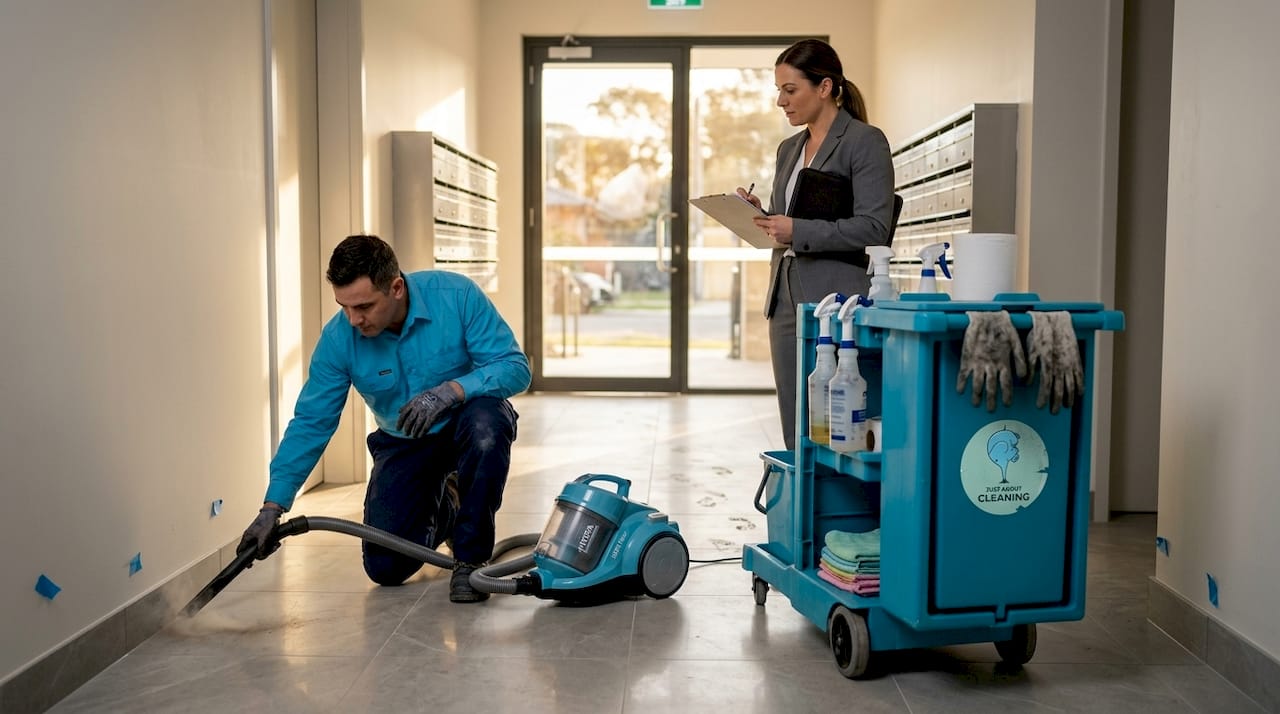
The risks left behind after construction are more serious than most people realise. Fine construction dust, particularly silica dust generated by cutting concrete, masonry, and tiles, is one of the most significant hazards. Silica particles are small enough to penetrate deep into the lungs and, with repeated exposure, can cause serious respiratory disease. This is not a theoretical risk. It is a well-documented occupational and environmental health concern relevant to any newly built or renovated space before professional cleaning occurs.
Beyond silica, construction sites produce a range of residues that affect indoor air quality and surface safety:
- Paint fumes and overspray on walls, floors, and glass
- Adhesive and sealant residues on tiles, benchtops, and joinery
- Grout haze on tiled surfaces that etches and clouds if left untreated
- Plaster and render dust coating horizontal surfaces, shelving, and cabinetry interiors
- Chemical cleaning agents used by trades that may leave toxic residues
Using HEPA-filtered vacuums and wet cleaning methods to remove fine dust and hazardous residues like silica is the professional standard for these environments.
Statistic callout: Indoor air quality can be up to five times more polluted than outdoor air after construction, according to environmental health research. In a newly built space that has not been professionally cleaned, this figure can be even higher due to concentrated dust and chemical off-gassing.
Post-construction cleaning also directly supports compliance with Australian health and safety standards. Property managers have a duty of care to ensure buildings are safe before occupancy. Missed residues, improperly cleaned ventilation systems, or hazardous dust left on surfaces can delay occupancy approvals, attract complaints from early occupants, or expose property managers to liability. Aligning with property management cleaning standards is not optional — it is an essential part of responsible property handover.
Pro Tip: Brief your cleaning provider about the specific trades that worked on the site before the clean begins. Knowing whether concrete cutting, tiling, spray painting, or epoxy work was carried out allows the team to bring the right equipment and chemicals to address each residue type safely and efficiently.
Working with health-focused and trained cleaners who understand construction environments also ensures that cleaning does not create secondary contamination by spreading fine dust rather than capturing it.
Key steps and specialised methods in post-construction cleaning
Having covered why this process matters, let us walk through the practical methods and steps used by professionals who clean up after building work.
Post-construction cleaning follows a deliberate sequence. Moving from the highest surfaces to the lowest is essential to prevent recontamination, as disturbed dust and debris always fall downward. Here is the standard framework used by experienced professionals:
- Remove bulk waste and debris from all rooms and outdoor areas, including packaging, off-cuts, and loose rubble.
- Vacuum all overhead surfaces including ceilings, light fittings, exhaust fans, and air vents using HEPA-filtered vacuums to capture fine particles.
- Wipe down walls, window frames, and door frames using damp microfibre cloths with appropriate, non-abrasive cleaning solutions.
- Clean windows and glass using specialist glass cleaners and rubber squeegees, removing adhesive stickers, paint overspray, and silicone smears.
- Address stubborn residues using specialised tools such as HEPA-filtered vacuums, non-abrasive chemicals, and paint scrapers to safely remove building dust and surface residues without damaging finishes.
- Clean all fixtures and fittings including kitchen benchtops, bathroom vanities, tapware, and cabinetry — inside and out.
- Treat floor surfaces last, vacuuming with HEPA equipment, wet mopping hard floors, and steam-cleaning carpets or soft floor coverings.
- Final inspection and detail pass to verify all surfaces meet the required presentation standard before handover.
The sequencing is not incidental. Professionals understand that skipping steps or working out of order risks undoing earlier work. A stepwise cleaning approach applied consistently is what separates a professional result from a superficially clean finish that hides ongoing contamination.
Applying eco-friendly cleaning methods at each stage also matters. Wet suppression methods, for example, are used to prevent fine dust from becoming airborne during vacuuming or scrubbing. This protects both the cleaning crew and the indoor environment.
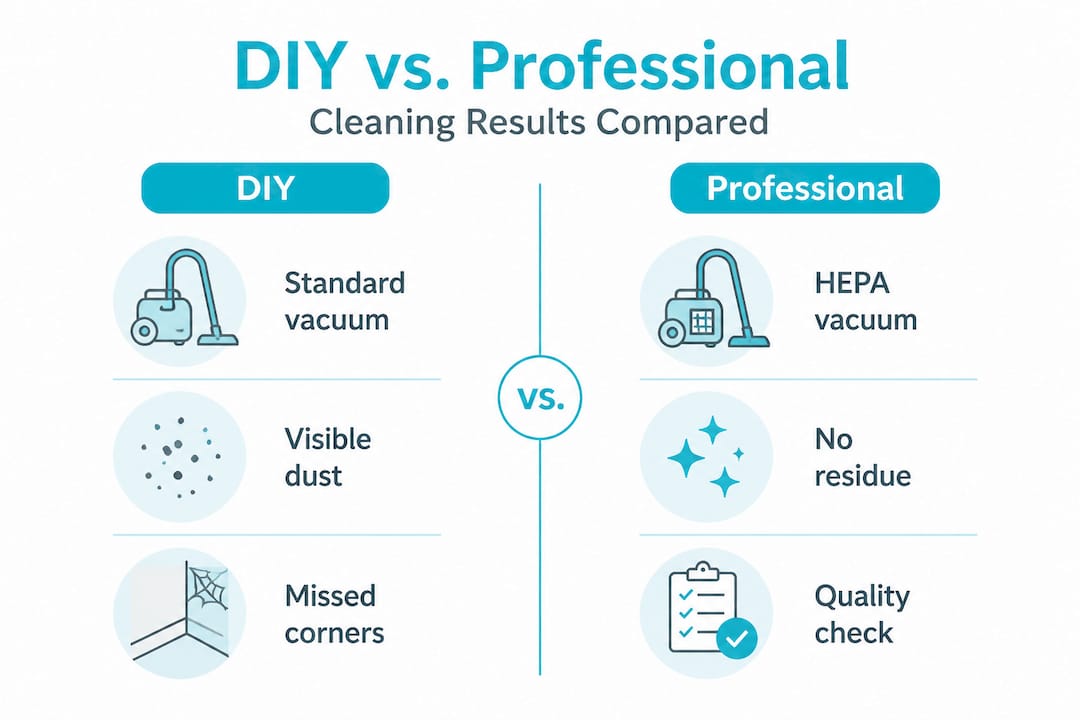
| Task | DIY approach | Professional approach |
|---|---|---|
| Dust removal | Broom and standard vacuum | HEPA-filtered vacuum and wet suppression |
| Residue removal | General-purpose spray and wipe | Specialist chemicals and paint scrapers |
| Window cleaning | Standard glass cleaner | Squeegee and adhesive removal tools |
| Surface protection | Risk of scratching with wrong products | Non-abrasive, surface-appropriate chemicals |
| Air quality outcome | Fine dust redistributed | Fine dust captured and removed |
The difference in outcomes between DIY and professional cleaning is substantial. A comparison of tools and techniques for post-construction cleaning consistently shows that professional equipment delivers superior results, particularly for airborne fine particles.
Pro Tip: Always ensure your cleaning provider performs a final quality inspection walk-through with a site representative before signing off. This protects both parties and confirms the property meets the agreed standard before occupancy proceeds.
Eco-friendly and safe cleaning products: Making the right choice
With cleaning methods covered, the next crucial consideration is choosing products that are both safe and environmentally responsible.
The choice of cleaning products in a post-construction environment matters more than most property managers realise. Newly installed surfaces, particularly stone benchtops, polished concrete floors, timber joinery, and glass splashbacks, are vulnerable to damage from harsh or abrasive chemicals. Using the wrong product can etch, stain, or permanently dull a finish, adding repair costs to what was meant to be a final clean.
Microfibre cloths and non-abrasive, eco-friendly chemicals are the professional standard for removing fine dust and residues without compromising new surfaces. These products are also safer for cleaning crew members and future occupants, as they do not leave behind toxic residues that off-gas into the indoor environment.
| Product type | Best for | Risk to surfaces | Environmental impact |
|---|---|---|---|
| Non-abrasive, pH-neutral cleaner | General surfaces, tiles, glass | Low | Low |
| Enzyme-based cleaner | Organic residues, adhesives | Low | Very low |
| Solvent-based cleaner | Paint overspray, heavy adhesives | Moderate (use with care) | Moderate |
| Abrasive chemical cleaner | Heavy-duty stripping | High — can damage finishes | High |
The benefits of eco-conscious cleaning extend beyond surface protection. They include:
- Reduced volatile organic compound (VOC) emissions indoors, improving air quality for early occupants
- Lower environmental impact from wastewater discharge during construction site cleaning
- Compliance with green building standards where these are relevant to the project
- Reduced occupational health risks for cleaning crew members
Exploring eco-friendly business cleaning options is increasingly important as more Australian property developers seek to meet sustainability benchmarks in their projects. The benefits of eco-friendly cleaning are well-documented and directly relevant to post-construction environments where multiple chemical exposures can compound.
Microfibre tools deserve specific mention. They capture and hold particles rather than redistributing them, and they require far less chemical product to achieve the same cleaning result. For post-construction environments where fine particle removal is a priority, microfibre is not a luxury — it is the correct tool for the job.
When and how to engage a post-construction cleaning professional
Even the best products and methods need experienced hands, so let us explore how to choose and work with the right professionals for your development.
Timing matters. The ideal point to engage a post-construction cleaning team is after all major trades have finished and removed their equipment, but before any soft furnishings, appliances, or fit-out items are installed. This gives the cleaning team unobstructed access to every surface and reduces the risk of new items being contaminated during the cleaning process.
A professional cleaning team uses a structured, staged approach with specialist tools and methods, ensuring safety and hygiene at every step. When selecting a provider, ask the right questions upfront:
- Do they hold current public liability and professional indemnity insurance?
- Are their staff trained in the handling of construction-related hazardous substances?
- Do they use HEPA-filtered equipment and eco-friendly cleaning products?
- Can they provide references from comparable construction or development projects?
- Do they offer a staged cleaning programme that includes builders' clean, detailed clean, and final inspection clean?
- Are they familiar with Australian health and safety standards applicable to commercial or residential handover?
Getting clear on the scope of work before the job begins is equally important. Specify which areas require what level of attention, confirm whether external glazing or high-access areas are included, and establish how quality will be verified at the end of each stage.
Understanding how to engage professional cleaners effectively and get expert deep cleaning outcomes relevant to your property type will help you set realistic expectations and avoid scope gaps. Reviewing post-construction cleaning steps used by experienced providers also helps you ask more informed questions when comparing quotes.
What most property managers get wrong about post-construction cleaning
Let us share some real-world lessons and industry insights that can prevent costly errors for property managers.
The most common mistake we see is treating post-construction cleaning as an afterthought. Many property managers plan extensively for construction timelines, budget allocations, and occupancy dates — and then schedule the cleaning as a last-minute task with minimal budget and a tight window. The result is either a surface-level clean that leaves residues behind, or a rushed job that creates new problems.
Here is the uncomfortable truth: construction dust and residues do not stay where you can see them. They settle into HVAC systems, hide behind skirting boards, coat the insides of cabinetry, and settle on ledges above eye level. A cleaning team that is under-resourced or working to an inadequate scope will miss these areas. The consequences are complaints from occupants within weeks of move-in, potential respiratory issues, and in some cases, costly remediation work.
Another overlooked factor is communication. Many disputes between property managers and cleaning providers come down to scope ambiguity. If the brief does not clearly specify that balcony drains must be cleared of plaster debris, or that window frames must be wiped inside and out, those tasks may not get done. Clear, detailed scoping is not bureaucracy — it is self-protection.
Investing properly in post-construction cleaning also has a measurable return. Properties that present in excellent condition at handover generate fewer defect notices, attract better first impressions from tenants, and reduce early maintenance costs. Aligning with compliance value in cleaning principles from the outset of your project planning — not as an afterthought — is the approach that experienced property managers take. It protects your investment, your reputation, and the health of your future occupants.
Professional post-construction cleaning solutions for your property
If you are ready to put these lessons into practice, here is where you can get professional support tailored to your property and regulatory needs.
At Just About Cleaning, we have spent over 15 years delivering high-standard cleaning services across commercial and residential developments throughout Australia. Our post-construction cleaning teams are trained, insured, and equipped with HEPA-filtered vacuums, eco-friendly products, and specialist tools to handle everything from builders' clean through to final handover detail.
We work with property developers and managers across all sectors, from large commercial builds to boutique residential projects, providing staged cleaning programmes that match your construction timeline and compliance requirements. Every job is completed by trained onsite crews who understand Australian health and safety standards and the specific demands of post-construction environments. Explore our full range of services and find out how Just About Cleaning can support your next project from completion through to confident occupancy.
Frequently asked questions
How long does post-construction cleaning take?
Most jobs require one to several days, depending on the size and complexity of the property, and the level of debris left after building work. Larger commercial projects may require a staged programme across multiple days.
What should I expect after a professional post-construction clean?
You should expect all fine dust, residues, and debris to be removed, leaving the environment safe, hygienic, and ready for use. A thorough professional clean uses top-to-bottom methods including HEPA vacuuming, microfibre cloths, and specialist tools to capture every particle.
Are eco-friendly cleaning products used for post-construction cleaning?
Yes, most reputable providers now use non-abrasive, eco-friendly chemicals that clean effectively without harming new surfaces or leaving harmful residues for occupants.
Is post-construction cleaning mandatory for property compliance in Australia?
While not always a specific legal requirement, thorough post-construction cleaning helps ensure compliance with health and safety laws and can prevent occupancy delays or liability issues arising from contaminated environments.
What is the difference between builders' clean and final detail clean?
Builders' clean removes major debris and bulk dust from all surfaces, while the final detail clean targets fine dust, smudges, residues, and surface marks immediately before property handover to achieve presentation-ready condition.
Recommended
- Cleaning in property management: Compliance and value
- Master the deep cleaning process: compliant workplaces
- How cleaning drives workplace safety in Australian businesses
- How to clean commercial offices for hygienic workplaces
- Post-Construction Cleaning: Ensuring Healthy, Eco-Friendly Homes - Nu-England Services
- Post Construction Cleaning Malta: Move-In Ready Made Easy | Rozie - Malta's Best Cleaning Services