
TL;DR:
- Household cleaning products can leave harmful residues that threaten pet health.
- Using natural, pet-safe ingredients and tools reduces chemical exposure risks.
- Proper storage, ventilation, and routine checks ensure a safe, clean environment for pets.
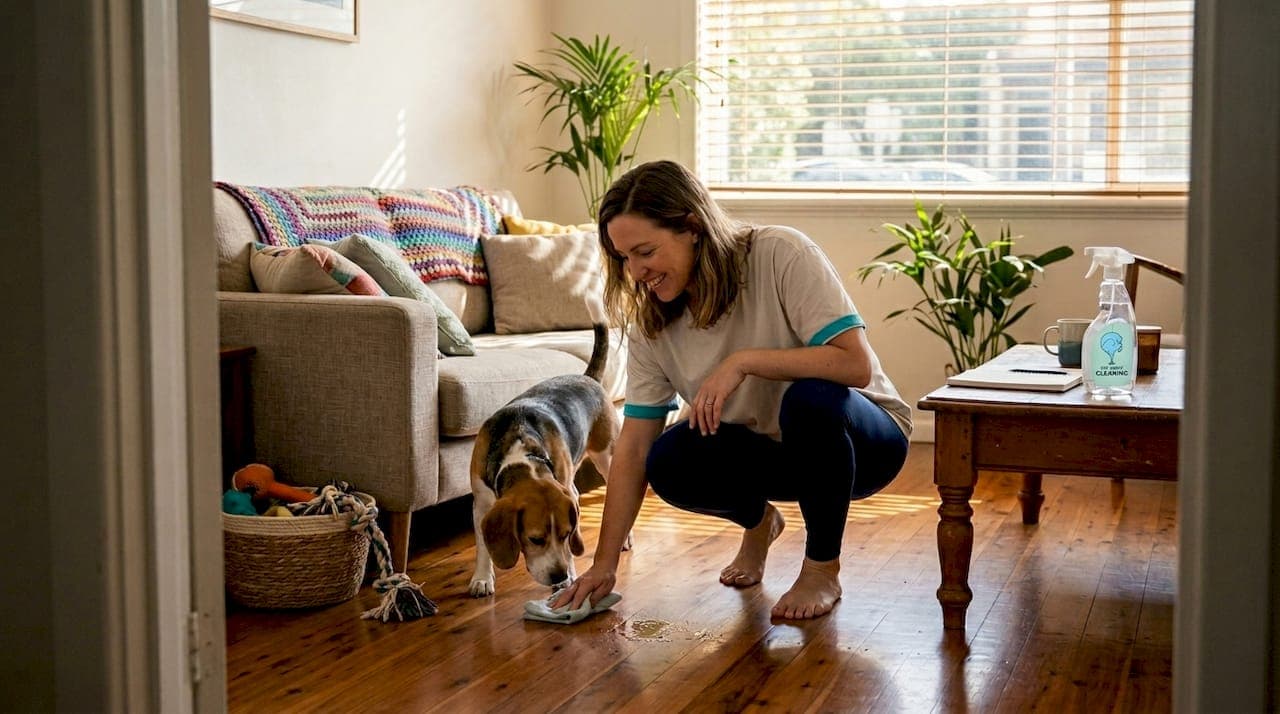
Imagine coming home to find your dog drooling excessively or your cat pawing at her mouth after you've just mopped the floors. It's a scenario that plays out in Australian homes more often than most pet owners realise. Everyday cleaning products can silently threaten your pet's health through residues left on floors, bowls, and bedding. Pets groom themselves, walk on wet surfaces, and spend far more time close to the ground than we do, making them far more vulnerable to chemical exposure. This guide gives you a clear, practical framework for keeping your home genuinely clean and your pets genuinely safe.
Table of Contents
- Understanding what makes cleaning safe for pets
- Preparing your toolkit: Safe products, tools, and Aussie brands
- Step-by-step safe cleaning: Everyday routines and spot solutions
- Troubleshooting, safety tips, and common mistakes
- Verifying a truly clean and pet-safe home
- Why
Key Takeaways
| Point | Details |
|---|---|
| Avoid toxic chemicals | Steer clear of bleach, ammonia, phenols, quats, and certain essential oils to keep pets safe. |
| Choose planet-safe brands | Select Australian brands like Koala Eco or Bona Pet Care for reliable, pet-friendly cleaning. |
| Prioritise ventilation and drying | Let surfaces dry thoroughly and air rooms out to protect pets from unseen residues. |
| DIY with care | Follow dilution guidelines for homemade mixes and test in small areas first to ensure pet safety. |
| Ongoing vigilance matters | Regular checks and safe storage help prevent accidental pet exposure year-round. |
Understanding what makes cleaning safe for pets
Pets aren't just small humans. Their bodies process chemicals very differently, and that's what makes common household cleaners so risky for them. Dogs and cats absorb chemicals through their skin and paws, and they ingest residues every time they groom. A product that's perfectly safe for an adult human can be acutely toxic for a small animal.
The first step is knowing which ingredients to avoid entirely. Pet-friendly cleaning methods prioritise natural, plant-based ingredients and avoid toxic chemicals such as bleach, ammonia, phenols, and quats. Quats (quaternary ammonium compounds) are especially common in multi-surface sprays and disinfectants, yet they're linked to respiratory issues and chemical burns in animals.
Here's a quick reference of ingredients to watch for on labels:
- Bleach (sodium hypochlorite): Found in bathroom cleaners and mould sprays. Highly corrosive to mucous membranes.
- Ammonia: Common in glass cleaners. Toxic if inhaled or ingested.
- Phenols: Often in pine-based disinfectants. Particularly dangerous to cats, who lack the liver enzyme to break them down.
- Quats: Widely used in disinfectant wipes. Can cause paw burns and oral ulcers.
- Certain essential oils: Cats are especially sensitive to essential oils like tea tree or eucalyptus, which can cause tremors and liver damage.
Safer alternatives include white vinegar, baking soda, and castile soap. These are effective for most everyday cleaning tasks and leave far less harmful residue. Some diluted essential oils, such as lavender, are generally tolerated by dogs but should still be used cautiously and avoided altogether around cats.
"No-residue formulas are particularly important for cats, who groom their paws constantly and will ingest whatever is left on the floor or surfaces."
For more grounding in home cleaning best practices that balance hygiene with household safety, it's worth reviewing the fundamentals before building your routine.
Pro Tip: When switching to a new cleaner, test it on a small, out-of-the-way surface first. Watch your pet's behaviour in that area for 24 hours before using the product throughout the home.
Preparing your toolkit: Safe products, tools, and Aussie brands
With clarity on what's safe, you're ready to build your pet-friendly cleaning toolkit. The right tools matter just as much as the products you choose. Some equipment reduces or eliminates the need for chemical cleaners altogether.
Essential tools for a pet-safe home:
- Microfibre cloths: Trap dirt, bacteria, and pet hair without needing heavy chemical agents.
- HEPA vacuum: Captures fine particles, dander, and allergens rather than redistributing them.
- Steam mop: Uses heat alone to sanitise floors, with no chemicals required.
- Reusable spray bottles: Allow you to dilute and dispense DIY solutions at the right concentration.
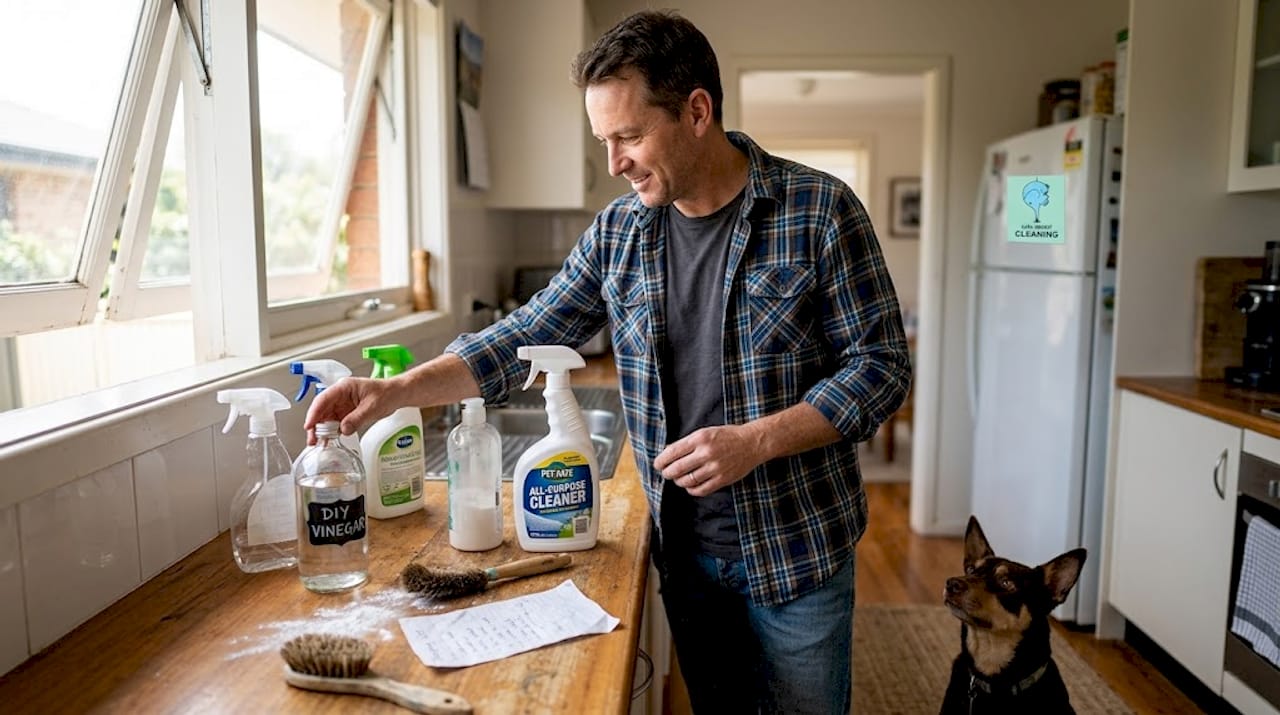
Australian pet owners are fortunate to have access to a growing range of locally made, pet-safe Australian brands that are transparent about their ingredients. Australian brands like Koala Eco, PawLab, and Bona Pet Care offer pet-safe, plant-based cleaning solutions that are biodegradable and greywater safe. Bona Pet Care is particularly well regarded for hard floor surfaces in pet households.
| Option | Key ingredients | Certifications | Best for |
|---|---|---|---|
| DIY vinegar solution | White vinegar, water | N/A | General surfaces, floors |
| Koala Eco | Plant-based enzymes | Biodegradable, vegan | Multi-surface, laundry |
| PawLab | Enzymatic formula | Pet-safe certified | Stain and odour removal |
| Bona Pet Care | Water-based, fragrance-free | Greywater safe | Timber and hard floors |
Certifications like "biodegradable" and "greywater safe" indicate that a product won't leave persistent residues in your home or the environment. This matters especially during the warmer months when many Australians are doing their spring cleaning and using products more intensively.
Pro Tip: Even natural and certified products can be harmful if ingested in quantity. Store all cleaners, including vinegar and baking soda mixes, in a locked or high cupboard well out of your pets' reach.
Step-by-step safe cleaning: Everyday routines and spot solutions
Armed with your safe cleaning kit, here's how to actually put it to use in your pet-friendly home. Structure matters. A consistent daily routine prevents build-up and reduces the need for heavy-duty cleaning that might require harsher products.
Daily pet-home cleaning routine:
- Ventilate the room by opening windows before you start cleaning.
- Vacuum floors and soft furnishings with a HEPA vacuum to remove hair and dander.
- Mop hard floors with a steam mop or a diluted castile soap solution. Allow to dry fully before letting pets back in.
- Wash pet bowls with hot water and fragrance-free dish soap. Pet bowls are among the germiest items in homes, so disinfecting them safely and regularly is essential.
- Spot-clean bedding with an enzyme-based spray to neutralise odours without harsh chemicals.
- Wipe down surfaces pets frequently contact using a microfibre cloth dampened with your chosen safe solution.
DIY all-purpose cleaner recipe: Combine 1 cup white vinegar, 1 cup water, and 10 to 15 drops of a pet-safe essential oil such as lavender or lemon. Avoid clove oil, which is toxic to dogs and cats.
| Cleaning task | Recommended solution | What to avoid |
|---|---|---|
| Pet urine on carpet | Enzyme-based cleaner, then bicarbonate of soda | Bleach, ammonia-based cleaners |
| Muddy paw prints on tiles | Diluted castile soap and warm water | Pine disinfectants (phenols) |
| Pet bowls | Fragrance-free dish soap, hot water rinse | Bleach, antibacterial soaps with triclosan |
| Odours on bedding | Enzyme spray, air dry in sunlight | Fabric sprays with essential oils |
| Hard floor stains | Bona Pet Care or white vinegar solution | Quats-based multi-surface sprays |
Do's and don'ts for safe pet cleaning:
- Always ventilate rooms during and after cleaning.
- Allow all surfaces to dry completely before pets re-enter.
- Rinse bowls and food preparation areas thoroughly.
- Never mix vinegar with baking soda in a sealed container (pressure build-up).
- Don't use scented plug-in diffusers near cats, even with "natural" oils.
For more on best home cleaning routines that suit busy households, refer to expert guidance on maintaining hygiene without compromising health.
Pro Tip: Always test new products in a small, inconspicuous area first. Give it a few hours and observe whether your pet shows any interest in sniffing or licking the treated area before proceeding.
Troubleshooting, safety tips, and common mistakes
Even with the best intentions, mistakes happen. Here's how to avoid the biggest risks and protect your pets day-to-day.
The most common errors aren't usually about choosing the wrong product. They're about how products are used. Overusing even safe ingredients, or failing to ventilate properly, creates unnecessary risk.
Common mistakes to avoid:
- Adding too many drops of essential oil to DIY cleaners, concentrating the solution beyond safe levels.
- Cleaning in a closed room, trapping fumes that irritate airways and eyes.
- Leaving wet residue on floors and surfaces where pets walk and groom.
- Storing cleaning products in low or unlocked cupboards accessible to curious animals.
- Assuming a product is safe simply because it smells pleasant or is labelled "natural."
Cats have suffered paw burns from quats, and vomiting from citrus residues, so the risk isn't theoretical. Watch for these signs of accidental exposure:
- Excessive drooling or pawing at the mouth
- Vomiting or diarrhoea shortly after cleaning
- Red or irritated paws or skin
- Unusual lethargy or changes in behaviour
- Squinting, watering eyes, or nasal discharge
8.3% of pet poison calls to the ASPCA are due to cleaning product exposure, making household cleaners one of the most common categories of pet poisoning. Fast action is critical.
Understanding the pet poison risks associated with everyday cleaning products is the first step to preventing emergencies. For a broader perspective on why ingredient awareness matters for both your household and the environment, the eco-friendly cleaning facts guide is worth reading.
Pro Tip: Save your vet's emergency number and the Animal Poisons Helpline (1300 869 738) in your phone right now. If exposure occurs, have the product packaging on hand so you can describe the ingredients accurately.
Verifying a truly clean and pet-safe home
After cleaning, you'll want to ensure your efforts actually result in a safe and welcoming environment for both people and pets. Cleaning isn't finished the moment the mop goes back in the cupboard.
Post-cleaning safety checklist:
- Run your hand across mopped floors. If it feels tacky or smells strongly of product, rinse again with plain water.
- Check pet bowls for any soap residue by rinsing under running water and smelling for fragrance.
- Open windows or run a fan for at least 20 minutes after cleaning to clear any airborne irritants.
- Confirm all cleaning products are stored securely before allowing pets back into the space.
- Assess whether your pet returns to the cleaned area calmly or avoids it, which can signal lingering residue or odour.
Air quality is often overlooked in pet households. Dander, cleaning product residue, and VOCs (volatile organic compounds) from sprays can linger in the air long after surfaces appear clean. Improving indoor air quality for pet owners involves using low-VOC products, maintaining adequate ventilation, and replacing HVAC filters regularly.
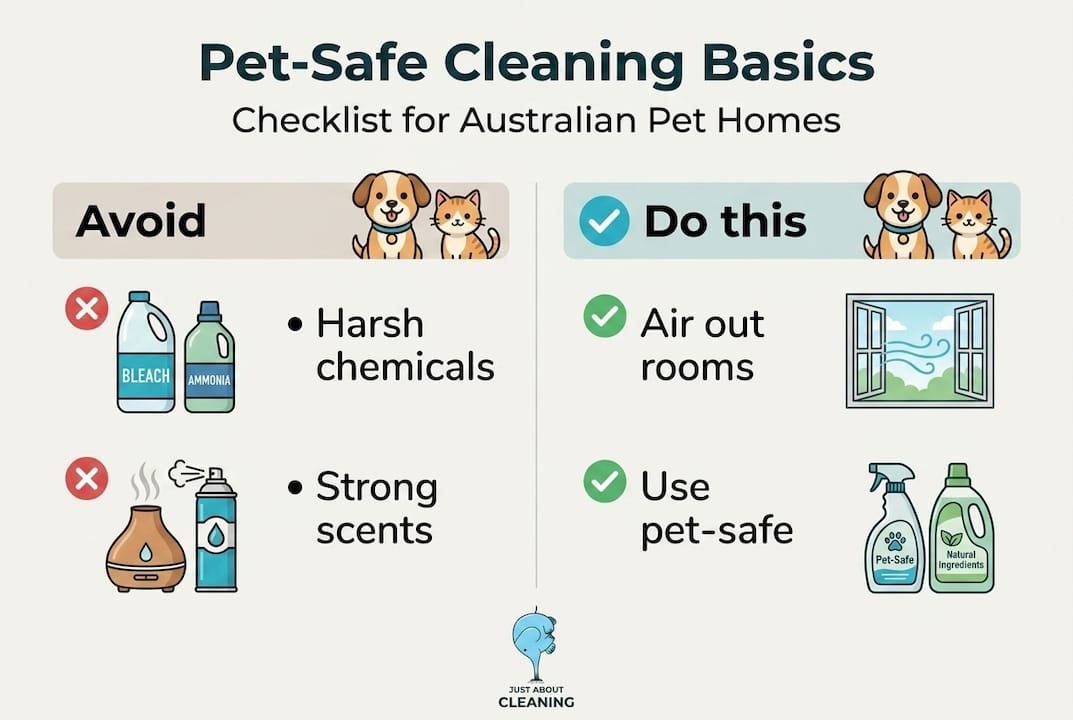
RSPCA advises pet-safe products, full drying, secure storage, and diligent checks as the foundation of ongoing pet safety at home. These aren't one-off steps. They're habits that need to be built into your routine. Adopting sustainable cleaning practices not only benefits your pets but also reduces your household's overall environmental footprint.
Pro Tip: Keep a simple cleaning journal for one month. Note which products you used, any reactions your pet showed, and which routines worked best. Small adjustments based on your pet's individual responses will refine your approach far better than any generic guide.
Why
Recommended
- Top spring cleaning tips for a fresher home in Australia
- Eco-friendly cleaning for Australian businesses: key facts
- Types of cleaning services: a guide for Australian businesses
- Sustainable cleaning practices for Australian businesses
- Why safe cleaning methods matter for your Citrus County home – white-diamond-pressure