
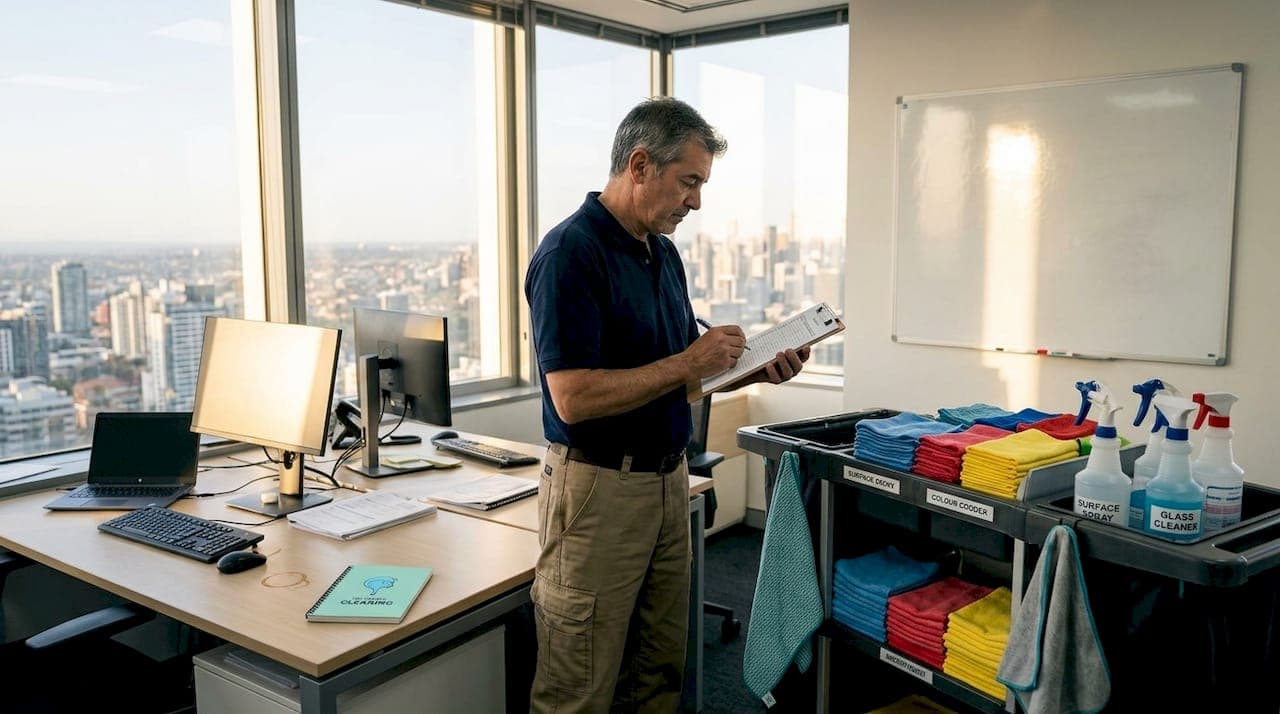
Managing office cleaning in Australia has never been more complex. Between rising hygiene expectations, tighter sustainability requirements, and the daily reality of inconsistent results, many office managers are left juggling checklists, confused staff, and compliance stress all at once. Sustainable cleaning boosts IAQ, tenant satisfaction, and your chances of meeting 2026 Australian certification standards. This guide gives you a practical, repeatable workflow that cuts through the confusion and keeps your workplace clean, compliant, and genuinely eco-friendly.
Table of Contents
- Why a workflow matters: risks, rewards, and the new standards
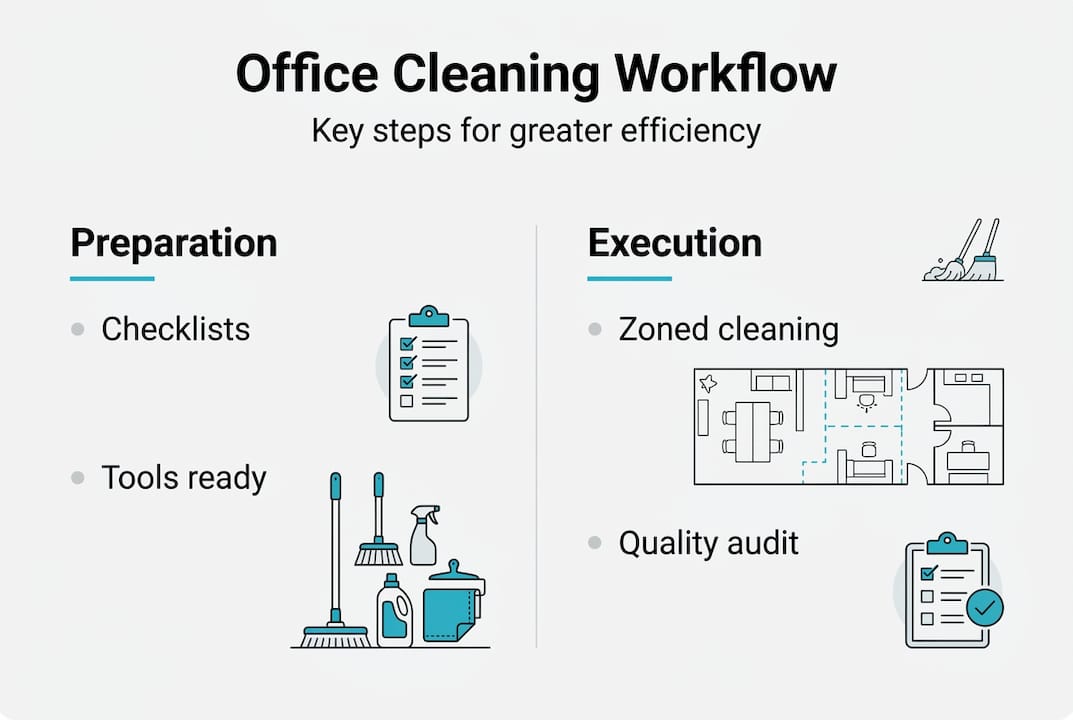
- Preparation: tools, products, and checklists you need upfront
- The core workflow: step-by-step office cleaning process
- Troubleshooting and common mistakes to avoid
- Measuring success: audits, reporting, and ongoing improvement
- Take your cleaning workflow further with specialist support
- Frequently asked questions
Key Takeaways
| Point | Details |
|---|---|
| Efficient workflows save time | A repeatable process reduces confusion and ensures all office zones are cleaned properly. |
| Eco-friendly compliance is essential | Australian offices must use green-certified products to meet 2026 sustainability standards. |
| Colour coding prevents errors | Assigning different cloths and tools to zones minimises risk of cross-contamination. |
| Audits drive improvement | Regular checklists and audits keep cleaning standards high and support green building certifications. |
| Expert support simplifies compliance | Partnering with specialists can help you achieve advanced certifications and peace of mind. |
Why a workflow matters: risks, rewards, and the new standards
A cleaning workflow is simply a structured sequence of tasks, tools, and responsibilities that removes guesswork from your cleaning programme. Without one, you get inconsistent results, missed zones, and staff who aren't sure what to do first. More importantly, you expose your business to real risks.
Australian offices are now operating under tighter sustainability expectations. Green Star mandates for large offices from 2026 mean that cleaning practices, product choices, and waste management are no longer optional extras. They're part of your compliance obligations. Understanding the standards for office cleaning is essential before you build or update your workflow.
A well-designed workflow doesn't just keep surfaces clean. It protects your staff's health, reduces liability, and signals to tenants and clients that your business takes its responsibilities seriously.
The business case is straightforward. Structured workflows reduce labour time, lower product waste, and cut the likelihood of costly re-cleans. They also support staff satisfaction because people work better when they know exactly what's expected. The importance of maintenance cleaning is often underestimated until something goes wrong.
Key reasons to formalise your workflow now:
- Compliance: Meet Green Star and NABERS requirements for 2026
- Efficiency: Reduce time-on-task and product overuse
- Health: Lower absenteeism linked to poor indoor air quality
- Reputation: Demonstrate environmental responsibility to clients and staff
- Liability: Documented workflows reduce risk in the event of incidents
Preparation: tools, products, and checklists you need upfront
Before your team cleans a single surface, you need the right materials in place. This is where most workflows fall apart. Offices stock whatever products are cheapest or most familiar, without considering efficacy, compliance, or environmental impact.
Start with a simple audit of your current toolkit. Map out every zone in your office (entrance, kitchen, bathrooms, desks, meeting rooms, waste areas) and assign cleaning frequency to each. This becomes the backbone of your checklist. Eco-friendly products that carry GECA certification are now the benchmark for compliant Australian offices.
GECA-certified, low-VOC, biodegradable products combined with microfibre cloths and HEPA vacuums significantly reduce environmental impact while maintaining strong cleaning performance. These aren't just feel-good choices. They're practical tools that outperform many traditional options on hard surfaces and reduce chemical residue in the air.
| Feature | Traditional products | GECA/green options |
|---|---|---|
| Efficacy on hard surfaces | High | High |
| VOC emissions | High | Low |
| Compliance (2026 standards) | Often non-compliant | Compliant |
| Staff health impact | Moderate to high risk | Low risk |
| Cost over time | Higher (overuse common) | Lower (dilution controlled) |
| Biodegradability | Low | High |
Colour-coded tools are non-negotiable. Assign specific colours to each zone (for example, red for bathrooms, blue for kitchens, green for general areas) so staff never accidentally use the same cloth across different surfaces. HEPA vacuums capture fine particles that standard vacuums recirculate into the air, which matters especially in offices with carpeted areas or high foot traffic.
Pro Tip: Audit your cleaning toolkit every month. Check for worn microfibre cloths, clogged HEPA filters, and expired or incorrectly diluted products. A five-minute audit prevents cross-contamination and keeps your hygiene maintenance on track.
Essential items for your upfront checklist:
- GECA-certified multipurpose cleaner and disinfectant
- Colour-coded microfibre cloths (minimum four colours)
- HEPA-filter vacuum cleaner
- Mop system with separate heads per zone
- Dilution station or pre-measured dispensers
- Zone-specific checklists printed or accessible digitally
- Personal protective equipment for staff
The core workflow: step-by-step office cleaning process
With your toolkit ready, here is a logical, repeatable daily workflow that covers the key zones in most Australian commercial offices. Periodic tasks are noted separately.
- Entrance and reception: Remove visible debris, wipe entry glass and door handles with a GECA disinfectant, allow the correct dwell time (usually 30 to 60 seconds for most surface disinfectants), then wipe clean. Vacuum or mop floor surfaces.
- Workstations and desks: Wipe down desk surfaces, keyboards, and phones using a low-VOC disinfectant spray and a colour-coded cloth. Avoid over-saturating electronics. Empty desk bins into the main waste stream.
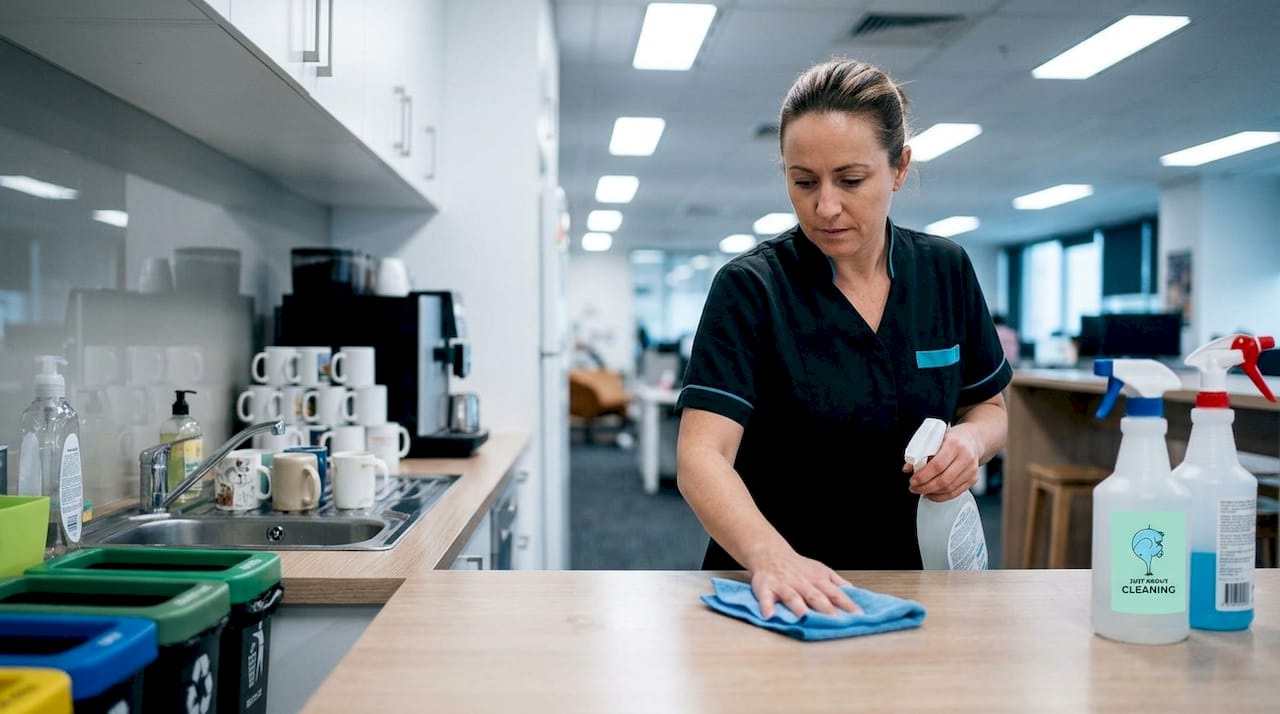
- Kitchen and breakroom: Clean benchtops, sink, and appliance exteriors. Disinfect the sink and tap handles. Restock consumables (paper towels, soap). Mop the floor last.
- Bathrooms and amenities: Use dedicated red-coded cloths and a separate mop head. Disinfect all touch points (taps, toilet handles, door handles). Allow full dwell time before wiping. Restock soap and paper products.
- Meeting rooms: Wipe table surfaces and chair armrests. Remove any waste. Spot-clean glass partitions or whiteboards.
- Waste management: Consolidate all bin liners. Separate recycling from general waste. Replace bin liners and return bins to position.
Colour-coded microfibre reduces cross-contamination and errors significantly, which is why it's a standard requirement in best-practice commercial cleaning. Following a clear office hygiene guide ensures nothing is missed during busy periods.
| Task | Frequency | Recommended product type |
|---|---|---|
| Desk and surface wipe | Daily | Low-VOC disinfectant spray |
| Bathroom disinfection | Daily (twice if high traffic) | GECA-certified disinfectant |
| Kitchen benchtop clean | Daily | Biodegradable multipurpose cleaner |
| Vacuuming (carpeted areas) | Daily or every 2 days | HEPA vacuum |
| Glass and partition cleaning | 2 to 3 times per week | Streak-free eco glass cleaner |
| Deep clean (all zones) | Monthly | Full GECA product suite |
| HEPA filter check | Monthly | N/A (maintenance task) |
Pro Tip: Zone-based scheduling is one of the most effective ways to cut downtime. Assign staff to specific zones rather than having everyone move through the whole office. Pair this with a printed or digital checklist and you'll reduce average cleaning time by up to 20%. For more detail on building repeatable systems, the routine cleaning steps guide is worth reviewing.
Troubleshooting and common mistakes to avoid
Even well-intentioned workflows break down. The most common issues aren't about effort. They're about process gaps that compound over time.
The difference between a compliant office and a liability risk often comes down to whether staff are following colour-coding, dwell times, zone-based scheduling, and regular audits, or skipping them under time pressure.
Here are the mistakes we see most often in Australian commercial offices:
- Wrong cloth for the zone: Using a bathroom cloth on a kitchen surface is a cross-contamination risk. Colour-coding eliminates this, but only if staff are trained and the system is enforced.
- Skipping dwell time: Disinfectants need time to work. Wiping a surface immediately after spraying reduces efficacy by up to 80%. Set a timer if needed.
- Neglecting HEPA filter maintenance: A clogged filter turns your vacuum into a particle spreader. Check and replace filters monthly.
- Outdated checklists: If your checklist doesn't reflect 2026 compliance areas (product types, waste separation, frequency standards), it's working against you.
- Not outsourcing specialist tasks: Some cleaning tasks (post-construction, medical-grade disinfection, high-level window cleaning) require specialist equipment and training. Trying to handle these in-house without the right gear creates both safety and compliance risks.
For a closer look at common issues in green cleaning and how to resolve them, that resource covers product selection errors and substitution strategies in detail.
Measuring success: audits, reporting, and ongoing improvement
A workflow without measurement is just a list of intentions. Regular audits turn your process into a quality system that improves over time and gives you documented proof of compliance.
Sustainable cleaning practices boost IAQ, tenant satisfaction, and your likelihood of achieving Green Star certification. That's not just a marketing claim. It's a measurable outcome that shows up in staff health data, tenant retention, and audit scores.
Stat callout: Switching to GECA-certified products can reduce chemical waste by up to 30%, which directly supports your office's sustainability reporting and ESG targets.
Build these habits into your workflow:
- Weekly spot audits: A supervisor checks two or three zones per week against the checklist. Takes 10 minutes and catches drift early.
- Monthly full audits: Review all zones, product stock levels, tool condition, and checklist currency. Update checklists if compliance requirements have changed.
- Cleaning logs: Record who cleaned, what was done, and any issues noted. This creates a paper trail that protects your business and supports managing cleaning quality over time.
- Staff feedback loops: Your cleaning team sees things managers don't. A simple monthly check-in surfaces product issues, equipment problems, and process gaps before they become compliance failures.
- Sustainability reporting: Link your cleaning data to your office's broader ESG goals. Track product volumes, waste diversion rates, and audit scores quarter by quarter.
When your team can see the data improving, engagement follows. Cleaning stops feeling like a chore and starts feeling like a contribution to something measurable.
Take your cleaning workflow further with specialist support
Building a compliant, eco-friendly office cleaning workflow takes time, the right products, and a clear process. But there's a point where internal resources reach their limit, especially when Green Star compliance, specialist equipment, or high-frequency cleaning schedules come into play.
At Just About Cleaning Australia, we've spent over 15 years helping Australian businesses build and maintain cleaning workflows that meet current standards without adding operational burden. Our trained crews work with GECA-certified products, follow zone-based scheduling, and provide documented audit trails so you always have proof of compliance. Whether you need a full workflow review, regular office cleaning, or support preparing for a Green Star or NABERS assessment, we make the process straightforward. Talk to our team about a tailored solution for your workplace.
Frequently asked questions
What does an office cleaning workflow include?
A workflow is a set sequence of tools, tasks, and checklists ensuring all office zones are cleaned, maintained, and compliance-checked consistently. It removes guesswork and keeps your cleaning programme repeatable and auditable.
How do I avoid cross-contamination in my cleaning routine?
Use colour-coded tools for zones and change microfibre cloths regularly. Never use the same cloth across bathrooms, kitchens, and general areas, regardless of how clean it looks.
Are green cleaning products as effective as traditional options?
GECA-certified, low-VOC products meet the same efficacy standards as conventional chemicals on most surfaces, and they're increasingly required for compliance in Australian commercial offices from 2026 onwards.
How can I tell if my current office cleaning workflow is compliant for 2026?
Check your product certifications, audit frequency, and alignment with Green Star and NABERS standards. If you're unsure, an expert cleaning service can assess your current workflow and identify gaps quickly.