
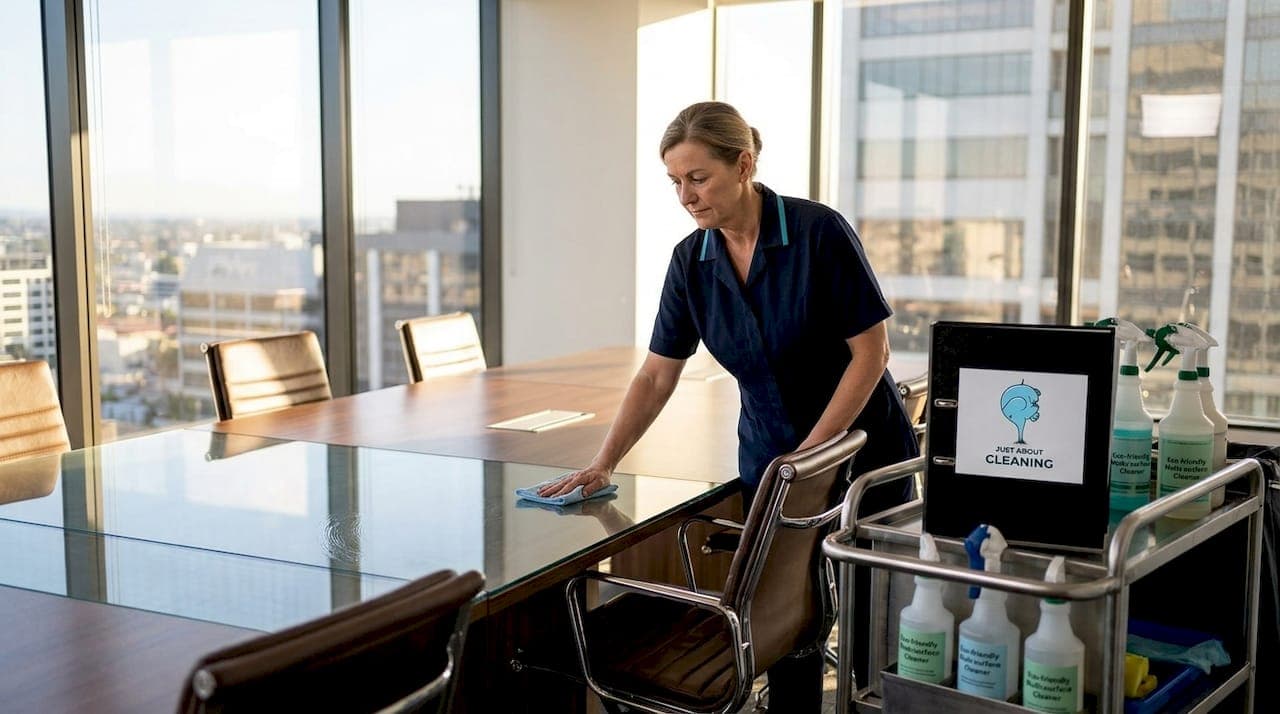
A spotless desk and vacuumed carpet might suggest your office is clean, but invisible bacteria and allergens often thrive on surfaces that look pristine. Many Australian business owners assume visual tidiness equals workplace safety, yet contamination invisible to the naked eye poses genuine health risks. Understanding comprehensive office cleaning standards ensures your facility meets compliance requirements whilst protecting employee wellbeing. This article explains the frameworks, methodologies, and quality measures that define professional office cleaning in Australia for 2026, equipping you with practical knowledge to maintain hygienic, compliant workplaces.
Table of Contents
- Understanding Australian Office Cleaning Standards
- Core Cleaning Methodologies And Best Practices
- Monitoring Cleaning Quality: Visual And Scientific Methods
- Choosing Cleaning Products And Providers For Compliance And Sustainability
- Choose A Trusted Office Cleaning Partner For 2026
- Frequently Asked Questions
Key takeaways
| Point | Details |
|---|---|
| Standards combine visible and invisible checks | Office cleaning protocols address both surface appearance and microbiological contamination through dual verification methods. |
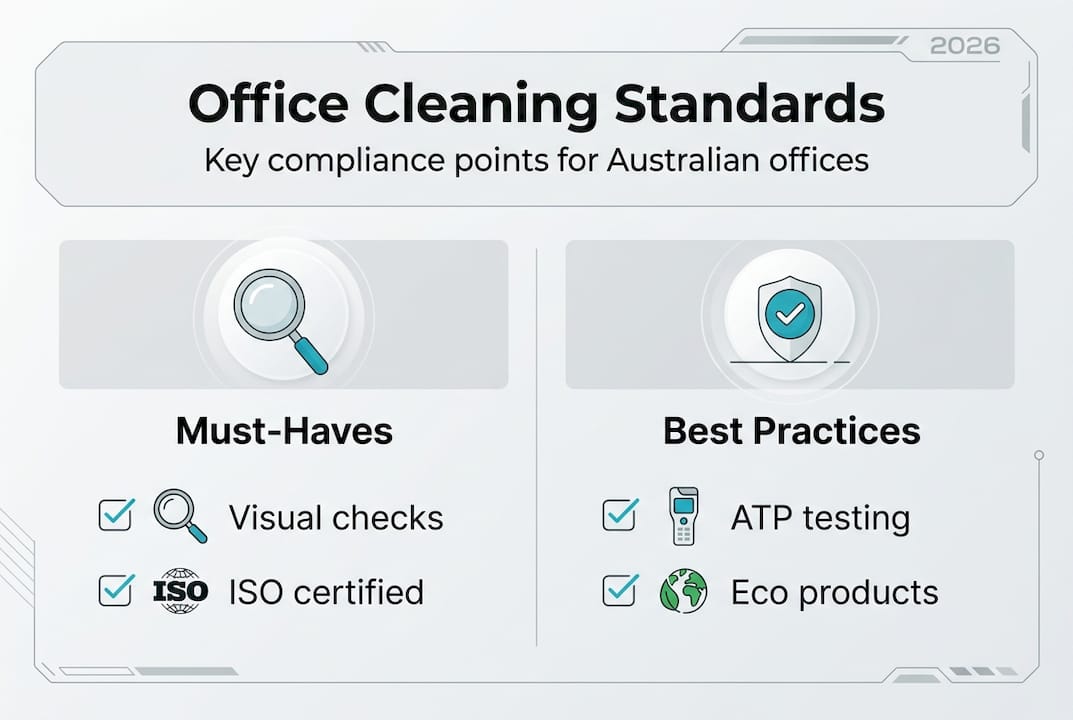
| ISO certifications guide quality and safety | ISO 9001 and ISO 45001 frameworks ensure consistent, auditable cleaning procedures across certified providers. |
| ATP testing reveals hidden contamination | High-density offices benefit from weekly ATP testing beyond daily visual inspections to detect invisible organic residues. |
| Eco-certified products match traditional efficacy | GECA-certified cleaning solutions deliver comparable results whilst reducing environmental impact and supporting sustainability goals. |
| Consistent methodologies ensure compliance | Following documented cleaning procedures with regular audits maintains workplace hygiene and regulatory adherence. |
Understanding Australian office cleaning standards
Office cleaning standards in Australia encompass regulatory requirements and voluntary quality frameworks that ensure safe, hygienic workplace environments. These standards aren't merely suggestions; they establish minimum expectations for contamination control, chemical safety, and worker protection. Business owners who grasp these frameworks can make informed decisions about cleaning service providers and verify compliance with occupational health obligations.
Professional cleaning companies typically adopt ISO 9001 and ISO 45001 standards as foundational certifications. ISO 9001 governs quality management systems, ensuring providers follow consistent, documented procedures that deliver predictable results. ISO 45001 addresses occupational health and safety, protecting both cleaning staff and building occupants from hazards during cleaning operations. Certification under these frameworks signals that a provider maintains auditable processes, trains staff systematically, and commits to continuous improvement.
Beyond ISO certifications, Australian office cleaning standards address several operational dimensions:
- Methodical cleaning procedures that prevent cross-contamination between zones
- Safe handling, storage, and disposal of cleaning chemicals
- Worker training programmes covering technique, safety protocols, and equipment use
- Quality verification systems combining visual inspections and scientific testing
- Environmental responsibility through sustainable product selection and waste management
Understanding these standards helps facility managers evaluate office cleaning service standards objectively. Rather than selecting providers based solely on price, you can assess whether their documented procedures align with recognised frameworks. Certified providers typically offer service level agreements specifying cleaning frequencies, quality benchmarks, and compliance guarantees. This transparency reduces risk whilst ensuring your workplace meets both regulatory obligations and employee expectations for cleanliness.
The practical benefit of standards-based cleaning extends beyond compliance. Systematic approaches reduce illness transmission, lower absenteeism, and demonstrate duty of care to staff and visitors. For businesses in regulated sectors like healthcare or food service, adherence to cleaning standards often forms part of broader licensing requirements. Even in less regulated industries, maintaining documented cleaning protocols provides defensible evidence of reasonable workplace safety measures.
Core cleaning methodologies and best practices
Effective office cleaning relies on proven methodologies that maximise hygiene whilst minimising time and resource waste. Australian providers following professional office cleaning techniques typically adopt systematic approaches validated through industry research. These methods aren't arbitrary; they reflect evidence-based practices that reduce contamination transfer and improve surface sanitation.
Experts recommend an 8-step method that structures cleaning activities for optimal results:
- Start cleaning from top surfaces downward to prevent recontaminating lower areas with falling dust and debris.
- Work clockwise around each room to ensure complete coverage without missing sections.
- Use microfiber cloths that trap particles rather than dispersing them into the air.
- Apply the figure-8 mopping pattern to increase floor contact and dirt removal efficiency.
- Clean high-touch surfaces like door handles and light switches with dedicated materials to prevent cross-contamination.
- Empty waste bins and replace liners before final surface cleaning to avoid spreading refuse particles.
- Inspect cleaned areas against quality checklists before moving to the next zone.
- Document completion times and any issues encountered for continuous improvement tracking.
Microfiber technology deserves particular attention. Unlike traditional cotton or synthetic cloths, microfiber's split fibres create electrostatic attraction that captures dust, bacteria, and allergens at the microscopic level. Research shows microfiber removes up to 99% of surface bacteria when used with appropriate cleaning solutions, compared to 30-50% removal rates for conventional materials. This performance difference directly impacts workplace hygiene, especially in high-density office environments where pathogen transmission risks run higher.
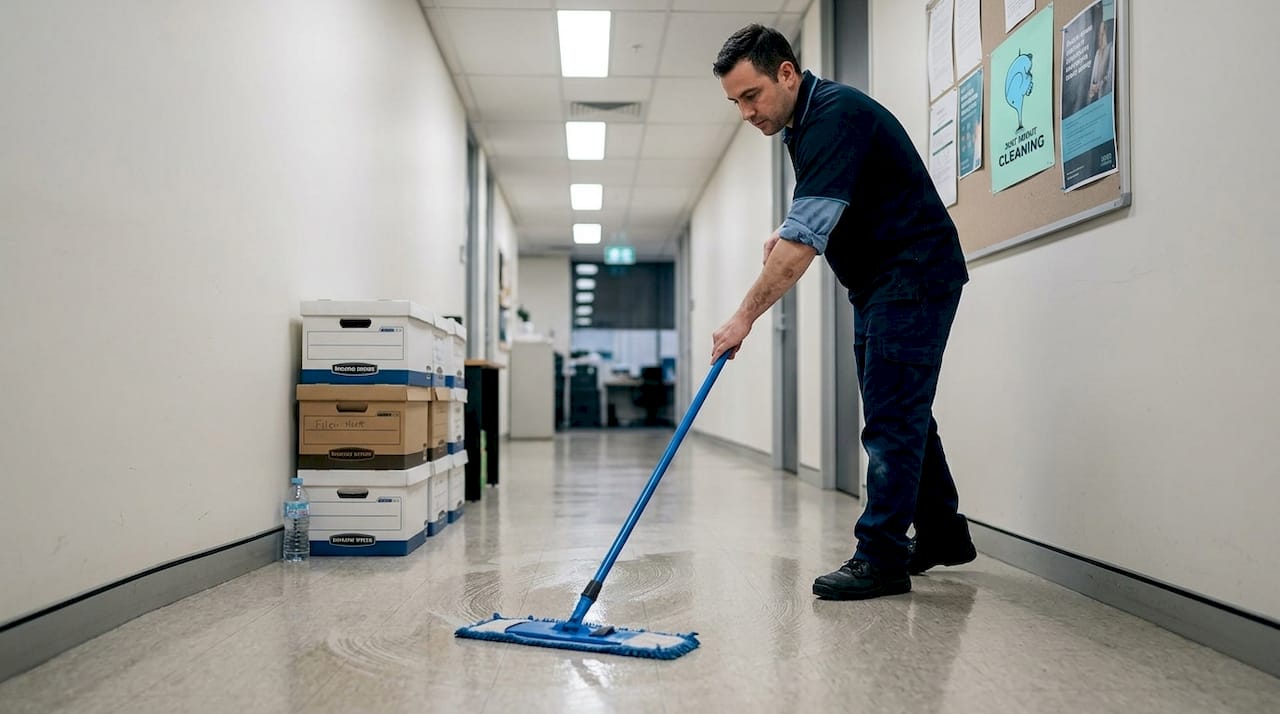
The figure-8 mopping technique similarly improves outcomes through biomechanics. Traditional back-and-forth mopping often redistributes dirt rather than removing it, whilst the figure-8 pattern maintains continuous contact with the floor surface and prevents the mop from lifting between strokes. This seemingly minor adjustment increases dirt capture by approximately 25% per pass, reducing the number of passes required and saving time.
Pro Tip: Schedule deep cleaning tasks like carpet extraction and window washing during low-occupancy periods to minimise disruption whilst allowing adequate drying time before staff return.
Chemical selection balances efficacy against environmental impact. Traditional disinfectants often contain harsh compounds that kill pathogens effectively but pose risks to indoor air quality and aquatic ecosystems when disposed. Modern eco-friendly alternatives use plant-based surfactants and hydrogen peroxide formulations that achieve comparable antimicrobial results with reduced toxicity. The key lies in matching product strength to contamination risk; high-touch surfaces in shared spaces warrant stronger disinfection than low-contact areas like storage rooms.
Regular methodology audits ensure cleaning teams maintain standards over time. Human performance naturally varies, and even well-trained staff may develop shortcuts that compromise quality. Monthly spot checks comparing cleaned surfaces against documented procedures identify training gaps and reinforce best practices. This continuous feedback loop prevents gradual quality erosion whilst demonstrating commitment to systematic improvement.
Monitoring cleaning quality: visual and scientific methods
Verifying cleaning effectiveness requires both traditional visual inspections and advanced scientific testing to capture the full hygiene picture. Visual checks remain valuable for assessing obvious cleanliness indicators like dust accumulation, stain removal, and surface organisation. They're quick, require no special equipment, and provide immediate feedback on whether cleaning tasks were completed. However, visual methods miss the microbiological contamination that poses genuine health risks in office environments.
ATP (adenosine triphosphate) bioluminescence testing bridges this gap by quantifying organic residues invisible to human eyes. ATP exists in all living cells, including bacteria, mould, and food particles. When a surface swab contacts ATP, it triggers a light-producing reaction measured by a luminometer. The resulting reading, expressed in relative light units (RLU), indicates contamination levels objectively. Lower RLU values signal cleaner surfaces, whilst elevated readings reveal inadequate cleaning or high-risk contamination.
Whilst daily visual inspections suffice for low-risk areas, weekly ATP testing is recommended for high-density offices to detect invisible contamination. High-traffic zones like reception desks, meeting rooms, and shared kitchens accumulate microorganisms rapidly despite appearing clean. ATP testing in these locations provides early warning of hygiene failures before they escalate into illness outbreaks or compliance violations.
Combining both methods creates a comprehensive office cleaning quality checks programme:
| Method | Frequency | Strengths | Limitations |
|---|---|---|---|
| Visual inspection | Daily | Immediate feedback, no equipment needed, assesses completion | Misses microbiological contamination, subjective interpretation |
| ATP testing | Weekly (high-risk areas) | Quantitative, detects invisible contamination, objective benchmarking | Requires equipment, training, and time for analysis |
| Periodic deep audits | Monthly | Comprehensive evaluation, identifies training gaps, validates procedures | Resource-intensive, disruptive if conducted during business hours |
Pro Tip: Establish baseline ATP readings for each surface type in your office, then track trends over time rather than relying on single test results that may reflect temporary conditions.
ATP testing proves particularly valuable when evaluating cleaning provider performance. Rather than accepting subjective assurances of quality, you can request regular ATP reports demonstrating contamination control in measurable terms. Providers confident in their methodologies typically welcome scientific verification, whilst those resisting testing may signal quality concerns.
The practical application involves selecting representative test sites across your office. Focus on high-touch surfaces like keyboard space bars, phone handsets, door push plates, and communal refrigerator handles. These locations experience frequent contact and serve as reliable indicators of overall cleaning thoroughness. Testing the same sites consistently allows meaningful comparison across cleaning cycles and providers.
Interpret ATP results within context. A single elevated reading doesn't necessarily indicate systemic failure; it might reflect recent contamination between cleaning cycles. However, persistent high readings or upward trends signal inadequate cleaning procedures requiring corrective action. Work with your provider to investigate root causes, whether insufficient contact time for disinfectants, improper technique, or unsuitable product selection.
Regular quality monitoring supports continuous improvement by creating accountability and transparency. When cleaning teams know their work will be verified scientifically, performance typically improves. Similarly, facility managers gain confidence that their investment in professional cleaning delivers measurable hygiene outcomes rather than merely aesthetic improvements.
Choosing cleaning products and providers for compliance and sustainability
Selecting appropriate cleaning products and certified providers requires balancing efficacy, compliance, cost, and environmental responsibility. Australian businesses increasingly recognise that sustainable practices and effective cleaning aren't mutually exclusive. The challenge lies in evaluating options objectively when marketing claims often exceed verifiable performance.
Certified providers offer significant advantages for compliance-focused organisations. Companies holding ISO 9001 and ISO 45001 certifications demonstrate commitment to quality management and workplace safety through third-party verification. These certifications require documented procedures, regular audits, and corrective action systems that reduce risk of cleaning failures. When evaluating providers, request certification copies and verify their validity through issuing bodies rather than accepting claims at face value.
Key selection criteria for cleaning providers include:
- Current ISO certifications with recent audit dates confirming active compliance
- Documented cleaning methodologies specifying techniques, frequencies, and quality benchmarks
- Staff training programmes covering safety, technique, and customer service
- Insurance coverage adequate for your facility size and risk profile
- Client references from similar industries and building types
- Transparent pricing structures without hidden fees for standard services
Product selection increasingly emphasises environmental credentials alongside cleaning performance. GECA-certified eco-cleaning products provide efficacy comparable to traditional products whilst aligning with sustainability goals. Good Environmental Choice Australia (GECA) certification verifies products meet stringent environmental and health criteria across their lifecycle, from raw material sourcing through disposal. These products typically contain biodegradable surfactants, avoid phosphates and chlorine, and minimise volatile organic compound (VOC) emissions that degrade indoor air quality.
The following comparison illustrates practical differences between product categories:
| Product Type | Efficacy | Environmental Impact | Cost Premium | Best Application |
|---|---|---|---|---|
| Traditional chemical | High for tough contamination | Higher water pollution, VOC emissions | Baseline | Heavy-duty degreasing, sanitising |
| GECA-certified eco | Comparable for routine cleaning | Minimal pollution, low VOC | 10-20% higher | Daily maintenance, low-risk areas |
| Hospital-grade disinfectant | Maximum pathogen kill | Moderate to high impact | 30-50% higher | Healthcare, food service, outbreak response |
Balancing these factors requires understanding your specific risk profile. Standard office environments typically achieve excellent results with eco-certified products for routine cleaning, reserving stronger chemicals for periodic deep cleaning or contamination incidents. This tiered approach minimises environmental impact whilst maintaining hygiene standards.
Negotiating cleaning contracts should address several critical elements beyond hourly rates. Specify cleaning frequencies for different zones based on usage intensity, require documented quality checks, and establish clear communication protocols for issues or changes. Include provisions for periodic contract reviews where both parties assess performance against agreed benchmarks and adjust services as needed. Well-structured contracts prevent misunderstandings whilst creating accountability for both provider and client.
Sustainability considerations extend beyond product chemistry. Evaluate providers' waste management practices, equipment energy efficiency, and staff training on environmental protocols. Providers genuinely committed to eco-friendly office cleaning options typically offer detailed sustainability reports demonstrating measurable environmental improvements over time. This transparency helps businesses track progress towards corporate sustainability targets whilst maintaining cleaning standards.
Cost analysis should account for total value rather than hourly rates alone. Cheaper providers may cut corners on training, use inferior products, or provide inconsistent service requiring supplementary cleaning. Calculate the true cost by considering product quality, staff turnover, complaint frequency, and your internal time spent managing the relationship. Slightly higher rates often prove more economical when they deliver reliable, compliant service requiring minimal oversight.
Choose a trusted office cleaning partner for 2026
Understanding office cleaning standards empowers informed decisions, but implementing them requires partnering with providers who translate knowledge into consistent results. Just About Cleaning delivers professional office cleaning services aligned with Australian compliance frameworks and sustainability expectations. With over 15 years of industry experience, their certified teams apply proven methodologies and quality verification systems that maintain workplace hygiene across diverse sectors.
Their approach combines ISO-certified procedures with flexible service plans accommodating different office sizes and contamination risk levels. Whether you manage a compact professional suite or a multi-floor corporate facility, their trained crews adapt cleaning frequencies and techniques to your specific requirements. Regular quality audits and ATP testing ensure invisible contamination receives the same attention as visible cleanliness, protecting employee health whilst demonstrating compliance with occupational safety obligations.
Choosing a trusted Australian cleaning provider with documented standards adherence mitigates compliance risks and operational disruptions. Their commitment to eco-friendly practices aligns cleaning operations with broader corporate sustainability goals without compromising hygiene outcomes. Contact their team to discuss how standards-based cleaning solutions can elevate your workplace environment in 2026.
Frequently asked questions
What are the key office cleaning standards in Australia?
ISO 9001 and ISO 45001 form the core quality and safety standards guiding professional office cleaning in Australia. ISO 9001 ensures providers maintain consistent, documented procedures delivering predictable results through systematic quality management. ISO 45001 addresses occupational health and safety, protecting cleaning staff and building occupants from hazards during operations. These certifications indicate auditable processes, trained personnel, and commitment to continuous improvement. Beyond ISO frameworks, Australian standards address methodical cleaning procedures, safe chemical handling, worker training, quality verification systems, and environmental responsibility through sustainable product selection.
How often should office cleaning quality be tested scientifically?
Testing frequency depends on contamination risk and occupancy density in your facility. Low-risk offices with moderate traffic typically achieve adequate hygiene through daily visual inspections verifying task completion and surface appearance. However, high-density workplaces benefit from weekly ATP testing to detect invisible organic contamination missed by visual checks. Focus ATP testing on high-touch surfaces like reception desks, meeting room tables, and shared kitchen areas where pathogen transmission risks run highest. Establish baseline readings for each surface type, then track trends over time to identify quality improvements or emerging issues requiring corrective action.
What advantages do eco-certified cleaning products offer?
GECA-certified products deliver cleaning efficacy matching traditional chemical formulations whilst significantly reducing environmental footprint. These products use biodegradable surfactants and plant-based ingredients that break down naturally without polluting waterways or releasing volatile organic compounds that degrade indoor air quality. For routine office cleaning applications, eco-certified solutions achieve comparable pathogen reduction and soil removal to conventional products. They support corporate sustainability goals, improve occupant comfort through reduced chemical odours, and demonstrate environmental responsibility to clients and staff. The modest cost premium, typically 10-20% above traditional products, often proves worthwhile when considering total environmental and health benefits.
How can I verify my cleaning provider meets Australian standards?
Request current ISO 9001 and ISO 45001 certification copies from your provider, then verify their validity through the issuing certification body rather than accepting documents at face value. Examine certification dates to confirm active compliance rather than expired credentials. Ask providers to share documented cleaning methodologies specifying techniques, product selections, and quality benchmarks for different areas. Review independent audit results if available, or request client references from organisations with similar facility types and hygiene requirements. Reputable providers welcome verification requests and typically maintain transparent documentation demonstrating standards adherence. Resistance to sharing certifications or procedures may signal quality concerns warranting further investigation before engagement.