
TL;DR:
- Neglected commercial carpets pose health risks due to accumulated allergens and moisture, and improper maintenance can void warranties.
- A thorough assessment, zone mapping, and documented cleaning schedules are essential to ensure compliance, safety, and carpet longevity.
- Using certified equipment and trained professionals for regular cleaning maintains hygiene standards, preserves warranties, and supports audit success.
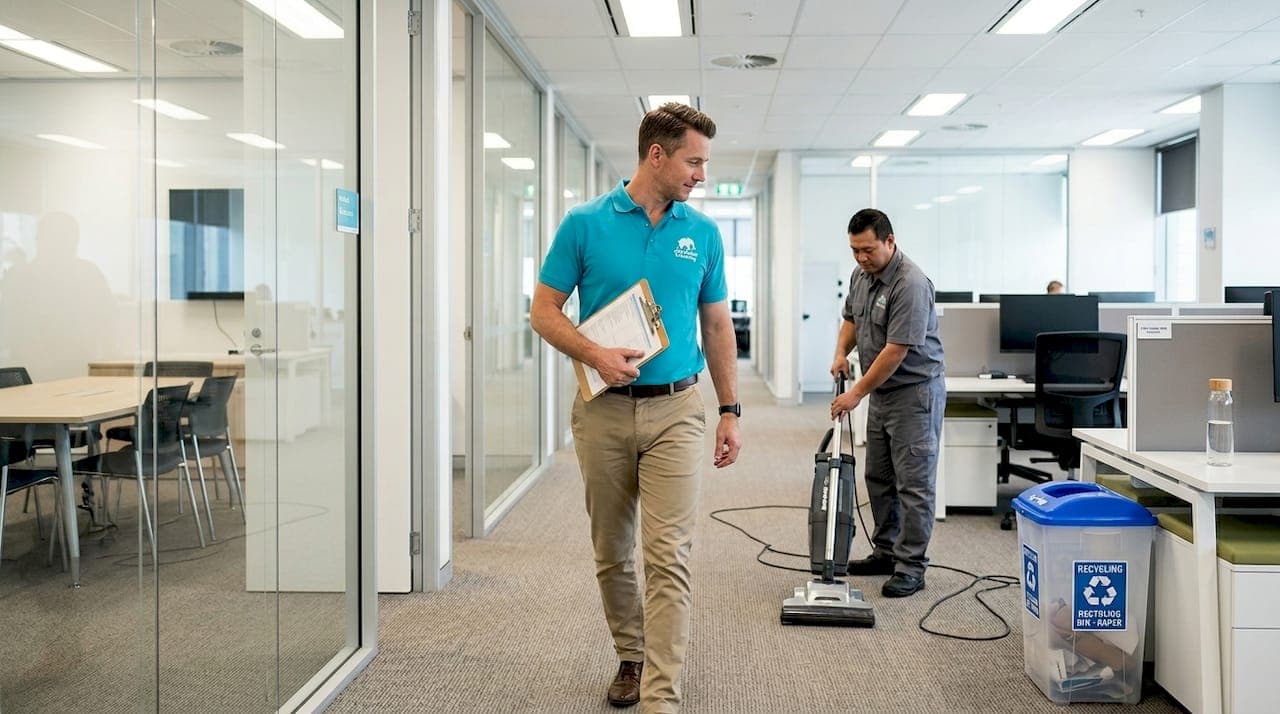
Neglected commercial carpets carry far more risk than a worn appearance. Accumulated allergens, bacteria, and moisture create genuine health hazards for staff and visitors, while poor maintenance practices can void carpet warranties and expose your business to liability. Compliance obligations under AS/NZS 3733 and IICRC S100 set clear expectations for hygiene, extraction, and drying in commercial environments. This guide walks you through every stage of a sound carpet maintenance process, from initial assessment through to verifying results, so your workspace stays safe, compliant, and genuinely spotless.
Table of Contents
- Assessing your carpets and planning maintenance
- Essential tools and materials for hygienic carpet care
- Step-by-step process for hygienic commercial carpet cleaning
- Avoiding common mistakes and ensuring compliance
- Signs of success: How to know your process is working
- Most carpet hygiene issues start before cleaning — experience matters
- Professional carpet maintenance solutions tailored for your business
- Frequently asked questions
Key Takeaways
| Point | Details |
|---|---|
| Plan before cleaning | Assess carpet types and traffic to tailor your maintenance routine and satisfy legal requirements. |
| Use correct tools | HEPA vacuums, approved cleaning agents, and entry mats are essential for both hygiene and compliance. |
| Follow compliance standards | Australian standards like AS/NZS 3733 and IICRC S100 protect your warranty and safe workplace status. |
| Document everything | Keeping cleaning logs and schedules protects you during WHS audits and warranty claims. |
| Evaluate and adapt | Regularly review the condition of your carpets to ensure the maintenance process is truly effective. |
Assessing your carpets and planning maintenance
Not every commercial carpet requires the same care. A healthcare waiting room demands a different approach to a low-traffic administrative office, and a childcare centre faces completely different soiling risks compared to a retail showroom. Getting this wrong from the start means wasted effort, misallocated budget, and gaps in compliance. Site assessment for carpet type and traffic before selecting a maintenance method is not optional — it is foundational.
Begin by mapping your facility zone by zone. Identify carpet type, fibre construction, installation date, and any warranty requirements tied to specific cleaning methods. Cross-reference each zone against foot traffic levels: high (entry areas, corridors, cafeterias), medium (open plan offices, meeting rooms), and low (private offices, storage). Understanding these distinctions directly shapes how often cleaning should occur and which methods are appropriate.
Meeting office cleaning standards requires proper documentation from the outset. The table below offers a practical structure for recording your site-specific data.
| Zone | Carpet type | Traffic level | Recommended cleaning frequency |
|---|---|---|---|
| Entry/lobby | Commercial loop pile | High | Daily vacuum, weekly spot clean, quarterly extraction |
| Open plan office | Cut pile commercial | Medium | 3x weekly vacuum, monthly spot clean, biannual extraction |
| Meeting rooms | Berber/loop | Low to medium | Weekly vacuum, quarterly spot check, annual extraction |
| Corridors | Heavy-duty flat weave | High | Daily vacuum, weekly inspection, quarterly extraction |
| Kitchen/break area | Commercial tile or mat | High | Daily clean, weekly deep clean |
Once your zones are mapped, document the following for WHS compliance:
- Carpet type, brand, and installation date for each zone
- Manufacturer maintenance requirements and approved product lists
- Cleaning frequency schedule, signed off by management
- Products used, including Safety Data Sheets (SDS) for each chemical
- Contractor details and qualifications for any external cleaning services
- Incident logs for spills, stains, or slip hazards
Reviewing cleaning compliance benchmarks alongside your schedule will help you confirm you are meeting current industry expectations in your sector.
Pro Tip: A documented maintenance schedule is not just good practice — it is your strongest defence in the event of a warranty dispute, insurance claim, or WHS audit. Keep records in a digital format with date and time stamps for maximum credibility.
Maintaining cleaning compliance for safer facilities also means reviewing your assessment periodically, particularly after facility refurbishments, occupancy changes, or seasonal factors that affect soiling rates.
Essential tools and materials for hygienic carpet care
With your plan in hand, the next priority is ensuring you have the right equipment and approved products on site. Using the wrong tools or non-certified chemicals is one of the most common ways businesses inadvertently void their carpet warranty or fail a compliance inspection.
HEPA vacuuming in high-traffic areas, combined with entrance mats and immediate spot cleaning using approved kits, forms the daily and weekly backbone of any sound maintenance programme. Entrance mats alone can capture up to 70 to 80 per cent of tracked-in dirt before it ever reaches your carpet surface — a statistic that makes investing in quality matting one of the highest-ROI decisions in commercial floor care.
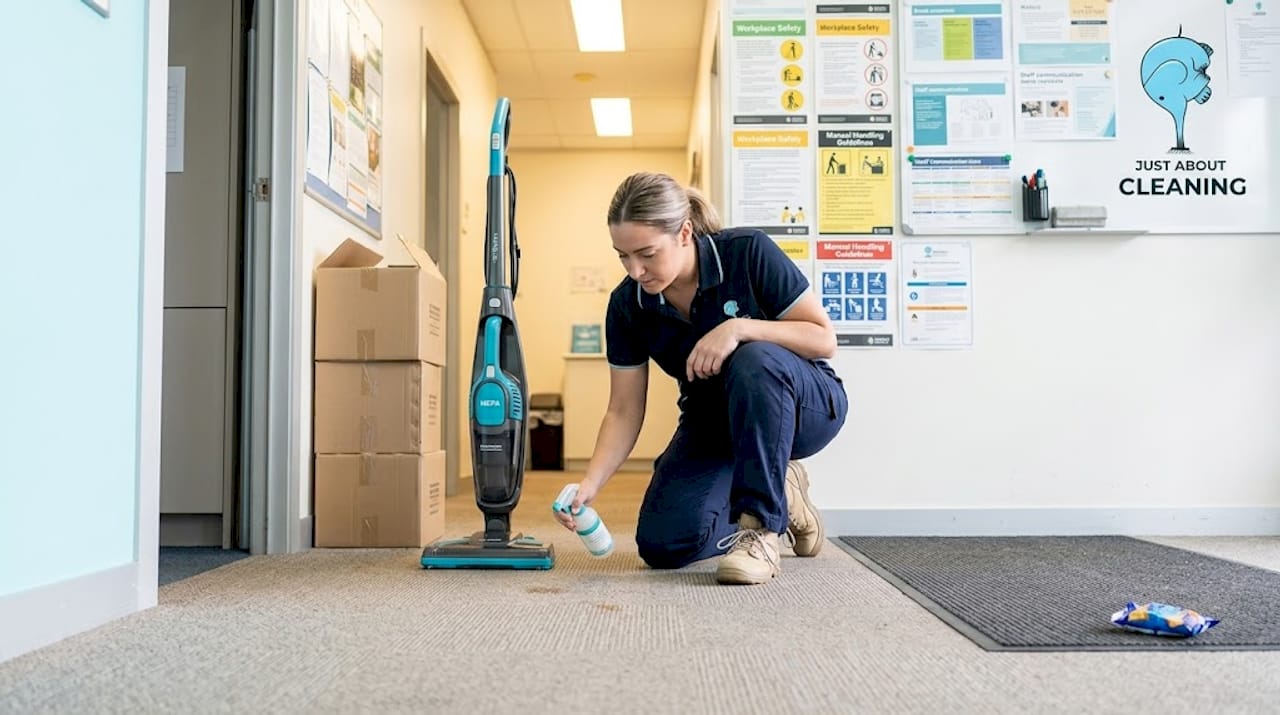
The comparison below highlights why upgrading to professional-grade equipment matters, particularly for warranty and compliance purposes.
| Item | Standard consumer grade | Professional/commercial grade |
|---|---|---|
| Vacuum | Basic suction, no HEPA filtration | HEPA filtration, high motor suction, commercial durability |
| Spot cleaning kit | Generic household spray | Certified commercial formula, SDS-compliant |
| Entrance mats | Decorative doormats | High-absorbency commercial mats rated for traffic volume |
| Extraction equipment | Domestic wet/dry vac | Truck-mount or commercial hot water extraction unit |
| Drying equipment | Open windows | Commercial air movers and dehumidifiers for rapid drying |
Essential items to have on hand for a compliant commercial carpet programme include:
- HEPA-filter commercial vacuum cleaners (one per cleaning zone for large facilities)
- Certified spot cleaning solutions with corresponding SDS sheets on file
- Commercial-grade entrance mats at all primary entry points
- Immediate-response stain kit with colour-safe, pH-neutral agents for rapid spill treatment
- Clean white cloths or microfibre pads for blotting (never rubbing) stains
- Signage for wet floor warnings during and after cleaning
Essential hygiene practices extend beyond the products themselves. Your team must be trained on correct application techniques, particularly for spot cleaning, where rubbing a stain further embeds it into the carpet fibres. The correct method is always to blot from the outside edge of a spill inward, using light pressure.
Product selection matters as much as technique. Always cross-check that the cleaning agents you use are approved by your carpet manufacturer. Some alkaline cleaners, for instance, can damage wool or wool-blend fibres and will void your warranty on contact.
Step-by-step process for hygienic commercial carpet cleaning
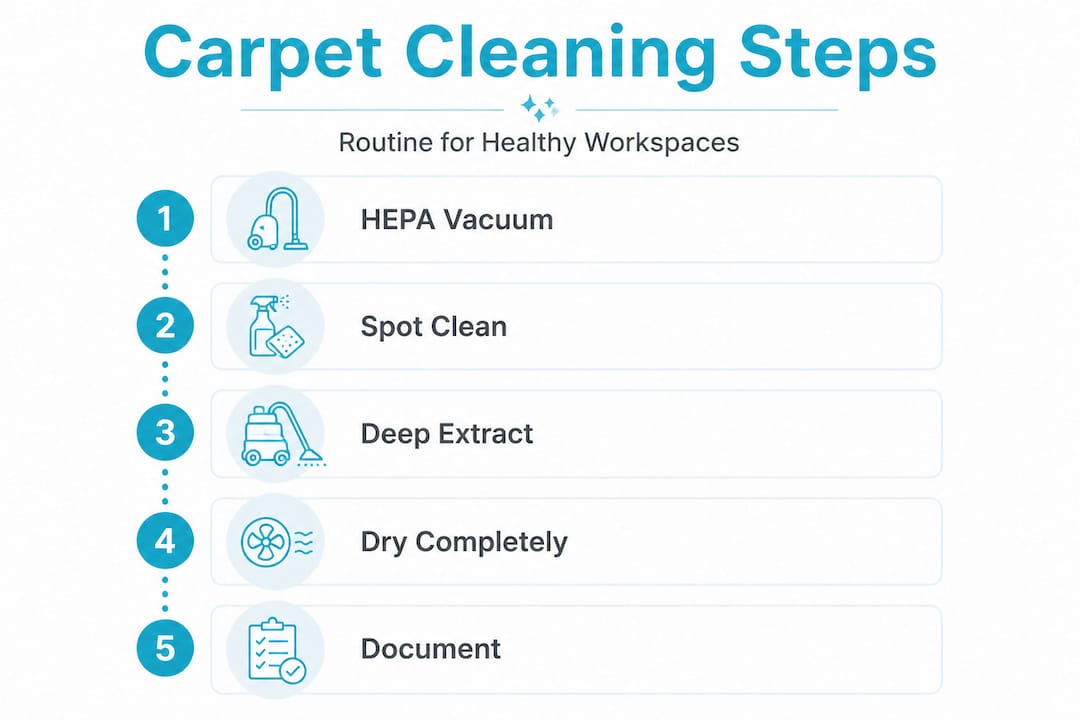
With your assessment complete and your tools ready, consistent execution is what separates a professional result from a patchwork effort. The following numbered routine covers both your ongoing daily and weekly responsibilities and the periodic deep cleaning that hygiene standards require.
- Pre-clean inspection: Walk each zone to identify new stains, damage, or high-soil areas before vacuuming begins.
- Entrance mat maintenance: Remove, shake out, and clean entrance mats daily, as saturated mats stop capturing soil and become a transfer risk.
- HEPA vacuuming: Vacuum all carpeted zones in a systematic pattern, covering high-traffic areas daily and lower-traffic zones three times per week at minimum.
- Spot treatment: Address any new stains immediately using approved spot cleaning agents. Blot, do not scrub. Allow to dry fully.
- Periodic interim cleaning: Use dry compound or encapsulation cleaning for interim refreshes between extraction cycles, particularly in high-traffic corridors.
- Scheduled hot water extraction: Conduct full extraction cleaning quarterly in high-traffic zones and biannually in medium-traffic areas, following AS/NZS 3733 and IICRC S100 procedures.
- Drying and ventilation: Maximise airflow after extraction using commercial air movers. Ensure carpet is fully dry before reopening the area to foot traffic.
- Post-clean documentation: Log the date, method, products used, staff or contractor responsible, and any observations about carpet condition.
The table below summarises cleaning tasks, recommended frequency, and their compliance relevance.
| Task | Frequency | Compliance reference |
|---|---|---|
| Entrance mat cleaning | Daily | WHS slip hazard prevention |
| HEPA vacuuming (high traffic) | Daily | AS/NZS 3733, hygiene standards |
| HEPA vacuuming (medium traffic) | 3x weekly | AS/NZS 3733 |
| Spot stain removal | As required | Warranty and hygiene |
| Encapsulation/interim clean | Monthly (high traffic) | IICRC S100 |
| Hot water extraction | Quarterly (high traffic) | AS/NZS 3733, IICRC S100 |
| Documentation update | After every clean | WHS audit compliance |
Engaging trained cleaning professionals for extraction work is strongly recommended, as incorrect equipment settings or excessive moisture can cause fibre damage and mould growth that is both expensive and hazardous.
Important safety note: Apply only manufacturer-approved cleaning agents to commercial carpets. Unapproved chemicals may react with carpet fibres, leave residue that attracts further soiling, or cause discolouration. Always review the SDS before use and follow label directions carefully. Your business carries liability for any harm resulting from improper chemical application on site.
Pro Tip: After any wet extraction clean, never allow foot traffic until carpets are completely dry. Damp carpets not only attract soil faster but create a slip hazard and a prime environment for mould spore growth. For larger areas, aim for drying times under four hours by using practical cleaning strategies including air movers, open windows, and HVAC assistance.
Avoiding common mistakes and ensuring compliance
Completing the cleaning process is only half the task. Many businesses invest genuine effort into their carpet maintenance routine, then undermine the whole effort through small but costly oversights. These errors can void warranties, expose your business to liability, or result in a failed audit despite clean-looking carpets.
The most common mistakes include using household cleaning products on commercial carpet, skipping documentation after cleans, failing to train staff on correct technique, not drying carpets fully after extraction, and neglecting entrance mats until they become soil transfer points rather than soil capture points. Each of these shortcuts carries a real business consequence.
Compliance reminder: Failing to follow AS/NZS 3733 and IICRC S100 puts your carpet warranty at direct risk and may compromise your standing during regulatory audits or insurance reviews. Standards compliance is not a formality — it is a legal and financial safeguard.
What auditors and insurers typically check in commercial carpet records includes:
- Cleaning logs with dates, methods, products used, and staff names
- SDS sheets for all chemicals used on site
- Evidence of scheduled maintenance intervals aligned with manufacturer requirements
- Staff training records related to carpet care and chemical handling
- Contractor qualifications and insurance certificates for any third-party cleaning work
- Incident reports for spills, water damage, or related floor-safety events
Understanding the importance of routine cleaning is inseparable from keeping those records accurate and up to date. A clean facility with no documentation is indistinguishable from a neglected one when an auditor visits.
Pro Tip: Create a simple one-page logbook template with fields for date, zone, task completed, product used, staff member, and any observations. Laminate a copy and store it in your cleaning cupboard. Digital versions with cloud backup are even more reliable. Review your cleaning standards definition annually to confirm your template still captures what compliance requires.
Signs of success: How to know your process is working
After doing the work and maintaining your records, you need a reliable way to assess whether your carpet hygiene programme is actually delivering results. Visual inspection tells part of the story, but several other indicators confirm that your process is working at a measurable level.
Positive signs your carpet maintenance routine is on track include reduced visible staining between scheduled cleans, the absence of musty or chemical odours in carpeted areas, positive outcomes from internal or external hygiene audits, fewer staff complaints about dust or allergy-related symptoms, stable carpet condition without premature wear or fibre damage, and continued warranty validity from your carpet supplier.
The role of professional cleaners becomes particularly evident when you start tracking these indicators. Facilities that rely on professional maintenance consistently report better hygiene audit outcomes and longer carpet lifespan compared to those using untrained internal staff alone.
Reassess your cleaning frequency or products when you observe any of the following:
- New stains reappearing within days of a clean, suggesting residue build-up or inadequate extraction
- Persistent odours that return after cleaning, indicating possible mould or bacterial growth below the surface
- Staff reporting increased dust, allergy symptoms, or respiratory irritation
- Carpet fibres showing signs of premature wear, crushing, or discolouration
- Failed or marginal results on hygiene audits, even after recent cleaning
The following table summarises the key success benchmarks and what each one signals about your programme.
| Success indicator | What it means |
|---|---|
| No staining between scheduled cleans | Soil load is being managed proactively |
| No odours post-clean | Drying and extraction are effective |
| Positive audit outcomes | Documentation and methods are compliant |
| No staff health complaints | Allergen and particle loads are under control |
| Warranty still valid | Approved products and methods are in use |
| Stable carpet appearance | Correct technique and frequency are working |
Reviewing best cleaning practices and comparing them against your current routine every six months is a sound habit. If your process is producing the results above, it is working. If not, the benchmarks tell you exactly where to investigate first. Documenting your WHS compliance schedules throughout this review process ensures your records reflect any changes made.
Most carpet hygiene issues start before cleaning — experience matters
There is a common assumption in commercial facilities management that carpet hygiene problems stem from poor cleaning. In our experience, that is rarely where the issue originates. The vast majority of problems we encounter trace back to the assessment and planning phase, not the cleaning phase itself.
Consider the pattern that emerges during audits. A site fails its carpet hygiene review, and the immediate response is to schedule a deep clean. But the clean alone rarely addresses the underlying cause. Closer examination reveals that no one mapped which zones needed daily attention versus weekly maintenance. Products were selected based on price, not approval status. Logs were filled in retrospectively rather than in real time. The cleaning happened, but without the framework to make it count.
The impact of trained cleaners goes well beyond technique. It extends into the planning, documentation, product selection, and compliance knowledge that separates a reactive programme from a proactive one. Experienced cleaning professionals often catch compliance gaps before they become audit failures — and that early intervention is where the real return on investment sits.
Property managers who invest in a proper site assessment before a single vacuum is switched on consistently achieve better outcomes: longer carpet life, fewer warranty disputes, cleaner audit results, and healthier staff environments. The cleaning itself, when the groundwork is solid, almost takes care of itself.
Professional carpet maintenance solutions tailored for your business
Managing carpet hygiene across a commercial facility is a significant responsibility, particularly when compliance, staff health, and asset protection are all on the line. For busy sites, persistent hygiene concerns, or upcoming regulatory audits, professional support makes a measurable difference.
Just About Cleaning Australia brings over 15 years of experience delivering compliant, results-driven commercial carpet maintenance services across a wide range of sectors, including retail, healthcare, education, and hospitality. Our trained onsite crews follow documented processes aligned with AS/NZS 3733 and IICRC S100, using only approved, eco-friendly products. Whether you need an ongoing maintenance programme, a one-off deep extraction clean, or full audit-ready documentation support, we build solutions around your specific facility needs. Contact our team today to discuss a tailored maintenance schedule for your site.
Frequently asked questions
How often should commercial carpets be cleaned for hygiene?
High-traffic areas require daily or weekly HEPA vacuuming, with immediate spot cleaning for spills and periodic extraction cleaning to maintain hygiene and compliance standards.
Why is documentation important in the carpet maintenance process?
Cleaning logs provide verifiable proof for WHS audits and warranty claims, demonstrating that scheduled cleaning for compliance has been completed correctly and consistently.
What standards apply to commercial carpet cleaning in Australia?
Compliant commercial carpet maintenance follows AS/NZS 3733 and IICRC S100, which set requirements for hygiene, extraction, drying practices, and warranty-aligned maintenance.
What happens if I use non-approved cleaning products?
Non-approved products can void your carpet warranty and create compliance gaps that become liabilities during insurance reviews or audits, particularly where IICRC S100 standards are referenced.
Are professional cleaners required for compliance?
Professional cleaners are not always mandatory, but they ensure certified methods are applied, accurate logs are maintained, and your facility meets current compliance requirements consistently.