
TL;DR:
- Effective property hygiene management requires adherence to Australian standards, proper product use, and thorough documentation to ensure legal compliance and tenant safety. Routine disinfection of high-touch surfaces, professional turnovers, and proactive maintenance work together to prevent health risks and reduce costly repairs. Treating hygiene as a layered management discipline, supported by trained professionals, optimizes property conditions and legal protections.
Managing hygiene across a portfolio of properties is far more demanding than most tenants realise. Whether you're overseeing a strata complex in Sydney or a mixed-use commercial building in Melbourne, applying the right hygiene tips for property managers can mean the difference between a compliant, well-tenanted property and one that attracts complaints, disputes, or even regulatory penalties. Tenant health, property value, and your legal obligations all hinge on how seriously you treat cleanliness. This guide gives you a practical, evidence-based framework to meet those demands confidently.
Table of Contents
- Criteria for effective hygiene practices in property management
- Daily and routine cleaning tips for high-touch surfaces
- Hygiene strategies for tenant turnover cleaning
- Prioritising preventive hygiene and maintenance tasks
- Comparing hygiene approaches for effective property management
- Our perspective: hygiene is a management skill, not just a cleaning task
- Managing your properties with professional cleaning support
- Frequently asked questions
Key Takeaways
| Point | Details |
|---|---|
| Use hospital-grade disinfectants | Always clean high-touch surfaces with ARTG-listed hospital-grade products for effective germ kill and compliance. |
| Prioritise tenant turnover cleaning | Comprehensive turnover cleaning prevents tenancy disputes and complies with Australian housing laws. |
| Implement preventive maintenance | Regular inspections and upkeep reduce health risks and costly property repairs. |
| Leverage residual disinfection | Choose disinfectants with 24-hour residual protection to continuously reduce microbial contamination. |
| Maintain cleaning documentation | Keep detailed cleaning logs and photo records to ensure accountability and support legal compliance. |
Criteria for effective hygiene practices in property management
Before diving into specific routines, you need a framework for evaluating whether your current hygiene practices are actually working. Too many property managers treat cleaning as a checkbox exercise, only to face issues at inspection time. Sound cleaning compliance and value principles start with clear, non-negotiable criteria.
Here is what your hygiene programme must satisfy to be considered effective:
- Compliance with Australian standards: All disinfectants used must be listed on the Australian Register of Therapeutic Goods (ARTG) or equivalent approved product registers. This is not optional. Using non-compliant products exposes you to liability.
- Correct product application: High-touch surfaces require daily disinfection using hospital-grade disinfectants with specific contact times. Contact time refers to how long a wet surface must remain in contact with a disinfectant for it to work. Most products require 30 to 60 seconds minimum.
- Frequency matched to usage intensity: A single-occupancy rental unit and a shared commercial lobby do not carry the same microbial load. High-traffic areas need more frequent attention, sometimes multiple times per day.
- Proper training for cleaners and staff: Whether you employ in-house cleaners or contractors, they must understand which products to use, how to apply them correctly, and how to document their work.
- Documentation and audit trails: Written logs, checklists, and photo records are your best protection in any tenancy dispute. They also demonstrate due diligence to regulatory bodies.
Meeting these criteria is not about being overly cautious. It is about building a system that protects tenants, protects you legally, and keeps your properties in top condition year-round.
With clear criteria established, let's explore essential hygiene practices you must implement.
Daily and routine cleaning tips for high-touch surfaces
High-touch surfaces are the most consistent vectors for illness transmission in any property. Door handles, light switches, lift buttons, tap fittings, intercom panels, and shared kitchen counters all accumulate bacteria and viruses rapidly throughout the day. Knowing how to clean and disinfect these surfaces properly is the core of any daily hygiene plan.
Follow these steps in sequence for effective disinfection:
- Remove visible soil first. Disinfectants do not work well on dirty surfaces. Wipe away grease, dust, or residue with a clean cloth and a general-purpose cleaner before applying your disinfectant product.
- Select an ARTG-listed disinfectant. Hospital-grade disinfectants with 24-hour residual protection are essential for lowering infection risk on high-touch surfaces. Residual protection means the product continues neutralising pathogens after the initial application has dried.
- Apply using the S-pattern wiping technique. Fold your cloth into quarters and wipe in overlapping S-shaped strokes, moving from clean zones toward dirtier areas. This prevents cross-contamination by ensuring you are always using a clean section of cloth.
- Do not dilute unless the label specifies. Many products are formulated for ready-to-use application. Diluting them incorrectly weakens their kill claims and renders the disinfection ineffective.
- Maintain the required contact time. Apply enough product to keep the surface visibly wet for the product's specified contact time, typically 30 seconds to one minute. Do not wipe dry prematurely.
- Follow up with a residual disinfectant. For shared spaces with continuous foot traffic, apply a residual disinfectant as a final layer. This provides ongoing surface protection between scheduled cleans.
Maintaining office cleaning standards and hygiene in commercial properties demands that these steps are followed consistently, not just when a major inspection is approaching.
Pro Tip: Create a laminated quick-reference card for each property listing the specific disinfectant products approved for use, the required contact times, and the surfaces to prioritise. Post these inside cleaning cupboards so no cleaner, whether regular or relief, is ever guessing.
Next, consider how to manage hygiene during tenant turnovers and deep cleans.
Hygiene strategies for tenant turnover cleaning
Turnover cleaning is where property managers most commonly fall short, and where the financial and legal consequences are most severe. Cleaning procedures for rentals at this stage are not about a quick vacuum and wipe-down. They must restore the property to a like-new presentation standard.
Key areas that demand attention during every turnover clean include:
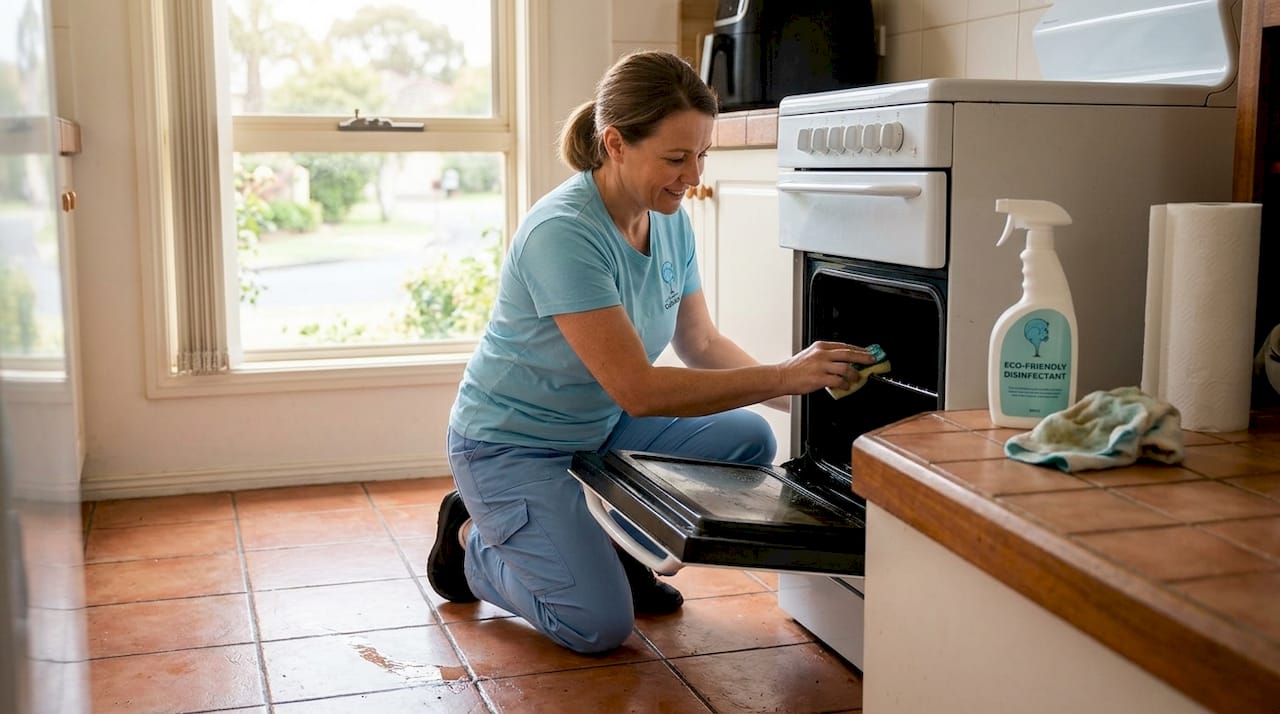
- Appliance interiors: Ovens, microwaves, dishwashers, and refrigerators must be cleaned and sanitised internally. Grease and food residue harbour bacteria and produce odours that a subsequent tenant will immediately notice and likely dispute.
- Grout and tile scrubbing: Bathroom grout in particular accumulates mould and soap scum that surface cleaning misses entirely. This requires dedicated grout cleaner and mechanical scrubbing.
- Cabinet interiors: Both kitchen and bathroom cabinets must be emptied, wiped out, and sanitised. Many managers inspect the cabinet doors but forget the shelves inside.
- Odour treatment: Surface cleaning does not eliminate embedded odours from pets, cooking, or dampness. Enzymatic treatments or professional fogging may be required.
- Timely coordination: Scheduling the clean immediately after the outgoing tenant vacates and before inspections and repairs begin prevents delays and demonstrates compliance.
Move-out cleaning requires interior appliance and cabinet sanitisation, with professional deep cleans costing a few hundred dollars for 4-bedroom units, compared to potential fines of up to $30,000 for non-compliance. The mathematics are straightforward.
Engaging professional cleaning services at this stage provides documented evidence of the property's condition, which is invaluable if a bond dispute arises. The importance of professional cleaning at turnover is not just about appearances. It is about protecting your legal position.
| Turnover cleaning task | DIY risk level | Professional advantage |
|---|---|---|
| Oven and appliance sanitisation | High, often missed or incomplete | Guaranteed to standard with documentation |
| Grout and tile scrubbing | Medium, labour-intensive | Specialist tools and products used |
| Odour treatment | High, surface sprays don't resolve source | Enzymatic or fogging treatments available |
| Cabinet interior cleaning | Low to medium | Systematic and checklist-driven |
| Final inspection report | Not applicable for DIY | Photo audit provided for legal records |
Understanding turnover cleaning's demands leads naturally into how to prioritise overall hygiene maintenance.
Prioritising preventive hygiene and maintenance tasks
Reactive cleaning solves today's problem. Preventive hygiene management prevents tomorrow's. Consistent preventive maintenance reduces costly repairs and supports safer, healthier living environments. For property managers, this is not just best practice. It is a liability management strategy.
Your preventive hygiene programme should include:
- Seasonal inspections: Conduct formal walkthroughs at least twice per year, checking for early signs of mould, water ingress, pest activity, and surface deterioration. Catching a small mould patch early costs far less than remediating a wall cavity later.
- HVAC system maintenance: Poorly maintained air conditioning and ventilation systems circulate dust, allergens, and airborne pathogens throughout a building. Filters should be cleaned or replaced every three to six months depending on usage.
- Plumbing checks: Slow leaks under sinks or around shower bases create the damp conditions that mould thrives in. A proactive plumbing inspection programme catches these before they become visible and expensive.
- Electrical safety: While not directly a hygiene issue, deteriorating electrical fittings can cause fires that obviously compromise the entire property. Include these in your seasonal inspection rounds.
- Exterior and landscaping: Overflowing gutters, standing water, and dense garden overgrowth all create pest habitats. Mosquitoes, rodents, and cockroaches entering a property from poorly maintained grounds represent a direct hygiene risk.
Embedding these home hygiene practices into your management calendar, rather than addressing them reactively, significantly reduces both repair costs and tenant turnover.
Pro Tip: Build a property-specific maintenance calendar in your property management software that triggers inspection reminders 30 days in advance. Include HVAC filter replacement, gutter clearing, and mould checks as recurring line items. This turns preventive hygiene from an intention into a scheduled action.
Let's compare these hygiene approaches side-by-side to help you decide which to prioritise.
Comparing hygiene approaches for effective property management
Understanding each approach in isolation is useful. Seeing them compared directly is where decision-making becomes practical. Residual disinfection technology with 24-hour surface protection is a significant advancement in infection prevention, but it functions as part of a broader system, not a replacement for the full range of hygiene strategies.
| Hygiene approach | Frequency | Scope | Primary benefit | Cost implication |
|---|---|---|---|---|
| Daily surface disinfection | Daily | High-touch surfaces | Reduces active infection transmission | Low to moderate ongoing cost |
| Turnover deep cleaning | Per tenancy change | Full property, like-new standard | Legal compliance and bond protection | Moderate one-off cost per vacancy |
| Preventive maintenance inspections | Twice yearly or seasonal | Structural, systems, exterior | Reduces long-term repair costs | Low scheduled cost, high risk if skipped |
| Professional cleaning services | As required | Any or all of the above | Documentation, consistency, compliance | Moderate, with measurable ROI |
Reviewing top cleaning standards for Australian compliance confirms that no single approach is sufficient on its own. Property managers who rely solely on daily cleaning while neglecting turnover standards will face bond disputes. Those who invest in deep cleans at turnover but ignore preventive maintenance will face escalating repair costs.
The most effective property managers treat hygiene as a layered system. Each approach addresses a different risk at a different point in the property lifecycle. Combining all three, with professional support where your internal capacity falls short, is where you achieve consistent compliance, satisfied tenants, and protected assets.
Our perspective: hygiene is a management skill, not just a cleaning task
After more than 15 years working across residential strata, commercial premises, and everything in between, we have observed a consistent pattern. The property managers who face the fewest hygiene-related disputes are not necessarily the ones with the largest cleaning budgets. They are the ones who treat hygiene as a management discipline rather than a delegated task.
The conventional view is that if you hire a cleaner, hygiene is handled. In reality, hygiene outcomes depend on the quality of your brief, the specificity of your cleaning schedule, the products approved for use, and the documentation system you have in place. A cleaner with no direction and a basic surface spray will not deliver the same outcome as one working from a detailed scope with ARTG-listed products and a signed checklist.
There is also an uncomfortable reality around reactive versus proactive spending. Many managers approve a $150 monthly clean but hesitate to invest in a $400 turnover deep clean. Then they spend thousands managing a bond dispute or dealing with a mould remediation that a $90 seasonal inspection would have caught.
Best practices for tenant sanitation and property maintenance hygiene are genuinely worth the investment. Not because it looks good, but because it directly reduces your exposure to complaints, legal liability, and costly emergency repairs. Sanitation guidelines for property managers exist in Australian legislation for exactly this reason. Treat them as a floor, not a ceiling.
Managing your properties with professional cleaning support
Applying these hygiene tips consistently across multiple properties takes more than good intentions. It requires reliable cleaning partners, documented processes, and products that actually meet Australian standards.
At Just About Cleaning Australia, we work with property managers and strata companies across Australia to deliver cleaning services that are consistent, documented, and compliant. Our trained crews follow verified cleaning procedures for rentals and commercial spaces, using approved hospital-grade disinfectants and providing detailed records after every service. Whether you need daily high-touch surface disinfection, comprehensive turnover cleaning, or ongoing preventive maintenance support, we can tailor a programme that fits your portfolio. Reach out to our team at justaboutcleaning.com.au to discuss how we can support your hygiene standards.
Frequently asked questions
How often should high-touch surfaces be disinfected in Australian properties?
High-touch surfaces must be disinfected at least daily using hospital-grade disinfectants with a minimum 30-second contact time, in line with 2026 Australian hygiene guidelines for residential and commercial properties.
What does a professional tenant turnover clean include?
A professional turnover clean includes interior appliance sanitisation, grout scrubbing, cabinet cleaning, odour treatment, and a full-property presentation to like-new standard, with photographic documentation provided for compliance purposes.
Why is using residual disinfectants important for property hygiene?
Residual disinfectants provide 24-hour surface protection by continuing to neutralise microbes on contact after the product has dried, which significantly reduces infection risk between scheduled cleaning visits.
How can documentation improve hygiene compliance?
Detailed cleaning logs and photo audits provide verifiable proof that cleaning was completed to the required standard, which supports your legal position in bond disputes and demonstrates compliance with Australian tenancy and health regulations.