
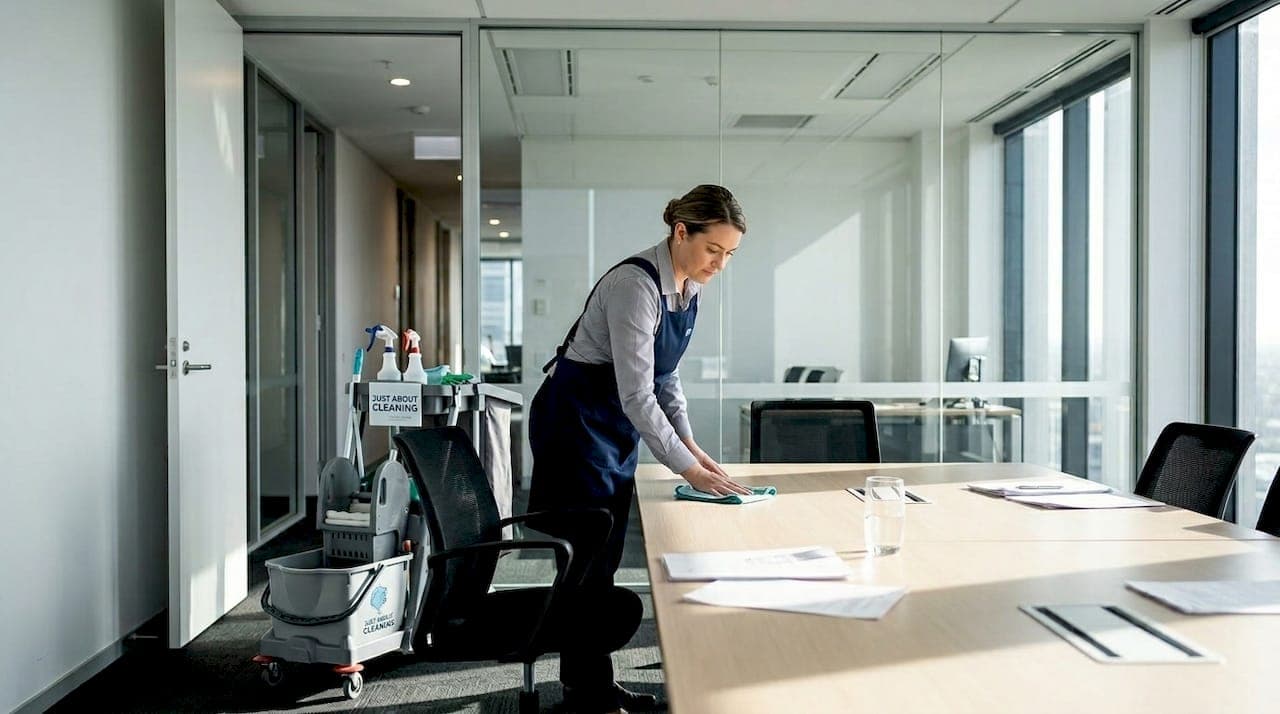
Unsanitary office conditions are one of the most overlooked threats to employee health and business productivity. Research consistently links poor workplace hygiene to higher rates of absenteeism, reduced staff morale, and even reputational damage when clients visit. For business owners and property managers across Australia, maintaining a clean office is not simply about appearances. It requires a structured, evidence-based approach that meets regulatory expectations and genuinely protects the people who work in your space. This guide walks you through every stage of commercial office cleaning, from understanding why it matters to verifying that your standards hold up over time.
Table of Contents
- Understand why commercial office cleaning matters
- Prepare: Tools, materials, and prerequisites for office cleaning
- Step-by-step: Cleaning commercial offices efficiently
- Troubleshooting and avoiding common mistakes in office cleaning
- Verification: Ensuring office cleanliness and compliance
- Professional help for commercial office cleaning
- Frequently asked questions
Key Takeaways
| Point | Details |
|---|---|
| Routine matters | Consistent daily and weekly cleaning prevents health risks in commercial offices. |
| Preparation is key | Having the right tools, materials, and eco-friendly products helps streamline the cleaning process. |
| Compliance ensures safety | Follow Australian standards and maintain records to guarantee workplace hygiene and legal compliance. |
| Deep cleaning required | Schedule deep cleaning regularly to address hard-to-reach areas and stubborn stains. |
Understand why commercial office cleaning matters
A clean office is directly linked to how well your team performs. Studies show that employees working in clean, organised environments report higher concentration levels and fewer sick days. When surfaces harbour bacteria and allergens, illness spreads quickly through shared spaces, costing businesses thousands of dollars in lost productivity each year.
Did you know? Offices with consistent cleaning programmes report up to 46% fewer employee sick days compared to those without structured hygiene protocols.
Beyond health, office cleaning standards in Australia are designed to safeguard employee health and ensure workplaces meet their duty-of-care obligations under Work Health and Safety legislation. Failing to comply can expose your business to legal liability, not just an untidy breakroom.
Here is what a well-maintained office delivers for your business:
- Reduced absenteeism: Fewer pathogens on surfaces means fewer staff calling in sick.
- Improved productivity: Staff focus better in clean, clutter-free environments.
- Positive brand image: Clients and visitors form immediate impressions based on cleanliness.
- Regulatory compliance: Meeting Australian standards protects you from workplace safety penalties.
- Staff wellbeing: A hygienic environment signals that you value your team's health.
The routine cleaning benefits extend well beyond surface-level tidiness. Consistent cleaning reduces the accumulation of dust, mould spores, and volatile organic compounds that affect indoor air quality, which is a significant concern in sealed, air-conditioned office buildings.
Prepare: Tools, materials, and prerequisites for office cleaning
Before any cleaning begins, having the right supplies on hand makes the difference between a thorough result and a rushed, ineffective one. Commercial office environments have specific requirements that differ from residential cleaning, particularly around chemical safety and surface compatibility.
Here is a practical checklist of essential commercial cleaning supplies:
- Microfibre cloths (colour-coded by zone to prevent cross-contamination)
- Commercial-grade disinfectant spray suitable for hard surfaces
- Glass cleaner and lint-free cloths for windows and partitions
- Mop and bucket system with a wringer for hard floors
- HEPA-filter vacuum cleaner for carpets and upholstered furniture
- Toilet bowl cleaner, scrubbing brushes, and sanitary disposal supplies
- Rubbish bags in multiple sizes for general and recycling bins
- Personal protective equipment (PPE): gloves, safety glasses, and where required, a mask
Eco-friendly products are increasingly preferred for Australian offices, and for good reason. They reduce chemical exposure for cleaning staff and office workers alike, and they align with the growing expectation from clients and employees that businesses operate responsibly.
The table below outlines common cleaning tasks alongside recommended product types:
| Cleaning task | Recommended product type | Frequency |
|---|---|---|
| Desk and surface wipe-down | Alcohol-based disinfectant spray | Daily |
| Glass and partition cleaning | Streak-free glass cleaner | Weekly |
| Floor mopping (hard floors) | pH-neutral floor cleaner | Daily or as needed |
| Carpet vacuuming | HEPA vacuum, no chemical required | Daily |
| Bathroom sanitisation | Hospital-grade disinfectant | Daily |
| Kitchen and breakroom surfaces | Food-safe antibacterial cleaner | Daily |
Safety compliance is non-negotiable. All cleaning products used in commercial settings must have a current Safety Data Sheet (SDS) on file, and staff must be trained in correct handling and dilution procedures.
Pro Tip: Always check manufacturer recommendations before applying any product to a new surface. Some disinfectants can damage powder-coated metals, certain plastics, or natural stone benchtops if used incorrectly.
Step-by-step: Cleaning commercial offices efficiently
With your supplies ready, a structured workflow ensures nothing is missed and time is used effectively. Professional cleaners follow a top-to-bottom, back-to-front method, which prevents dust and debris from falling onto already-cleaned surfaces.
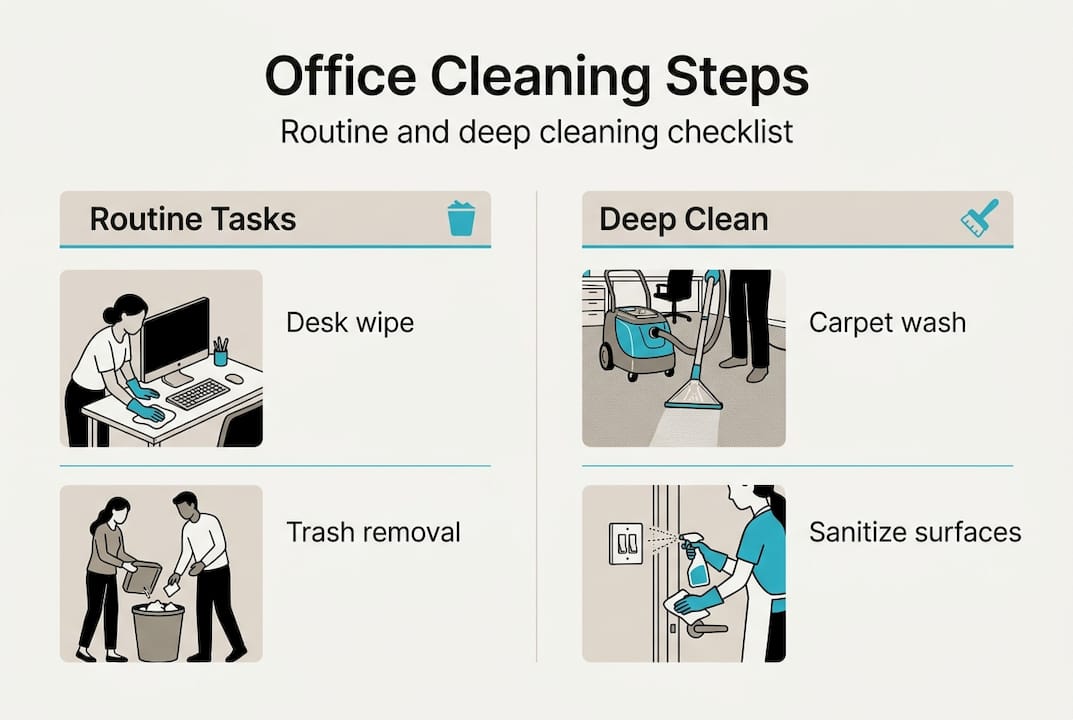
Daily cleaning tasks:
- Remove rubbish from all bins and replace liners.
- Wipe down all desks, workstations, and shared surfaces with disinfectant.
- Clean and sanitise all high-touch points: door handles, light switches, lift buttons, and shared equipment.
- Vacuum carpeted areas and mop hard floors.
- Clean and restock bathrooms, including sanitising toilets, basins, and mirrors.
- Wipe down kitchen benches, clean the sink, and restock consumables such as soap and paper towels.
- Empty and wipe recycling and compost bins.
Weekly cleaning tasks:
- Clean glass partitions, windows, and mirrors throughout the office.
- Dust blinds, skirting boards, and air conditioning vents.
- Wipe down chair bases, monitor stands, and under-desk areas.
- Sanitise communal appliances including microwaves, fridges, and coffee machines.
Monthly cleaning tasks:
- Deep clean carpets using extraction or dry-cleaning methods.
- Wash walls and spot-clean painted surfaces.
- Clean light fittings and ceiling fans.
- Inspect and clean behind large furniture and storage units.
The deep cleaning process is essential for maintaining a compliant and safe workplace, particularly in high-traffic offices where daily cleaning alone cannot address embedded grime or allergen build-up.
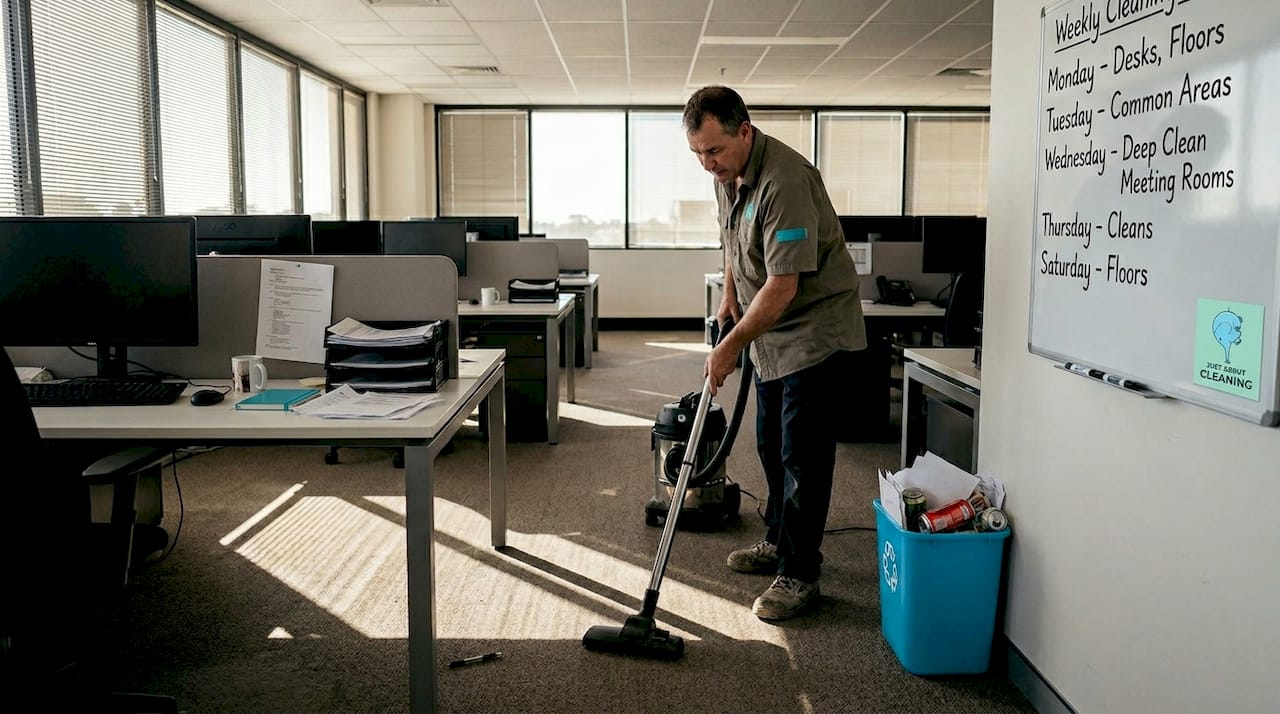
Pro Tip: High-touch surfaces such as phones, door handles, and shared desks should be disinfected at least twice daily in busy offices. This single habit significantly reduces the transmission of common illnesses.
The table below compares quick routine cleans with thorough deep cleans:
| Feature | Routine clean | Deep clean |
|---|---|---|
| Frequency | Daily or weekly | Monthly or quarterly |
| Time required | 1 to 3 hours | 4 to 8 hours or more |
| Areas covered | Visible surfaces, floors, bathrooms | All surfaces including hidden areas |
| Equipment needed | Standard supplies | Specialist equipment |
| Compliance value | Maintains baseline hygiene | Meets full compliance requirements |
Improving your cleaning workflow efficiency also reduces the time and cost of each clean without compromising results. Assigning zones to specific staff members and using colour-coded equipment are two practical strategies that professional teams use consistently. For a broader view of ongoing office hygiene maintenance, a documented schedule tailored to your office size and usage patterns is the most reliable foundation.
Troubleshooting and avoiding common mistakes in office cleaning
Even experienced cleaning teams encounter recurring issues. Knowing what to look for and how to correct it quickly keeps your standards high and prevents small problems from becoming compliance risks.
Common mistakes and how to address them:
- Smears on glass surfaces: Usually caused by using too much product or a dirty cloth. Use a clean, dry microfibre cloth and apply glass cleaner sparingly.
- Missed corners and edges: Dust accumulates in skirting board corners and under furniture. Add a specific corner-check step to your cleaning checklist.
- Improper disinfectant use: Many disinfectants require a minimum contact time (called dwell time) to be effective. Wiping immediately after application reduces their efficacy significantly.
- Cross-contamination between zones: Using the same cloth in the bathroom and the kitchen is a serious hygiene risk. Colour-coded cloths and equipment eliminate this problem.
- Overlooking air vents and ceiling fixtures: These accumulate dust rapidly and distribute it throughout the office when the air conditioning runs. Schedule these into your weekly or monthly tasks.
'Failing to regularly clean high-traffic areas increases infection risk and can undermine even the most thorough cleaning programme.'
Routine cleaning mistakes can lead to compliance issues and genuine health risks for your staff. The most effective prevention strategy is a detailed, zone-specific checklist that cleaning staff sign off on after each session. This creates accountability and makes it easy to identify where gaps are occurring.
Layered cleaning, which means addressing surfaces at different levels (ceiling, mid-height, floor level) in a deliberate sequence, also prevents the common mistake of re-contaminating surfaces that have already been cleaned.
Verification: Ensuring office cleanliness and compliance
Cleaning without verification is an incomplete process. Inspection and record-keeping are required to demonstrate office compliance requirements under Australian workplace standards, and they also give you the data needed to improve your cleaning programme over time.
Follow these steps to build a reliable verification process:
- Conduct post-clean inspections: Walk through the office after each clean using a standardised checklist. Check high-touch surfaces, bathrooms, the kitchen, and entry areas as a minimum.
- Maintain a cleaning log: Record the date, time, areas cleaned, products used, and the name of the person responsible. This log is your primary compliance document.
- Use ATP testing for high-risk areas: Adenosine triphosphate (ATP) testing uses a swab and a handheld device to measure biological residue on surfaces. It provides objective data on surface cleanliness, particularly useful in kitchens and bathrooms.
- Gather staff feedback regularly: Your team notices things that inspections can miss. A simple monthly survey asking about cleanliness concerns gives you an early warning system for emerging issues.
- Review and update your cleaning schedule: As your office grows or usage patterns change, your cleaning programme needs to adapt. Review the schedule at least every six months.
Key stat: Workplaces that conduct regular cleaning audits are significantly more likely to maintain consistent hygiene standards and avoid compliance-related incidents.
Documentation is not just a bureaucratic requirement. It protects your business in the event of a workplace health complaint or audit, and it demonstrates to your staff and clients that hygiene is taken seriously at every level of your operation.
Professional help for commercial office cleaning
Maintaining a consistently clean and compliant office is a significant commitment, and many Australian businesses find that partnering with a professional service delivers better results with less internal effort.
At Just About Cleaning Australia, we bring over 15 years of experience to professional office cleaning across a wide range of commercial environments. Our trained onsite crews follow documented cleaning protocols that align with Australian workplace standards, and we use eco-friendly products that protect both your staff and the environment. Whether you need daily maintenance cleaning, scheduled deep cleans, or a tailored programme built around your office's specific needs, we can deliver consistent, verifiable results. Contact us today for a no-obligation quote and find out how we can take the complexity out of keeping your workplace hygienic, compliant, and ready for business.
Frequently asked questions
How often should a commercial office be cleaned?
Daily cleaning is recommended for common areas, bathrooms, and kitchens, with deeper cleaning scheduled weekly or monthly depending on office size and foot traffic. Routine cleaning aligns with Australian standards for employee health and duty-of-care obligations.
What are the best cleaning products for office environments?
Use eco-friendly products wherever possible to reduce chemical exposure for staff, and always confirm that products are compatible with the specific surfaces in your office before use.
How can I ensure cleaning meets Australian compliance standards?
Keep detailed cleaning logs, follow zone-specific checklist procedures, and conduct regular post-clean inspections. Compliance requires both consistent practice and documented evidence that your standards are being met.
What is the difference between routine and deep cleaning?
Routine cleaning covers daily upkeep such as dusting, disinfecting surfaces, and vacuuming, while deep cleaning addresses carpets, upholstery, and less-accessible areas to maintain full workplace safety and compliance.