
TL;DR:
- % of East Coast Australian cleaning businesses have adopted eco-friendly practices, showing widespread compliance.
- Green cleaning uses certified, biodegradable products that improve indoor air quality and reduce environmental harm.
- Implementing green cleaning technologies boosts staff health, compliance, reputation, and offers long-term business advantages.
Many Australian business leaders still assume that going green means spending more and cleaning less effectively. That assumption is outdated. 80% of east coast cleaning businesses have already adopted eco-friendly practices, and the sector is only accelerating. Green cleaning is no longer a niche preference reserved for progressive startups. It is a practical, evidence-backed approach to maintaining hygienic workplaces while reducing environmental harm. This guide walks Australian organisations through what green cleaning actually means, which standards apply, what technologies are available, and what real-world outcomes to expect when they make the shift.
Table of Contents
- What is green cleaning and why does it matter?
- Australian green cleaning standards and compliance
- Key technologies and materials in green cleaning
- Real-world benefits and challenges of green cleaning for Aussie businesses
- Our take: Why genuine green cleaning is the next business advantage
- Adopt green cleaning with confidence
- Frequently asked questions
Key Takeaways
| Point | Details |
|---|---|
| Clear standards | Australia’s green cleaning requirements focus on environmental safety and compliance frameworks like GECA, Green Star, and NABERS. |
| Proven benefits | Businesses see reduced chemical use, better workplace health, and streamlined ESG reporting. |
| Measurable adoption | Over 80% of east coast cleaning businesses use eco-practices, making green the new norm in Australia. |
| Real-world challenges | Initial costs exist, but the long-term value clearly outweighs the hurdles for most organisations. |
What is green cleaning and why does it matter?
Green cleaning is the use of cleaning methods, products, and equipment that are demonstrably safe for human health and the natural environment. It goes well beyond simply switching to a product labelled "natural." True green cleaning involves a systemic approach: choosing certified chemicals, adopting lower-impact cleaning methods, and considering the full lifecycle of every material used, from manufacture through to disposal.
A useful reference point is the GECA standard CPv3.0-2022, which sets out clear product requirements for cleaning chemicals used in Australian commercial environments. To meet this standard, a product must have:
- Less than 3% volatile organic compounds (VOCs), which are airborne chemicals that degrade indoor air quality
- Fully biodegradable surfactants, meaning the active cleaning agents break down safely in waterways
- No phosphates, which contribute to algal blooms and aquatic ecosystem damage
- Low aquatic toxicity ratings across all ingredients
- A verified lifecycle assessment of packaging, covering production, use, and end-of-life disposal
These criteria are not arbitrary. They reflect years of research into what actually harms building occupants and surrounding ecosystems when conventional cleaning products are used at scale.
Two persistent myths deserve attention.
The first myth is that green cleaning is prohibitively expensive. While GECA-certified products may carry a slightly higher unit cost in some cases, chemical load reductions of up to 80% mean that organisations use significantly less product overall. That directly offsets higher per-litre pricing. When you add reduced PPE requirements, lower ventilation demands, and fewer incident reports, the economics shift favourably.
The second myth is that green products clean less thoroughly. In controlled commercial settings across Australia, certified eco-products consistently match the performance of conventional counterparts for standard soil removal, bacteria reduction, and surface protection. The difference is in what they leave behind: no toxic residue, no harsh fumes, and no lasting chemical film on surfaces where people work and eat.
Understanding these eco-friendly cleaning facts is essential before any organisation begins evaluating suppliers or revising their cleaning schedules. The business case is real, and the green cleaning benefits extend well beyond environmental goodwill. Improved staff health, reduced absenteeism, and stronger compliance posture are all measurable outcomes that directly affect your bottom line and workforce performance.
Did you know? Green cleaning can reduce a workplace's total chemical load by up to 80%, improving air quality for every person who spends time in the building.
Australian green cleaning standards and compliance
Once green cleaning is defined, it is essential to understand the standards and frameworks shaping its adoption across Australian businesses. Three certifications stand out as the most relevant for commercial organisations: GECA, Green Star, and NABERS.
GECA (Good Environmental Choice Australia) is a product certification scheme that independently verifies cleaning chemicals and related products against rigorous environmental and health criteria. For procurement teams, GECA certification is a reliable shortcut. If a product carries the GECA mark, it has been tested against standards that cover chemical composition, packaging impact, and supplier transparency.
Green Star, administered by the Green Building Council of Australia, is a building rating system that includes indoor environment quality (IEQ) as a scored category. Cleaning practices directly influence IEQ scores because the chemicals used in a building affect the air that occupants breathe. Switching to GECA-certified products and low-chemical cleaning methods can contribute meaningfully to a building's Green Star rating, which in turn supports property values, tenant attraction, and corporate reporting.
NABERS (National Australian Built Environment Rating System) assesses building performance across energy, water, waste, and indoor environment. NABERS IEQ ratings reward organisations that demonstrate cleaner indoor air and better waste management practices. Green cleaning programmes, when documented correctly, provide direct evidence for NABERS assessments.
Here is a side-by-side overview of how these three frameworks compare:
| Standard | Administered by | Key areas covered | Relevance to cleaning |
|---|---|---|---|
| GECA CPv3.0-2022 | Good Environmental Choice Australia | Chemical composition, packaging, lifecycle | Product selection and certification |
| Green Star | Green Building Council of Australia | IEQ, energy, materials, innovation | Indoor air quality, surface treatments |
| NABERS | Federal government | Energy, water, waste, indoor environment | IEQ scoring, waste reduction |
For businesses with active ESG (Environmental, Social, Governance) reporting obligations, these standards do not operate in isolation. They feed into sustainability disclosures, net-zero roadmaps, and procurement policies that are increasingly scrutinised by investors, insurers, and government clients. Understanding top cleaning standards helps you map your cleaning programme directly to your broader sustainability commitments.
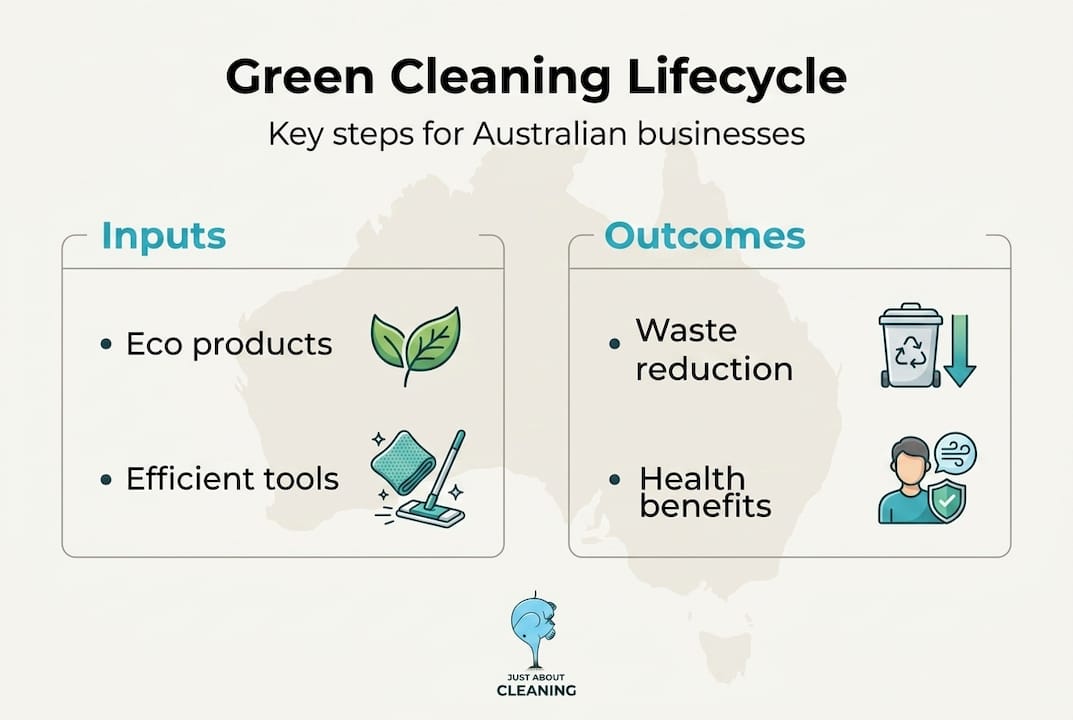
Lifecycle thinking is another dimension that compliance frameworks increasingly demand. This means evaluating not just what a product does during use, but how its packaging was produced, whether it can be recycled, and what happens when it enters the waste stream. Organisations that treat packaging as an afterthought often find it creates compliance gaps during audits.
For detailed guidance on office compliance explained in the context of 2026 regulatory expectations, it pays to understand how each standard connects to your specific facility type.
Pro Tip: Build a product register that captures each cleaning chemical used, its GECA certification status, VOC rating, and packaging disposal method. This single document will streamline Green Star and NABERS audits and demonstrate compliance readiness to any client or regulator who requests it.
"Green cleaning is not simply about substituting one product for another. It is about building systems, training people, and documenting processes that can be independently verified."
Key technologies and materials in green cleaning
A clear understanding of standards leads naturally to the materials and technologies that make next-generation green cleaning possible. The good news for Australian businesses is that the most impactful tools are already widely available and proven in commercial settings.
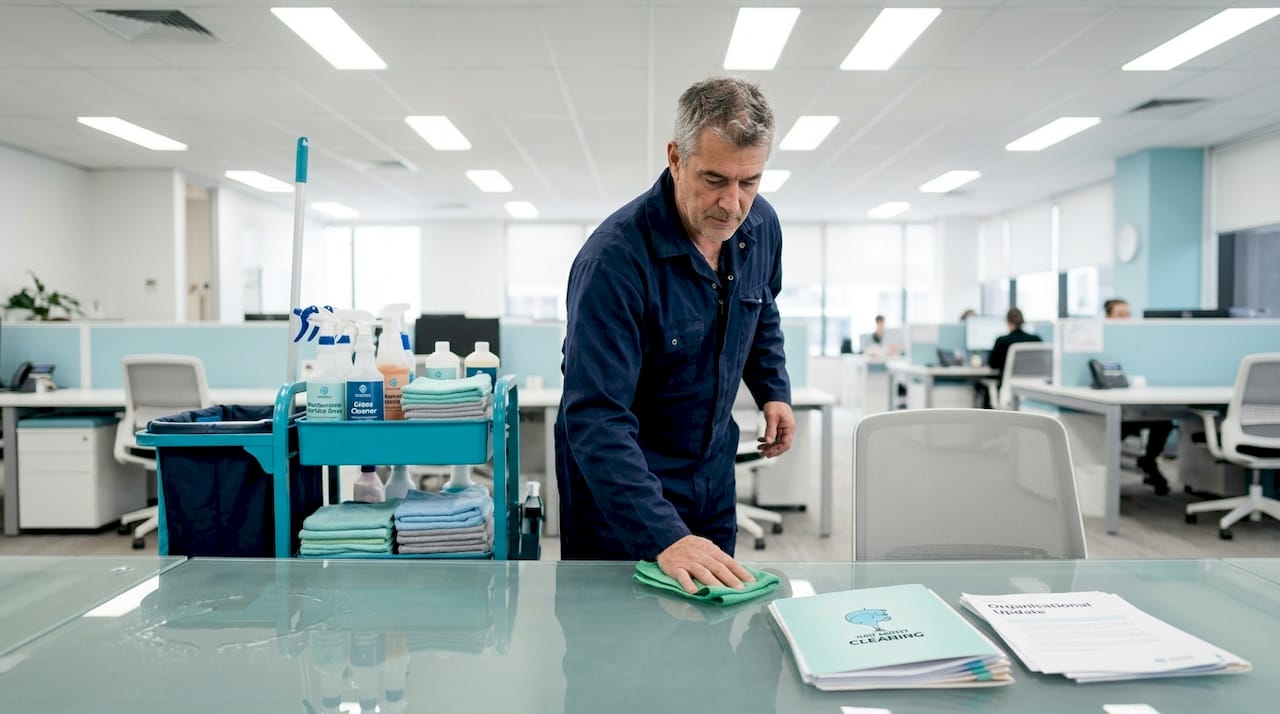
Microfibre technology is one of the most significant advances in commercial cleaning of the last two decades. Microfibre cloths and mop heads are engineered with millions of tiny fibres that physically lift and trap particles, bacteria, and oils from surfaces. Because the fibres do the mechanical work, chemical use is dramatically reduced. Microfibre reduces chemical use by 99% in many applications, which is not a marketing claim but a figure validated in institutional cleaning studies. For large commercial facilities, this translates to measurable cost savings and substantially lower chemical residue on surfaces.
Concentrated cleaning products are the second major technology shift. Traditional ready-to-use cleaning sprays carry enormous volumes of water in packaging that travels from a factory to a warehouse to a facility. Concentrated formulations allow a small volume of active product to be diluted on-site, which cuts packaging waste by up to 90%. This reduces transport emissions, storage footprint, and plastic waste simultaneously.
Here is a comparison of conventional versus green cleaning technology performance:
| Technology | Conventional approach | Green alternative | Key improvement |
|---|---|---|---|
| Surface cleaning cloths | Single-use disposable wipes | Microfibre reusable cloths | 99% less chemical use |
| Chemical delivery | Ready-to-use spray bottles | Concentrated dilution systems | Up to 90% less packaging |
| Floor mopping | String mop with chemical solution | Microfibre flat mop, minimal solution | Reduced water and chemical load |
| Product certification | Unverified "natural" labels | GECA-certified formulations | Verified environmental performance |
Introducing these technologies effectively requires a structured approach. Follow these steps to transition your facility:
- Audit your current product inventory. List every cleaning chemical and consumable in use, noting volumes, costs, and current certifications. This baseline makes the switch measurable.
- Identify GECA-certified alternatives. Match each current product to a certified equivalent. Your cleaning supplier should be able to provide this directly.
- Replace single-use cloths with microfibre systems. Begin with high-traffic surfaces such as desks, kitchenettes, and bathrooms where the chemical reduction is most impactful.
- Introduce concentrated products with dosing equipment. Install wall-mounted or portable dilution stations to ensure consistent, accurate mixing and prevent overuse.
- Update your cleaning schedules and method statements. New materials require adjusted dwell times, dilution ratios, and handling procedures.
- Train all cleaning staff before rollout. Even experienced cleaners need instruction on microfibre care, concentration ratios, and documentation requirements.
For a broader view of sustainable cleaning methods that apply across different facility types, it is worth reviewing how method selection varies between healthcare, office, and industrial environments.
Pro Tip: Microfibre cloths must be laundered separately from other linen and without fabric softener, which clogs the fibres and destroys their effectiveness. Establish a dedicated laundry protocol from day one to protect your investment in this technology.
When it comes to specific surfaces such as blinds and window treatments, natural blind cleaning tips and guidance on eco-friendly window treatments can help facilities teams extend their green approach to every surface in the building.
Real-world benefits and challenges of green cleaning for Aussie businesses
Understanding materials and methods sets the stage for analysing what Aussie businesses actually experience when they go green. The picture is largely positive, though honest about the initial effort required.
The benefits are tangible and broad-reaching:
- Healthier staff: Removing harsh chemical fumes from the workplace directly improves indoor air quality, reducing respiratory irritation, headaches, and allergy symptoms among staff. This is especially significant in enclosed offices and healthcare settings.
- Fewer sick days: Cleaner air and lower chemical exposure correlate with reduced sick days and lower rates of occupational illness, benefiting both staff wellbeing and productivity.
- Stronger compliance posture: Green cleaning programmes that are properly documented create audit-ready evidence for Green Star, NABERS, and ESG reporting requirements.
- Waste and cost reductions: Concentrated products and reusable microfibre systems significantly reduce packaging waste and ongoing consumable costs once systems are embedded.
- Improved reputation: Clients, tenants, and employees increasingly value visible sustainability practices. A credible green cleaning programme signals organisational responsibility.
The challenges are real but manageable:
- Upfront investment: Replacing equipment, sourcing certified products, and installing dilution systems requires capital outlay that may feel significant for smaller organisations.
- Change management: Existing cleaning staff and facility managers may resist new methods or products, particularly if they are accustomed to specific products they trust.
- Staff training requirements: New technology and certified products require structured onboarding, updated method statements, and ongoing supervision until habits are embedded.
Research confirms that transition costs exist in institutional green cleaning programmes, but the evidence consistently shows that waste reduction, improved health outcomes, and compliance value outweigh those initial costs over a two to three year period.
The 80% adoption rate among east coast cleaning businesses is not driven by idealism. It reflects a rational business response to tightening compliance standards, growing client expectations, and the demonstrable long-term economics of eco-friendly practice.
"The evidence base for green cleaning is now strong enough that the question is no longer whether to adopt it, but how to do so in a way that sticks."
Our take: Why genuine green cleaning is the next business advantage
Most guides on green cleaning focus heavily on upfront costs and regulatory tick-boxes. That framing misses where the real value sits.
In our experience working across Australian commercial, healthcare, and education facilities, the biggest and most lasting payoff from green cleaning is not compliance or cost savings. It is competitive differentiation and employee culture. When staff see that their organisation has invested in a healthier workplace environment, it signals care. That perception influences retention, recruitment, and day-to-day morale in ways that are genuinely difficult to replicate through other HR initiatives.
Organisations that track staff satisfaction and absenteeism before and after a sustainable cleaning rollout consistently observe improvements that extend well beyond what the cleaning programme itself can claim sole credit for. The visible commitment to health and sustainability creates a cultural shift.
Green cleaning also simplifies audits in ways that facility managers rarely anticipate. A well-maintained product register, clear method statements, and certified consumables reduce the time spent preparing for Green Star and NABERS reviews by a significant margin.
Pro Tip: Measure staff satisfaction and unplanned absences in the three months before and after your green cleaning rollout. The data will make your internal business case far more persuasive than any environmental argument alone.
The conventional focus on cost is understandable, but it undervalues the talent attraction and audit simplicity benefits that accumulate quietly over time. Those are the gains most businesses do not account for until they are already enjoying them.
Adopt green cleaning with confidence
Making the shift to green cleaning is straightforward when you have the right partner alongside you.
At Just About Cleaning, we support Australian organisations across every sector to implement cleaning programmes that meet GECA and Green Star compliance standards from day one. Our trained crews use certified products, proven microfibre systems, and documented processes that hold up under audit. Whether you are managing an office building, a healthcare facility, a childcare centre, or a large industrial site, we provide tailored solutions that balance rigorous hygiene with genuine environmental responsibility. Reach out to our team today to discuss a sustainable cleaning programme that works for your facility and your ESG commitments.
Frequently asked questions
What are the main requirements for green cleaning products in Australia?
To meet the GECA standard CPv3.0-2022, products must contain less than 3% VOCs, use fully biodegradable surfactants, contain no phosphates, demonstrate low aquatic toxicity, and satisfy lifecycle and packaging assessment requirements.
How does green cleaning benefit workplace health and safety?
By reducing toxic chemical exposure, green cleaning directly improves indoor air quality, which lowers respiratory irritation and illness among staff. Chemical load reductions of up to 80% mean fewer harmful substances circulating in the air that people breathe each day.
Is it expensive to transition to green cleaning?
There are real upfront costs involved in transitioning, but organisations reliably recover those costs through savings on chemicals, packaging, and waste management, alongside measurable improvements in staff health and compliance efficiency over time.
What green cleaning certifications matter in Australia?
The three most important are GECA, Green Star, and NABERS, each of which supports compliance and ESG goals in different but complementary ways across building performance, product selection, and indoor environment quality reporting.