
TL;DR:
- Maintaining strict hygiene standards in event venues is essential to prevent contamination and ensure safety. Proper preparation, including staff training and suitable supplies, underpins effective cleaning, sanitising, and disinfecting processes. Regular verification using tools like ATP testing and thorough documentation ensures consistent hygiene success and compliance.
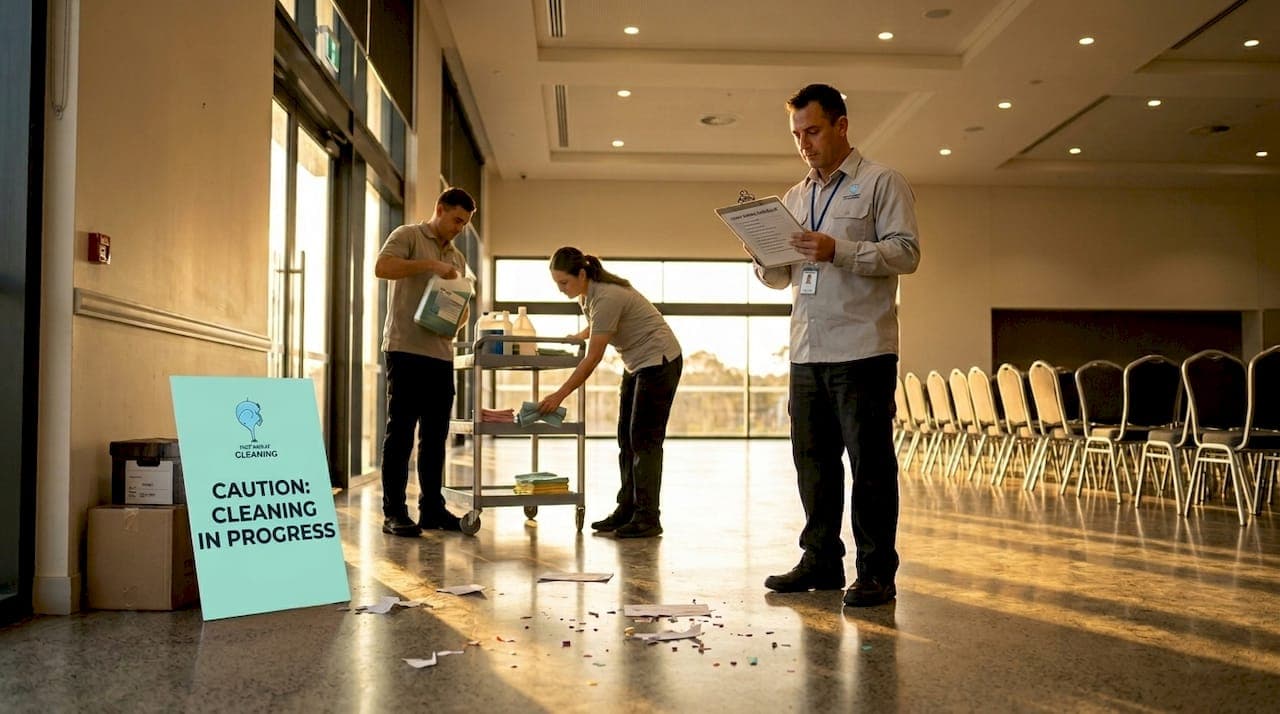
An event venue that looks polished on the surface but falls short on hygiene can quickly undo months of planning. Guests notice sticky surfaces, unpleasant odours, and poorly maintained bathrooms, and these impressions stick long after the event ends. For event organisers and venue managers across Australia, a structured cleaning process is not optional — it is the foundation of a professional, safe, and legally compliant event. This guide walks you through every stage, from preparation to post-event verification, so you can deliver a genuinely spotless experience every time.
Table of Contents
- Preparation: what you need before cleaning an event venue
- Step-by-step cleaning process for event venues
- Troubleshooting and avoiding common cleaning mistakes
- Verifying your cleaning: how to measure event hygiene success
- Expert perspective: why cleaning checklists alone aren't enough for venues
- How professional cleaning services streamline venue hygiene
- Frequently asked questions
Key Takeaways
| Point | Details |
|---|---|
| Start with preparation | Gather all supplies and ensure compliance, especially for food-related event areas. |
| Clean before disinfecting | Remove dirt before using sanitisers or disinfectants to maximise chemical effectiveness. |
| Follow a structured process | Use step-by-step cleaning for every area, with special care for high-touch and food zones. |
| Avoid common mistakes | Always read labels and never skip crucial steps to maintain safety and hygiene standards. |
| Verify for confidence | Checklists and measurements ensure cleaning was done thoroughly and that the venue is safe. |
Preparation: what you need before cleaning an event venue
Solid preparation is what separates a reactive clean from a professional one. Before any cleaning crew sets foot in the venue, you need the right supplies, trained staff, and a clear compliance framework.
Essential cleaning supplies
Having the correct products on hand prevents delays and ensures each area is treated appropriately. Below is a summary of what event venue cleaning typically requires:
| Supply | Purpose | Application area |
|---|---|---|
| Neutral pH cleaner | General surface cleaning | Tables, chairs, floors |
| Disinfectant spray | Kill harmful microorganisms | Bathrooms, high-touch points |
| Food-safe sanitiser | Reduce germs on food-contact surfaces | Kitchen, catering zones |
| Microfibre cloths | Trap and remove fine particles | All surfaces |
| Mop and bucket system | Floor cleaning | Hard floor areas |
| Colour-coded cleaning tools | Prevent cross-contamination | Food vs non-food areas |
| PPE kit | Protect cleaning staff | All zones |
Colour-coded systems are particularly important in venues with catering facilities. Using the same cloth on a food preparation bench and a bathroom surface creates serious contamination risks. Establishing zones and assigning corresponding tools from the outset is standard practice in professional event cleaning.
PPE and staff safety requirements
Your cleaning staff need proper personal protective equipment before starting. This includes:
- Disposable or heavy-duty gloves appropriate to the chemicals being used
- Safety goggles when handling concentrated disinfectants
- Masks, particularly when cleaning confined spaces with poor ventilation
- Non-slip footwear for wet floor areas
- Aprons or protective overalls for heavy-duty cleans
Skipping PPE is a safety and liability risk. If a staff member is exposed to harmful cleaning chemicals or slips on a wet surface without adequate protection, your venue faces serious consequences.
Compliance and food safety requirements
If your event involves food preparation or service, Australian compliance requirements apply directly to how you clean. Cleaning and sanitising under Food Standards Australia guidelines require that premises, equipment, and utensils must be kept clean and sanitary; food-contact surfaces should be cleaned before sanitising takes place; and grease or food waste must not be allowed to accumulate. These requirements apply to temporary events as well as permanent venues.
Pro Tip: Download a venue-specific cleaning checklist and map it against Food Standards Australia New Zealand (FSANZ) requirements before every event. This saves time during the event and protects you during any compliance audit.
For broader context on keeping hospitality spaces consistently clean, review hospitality venue cleaning basics for practical guidance tailored to Australian operators.
Your pre-cleaning checklist should also include confirming which products are approved for use in food zones, checking product expiry dates, and briefing staff on the order of operations — cleaning before sanitising, always.
Step-by-step cleaning process for event venues
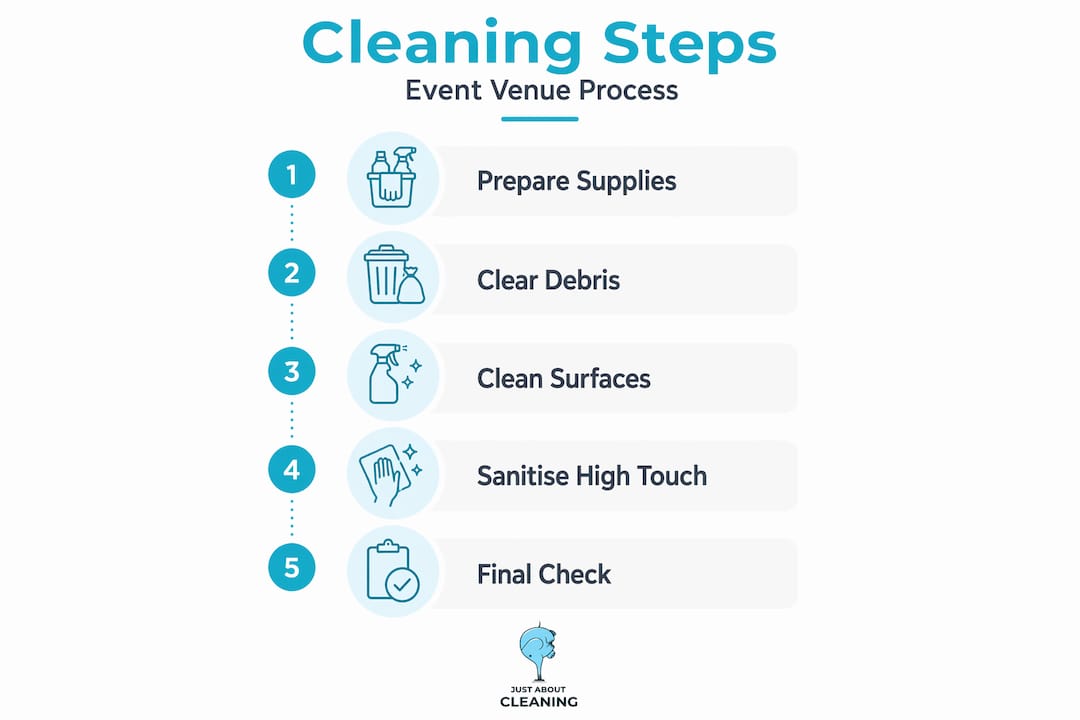
Once your preparation is complete and your team is briefed, you can move through the actual cleaning process in a logical sequence. Skipping steps or working out of order is where most hygiene failures occur.
Understanding the difference between cleaning, sanitising, and disinfecting
These three terms are often used interchangeably, but they describe distinct actions with different outcomes:
| Term | What it does | When to use it |
|---|---|---|
| Cleaning | Removes visible dirt, debris, and most germs | Always the first step |
| Sanitising | Reduces germs to a safe level on food-contact surfaces | Food prep areas, catering equipment |
| Disinfecting | Destroys most harmful microorganisms | Bathrooms, high-touch points, post-illness situations |
A risk-based approach separates routine cleaning from targeted disinfection: clean with soap and water plus scrubbing, then disinfect specifically when someone is unwell or when surfaces are at higher risk. High-touch surfaces should be cleaned regularly throughout the event, and other surfaces should be addressed when visibly dirty.
The cleaning sequence for event venues
Follow this order for a thorough, compliant clean:
- Remove all rubbish and waste from the venue, including catering debris, decorative materials, and disposable items.
- Disassemble and sort equipment such as tables, chairs, and catering furniture to allow full access to surfaces.
- Dry clean first by sweeping, dusting, and vacuuming before introducing any liquids, which prevents spreading dry debris with wet cloths.
- Apply cleaner to surfaces using the appropriate product for each zone, working from top to bottom so that dust and debris fall downward.
- Scrub and wipe surfaces thoroughly, including underneath tables, chair legs, and any surface guests or staff have touched.
- Clean food preparation and catering zones separately, using food-safe products and colour-coded tools.
- Sanitise food-contact surfaces after cleaning, following product dwell time instructions precisely.
- Clean and disinfect bathrooms last, using separate equipment to prevent cross-contamination with guest areas.
- Mop hard floors from the far end of the room toward the exit, so you do not walk over cleaned areas.
- Dispose of all cleaning materials used in bathroom areas separately from those used in food and guest zones.
"Clean high-touch surfaces regularly and other surfaces when visibly dirty." This principle from the CDC underpins good event hygiene protocol and should be built into your cleaning schedule, not treated as an afterthought.
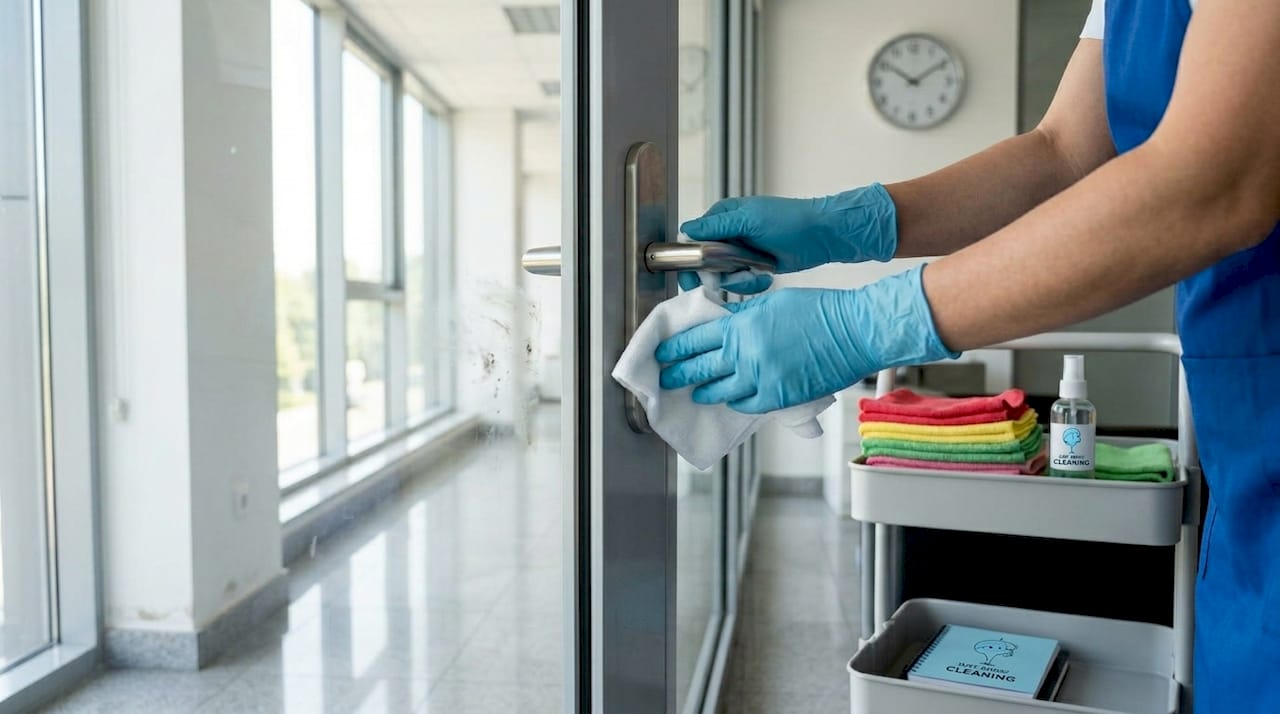
High-touch points in event venues include door handles, light switches, lecterns or podiums, AV equipment controls, bar counters, buffet serving areas, and bathroom taps. These surfaces require attention both during and after the event.
Pro Tip: For large events, assign specific staff members to rotating high-touch point checks every 60 to 90 minutes during the event itself. This keeps the venue clean in real time rather than leaving everything to a post-event clean.
For a detailed look at how professional event cleaning is structured across different venue types, the linked resource covers practical approaches that work at scale.
Troubleshooting and avoiding common cleaning mistakes
With the core cleaning process outlined, it is worth addressing the mistakes that most commonly undermine hygiene efforts in event venues. Some of these errors are easy to miss under time pressure, which is precisely when they tend to happen.
The most frequent cleaning mistakes in event venues
- Skipping the cleaning step before sanitising or disinfecting. Dirt, grease, and organic material physically block disinfectants from reaching the surface beneath. Disinfecting a dirty surface is largely ineffective.
- Not reading product labels. Every disinfectant has a required dwell time, which is how long it must remain wet on the surface to work properly. Wiping it off immediately after application renders it almost useless.
- Using the same cleaning tools across different zones. Cross-contamination is a serious risk, particularly between food areas and bathrooms. Colour-coded systems exist specifically to prevent this.
- Overlooking high-touch points. Organisers often focus cleaning effort on visible surfaces like floors and tables while neglecting door handles, lift buttons, and shared equipment controls.
- Ignoring allergen contamination risks. In venues where food is served, traces of common allergens such as nuts, gluten, and dairy can remain on surfaces if equipment is not cleaned thoroughly between uses.
- Rushing the post-event clean. The final clean is often squeezed between events. Insufficient time leads to corners being cut, which can create hygiene failures that compound over multiple events.
Following product label instructions is essential for effectiveness. As the CDC notes, cleaning before sanitising or disinfecting is important because dirt and impurities reduce how well these products work.
How to recover from common mistakes
If you identify that a step was missed, address it immediately rather than continuing. For example, if a surface was disinfected without prior cleaning, remove the disinfectant, clean the surface properly, and apply disinfectant again with correct dwell time. Document what happened and update your checklist to prevent recurrence.
For venues that need structured guidance on staying compliant, hygiene compliance advice provides practical frameworks that event venues can adapt into their standard operating procedures.
Verifying your cleaning: how to measure event hygiene success
Avoiding mistakes is only part of the equation. Verification confirms that your cleaning efforts have actually achieved the required standard, not just that the steps were completed.
Why visual inspection is not enough
A surface can appear clean and still harbour significant microbial contamination. Grease residue, allergen traces, and viral particles are all invisible to the naked eye. Relying solely on visual inspection gives you a false sense of security, particularly in food handling and bathroom areas.
Key statistic: Studies show that visual cleanliness correlates poorly with actual microbial load on surfaces, making objective measurement tools essential for venues that need genuine hygiene assurance.
Tools and methods for verifying cleaning effectiveness
| Verification method | What it measures | Best used for |
|---|---|---|
| ATP bioluminescence testing | Organic matter residue on surfaces | Food contact surfaces, bars |
| UV light inspection | Residue and missed areas | Post-event general inspection |
| Sign-off checklists | Process compliance | All zones |
| Microbial swab testing | Specific bacteria counts | High-risk areas in food venues |
| Third-party audit | Compliance against a standard | Periodic review |
The CDC provides frameworks for evaluating environmental cleaning programmes and monitoring whether high-touch areas are being cleaned thoroughly. These tools are directly applicable to event venue settings, particularly for venues that host large numbers of guests regularly.
Post-event verification checklist
- Confirm all rubbish has been removed and bins emptied and cleaned.
- Visually inspect every surface for residue, debris, or missed areas.
- Test high-risk surfaces using ATP testing or UV inspection where available.
- Review cleaning logs to confirm all steps were completed in sequence.
- Check that colour-coded equipment was used correctly and is stored appropriately.
- Confirm bathroom consumables such as soap and paper towels have been restocked.
- Document findings and sign off on the completed clean for compliance records.
For more detail on how measuring cleaning success can be built into your event workflow, the linked resource outlines a practical monitoring approach that works for both small and large-scale venues.
Documentation is not just a compliance formality. It builds client trust, supports insurance claims if issues arise, and gives your team a record they can improve upon after every event.
Expert perspective: why cleaning checklists alone aren't enough for venues
Checklists are a useful starting point. But in our experience working across Australian event venues, the venues that achieve consistently high hygiene standards are not just the ones with the most detailed checklists. They are the ones where staff understand why each step matters, not just what the step is.
A checklist that a team member does not fully understand becomes a box-ticking exercise. If someone does not know that cleaning must precede disinfecting, and why, they may complete both steps out of order and still mark them as done. The checklist records compliance; the surface tells a different story.
Continuous training is where the gap between a good clean and a truly effective one is closed. Staff need to be trained on the reasoning behind each protocol, updated when products or standards change, and given the opportunity to raise concerns when they notice issues in the field. Venues that invest in this training see fewer compliance incidents and faster, more efficient cleans over time.
Every event is also different. A wedding reception with a catered buffet has very different hygiene demands from a corporate conference. A children's event introduces allergen and surface safety considerations that do not apply to an adult-only function. Applying a single generic checklist across all event types is a risk that experienced venue managers learn to avoid. Tailoring your approach to the specific event, its catering arrangements, and the number of guests is what separates adequate hygiene from genuine professional excellence.
Long-term hygiene success relies on ongoing monitoring, feedback loops, and a willingness to update your approach when something is not working. For venues looking to move beyond standard protocols, specialised cleaning solutions explores how different facility types can adapt their hygiene strategies to meet sector-specific demands.
How professional cleaning services streamline venue hygiene
Managing every aspect of event venue cleaning in-house is achievable, but it is demanding. For venues that host multiple events per week, or for organisers managing high-profile functions where standards cannot slip, professional cleaning support brings a level of consistency and expertise that is difficult to replicate internally.
Just About Cleaning Australia has supported event venues and organisers across the country for over 15 years, with trained crews who understand Australian compliance requirements and can tailor cleaning plans to specific event types, venue layouts, and catering configurations. Whether you need a pre-event setup clean, a real-time hygiene service during a large function, or a thorough post-event clean that meets FSANZ and workplace health and safety standards, our team delivers reliable, documented results. As event cleaning specialists, we handle the complexity so your team can focus on delivering a great experience for your guests.
Frequently asked questions
What is the difference between cleaning, sanitising, and disinfecting in event venues?
Cleaning removes visible dirt and most germs; sanitising reduces germs to safe levels on food-contact surfaces; and disinfecting destroys most harmful microorganisms. Each step serves a distinct purpose, and as the CDC recommends, cleaning should always come first, with disinfection reserved for high-risk situations.
How often should high-touch areas be cleaned during an event?
High-touch surfaces should be cleaned regularly throughout an event, especially when visibly dirty or heavily used. For large events, assigning a staff member to rotating surface checks every 60 to 90 minutes is a practical approach.
Do food preparation areas require special cleaning steps?
Yes. Under Australian food safety standards, food-contact surfaces must be cleaned before sanitising, and grease or food waste must not be allowed to accumulate. Separate colour-coded tools must be used in food zones to prevent cross-contamination.
Why is cleaning before disinfecting important?
Dirt and organic matter physically prevent disinfectants from working effectively. Cleaning before disinfecting ensures the active ingredients in disinfectant products can actually reach and destroy harmful microorganisms on the surface.
How can I check if my venue cleaning is effective?
Visual inspection alone is insufficient. Use environmental cleaning frameworks alongside tools such as ATP bioluminescence testing, UV light inspection, and documented sign-off checklists to verify that cleaning has genuinely achieved the required hygiene standard.