
TL;DR:
- A single missed cleaning step in healthcare settings can jeopardize patient safety and lead to accreditation and legal issues.
- Strict documentation, staff training, and regular audits using visual, ATP, and fluorescent marker methods are essential for compliance.
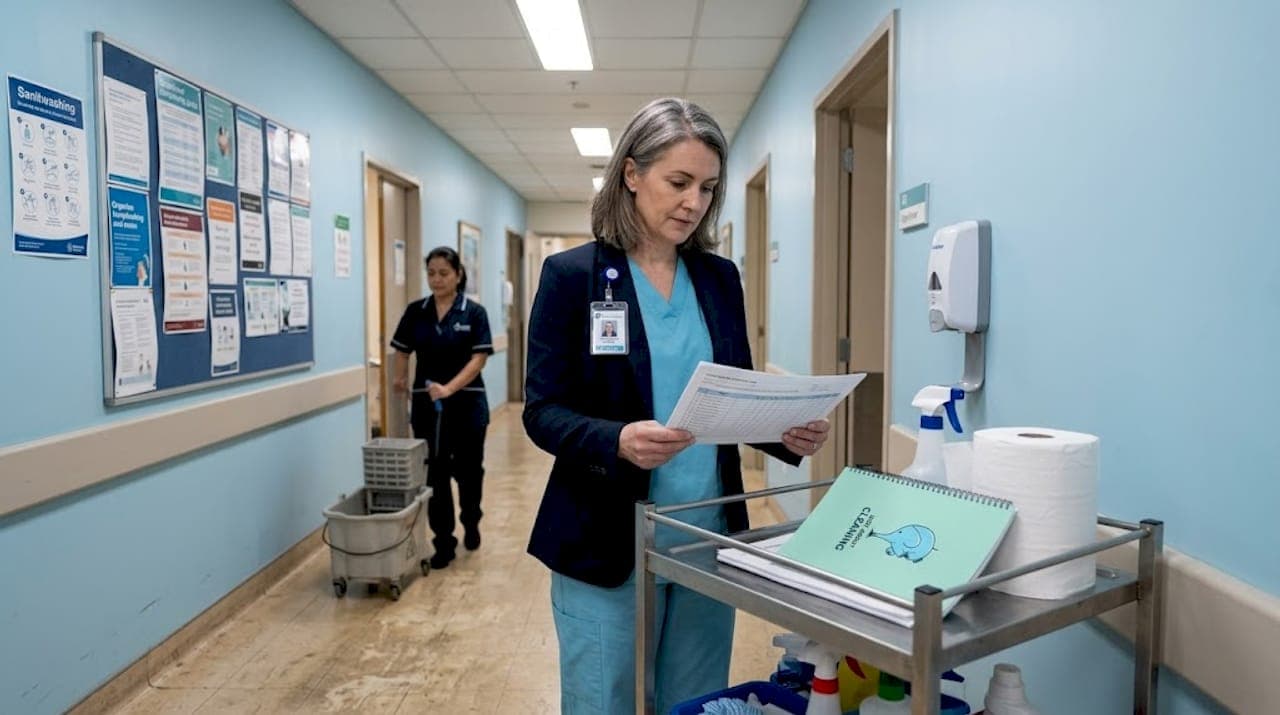
A single missed cleaning step in a healthcare facility can put patient safety at risk, trigger an accreditation finding, or expose your organisation to serious legal and reputational consequences. Healthcare administrators and facility managers across Australia are under increasing pressure to demonstrate not just that cleaning is happening, but that it is happening consistently, correctly, and in line with national standards. This guide provides a structured, practical compliance checklist drawn from NSQHS and RACGP requirements, covering daily tasks, outbreak protocols, documentation, and the auditing processes that accreditation assessors scrutinise most closely.
Table of Contents
- Key compliance standards for healthcare cleaning
- Daily and periodic cleaning tasks: The complete checklist
- Cleaning during outbreaks: Targeted compliance steps
- Training, documentation, and continuous auditing
- A practical perspective on healthcare cleaning compliance
- Get support for compliant healthcare cleaning
- Frequently asked questions
Key Takeaways
| Point | Details |
|---|---|
| Follow recognised standards | Always align your cleaning program to NSQHS and RACGP requirements for accreditation. |
| Document every step | Maintain thorough, up-to-date checklists, schedules, and training logs for compliance evidence. |
| Adapt in outbreaks | Increase chemical strength and protocols for outbreak scenarios using guidelines. |
| Invest in staff training | Regular education and supervision are mandatory for both safety and audit readiness. |
| Audits drive improvement | Frequent audits spot gaps before they become compliance failures. |
Key compliance standards for healthcare cleaning
Australia's healthcare cleaning requirements are governed primarily by two frameworks: the National Safety and Quality Health Service (NSQHS) Standards and the Royal Australian College of General Practitioners (RACGP) Standards for general practice. Both frameworks expect facilities to demonstrate a systematic, evidence-based approach to environmental cleaning, not just a rough routine.
Understanding cleaning compliance for safer Australian facilities means recognising what assessors are actually looking for during site visits. They are not simply checking whether surfaces look clean. They are reviewing whether your processes are documented, whether staff are trained, and whether you can produce evidence that cleaning is performed to a defined standard.
Key requirements under both NSQHS and RACGP include:
- Written cleaning schedules that specify zones, frequencies, and methods
- Completed cleaning checklists signed off by responsible staff
- A product register listing all cleaning and disinfection agents in use
- Evidence of staff training in infection prevention and control (IPC) principles
- Records of audits, including outcomes and corrective actions taken
The three main auditing methods used in accredited facilities are visual inspection (a direct assessment of surface cleanliness), ATP bioluminescence testing (which measures organic residue on surfaces as a proxy for microbial contamination), and fluorescent marker checking (where invisible markers are applied before cleaning and inspected under UV light afterwards). According to SESLHD environmental cleaning auditing guidelines, all three audit methods are recommended, and documentation of schedules, checklists, training records, and product registers is essential for accreditation.
"Environmental cleaning audits are a critical component of infection prevention. Without structured auditing and documentation, facilities cannot demonstrate compliance with national standards, regardless of how thorough their cleaning programme may be in practice."
During an accreditation site visit, assessors will typically tour clinical and non-clinical areas, request documentation on the spot, and may conduct their own spot audits. Facilities that consistently achieve strong results understand that quality cleaning standards are not aspirational but operational. Every cleaning task needs to be verifiable.
Daily and periodic cleaning tasks: The complete checklist
Once core compliance standards are clear, implementing them consistently relies on robust day-to-day procedures. Daily cleaning in a healthcare setting is far more demanding than in a standard commercial environment because the consequences of failure are clinical, not just cosmetic.
Daily cleaning checklist steps:
- Clean and disinfect all high-touch surfaces, including door handles, light switches, nurse call buttons, bed rails, IV poles, and tap fittings
- Clean and disinfect patient contact zones: examination tables, chairs, and waiting room seating
- Clean bathrooms and toilet areas, including hand basins, dispensers, and floors, using a colour-coded cloth and mop system to avoid cross-contamination
- Restock personal protective equipment (PPE) and consumables such as gloves, paper towels, and hand sanitiser
- Clean and disinfect spill sites immediately using the appropriate disinfectant for the substance type
- Empty bins using correct waste segregation procedures, particularly for clinical and sharps waste
- Inspect and clean internal glass, mirrors, and surfaces at patient eye level
- Complete and sign the daily cleaning checklist, noting any deficiencies or items escalated for repair
Periodic cleaning tasks, carried out weekly, monthly, or quarterly, cover areas that daily schedules do not reach but that accumulate contamination over time. These include ceiling vents and air return grilles, behind and under equipment, internal window sills, storage room shelves, and curtains or privacy screens. Medical office HVAC compliance is a particularly overlooked area, as air handling systems can harbour and distribute pathogens if not maintained on schedule.
Sample compliance checklist: Daily vs periodic tasks
| Task | Frequency | Responsible staff | Documentation required |
|---|---|---|---|
| High-touch surface disinfection | Daily | Cleaner | Signed daily checklist |
| Bathroom and toilet cleaning | Daily (2x minimum) | Cleaner | Signed daily checklist |
| Clinical waste bin removal | Daily | Cleaner | Waste disposal record |
| Curtain and privacy screen laundering | Monthly or when visibly soiled | Facility manager | Laundry log |
| HVAC vent cleaning | Quarterly | Specialist or cleaner | Maintenance record |
| Fluorescent marker audit | Quarterly minimum | Infection control officer | Audit log with outcome |
| Product register review | Annually or on product change | Facility manager | Updated register |
Routine cleaning essentials go hand in hand with compliance. Facilities that treat cleaning as a clinical activity, rather than a support service, consistently perform better in audits.
Documentation of schedules, checklists, training records, and product registers is essential for accreditation under both NSQHS and RACGP. Missing or incomplete paperwork is the single most common reason facilities receive a finding during assessment, even when physical cleaning standards are adequate.
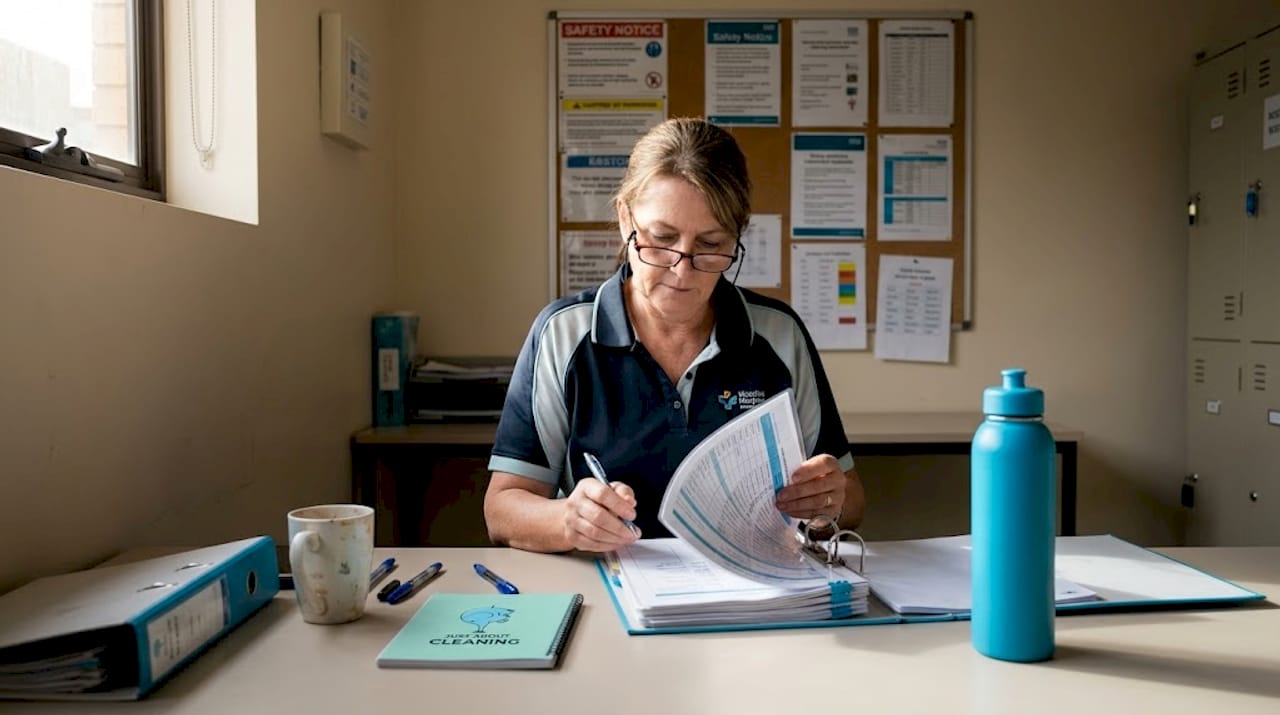
Pro Tip: Create a laminated "end of shift" prompt card for every cleaner summarising the five documents they must complete before leaving: daily checklist, waste record, spill log (if applicable), product use log, and supervisor sign-off. This simple tool dramatically reduces documentation gaps.
Cleaning during outbreaks: Targeted compliance steps
With daily and routine tasks covered, it is critical to know the additional steps required when infection risks escalate. An outbreak situation demands a structured, pre-planned response, not improvisation.
The fundamental difference between routine and outbreak cleaning is not just frequency; it is also the choice of agent, the concentration used, the equipment deployed, and the documentation generated. For specialised cleaning solutions during high-risk scenarios, facilities need a written outbreak cleaning protocol that staff have been trained to activate.
For pathogens such as Norovirus, chlorine-based disinfectants such as dichloroisocyanurate (NaDCC) tablets are required at specific concentrations, terminal cleans must be performed, and dedicated equipment that is not used in other areas must be employed. Standard quaternary ammonium compounds used in routine cleaning are often insufficient against Norovirus.
Outbreak vs routine cleaning protocols: A comparison
| Protocol element | Routine cleaning | Outbreak cleaning |
|---|---|---|
| Primary disinfectant | Quaternary ammonium or TGA-listed product | Chlorine-based (NaDCC) at specified concentration |
| Cleaning frequency | As per schedule | Increased, often after each patient contact |
| Equipment | Shared, colour-coded | Dedicated and isolated for affected zone |
| Terminal clean required | No | Yes, after outbreak declared over |
| Documentation | Standard checklist | Enhanced log including agent, concentration, time, operator |
| Staff PPE level | Standard | Elevated (mask, eye protection, gown) |
Key actions during an outbreak include:
- Immediately activate your written outbreak cleaning protocol and notify the infection control officer
- Switch to chlorine-based disinfectants at the concentration recommended for the specific pathogen
- Restrict the affected zone and use dedicated cleaning equipment that does not leave the area until terminally cleaned or discarded
- Perform terminal cleans (a full, room-by-room intensive disinfection process) once the outbreak is declared over
- Document all cleaning activities with specific agent names, batch numbers, concentrations, times, and staff names
- Conduct a post-outbreak audit using fluorescent markers or ATP testing to verify environmental decontamination
Pro Tip: Keep a ready-made outbreak kit in each clinical zone. This should include pre-labelled NaDCC tablets with a laminated concentration guide (e.g., 1,000 ppm for general surfaces, 10,000 ppm for blood spills), dedicated cloths in outbreak colours, and a dedicated outbreak log sheet. Activating this kit removes decision-making pressure during a stressful event.
Training, documentation, and continuous auditing
Even with correct daily practices in place, maintaining standards over time depends on staff skills and systematic quality controls. Cleaning staff turnover in healthcare settings is often high, which means training cannot be a one-off event.
Mandatory training for cleaners covers IPC principles, correct chemical use and safety, standard precautions, and the specific procedures for the facility they work in. Supervision and regular competency assessment are also required, meaning a cleaner cannot simply be inducted once and left unsupervised indefinitely.
"Ongoing competency assessment and direct supervision of cleaning staff are not optional extras; they are mandatory components of a compliant environmental cleaning programme. Facilities must be able to demonstrate that training is current, records are maintained, and staff performance is regularly reviewed."
The documentation required for a fully compliant training and auditing system includes:
- Individual staff training records with dates, content covered, and assessor sign-off
- Induction checklists for new cleaning staff covering site-specific protocols
- Competency assessment records completed after initial training and at defined intervals
- Audit schedules showing when audits are planned, who conducts them, and the methods used
- Audit outcome reports with pass/fail results, photos where relevant, and identified corrective actions
- Corrective action logs tracking issues through to resolution
Audits should follow a defined cycle. Many healthcare facilities conduct internal audits monthly and formal compliance audits quarterly. The person conducting audits should ideally be independent of the cleaning team being assessed, whether that is an infection control nurse, a quality manager, or an external provider. Following top cleaning standards for Australian compliance in 2026 means treating audits not as a test to pass but as a continuous improvement tool.
Results must be shared with cleaning staff and management. A finding that sits in a report without triggering a response is a compliance liability. Boosting compliance and safety requires a closed-loop system where audit outcomes feed directly into refresher training, schedule adjustments, or product changes.
A practical perspective on healthcare cleaning compliance
After more than 15 years working across healthcare, aged care, and specialist medical facilities, we have seen one consistent pattern: the facilities that perform best in accreditation audits are not necessarily the ones with the most detailed checklists. They are the ones where cleaning staff feel genuinely accountable and where managers actively communicate with their teams about what is working and what is not.
Checklists are indispensable tools, but they can become a compliance trap when treated as a performance script rather than a reflection of real practice. We have reviewed facilities where every box was ticked on paper but observed cleaning techniques that would never survive an ATP test. Conversely, we have seen facilities with simpler documentation that consistently achieved near-perfect fluorescent marker results because cleaners understood the "why" behind each step.
The contrarian view worth considering: your checklist may not be right for your site's context. A checklist written for a 500-bed tertiary hospital does not automatically translate to a six-room GP practice. Assess your facility's actual risk zones, patient demographics, and staff capabilities, then build your checklist from those realities rather than importing a generic template.
The element most often absent from compliance programmes is a genuine communication loop. Cleaners are the first to notice when a disinfectant is running low, when a surface is damaged and harbouring contamination, or when a cleaning protocol is physically impractical in a specific room layout. Building a structured, regular feedback channel between cleaners, facility managers, and infection control practitioners makes hygienic cleaning for safety a shared organisational value, not just a contracted obligation.
True compliance is a culture, and culture is built through accountability, communication, and consistent reinforcement, not just through paperwork.
Get support for compliant healthcare cleaning
Managing healthcare cleaning compliance is a significant operational responsibility, and getting it right requires more than good intentions. Facilities that partner with an experienced, specialist cleaning provider gain access to structured audit support, up-to-date documentation systems, trained staff, and the confidence that comes from working with a team that understands the regulatory environment.
Just About Cleaning has supported healthcare facilities across Australia in meeting NSQHS and RACGP requirements for over 15 years. Whether you need a full compliance assessment, help preparing for an upcoming accreditation visit, staff upskilling, or an ongoing compliant cleaning service, our team is ready to work alongside your infection control and management staff. Contact us today to arrange a site assessment and find out how we can help your facility achieve and sustain full cleaning compliance.
Frequently asked questions
What is the first step in a healthcare cleaning compliance audit?
The first step is a visual inspection combined with a documentation review, covering cleaning checklists, training logs, and product registers, as required by accreditation bodies including NSQHS and RACGP.
Are special disinfectants required during outbreaks in healthcare facilities?
Yes, chlorine-based disinfectants at specific concentrations and terminal cleaning are required during outbreaks such as Norovirus, replacing standard routine cleaning agents.
What minimum training must cleaners have for compliance?
Mandatory training covers infection prevention and control principles, chemical safety, and site-specific procedures, and must be supported by documented competency assessment and ongoing supervision.
How often should cleaning audits be conducted?
Internal audits are commonly conducted monthly, with formal compliance audits conducted at least quarterly, using methods such as visual inspection, ATP testing, and fluorescent marker checking.
What documentation is essential for healthcare cleaning compliance?
Essential documentation includes cleaning schedules, signed daily checklists, product registers, staff training records, competency assessments, and audit outcome logs with corrective action tracking.