
TL;DR:
- Deep cleaning is essential to eliminate pathogens, odours, and contamination risks at large events.
- It involves thorough disinfection of high-touch points and hard-to-reach areas before, during, and after events.
- Professional deep cleaning protects guest health, ensures compliance, and enhances venue reputation.
Running a large-scale event involves hundreds of moving parts, and hygiene is often the one that gets underestimated. Surface-level tidying between sessions might look acceptable to the untrained eye, but it leaves behind pathogens, odours, and contamination risks that can compromise guest safety and your reputation. For event organisers across Australia, professional deep cleaning is not optional — it is a core operational requirement that protects attendees, meets compliance obligations, and sets the standard for every event that follows.
Table of Contents
- What is deep cleaning for events?
- Why events need professional deep cleaning
- The deep cleaning process: Step-by-step for event organisers
- Common challenges and expert advice for flawless results
- What most event organisers miss about deep cleaning services
- How we help you deliver spotless events every time
- Frequently asked questions
Key Takeaways
| Point | Details |
|---|---|
| Definition matters | Deep cleaning for events is more thorough and targeted than standard cleaning routines. |
| Key to compliance | Professional deep cleaning ensures safety, reduces legal risks, and builds attendee trust. |
| Seamless execution | Step-by-step planning and expert partnerships make spotless events achievable and stress-free. |
| Expert strategies | Using pro tips and anticipating challenges prevents costly event-day issues. |
What is deep cleaning for events?
Now that we've acknowledged how often event cleaning is misunderstood, let's clarify what true deep cleaning involves.
Deep cleaning in the event context goes well beyond wiping down surfaces and emptying bins. It is a systematic, thorough process that targets every layer of contamination in a venue, including areas that regular cleaning crews rarely address. The benefits of deep cleaning are significant: as noted in industry guidance, deep cleaning delivers a much higher standard of hygiene in event venues compared to routine cleans.
Understanding the difference between deep cleaning and routine cleaning is essential before you plan your next event. Here is a clear comparison:
| Feature | Routine cleaning | Deep cleaning |
|---|---|---|
| Frequency | Daily or between sessions | Before and after events |
| Focus areas | Visible surfaces, floors, bins | All surfaces including hidden zones |
| Disinfection | General wiping | Hospital-grade disinfectants applied thoroughly |
| Odour removal | Minimal | Targeted treatment of odour sources |
| Risk reduction | Low to moderate | High, including pathogen elimination |
| Equipment used | Standard mops and cloths | Specialist machines and EPA-approved products |
The types of cleaning services available in Australia range from basic daily maintenance to intensive specialist treatments. Deep cleaning sits firmly at the intensive end of that spectrum.
Key elements that only deep cleaning covers in an event setting include:
- Disinfection of high-touch points such as door handles, light switches, microphones, and shared technology
- Odour neutralisation in restrooms, catering areas, and confined spaces
- Hard-to-reach zones including behind staging equipment, under seating, and inside air vents
- Fabric and upholstery treatment for chairs, drapes, and soft furnishings
- Grout, tile, and surface deep scrubbing in wet areas and kitchens
Skipping deep cleaning introduces real risks. Shared spaces at large events are breeding grounds for gastrointestinal illness, respiratory infections, and skin conditions. Without proper disinfection, these risks multiply with each guest who passes through. Regulatory frameworks in Australia also require venues to meet specific hygiene standards, and inadequate cleaning can result in non-compliance penalties or venue shutdowns.
Pro Tip: Before and after each event, inspect high-touch and hidden areas personally. Pay particular attention to restroom fixtures, entrance handles, and any shared catering equipment. Comparing these areas before and after service gives you a measurable quality benchmark.
Good routine cleaning practices maintain baseline hygiene between events, but they were never designed to handle the concentrated foot traffic and contamination load that a large-scale event generates.
Why events need professional deep cleaning
With a clear understanding of what deep cleaning means, let's look at why it is indispensable for any major event.
Health hazards at events are real and varied. Large gatherings create conditions where cross-contamination spreads rapidly. Shared restrooms, communal dining areas, buffet stations, registration desks, and high-density seating all contribute to elevated infection risk. Professional deep cleaning reduces the risk of illness outbreaks at high-traffic gatherings, making it a non-negotiable investment for any serious event organiser.
"A venue that looks clean is not always a venue that is clean. The difference between appearance and actual hygiene is where professional deep cleaning earns its value."
The specific benefits for events include:
- Preventing cross-contamination between food service areas and public spaces, reducing the spread of bacteria such as Salmonella and Norovirus
- Eliminating residual pathogens that survive on hard surfaces for hours or even days after contact
- Restoring air quality by removing dust, allergens, and airborne particles from HVAC systems and carpeted areas
- Protecting vulnerable guests including elderly attendees, children, and immunocompromised individuals who face higher risk in poorly sanitised environments
- Reducing post-event complaints related to odours, stains, or reported illnesses, which directly impact future bookings and your professional standing
From a compliance perspective, Australian event venues must adhere to standards set under the Food Standards Australia New Zealand Act 1991, relevant state public health legislation, and Work Health and Safety (WHS) regulations. Failing to maintain documented hygiene practices can expose organisers and venue operators to significant legal liability.
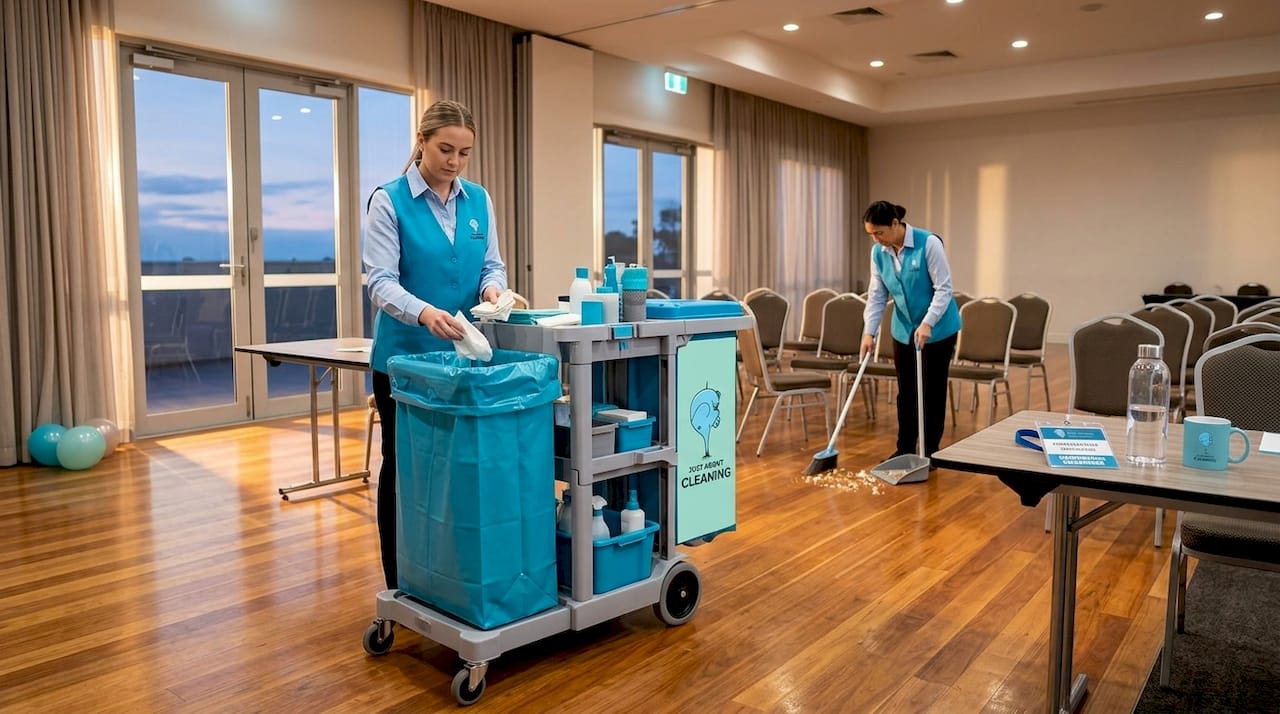
The hospitality cleaning practices that apply to restaurants and hotels translate directly to event environments. Guests and stakeholders expect the same level of hygiene assurance regardless of whether they are attending a corporate conference, a gala dinner, or a trade exhibition. Venues that invest in professional deep cleaning consistently receive stronger post-event feedback and are more likely to secure repeat business.
The importance of routine cleaning is well documented, but it is the addition of deep cleaning at key intervals that truly protects both attendee health and the long-term reputation of your event.
The deep cleaning process: Step-by-step for event organisers
Knowing its importance, here's how you can implement a professional-grade deep cleaning plan for your next event.
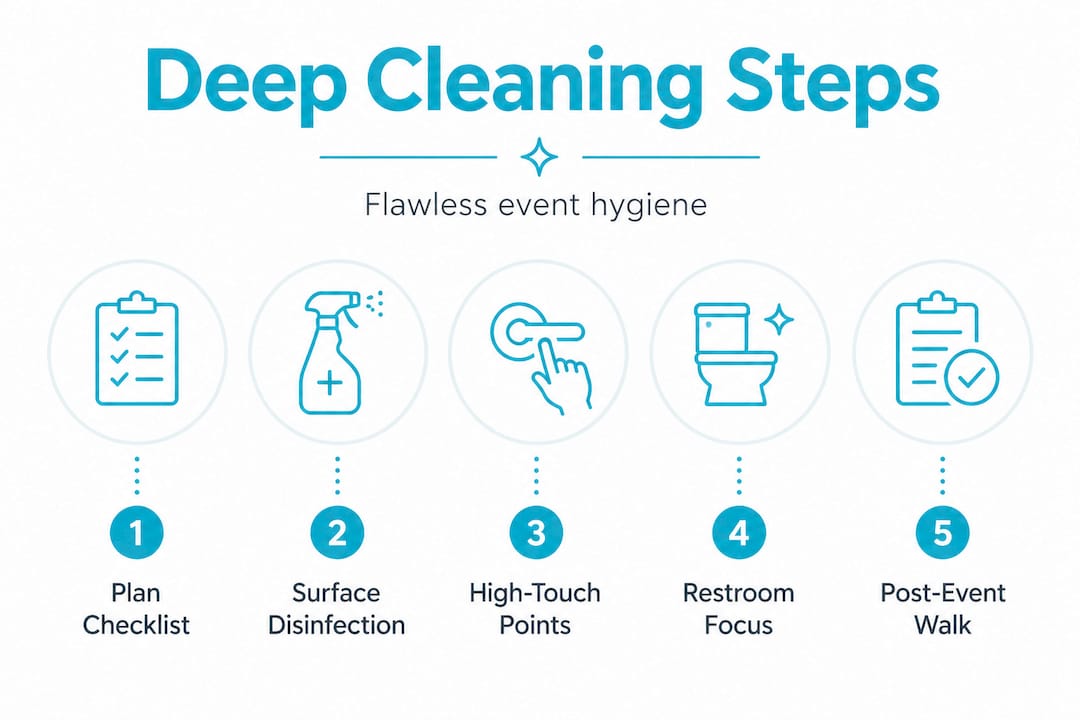
A structured deep cleaning process follows four clear phases. Each phase has distinct objectives and requires coordination between your event team and your cleaning provider.
-
Planning phase: walk-through and risk assessment. Before any cleaning commences, the professional crew conducts a full venue walk-through. They identify high-risk zones, assess surface types, note special requirements for sensitive equipment, and confirm access arrangements. This stage also includes confirming the cleaning schedule around your event timeline.
-
Pre-event clean: targeting hygiene hotspots. In the days leading up to your event, the team performs a thorough deep clean of all areas. This includes disinfecting restrooms to a clinical standard, sanitising kitchen and catering infrastructure, steam-cleaning carpets and upholstery, and treating air handling units. Think of this phase as resetting the venue to its safest possible state before guests arrive.
-
During event: on-call spot cleaning. Throughout the event, a dedicated cleaning team remains on-site for responsive cleaning. Restroom checks occur every 30 to 60 minutes. Spill response is immediate. High-touch surfaces are periodically wiped down with disinfectant. This continuous attention prevents minor issues from becoming hygiene incidents.
-
Post-event deep clean: resetting all spaces. After guests depart, the full deep clean is conducted again. This is the most intensive phase, addressing residual food waste, beverage spills, bathroom soiling, and any damage to surfaces. As structured cleaning guidance confirms, a cleaning checklist before and after the event ensures nothing is overlooked.
Here is a breakdown of key areas and recommended treatments:
| Area | Pre-event treatment | Post-event treatment |
|---|---|---|
| Main entrance | Surface disinfection, floor scrub | Full floor clean, disinfect door hardware |
| Restrooms | Deep scrub, grout treatment, fixture disinfection | Full reset, restocking, odour treatment |
| Catering and kitchen | Equipment sanitisation, surface disinfection | Grease removal, full equipment clean, waste disposal |
| Seating and staging | Upholstery treatment, surface wipe | Stain removal, fabric sanitisation |
| Technical equipment | Wipe-down with approved solutions | Dust removal, spot disinfection |
| Corridors and lobbies | Floor and surface clean | Full floor scrub, rubbish removal |
A useful companion resource when building your internal event checklist is a spring cleaning checklist, which covers methodical area-by-area coverage that translates well to venue environments.
Pro Tip: Assign a dedicated cleaning liaison within your event management team. This person communicates directly with the professional cleaning crew, relays real-time venue issues, and ensures the cleaning schedule adjusts as the event evolves. Clear communication between your team and the cleaners prevents delays and confusion during high-pressure moments.
Common challenges and expert advice for flawless results
Even with the best checklist, every event presents unique challenges — here's how professionals tackle them.
Time is the most common pressure point. Events often have tight turnarounds between sessions, setup windows of just a few hours, and post-event access limitations. Professional cleaning crews trained in event environments know how to work efficiently without cutting corners, deploying team members in parallel across different zones rather than working sequentially.
Staffing is another frequent issue. Relying on internal event staff to manage cleaning tasks splits their attention and almost always produces inconsistent results. Professional cleaners can anticipate and solve issues that typical event staff might miss, from identifying early signs of mould in humid venues to managing biohazard situations with proper protocols.
Stubborn stains from red wine, food, or heavily trafficked carpet zones require specialist equipment and solutions that standard event teams rarely carry. Professional providers arrive with the right tools for these situations, including hot water extraction machines, enzyme-based stain removers, and industrial degreasers.
Expert advice for overcoming these challenges includes:
- Communicate venue layout and event schedule in advance so your cleaning provider can plan staffing levels and equipment accordingly
- Define roles clearly between your internal team and the cleaning crew to avoid duplication or gaps
- Build contingency time into your schedule for unexpected spills or high-traffic restroom demand during peak session breaks
- Use eco-friendly products where possible to reduce chemical residue in catering areas and protect attendee health
- Review cleaning offices for hygiene as a reference for managing high-density shared spaces, since corporate event environments share many characteristics with large open-plan offices
- Document every cleaning phase with sign-off checklists so you have evidence of compliance if questions arise later
Reviewing cleaning best practices as part of your event planning process helps you ask the right questions when briefing a cleaning provider and sets a measurable standard for performance.
"The organisers who get the best results are those who treat cleaning as a logistics function, not an afterthought. When you brief your cleaners the same way you brief your AV team, everything runs more smoothly."
Pro Tip: Schedule a post-event walk-through with your cleaning provider within 24 hours of the event concluding. Walk each zone together, note anything that did not meet the agreed standard, and use that feedback to refine the plan for your next event. This feedback loop is how the best event-cleaning partnerships are built over time.
What most event organisers miss about deep cleaning services
After more than 15 years working across Australian commercial and event environments, we have observed a consistent pattern. Organisers who experience the most seamless, incident-free events are not necessarily those with the biggest budgets or the most elaborate venues. They are the ones who engage their cleaning provider early, treat cleaning as a core logistical function, and genuinely understand what essential deep cleaning benefits are designed to protect.
The most common blind spot we see is treating deep cleaning as a box-ticking exercise rather than a strategic investment. Organisers who book cleaning as a last-minute add-on rarely give their provider enough information to do the job well. That leads to rushed assessments, inadequate staffing, and cleaning that looks complete on the surface but leaves genuine hygiene risks unaddressed.
There is also a mindset issue around what "invisible" means in event hygiene. An event that looks spotless can still carry significant contamination on shared surfaces, in air circulation systems, and in food preparation zones. Guests will not always see the problem, but some will feel it — and post-event illness reports or negative reviews are far more damaging to your reputation than the cost of a thorough professional clean.
The most successful event organisers we work with treat their cleaning crew as part of the event team. They share the run sheet. They plan for concurrent session breaks that will spike restroom demand. They discuss specific surface materials that require specialist treatment. That level of collaboration produces measurably better outcomes and rarely results in the kind of expensive, last-minute remediation that under-prepared events require.
Deep cleaning done properly is not just about compliance. It is a direct investment in the experience every guest has, from the moment they walk through your doors to the moment they leave.
How we help you deliver spotless events every time
If you'd rather focus on the event than the cleaning checklist, here's how professionals can help.
At Just About Cleaning Australia, we work with event organisers across the country to deliver complete, professional cleaning solutions tailored to the demands of corporate conferences, gala dinners, trade exhibitions, and large-scale public events. Our trained crews understand the unique pressures of event timelines and deliver consistent results across every phase, from pre-event preparation through to post-event deep clean and venue reset.
Our event cleaning plans are fully customisable. We conduct a venue walk-through before every engagement, provide detailed scheduling that fits your event programme, and assign dedicated liaisons for on-the-day communication. Whether you need a single large-scale clean or an ongoing arrangement for a recurring event series, our team is ready to support you. We use eco-friendly, compliance-approved products in line with our ESG commitments, so your guests are always protected. Reach out to Just About Cleaning today to discuss a tailored cleaning plan for your next event.
Frequently asked questions
What exactly does deep cleaning for events include?
Deep cleaning for events covers disinfection of all surfaces and high-touch points, odour removal, treatment of hidden and hard-to-reach areas, fabric sanitisation, and compliance-aligned hygiene checks. As deep cleaning demonstrates, it delivers a far higher hygiene standard than routine cleaning alone.
How far in advance should I book deep cleaning before an event?
Book your deep cleaning at least one to two weeks before the event to allow sufficient time for a venue walk-through, staffing allocation, and detailed schedule planning.
Is deep cleaning necessary if routine cleaning is done daily?
Yes, because routine cleaning addresses visible surfaces but cannot eliminate the pathogens, embedded odours, or high-risk contamination zones that accumulate in high-traffic event environments. Professional deep cleaning reduces the risk of illness outbreaks that routine cleaning simply cannot prevent.
What's the difference between pre-event and post-event deep cleaning?
Pre-event deep cleaning prepares the venue by targeting hygiene hotspots and resetting all surfaces to a safe, sanitised standard before guests arrive. Post-event deep cleaning addresses residual contamination from high-density use. A structured cleaning checklist for both phases ensures full venue coverage and compliance documentation.
Recommended
- Master the deep cleaning process: compliant workplaces
- Home cleaning best practices for spotless, healthy living
- How to clean your home: Practical strategies for a spotless space
- What is deep cleaning? Essential benefits for workplaces
- Efficient Carpet Cleaning for Events: A Step-by-Step Guide - Yarra Valley Carpet Cleaning
- Unlock the True Benefits of Professional Floor Cleaning