
TL;DR:
- Poor indoor air quality in Australian facilities is linked to health issues and productivity losses.
- HEPA vacuuming and damp microfibre wiping are highly effective cleaning methods to improve IAQ.
- Integrating cleaning with ventilation, humidity control, and other IAQ strategies ensures better long-term outcomes.
Indoor air quality is one of the most overlooked concerns in Australian facilities. Most facility managers focus on visible grime, but indoor air can be far more polluted than outdoor air, with dust, allergens, and chemicals quietly building up between cleaning sessions. The consequences range from increased absenteeism and allergy flare-ups to long-term respiratory conditions for staff and visitors. This article unpacks the science behind cleaning and air quality, separates fact from fiction, and gives you practical, evidence-backed strategies to protect the people in your care.
Table of Contents
- Why indoor air quality matters for facilities
- How cleaning affects airborne pollutants
- Best cleaning practices for real IAQ improvement
- Integrating cleaning with broader IAQ strategies
- Why cleaning is the secret weapon in facility air quality
- Professional support for cleaner, healthier air
- Frequently asked questions
Key Takeaways
| Point | Details |
|---|---|
| Cleaning lowers pollutants | Routine cleaning directly reduces dust, allergens, and pollutants impacting indoor air quality. |
| Best tools matter | Using HEPA vacuums and microfibre cloths is proven to be more effective than conventional methods. |
| Eco choices protect health | Low-VOC and eco-friendly cleaning products help avoid introducing new risks indoors. |
| Cleaning is part of a system | Combine cleaning with good ventilation, humidity control, and air monitoring for best results. |
Why indoor air quality matters for facilities
For facility managers and property owners across Australia, indoor air quality (IAQ) is not simply a comfort issue. It directly shapes the health, performance, and satisfaction of every person who enters your building. Poor IAQ leads to higher rates of illness, increased sick leave, and reduced productivity — outcomes that affect your bottom line as much as your duty of care.
Common indoor pollutants include:
- Dust and dust mites: Generated by foot traffic, soft furnishings, and everyday activity
- Pollen: Carried in from outside and deposited on surfaces and in carpet fibres
- Volatile organic compounds (VOCs): Released from paints, adhesives, cleaning products, and office equipment
- Mould spores: Thriving in humid or poorly ventilated spaces
- Pet dander: Relevant for facilities that accommodate animals, such as childcare or veterinary centres
Each of these pollutants can trigger or worsen asthma, hay fever, and other respiratory conditions. For occupants who spend eight or more hours a day inside a facility, this exposure adds up quickly.
From a regulatory standpoint, Safe Work Australia requires employers to maintain a workplace that is safe and without risks to health. That obligation extends to air quality. The Australian government recommends routine dust removal to control allergens, dust mites, and mould spores as a core part of maintaining healthy indoor environments.
Understanding office cleaning standards is a practical starting point for facilities aiming to meet these obligations. Equally, home cleaning best practices offer transferable insights for property managers overseeing residential spaces. Properly maintained HVAC and air quality systems work hand in hand with cleaning routines to support a healthier environment overall.
Did you know? Poor IAQ has been estimated to cost Australian businesses billions annually in lost productivity and increased healthcare costs. The investment in proper cleaning pays dividends far beyond a tidy appearance.
How cleaning affects airborne pollutants
Understanding the dangers helps highlight why cleaning routines are so significant. But how exactly does cleaning change the air we breathe?
Cleaning removes the settled particles that would otherwise be disturbed and become airborne again. Dusting, vacuuming, and mopping all reduce the reservoir of contaminants on surfaces and floors. However, the method matters enormously. Not all cleaning approaches deliver the same results, and some can actually make indoor air quality worse before it gets better.
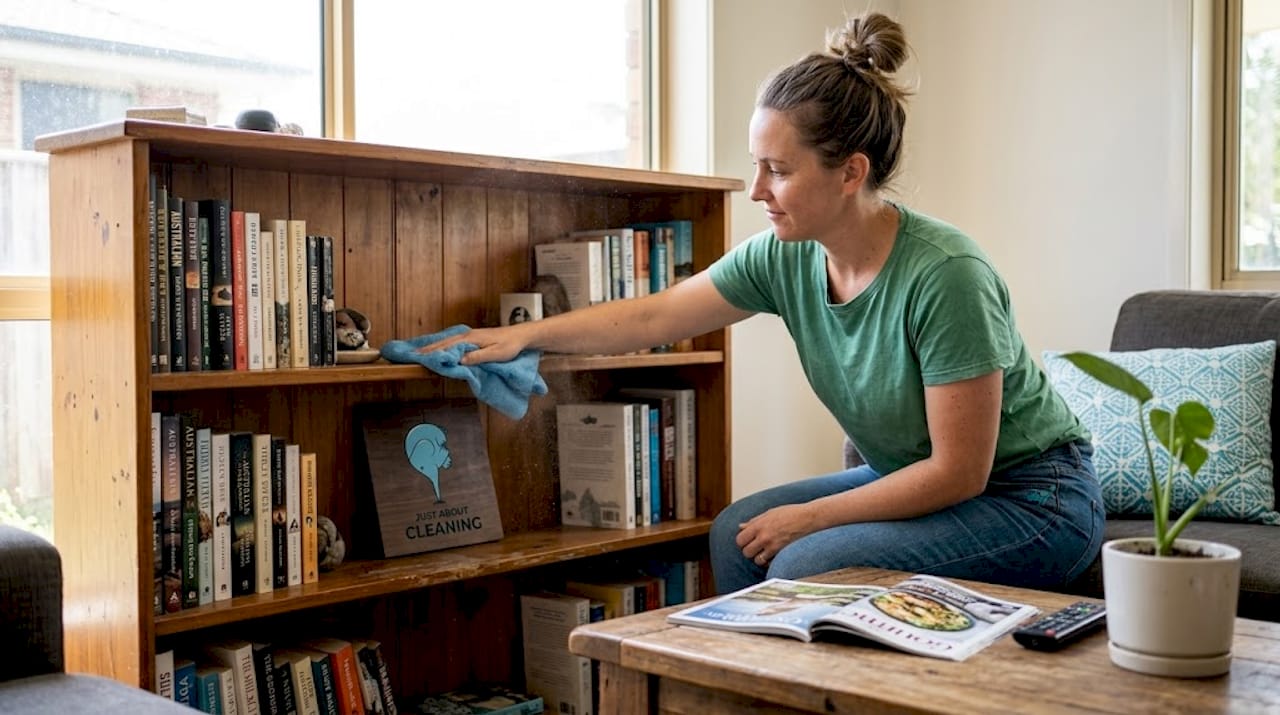
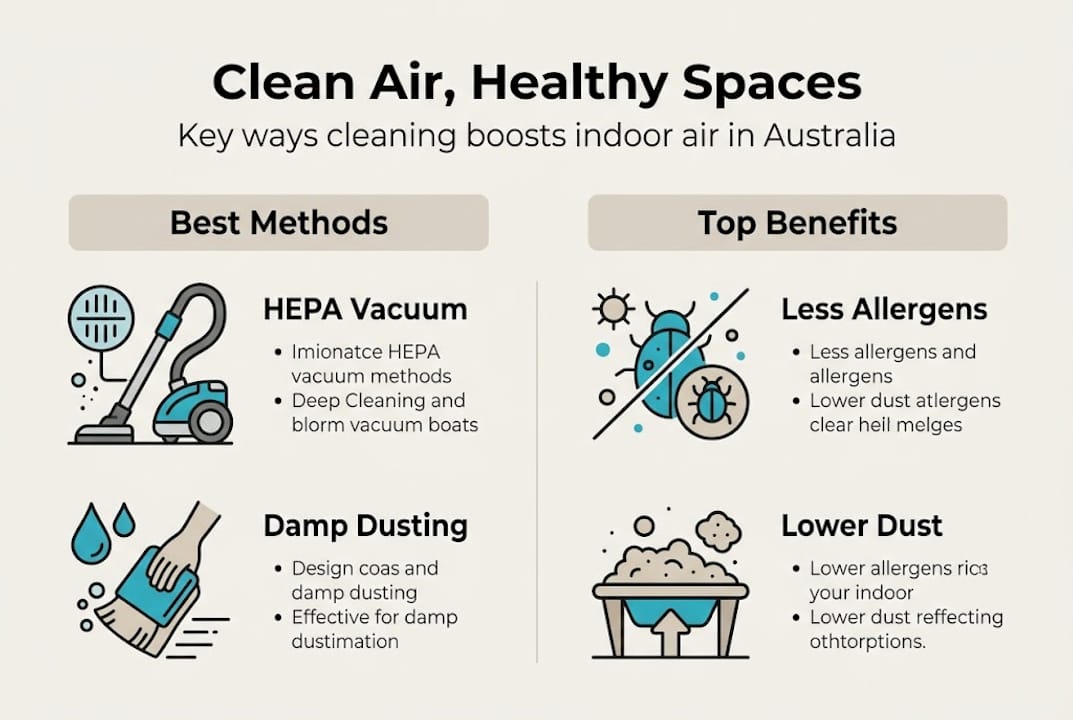
HEPA (High Efficiency Particulate Air) filtration is the gold standard. HEPA-filtered vacuums capture 99.97% of fine particles, including dust and allergens as small as 0.3 microns. In contrast, standard vacuums without HEPA filters often exhaust fine particles back into the air. Poor vacuuming methods can increase airborne particulate matter by up to 130%, which is a significant and often surprising finding for facilities relying on basic equipment.
The table below summarises the key differences:
| Method | Particle capture rate | Airborne risk | Recommended for facilities |
|---|---|---|---|
| HEPA vacuum | Up to 99.97% | Very low | Yes |
| Standard vacuum | 60-80% | High | No |
| Microfibre cloth (damp) | 98%+ of surface dust | Very low | Yes |
| Dry feather duster | Minimal | Very high | No |
| Dry mop | Moderate | Moderate | With caution |
Microfibre cloths used damp are another high-performer. They trap particles rather than redistributing them across surfaces, which is why professional cleaning crews favour them over traditional cotton cloths or dry dusting tools.
For facilities with air ducts, cleaning air ducts removes accumulated dust and mould that can be continuously recirculated through the ventilation system.
Pro Tip: Instruct cleaning staff to always work from top to bottom and from clean zones to dirtier areas. This prevents disturbed particles from settling on already-cleaned surfaces and ensures the most effective removal. You can read more about the importance of routine cleaning to reinforce these principles across your team, and explore spring cleaning tips for seasonal deep-clean strategies that apply equally to commercial spaces.
Best cleaning practices for real IAQ improvement
It's clear that not all cleaning methods are equal. So which routines make the biggest difference, and how can you avoid common missteps?
A structured, evidence-based schedule is your most reliable foundation. Weekly vacuuming and dusting, alongside good ventilation and humidity control, have been shown to reduce indoor pollutants meaningfully. Here is a practical sequence for facilities:
- Vacuum all floors and soft furnishings weekly using HEPA-equipped equipment, paying extra attention to entry points, under desks, and around vents
- Damp wipe all hard surfaces with microfibre cloths at least twice per week, including desks, shelving, window sills, and communal areas
- Mop hard floors with a low-residue, low-VOC solution after vacuuming to capture remaining fine particles
- Clean HVAC filters and grilles monthly, or more frequently in high-traffic areas
- Address spills and moisture promptly to prevent mould growth within 24 to 48 hours of any water incident
- Review high-touch and high-traffic zones for more frequent spot cleaning throughout the day
Product selection is equally important. Using multiple conventional cleaners heavily can emit VOCs and is linked to an increased risk of asthma for regular occupants. This finding is especially relevant for cleaning staff who are exposed daily. Choosing low-VOC or certified eco-friendly cleaning approaches protects both the environment and the people inside your building.
| Practice | IAQ benefit | Recommended frequency |
|---|---|---|
| HEPA vacuuming | Removes 99.97% of fine particles | Weekly minimum |
| Microfibre damp wiping | Traps surface allergens | 2x per week |
| Low-VOC product use | Reduces chemical exposure | Every clean |
| HVAC filter replacement | Prevents recirculation | Monthly to quarterly |
| Conventional spray cleaners | Can increase VOCs | Avoid or limit |
For a deeper look at how these routines translate into managed environments, facility cleaning protocols provide sector-specific guidance you can apply directly. Good ventilation advice complements these cleaning routines to maximise results.
Pro Tip: Always ensure windows or ventilation are open when cleaning products are in use. This simple habit significantly reduces VOC build-up during the cleaning process itself.
Integrating cleaning with broader IAQ strategies
Mastering cleaning is just the start. Top-performing facilities treat IAQ as an overall system, not a one-off checklist.
Cleaning works best when paired with complementary measures that address the full cycle of pollutant generation, accumulation, and removal. Consider building the following into your facility management programme:
- Entry matting systems: High-quality mats at all entry points capture up to 80% of dirt before it reaches internal spaces, reducing the cleaning load and limiting the spread of outdoor pollutants
- Air purifiers with HEPA filtration: Useful in areas with poor natural ventilation or in spaces with elevated occupancy, such as meeting rooms and reception areas
- Humidity monitoring and control: Maintaining indoor humidity between 40% and 60% discourages dust mite populations and prevents mould growth
- CO2 and particulate monitors: Real-time sensors allow facility managers to identify when ventilation or cleaning needs to be increased in specific zones
- Scheduled ventilation reviews: Working with your HVAC provider to audit air exchange rates and upgrade filters where needed
Effective cleaning coupled with ventilation and humidity control is recognised as crucial for allergen management and pollutant reduction in Australian facilities. Treating these as separate tasks rather than an integrated system is one of the most common mistakes we see in facility management.
Regular compliance checks are also worth building into your calendar. Reviewing your current approach against types of cleaning services available in Australia helps you identify gaps and opportunities. Benchmarking against quality cleaning standards ensures your routines meet industry expectations. Upgrading HVAC filter upgrades at regular intervals rounds out a solid, system-level approach to air quality.
Why cleaning is the secret weapon in facility air quality
After exploring the holistic picture, it's worth cutting through the noise and considering what really shifts the needle for air quality in Australian facilities.
There is a tendency in facility management to chase technology-led solutions. Air quality monitors, ionisers, smart HVAC systems — these all have merit, but they are most valuable when the cleaning foundation is solid. We've seen facilities invest heavily in air purifiers while continuing to use non-HEPA vacuums and harsh chemical sprays. The result is a system working against itself.
Evidence consistently shows that consistent, quality cleaning addresses the root causes of poor IAQ far more directly than any monitoring device alone. Sensors tell you there is a problem. Cleaning removes it. Starting with practical cleaning strategies and building from there is not just cost-effective, it is the most logical sequence. Once your cleaning protocols are reliable and well-documented, the data from air sensors becomes genuinely actionable. Until then, it simply highlights a problem you haven't yet addressed at its source.
The facilities that achieve the best long-term air quality outcomes are almost always the ones that treat cleaning as a strategic priority, not just a maintenance task.
Professional support for cleaner, healthier air
If you want to make real progress for your facility, expert support can make a meaningful difference to outcomes.
At Just About Cleaning, we bring over 15 years of experience delivering professional cleaning across commercial, healthcare, education, and industrial environments throughout Australia. Our trained crews use HEPA-equipped tools, low-VOC products, and proven protocols designed to deliver measurable IAQ improvement with every visit. We understand compliance requirements, adapt to your schedule, and provide the consistency that air quality management demands. Whether you manage a single site or a portfolio of properties, we can tailor a cleaning programme that protects your occupants and supports your operational standards. Reach out today to discuss your facility's needs.
Frequently asked questions
How often should high-traffic facilities clean to control indoor air quality?
Weekly vacuuming and dusting, combined with regular HVAC maintenance, are recommended for optimal air quality in high-traffic environments.
Do cleaning products worsen indoor air quality?
Heavy use of conventional cleaning products can release VOCs and increase asthma risk; choosing low-VOC or eco-friendly alternatives is strongly recommended for regularly occupied spaces.
Are HEPA vacuums worth the investment for facilities?
Yes. HEPA filters capture 99.97% of particles at 0.3 microns, delivering significantly better air quality outcomes than standard vacuum models.
Is cleaning alone enough for indoor air quality?
Cleaning is essential but most effective when paired with proper ventilation, humidity control, and regular air filter changes, as ventilation and humidity control are crucial to complete allergen management.