
TL;DR:
- School cleaning routines often focus on appearance rather than infection control, which risks spreading pathogens. Proper infection control requires distinct steps—cleaning, sanitizing, and disinfecting—that are effectively implemented with risk-based scheduling, safe product use, and staff training. Regular deep cleans, especially in high-risk zones, and deliberate response protocols are essential for safeguarding student and staff health.
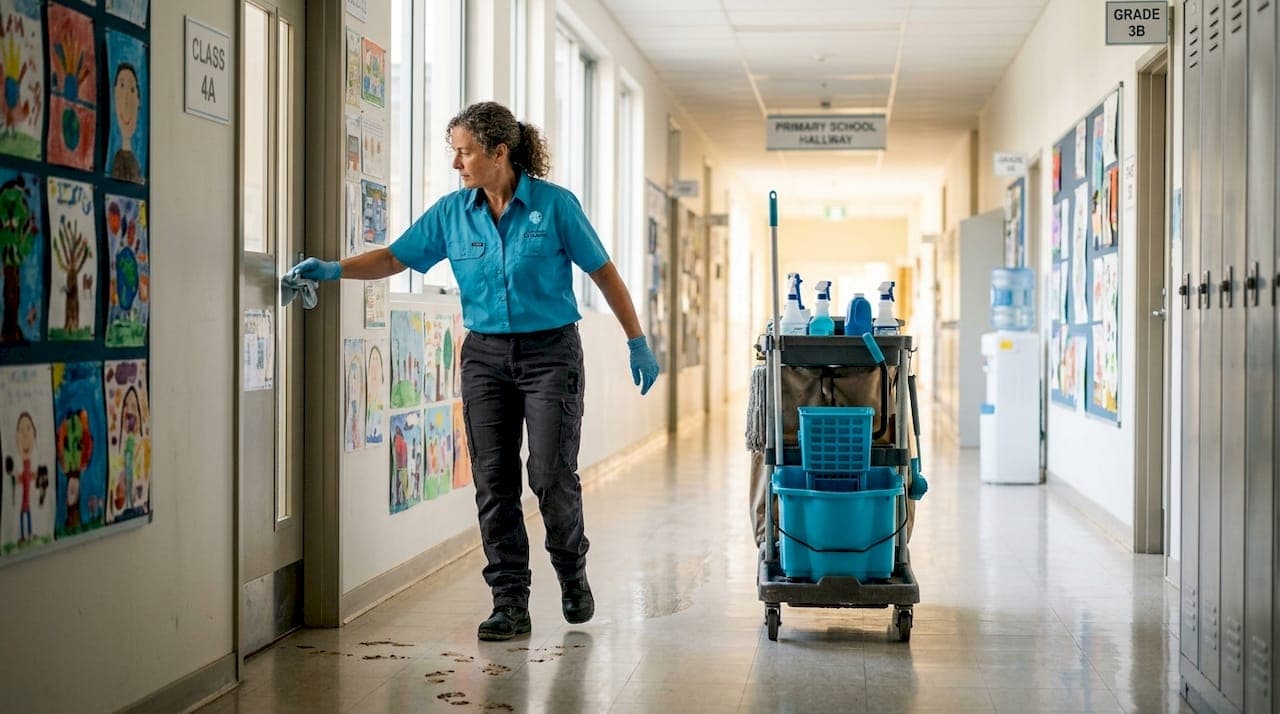
Routine cleaning schedules in most schools were not designed with infection control in mind. They were designed for appearance. That gap matters enormously when you consider that classrooms, childcare centres, and common areas house hundreds of people daily, with children who touch every surface, share every resource, and carry every pathogen. Education sector cleaning explained properly goes far beyond mops and bins. This article covers the regulatory standards, risk-based scheduling, safe product selection, and sanitation challenges that facility managers and cleaning staff need to actually protect student and staff health.
Table of Contents
- Key takeaways
- Infection control and regulatory standards
- Deep cleaning schedules and risk-based planning
- Product selection and safe application
- High-risk zones and student well-being
- My perspective on what really goes wrong
- How Just About Cleaning supports your school
- FAQ
Key takeaways
| Point | Details |
|---|---|
| Cleaning vs disinfecting | These are distinct steps; cleaning must always precede disinfection for products to work effectively. |
| Risk-based scheduling | Deep cleans should respond to occupancy spikes and illness outbreaks, not just fixed calendar dates. |
| Chemical safety matters | Children must never access cleaning products; Safer Choice or equivalent low-hazard products are strongly recommended. |
| High-risk zones need priority | Toilets, diaper-changing areas, and canteen surfaces require higher-frequency cleaning than general classrooms. |
| Staff training is non-negotiable | Protocols only work when staff understand and consistently apply correct contact times and sequences. |
Infection control and regulatory standards
Understanding the regulatory foundations of education sector cleaning is the starting point for every administrator and facility manager. The relevant frameworks distinguish clearly between three separate actions: cleaning (removing visible dirt and organic matter), sanitising (reducing microbial load to safe levels), and disinfecting (killing a defined spectrum of pathogens). These are not interchangeable, and treating them as the same step is one of the most common failures in school cleaning programmes.
Hand hygiene sits at the centre of infection control in any educational facility. The CFOC 20-step handwashing sequence, with a minimum 20-second scrub, is the mandated standard in childcare settings. This is not optional guidance. It defines what staff are expected to model and enforce. For administrators, this means handwashing stations must be accessible, functional, and stocked at all times across all areas children use.
Surface disinfection carries its own set of requirements. Key principles include:
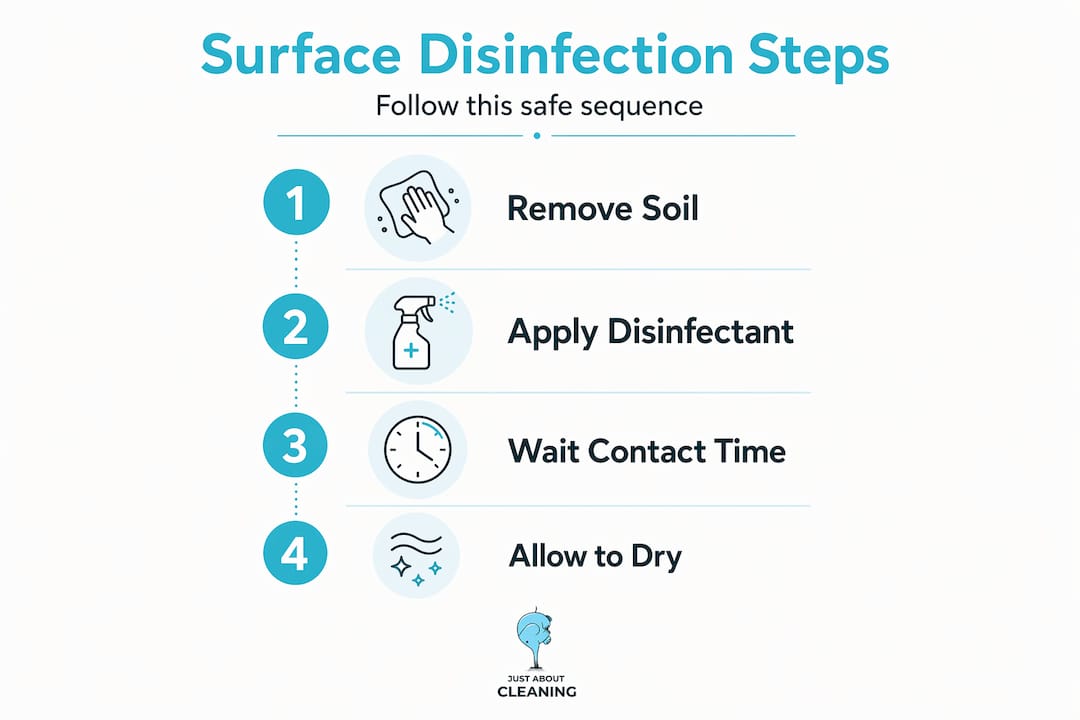
- Clean before you disinfect. Organic matter (food residue, body fluids, dirt) actively neutralises disinfectant chemistry. Skipping this step means the disinfectant is working on contamination rather than pathogens.
- Use registered products. The EPA advises that only registered disinfectants with verified kill claims should be used in school environments, particularly in childcare and food-handling areas.
- Respect contact time. A disinfectant wipe that is rubbed across a surface and immediately dried has not disinfected anything. Products must remain visibly wet for their specified contact period.
- Store chemicals securely. Children's chemical sensitivity means they should never have access to cleaning products, including disinfectant wipes. Locked, ventilated storage is a regulatory baseline, not a suggestion.
Diapering areas in childcare settings require a separate and more intensive protocol. Diaper-changing areas can require cleaning and disinfection 40 or more times daily, meaning this must be embedded into staffing plans rather than treated as an incidental task.
Pro Tip: Label all cleaning and disinfecting products clearly with dilution ratios and contact times at point of use. Staff should not need to recall this information from memory during a busy shift.
Deep cleaning schedules and risk-based planning
The term "deep clean" is used loosely in many schools, but it has a specific meaning in a compliance context. A deep clean goes beyond daily surface maintenance to address built-up contamination in harder-to-reach areas, including behind furniture, inside ventilation grilles, under equipment, and within carpet fibres. Full school deep cleans typically occur two to three times per year, with additional targeted deep cleans conducted at least once per term.
The table below outlines recommended cleaning frequencies by zone type in a typical Australian educational facility:
| Zone | Daily cleaning | Weekly cleaning | Termly deep clean |
|---|---|---|---|
| Classrooms | Wipe desks, empty bins, vacuum/mop floors | Wipe doors, light switches, handles | Full surface clean, carpet clean if applicable |
| Toilets and washrooms | Full clean and disinfection | Grout scrub, pipe fittings | Deep descale, exhaust clean |
| Kitchen and canteen | Food contact surfaces after each service | Appliance exteriors, behind equipment | Degreasing, drain treatment |
| Sports halls and gyms | Spot clean equipment, sweep floors | Mat disinfection, change room clean | Full equipment wipe-down, floor strip and seal |
| Childcare areas | After each activity session | Toy sanitisation, nap area disinfection | Cot and furniture deep clean |
What separates effective schools from reactive ones is the willingness to adjust this schedule when real-world conditions change. Risk-based cleaning schedules that respond to occupancy spikes, student onboarding periods, outbreaks, and building renovations consistently outperform fixed-calendar approaches. At the start of each academic year, occupancy jumps sharply and pathogen exposure increases. Planning a targeted deep clean before term begins, rather than waiting for the first scheduled one, directly reduces illness transmission in those critical early weeks.
Pro Tip: Build a simple risk register that flags trigger events for unscheduled cleaning responses. Events like a confirmed gastro case, flooding, or a pest sighting should automatically prompt a defined cleaning escalation, not a committee decision.
For administrators managing budgets, structured scheduling also supports cost control. When cleaning requirements are mapped to a calendar and a risk framework, procurement becomes predictable, staffing is easier to plan, and compliance documentation is straightforward to maintain.
Product selection and safe application
Getting product selection right is not simply about choosing a product with an impressive list of kill claims. The correct application of any disinfectant depends on three factors working together: the right concentration, the right contact time, and the right surface preparation. Miss any one of these and the product will not perform as labelled.
For school and childcare facilities, the following principles govern safe and effective product use:
- Norovirus requires specific products. Not all disinfectants kill norovirus, which is a leading cause of gastroenteritis outbreaks in schools. Look for products explicitly listed as effective against norovirus on their EPA-registered label. Bleach-based solutions at the correct concentration (typically 1,000 ppm or higher) are among the most reliably effective options.
- Dilution matters both ways. Under-diluted products can leave harmful residues and exceed safe exposure levels for children. Over-diluted products may fail to disinfect. Always follow label instructions, and where possible, use pre-measured dispensing systems.
- Safer Choice equivalents are worth prioritising. Products carrying the EPA's Safer Choice designation, or their Australian equivalents, are formulated to reduce hazard to human health and the environment without compromising cleaning performance. For chemical safety in schools, this is especially relevant given that children spend six to eight hours daily in these environments.
- Contact time is the most overlooked factor. Research consistently shows that typical spray-and-wipe habits reduce contact time to under 30 seconds. Most hospital-grade disinfectants require three to ten minutes of surface-wet time to achieve their stated kill rates.
The correct sequence is always: remove visible soil, apply disinfectant, wait the full contact time, then allow to dry or rinse as directed. Skipping the first step is the single most common reason disinfection fails in practice.
High-risk zones and student well-being
Some areas of an educational facility carry disproportionate hygiene risk and need dedicated attention beyond the general cleaning schedule. Administrators who treat all zones as equal are likely to find that sanitation shortfalls cluster in predictable places.
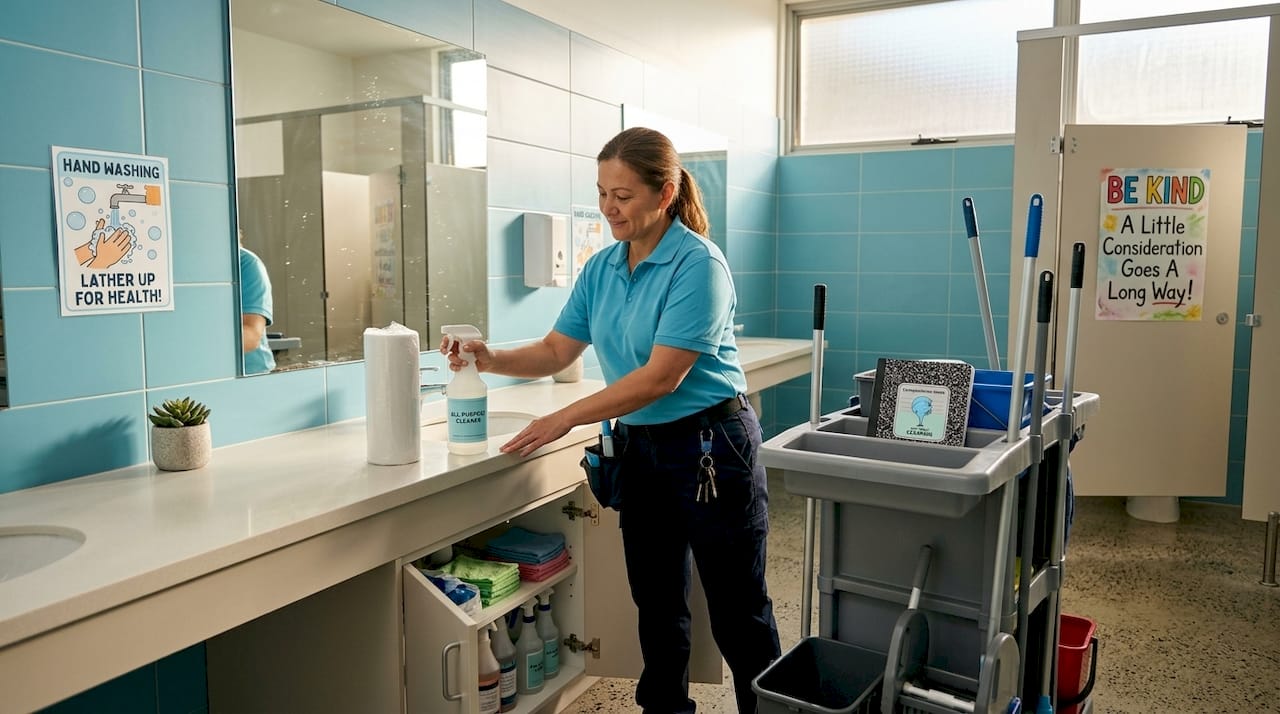
Toilet and washroom facilities are the most critical. Benchmark guidance recommends 1 toilet per 30 boys and 1 per 25 girls as minimum ratios. When a school exceeds these ratios, cleaning frequency must increase to compensate because higher usage means faster contamination. Overcrowded facilities with standard cleaning schedules are an almost guaranteed source of hygiene complaints and absenteeism.
For childcare centres and primary schools, maintaining adequate handwashing stations is closely tied to how effectively hand hygiene protocols are followed. Stations need to be at child height, consistently stocked with soap and single-use towels, and positioned near toilets, food areas, and entry points.
Here are the key steps for managing illness-related cleaning escalation in a school setting:
- Identify and isolate. When a student or staff member presents with symptoms of a contagious illness, remove them from shared spaces and notify the relevant coordinator immediately.
- Assess contamination scope. Identify which areas the individual used in the preceding two to four hours, as this defines the priority cleaning zone.
- Apply enhanced cleaning to affected areas. Use a disinfectant registered for the specific pathogen of concern and extend the cleaning scope beyond obvious surfaces to include door handles, chairs, light switches, and shared equipment.
- Document the response. Record what was cleaned, by whom, and with what product. This supports compliance reporting and demonstrates due diligence if a broader outbreak occurs.
- Review whether the schedule needs temporary adjustment. A single confirmed case of gastroenteritis, for example, should trigger a higher-frequency cleaning cycle across all toilets for a minimum period of 48 to 72 hours.
Pro Tip: Post a simple illness response checklist in your cleaners' room. When a notification comes through, staff should be able to act without waiting for instructions from management. Speed matters in outbreak control.
Menstrual hygiene facilities are an often-neglected part of educational facility hygiene. Adequate disposal units, regular servicing, and private, clean toilet cubicles directly affect student attendance and dignity. Facility managers should audit these areas on a separate schedule from general washroom maintenance.
My perspective on what really goes wrong
I've spent years seeing how cleaning programmes work in practice across educational facilities, and the most common failure has nothing to do with products or schedules. It's the gap between the written protocol and what actually happens on the floor.
In my experience, schools invest real effort in developing detailed cleaning documents. Then those documents sit in a folder while staff, under time pressure, revert to habit. The protocol says apply disinfectant and wait five minutes. What actually happens is a spray and a wipe and on to the next room.
What I've found actually works is making the correct behaviour the easiest behaviour. That means pre-measured dispensing systems so dilution is never guessed. It means laminated checklists at point of use so contact times are visible. It means periodic, low-pressure spot checks that reinforce the standard without creating anxiety. The infection control process only delivers results when the people applying it understand why each step matters, not just what to do.
The other thing I'd push back on is the assumption that more products equals better cleaning. Schools often accumulate a cabinet full of different cleaners, each purchased for a specific purpose, and the result is confusion about which product goes where. Simplifying to a smaller, well-chosen product range with clear usage instructions almost always improves compliance and outcomes.
The impact on student attendance is real. Schools with strong cleaning protocols and active illness response systems have measurably lower absenteeism during peak illness seasons. That is a metric administrators can take to their boards and their communities with confidence.
— David
How Just About Cleaning supports your school
Keeping an educational facility genuinely clean requires more than goodwill and a mop. It requires trained staff, the right products, documented protocols, and scheduling that bends to your academic calendar rather than a rigid service timetable.
Just About Cleaning has over 15 years of experience delivering specialist school cleaning services across Australia, with dedicated programmes for both schools and childcare centres. Their teams are trained in infection control protocols, compliant product use, and risk-based scheduling, so your facility is not just clean to the eye but clean to a health standard. Whether you need a pre-term deep clean, ongoing daily maintenance, or an outbreak response plan built into your service agreement, Just About Cleaning can tailor a programme to your specific needs. For a no-obligation consultation on what your facility actually requires, reach out to the Just About Cleaning team directly through their website.
FAQ
What does education sector cleaning involve?
Education sector cleaning covers daily maintenance, scheduled deep cleans, infection control protocols, and safe chemical management across classrooms, toilets, kitchens, and childcare areas. It goes well beyond appearance-based cleaning to address pathogen control and regulatory compliance.
How often should a school be deep cleaned?
Full deep cleans should occur two to three times per year, with targeted deep cleans at least once per term. Additional cleans should be triggered by illness outbreaks, occupancy spikes, or other risk events.
What is the correct order for surface disinfection?
Always clean the surface to remove visible soil first, then apply a registered disinfectant, allow the full contact time specified on the label, and then dry or rinse as directed. Skipping the cleaning step significantly reduces disinfection effectiveness.
Are children safe around school cleaning products?
Children should never handle cleaning chemicals, including disinfectant wipes. Products should be stored in locked, ventilated areas, and low-hazard Safer Choice products are recommended for environments where children are present.
What toilet-to-student ratio should schools maintain?
Recommended minimum ratios are one toilet per 30 boys and one per 25 girls. Where facilities exceed these ratios, cleaning frequency should increase to manage the higher usage load and maintain adequate hygiene standards.