
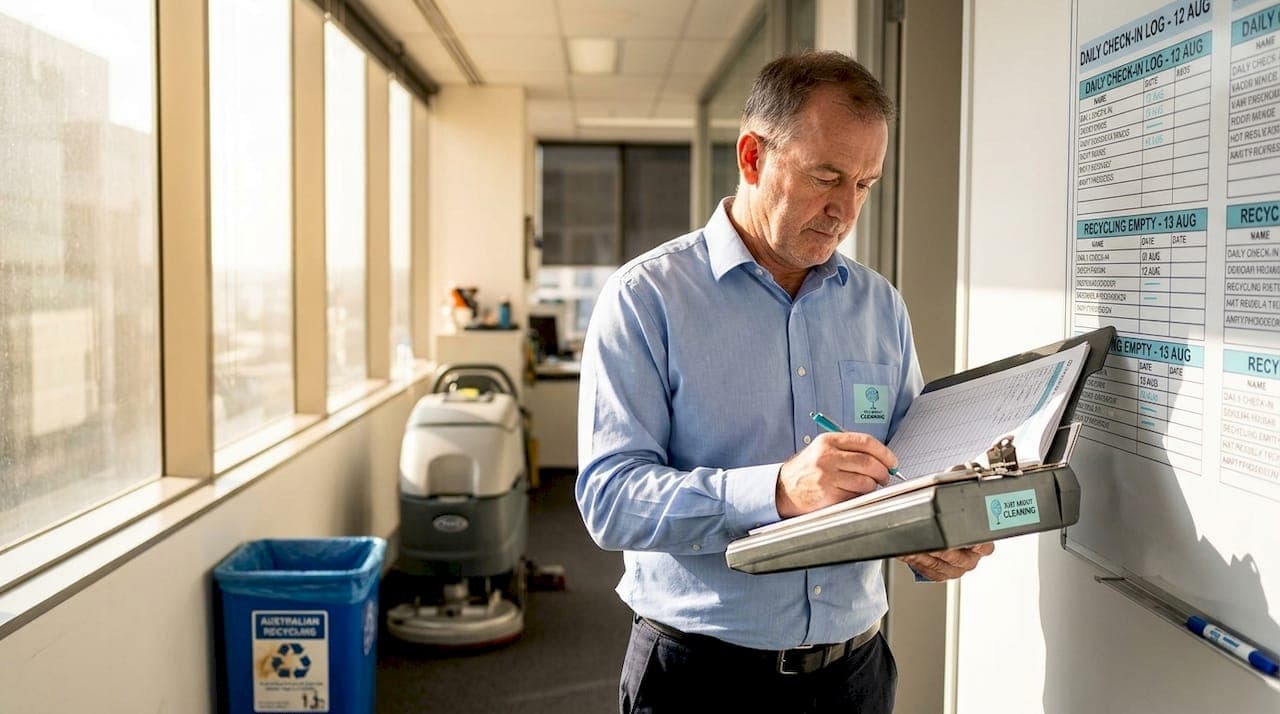
A spotless-looking office or facility can still harbour dangerous pathogens, allergens, and chemical residues that no amount of visual inspection will reveal. Many facility managers and business owners across Australia operate under the assumption that if a space looks clean, it is clean. That assumption carries real risk. Modern standards demand evidence-based, regulated procedures for true quality, not just a polished surface. This article walks you through the frameworks, sector differences, measurement tools, and practical steps you need to ensure your facility genuinely meets the mark.
Table of Contents
- Why defining quality cleaning standards matters
- Core frameworks and benchmarks for cleaning quality
- Key elements of a high-quality cleaning process
- Addressing sector-specific risks and compliance
- Sustainability and ethical considerations in quality cleaning
- How to implement and monitor quality cleaning in your facility
- Choosing a cleaning provider that meets high-quality standards
- Frequently asked questions
Key Takeaways
| Point | Details |
|---|---|
| Science-based standards | Quality cleaning means using evidence and scientific checks, not just visual inspection. |
| Sector-specific requirements | High-risk settings like medical and food require specialised methods and audit trails. |
| KPIs and regular audits | Routine ATP testing, complaint tracking, and clear reporting safeguard ongoing quality. |
| Sustainable and ethical | Top cleaning includes eco products and fair, transparent labour practices as part of its standards. |
| Actionable contracts | Demand clear, practical SLAs with measurable cleaning and sustainability targets. |
Why defining quality cleaning standards matters
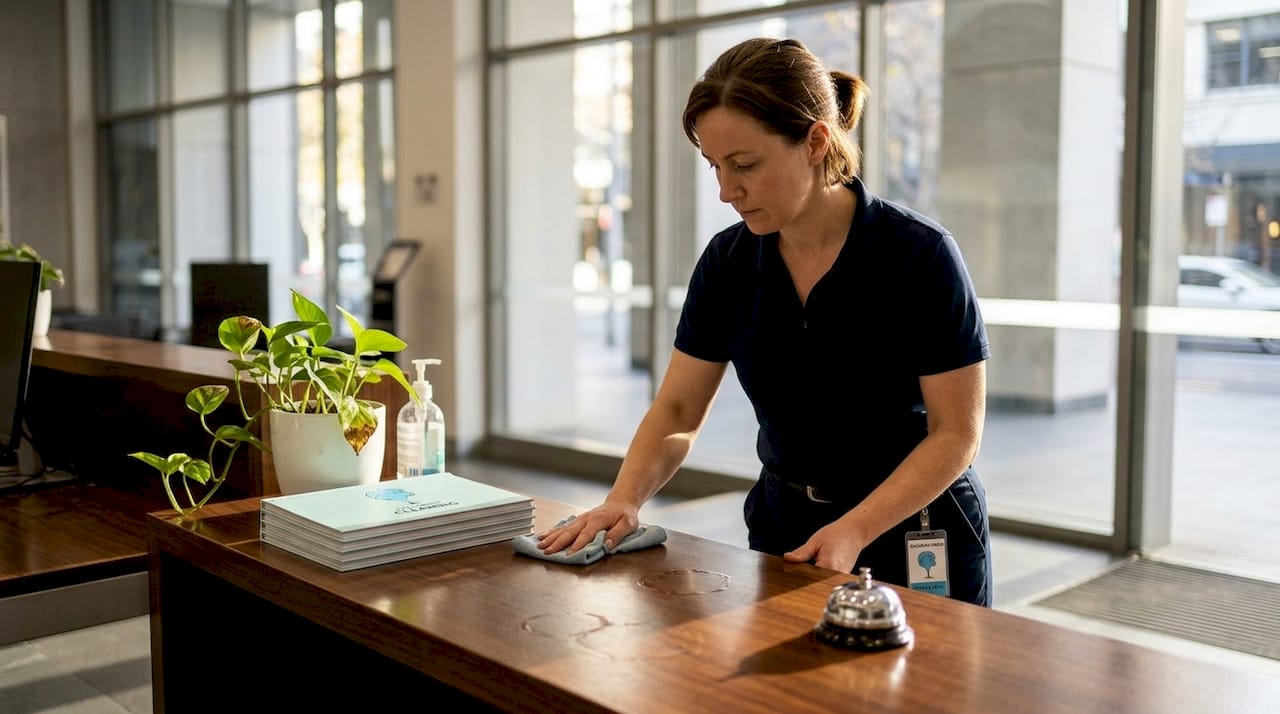
There is a significant gap between a space that looks presentable and one that is genuinely hygienic. Pathogens like Staphylococcus aureus and norovirus can survive on hard surfaces for days, completely invisible to the naked eye. Relying on visual checks alone leaves your staff, clients, and visitors exposed to preventable health risks.
The consequences of poor cleaning standards extend well beyond health. Businesses face regulatory penalties, reputational damage, and potential legal liability when cleaning fails to meet required benchmarks. In high-traffic environments like retail centres, gyms, and shared workplaces, a single outbreak can trigger investigations, closures, and lasting damage to client trust.
Understanding cleaning standards explained for your sector is the first step toward genuine compliance. True quality cleaning involves:
- Documented cleaning schedules with sign-off accountability
- Use of approved disinfectants appropriate to the risk level
- Scientific verification methods such as ATP testing to detect organic residue invisible to the eye
- Regular third-party audits and performance reporting
- Staff training aligned to sector-specific requirements
"Visual cleanliness is not a reliable indicator of hygiene. Scientific approaches like ATP bioluminescence testing provide objective, measurable evidence of surface cleanliness that visual inspection simply cannot match."
This shift from appearance-based to evidence-based cleaning is not optional in many sectors. It is a regulatory requirement.
Core frameworks and benchmarks for cleaning quality
So what actually defines a cleaning standard in Australia? Several frameworks govern this space, and the one that applies to your facility depends heavily on your sector.
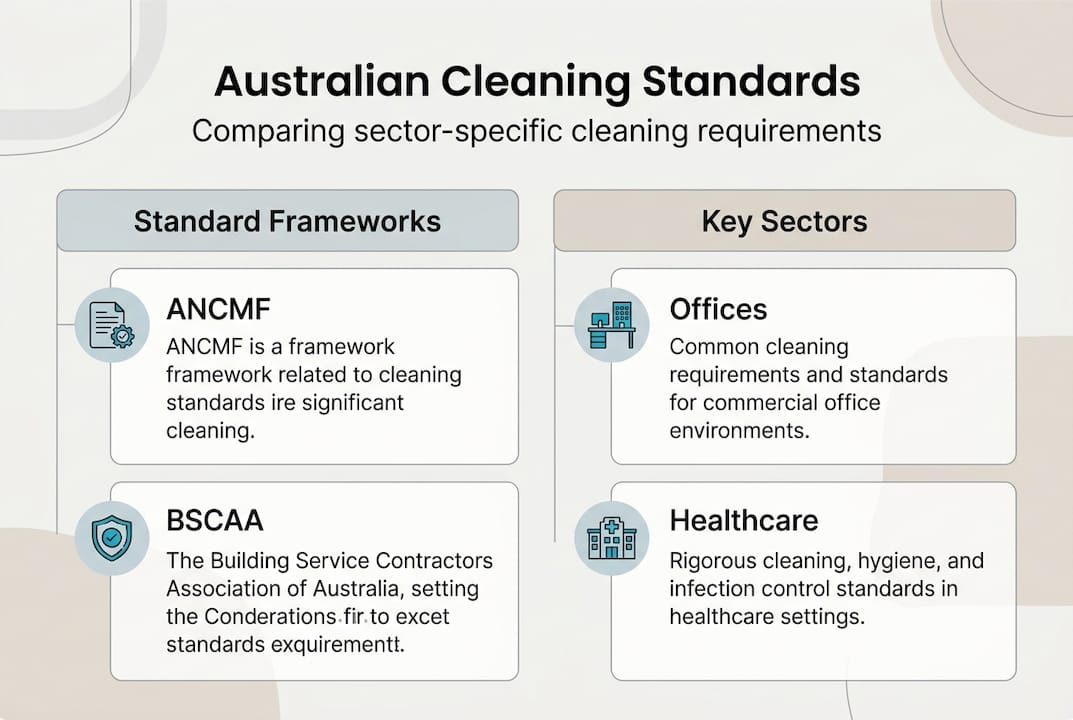
The Australian National Cleaning Minimum Framework (ANCMF) sets baseline expectations for commercial environments. The Building Service Contractors Association of Australia (BSCAA) provides industry codes of practice. For healthcare settings, the National Safety and Quality Health Service (NSQHS) Standards are mandatory. Food businesses must comply with HACCP principles, while childcare centres fall under the National Quality Framework (NQF). The Cleaning Accountability Framework (CAF) adds an ethical and financial transparency layer across all sectors.
Medical, food, and childcare settings require sector-specific standards and more frequent specialised cleaning than standard commercial environments.
| Sector | Primary framework | Cleaning frequency | Key requirement |
|---|---|---|---|
| Office/commercial | ANCMF, BSCAA | Daily to weekly | Documented schedules, KPIs |
| Healthcare | NSQHS, Spaulding | Multiple times daily | ARTG-listed disinfectants, audit trails |
| Food premises | HACCP | After every use | Surface sanitisation, temperature logs |
| Childcare | NQF | Daily minimum | Non-toxic products, documented records |
| Aged care | NSQHS, ACQSC | Daily, outbreak protocols | Infection control plans, staff training |
Reviewing home cleaning best practices alongside commercial requirements helps you understand how standards scale with risk. For businesses wanting to align with sustainability goals, eco-friendly cleaning standards are increasingly embedded within these frameworks.
Key elements of a high-quality cleaning process
Knowing the frameworks is just the start. A high-quality cleaning process has specific operational components that separate genuine compliance from surface-level effort.
- Scope definition: Clearly document which areas are cleaned, at what frequency, and to what standard before any work begins.
- Staff training: All cleaning personnel must be trained in the correct use of chemicals, equipment, and infection control procedures relevant to your sector.
- Product selection: Use ARTG-listed disinfectants where required and ensure all chemicals are appropriate for the surfaces and risk levels involved.
- Execution and documentation: Cleaning tasks must be completed as scheduled and signed off, creating an auditable record.
- Scientific verification: ATP testing and audits provide objective evidence that cleaning has achieved the required hygiene outcome.
- Review and improvement: KPIs such as complaint rates, response times, and audit scores are tracked and acted upon regularly.
| Verification method | What it measures | Best used for |
|---|---|---|
| Visual inspection | Surface appearance | Routine spot checks |
| ATP bioluminescence | Organic residue levels | Post-clean verification |
| Microbial swab testing | Specific pathogen presence | Outbreak investigation |
| Third-party audit | Process and documentation compliance | Contract accountability |
For facilities wanting to understand the broader value of consistent cleaning, routine cleaning for healthier facilities outlines why frequency and method both matter.
Pro Tip: Ask your cleaning provider to share ATP test results from your facility on a monthly basis. If they cannot provide this data, that is a clear signal their quality assurance process needs strengthening.
Addressing sector-specific risks and compliance
Some environments carry significantly higher stakes. Hospitals, aged care facilities, childcare centres, and food premises face stricter scrutiny because the consequences of cleaning failure are more severe.
In healthcare settings, the NSQHS Standards require documented infection prevention and control systems, including cleaning protocols that align with the Spaulding classification for medical equipment and surfaces. Aged care facilities must also meet Australian Aged Care Quality and Safety Commission requirements, which include regular unannounced audits.
Outbreaks demand increased disinfection with ARTG-listed products and documented audit trails. This is not discretionary. Facilities that cannot produce evidence of compliant cleaning during an outbreak investigation face serious regulatory consequences.
For childcare centres, the National Quality Framework requires:
- Daily cleaning of all contact surfaces with approved products
- Non-toxic, child-safe chemicals throughout the facility
- Written cleaning schedules accessible to regulators on request
- Staff trained in hygiene and infection control procedures
Food businesses operating under HACCP must treat cleaning as a critical control point, not an afterthought. Surface sanitisation logs, chemical concentration records, and temperature monitoring are all part of a compliant food safety programme.
"In high-risk environments, cleaning is not a support function. It is a core component of your safety and compliance system."
Reviewing your office hygiene maintenance guide and understanding why maintenance cleaning matters will help you build a stronger baseline before tackling sector-specific requirements.
Pro Tip: Keep a dedicated compliance folder, physical or digital, containing your cleaning schedules, product safety data sheets, staff training records, and audit reports. Regulators expect this documentation to be readily available.
Sustainability and ethical considerations in quality cleaning
Beyond regulation and risk, today's standards increasingly require ethical and sustainable cleaning practices. Leading providers are integrating environmental responsibility directly into their service delivery.
Eco-friendly cleaning is no longer a marketing add-on. It is becoming embedded in procurement requirements, particularly for government contracts and organisations with formal ESG commitments. CAF standards include fair labour and financial viability alongside hygiene and ecological benchmarks, meaning quality now encompasses how workers are treated, not just how surfaces are cleaned.
Key sustainability considerations for your cleaning programme include:
- Selecting ARTG-listed disinfectants that are effective without unnecessary environmental impact
- Choosing low-VOC (volatile organic compound) cleaning chemicals to protect indoor air quality
- Requiring microfibre equipment that reduces chemical usage and water consumption
- Including sustainability KPIs in your service level agreement alongside hygiene metrics
- Verifying that your provider pays fair wages and complies with modern slavery obligations
For a practical overview of what sustainable cleaning looks like in commercial settings, eco-friendly cleaning for Australian businesses covers the key facts you need.
Pro Tip: When reviewing cleaning tenders, ask providers to submit their environmental product list alongside their method statements. This quickly separates providers with genuine sustainability commitments from those making unsubstantiated claims.
How to implement and monitor quality cleaning in your facility
With the standards set, here is a practical action plan to ensure quality is delivered consistently on the ground.
- Define your sector requirements: Identify which frameworks apply to your facility and document the minimum standards you must meet.
- Draft a detailed SLA: Your service level agreement should specify cleaning frequencies, approved products, KPIs, reporting requirements, and escalation procedures.
- Include measurable KPIs: Sector-tailored KPIs and eco-product requirements are essential for balanced quality and compliance. Examples include complaint resolution time under 24 hours and monthly ATP pass rates above 90%.
- Conduct regular audits: Schedule quarterly reviews with your provider, including a walkthrough, documentation check, and KPI performance discussion.
- Establish a feedback loop: Encourage staff to report cleaning concerns promptly. A simple digital form or dedicated contact point makes this easy and ensures issues are captured before they escalate.
- Review and renew: Cleaning needs change as your facility evolves. Review your SLA annually and update it to reflect any changes in occupancy, sector requirements, or sustainability goals.
For sector-specific guidance on customer-facing environments, retail cleaning hygiene demonstrates how cleaning quality directly influences sales and customer perception.
Pro Tip: Build a quarterly cleaning review into your facility management calendar as a standing agenda item. Treating it as a routine business process, rather than a reactive response to complaints, keeps standards consistently high.
Choosing a cleaning provider that meets high-quality standards
Once you understand what genuine quality cleaning requires, the next step is finding a provider who can actually deliver it. Not every cleaning company operates to the same standard, and the gap between compliant and non-compliant providers can have real consequences for your facility.
At Just About Cleaning, we have spent over 15 years building cleaning programmes that meet and exceed the frameworks discussed in this article. Our trained onsite crews work across commercial and residential environments throughout Australia, from healthcare and childcare facilities to offices, warehouses, and retail spaces. We use ARTG-listed products, maintain full documentation for every service, and align our practices with CAF standards for ethical labour and environmental responsibility. Whether you need a compliance review, a tailored SLA, or a full-service cleaning programme, we are ready to help you meet your obligations and protect your facility's reputation.
Frequently asked questions
What are the minimum legal cleaning standards for offices in Australia?
Minimum standards are guided by frameworks such as ANCMF and BSCAA, with additional sector requirements set by NSQHS and BSCAA benchmarks for Australian cleaning standards. Your specific obligations depend on your industry and the nature of your facility.
How do I verify if cleaners meet scientific quality standards?
Check for ATP testing results, regular compliance audits, and clearly defined KPIs in your cleaning contract. A reputable provider will share this data proactively and transparently.
Are there eco-friendly cleaning products that comply with regulations?
Yes. ARTG-listed disinfectants and approved low-impact chemicals are both effective and compliant with Australian regulatory requirements, including outbreak response protocols.
What should be included in a cleaning SLA for my facility?
SLAs should specify KPIs, sector-specific methods, frequency, eco-product use, and clear reporting requirements. Sector-specific scopes and measurable KPIs are essential for a contract that holds your provider accountable.