
TL;DR:
- Most Australian businesses mistakenly believe surface cleaning ensures safety, overlooking hidden hazards like bacteria and airborne pathogens. Professional commercial cleaning is essential for health, compliance, and environmental sustainability, going beyond appearances to protect staff and reputation. Investing strategically in eco-friendly, documented cleaning practices enhances workplace safety, regulatory adherence, and brand value over the long term.
Most Australian business owners assume a clean-looking workplace is a safe one. That assumption carries real risk. What's visible on surfaces tells only part of the story, because bacteria, allergens, volatile organic compounds (VOCs), and airborne pathogens thrive in places that standard cleaning never reaches. Modern commercial cleaning is not simply about appearances. It directly shapes employee wellbeing, regulatory compliance, environmental impact, and ultimately the reputation of your business. This guide unpacks the critical reasons why professional commercial cleaning deserves a central place in your operational strategy, not just a line item in the budget.
Table of Contents
- Why surface cleaning isn't enough for businesses
- Key health and safety reasons for investing in commercial cleaning
- Sustainability: why green commercial cleaning matters
- Meeting compliance: legal and insurance reasons you can't ignore
- Why most businesses underestimate the full value of commercial cleaning
- Get expert commercial cleaning tailored to your workplace
- Frequently asked questions
Key Takeaways
| Point | Details |
|---|---|
| Protect health and safety | Commercial cleaning reduces illness risk, sick leave, and enhances air quality for staff and clients. |
| Meet compliance standards | Professional cleaning helps your business avoid legal trouble and maintain insurance and contracts. |
| Boost sustainability | Eco-friendly cleaning methods use fewer harsh chemicals and greatly lower your carbon footprint. |
| Improve business reputation | Clean workplaces build trust, attract clients, and safeguard your brand's credibility. |
Why surface cleaning isn't enough for businesses
Building on what's really at stake, let's clarify why basic cleaning simply doesn't make the grade for Australian workplaces.
When a staff member gives the reception area a quick wipe and empties the bins, the result looks clean. But surface-level cleaning removes only visible dirt. It leaves behind a hidden layer of contaminants that poses genuine risk to everyone who enters your premises.
What standard cleaning misses:
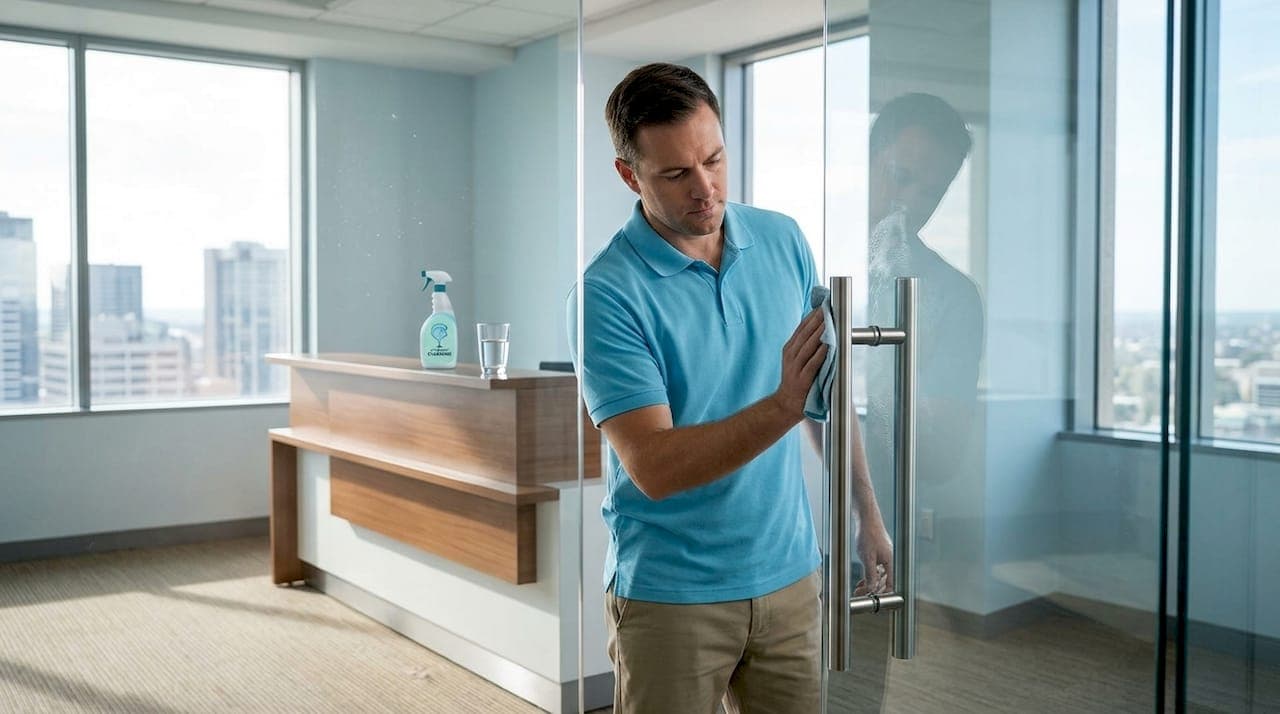
- Bacteria and viruses on high-touch surfaces such as door handles, light switches, and lift buttons
- Allergens trapped in carpet fibres, upholstery, and air conditioning vents
- VOCs off-gassed from furniture, printers, and conventional cleaning products themselves
- Mould spores growing in poorly ventilated bathroom tiles or ceiling panels
- Pathogens on shared equipment like keyboards, phones, and photocopiers
Poor indoor air quality benefits your staff in ways most managers never consider. Indoor air can carry up to five times more pollutants than outdoor air in urban environments, yet many workplaces rely entirely on general cleaning schedules that never address ventilation systems or hard-to-reach surfaces.
The consequences of inadequate cleaning go beyond staff illness. If a client or regulatory inspector visits a facility that appears clean but harbours hygiene failures, the reputational and financial damage can be severe and often irreversible. Insurance policies increasingly require evidence of documented cleaning protocols, and failing to provide that evidence can void a claim after an incident.
Research confirms that eco-friendly cleaning products using low-VOC, Green Seal certified formulations and microfibre systems reduce chemical use by 60 to 70 per cent and global warming potential (GWP) by 47.7 per cent, while maintaining or exceeding hygiene standards compared to conventional methods.
Following a solid hygienic workplaces guide makes the difference between a workspace that merely looks presentable and one that actively protects the people inside it.
Pro Tip: The most commonly missed hotspots for pathogen spread in any commercial environment are light switches, shared keyboards, phone handsets, and tap handles in kitchenettes and bathrooms. A professional cleaning schedule targets these surfaces at every visit, not just on a monthly deep-clean.
Key health and safety reasons for investing in commercial cleaning
Now that we've uncovered why basic cleaning isn't enough, let's look at the specific health and safety benefits robust professional cleaning brings.
Workplace illness is expensive. Every sick day costs an Australian business in lost productivity, temporary cover, and the risk that illness spreads to other team members. Professional commercial cleaning directly reduces the likelihood of transmission by systematically targeting the environments where pathogens survive longest.
Steps a professional cleaning programme covers that standard cleaning does not:
- Disinfection of high-touch surfaces using hospital-grade or appropriately rated products on every scheduled visit
- Deep cleaning of kitchens, bathrooms, and breakout areas where cross-contamination risk is highest
- Attention to air quality through regular vent cleaning, filter checks, and use of low-VOC products
- Documented cleaning logs that satisfy Occupational Health and Safety (OH&S) requirements and insurance conditions
- Use of colour-coded microfibre cloths to prevent cross-contamination between different zones of a building
Studies show that adopting eco-friendly commercial solutions achieves 82.6% less chemical use compared to traditional approaches, improving both staff wellbeing and broader compliance outcomes without sacrificing hygiene effectiveness.
The following table illustrates the measurable difference between consistently cleaned workplaces and those cleaned sporadically or only at a surface level:
| Metric | Consistently cleaned workplaces | Sporadically cleaned workplaces |
|---|---|---|
| Average sick days per employee per year | 3 to 5 days | 8 to 11 days |
| Reported respiratory complaints | Low | High |
| Regulatory compliance incidents | Rare | Frequent |
| Client-facing hygiene complaints | Very low | Moderate to high |
| Staff satisfaction with workspace | High | Below average |
These figures reflect patterns observed consistently across commercial environments and align with essential safe workplaces research across healthcare, office, and retail settings.
Beyond the numbers, there is a trust factor. When clients visit your office, healthcare practice, or retail space, the cleanliness of the environment signals your professionalism and your standards. Staff, too, feel more valued and motivated when their employer visibly invests in a safe, well-maintained space. This is not a soft benefit. It feeds directly into staff retention and the quality of work your team produces each day.
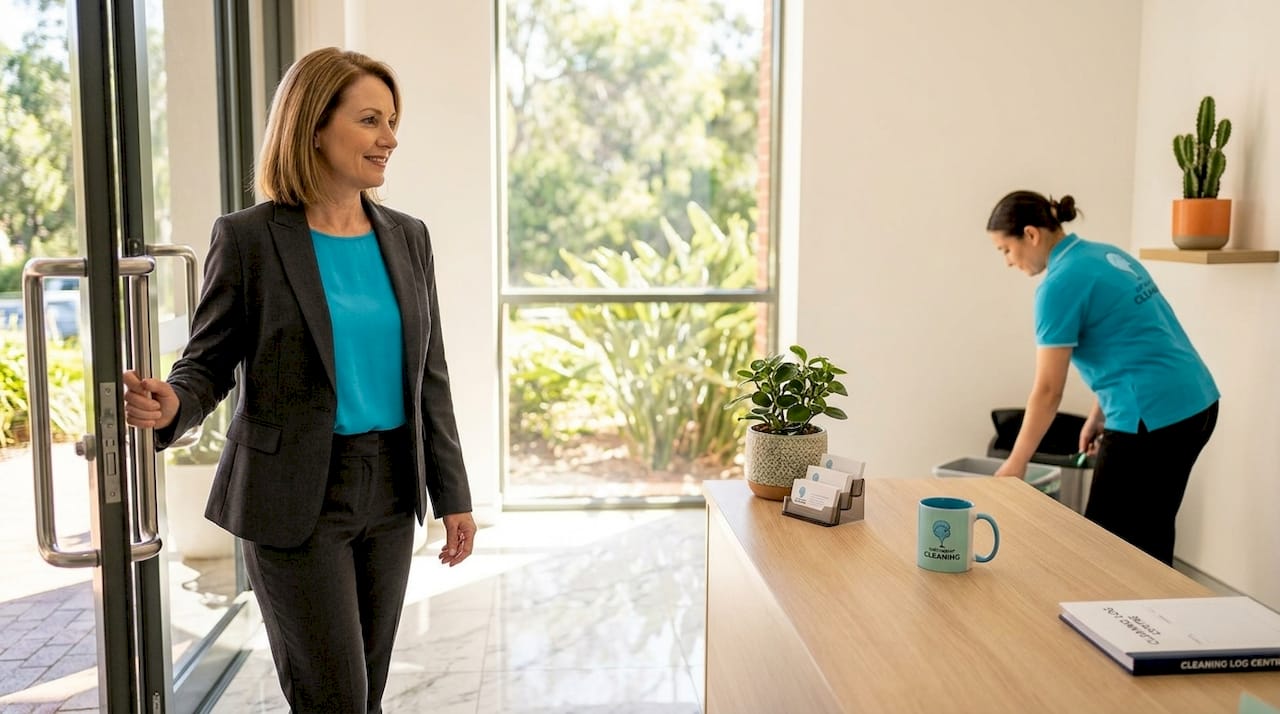
To boost compliance and safety, your cleaning provider must understand the specific requirements of your industry, whether you operate in retail, healthcare, education, or hospitality.
Sustainability: why green commercial cleaning matters
With health and safety covered, let's discuss how the right cleaning approach also supports your sustainability goals and future-proofs your brand.
Sustainability is no longer a marketing add-on. Clients, investors, and government contracts increasingly demand evidence of responsible environmental practices. Commercial cleaning is one of the most practical and measurable ways a business can reduce its environmental footprint.
Key environmental benefits of switching to green commercial cleaning:
- Significant reductions in chemical runoff entering water systems
- Lower carbon emissions from product manufacturing and transport
- Reduced single-use plastic through concentrated, refillable product formats
- Healthier indoor air quality through elimination of harsh chemical aerosols
- Compliance with Environmental, Social and Governance (ESG) reporting expectations
The science behind this is compelling. Green cleaning reduces GWP by 47.7 per cent and CO2 emissions by up to 53 per cent in low to moderate risk settings, while delivering hygiene outcomes that are comparable or superior to traditional chemical-based methods.
The following comparison table shows the difference between standard and eco-friendly commercial cleaning in practical terms:
| Factor | Standard cleaning | Eco-friendly cleaning |
|---|---|---|
| Chemical use | High, often synthetic | Reduced by 60 to 70 per cent |
| VOC emissions | Elevated | Low (certified products) |
| Global warming potential | Higher baseline | Reduced by up to 47.7 per cent |
| CO2 per cleaning cycle | Standard baseline | Reduced by up to 53 per cent |
| Hygiene outcomes | Meets standards | Meets or exceeds standards |
| ESG alignment | Limited | Strong |
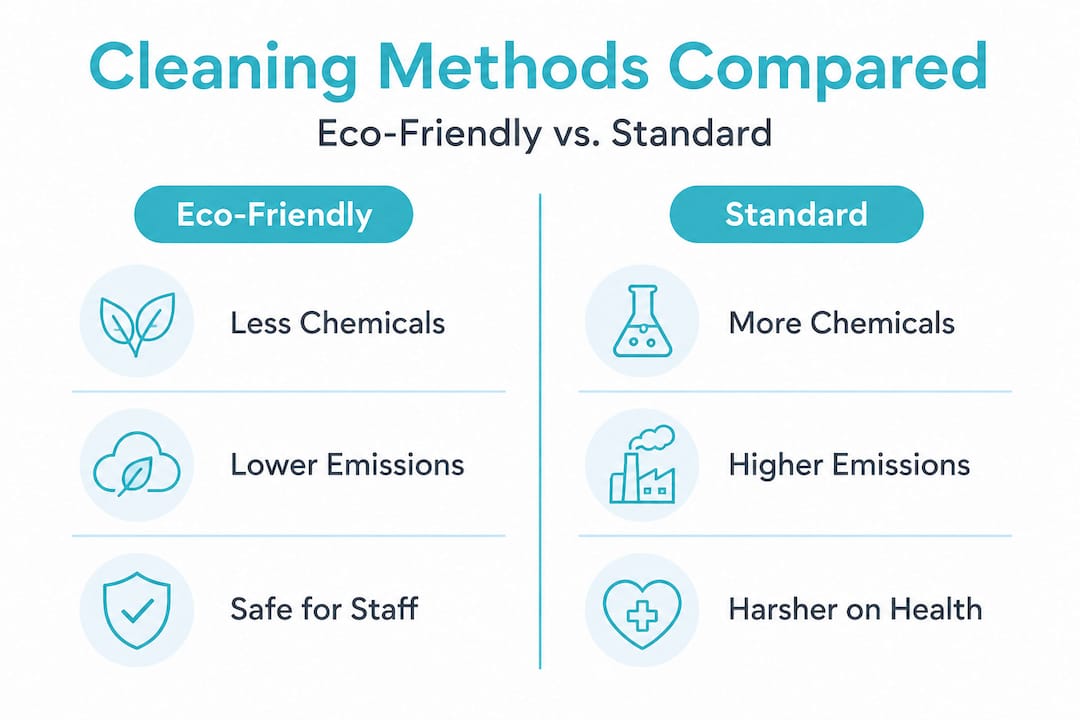
It is important to note that eco-friendly cleaning is not automatically superior across every environment. High-risk settings such as intensive care units, surgical suites, or facilities handling raw food may require specific chemical protocols that green products cannot fully replace. In these settings, a hybrid approach, using eco-friendly methods where safe and targeted chemical disinfection where necessary, delivers the best outcome. Studies confirm that in low to moderate risk settings, green methods achieve 49 to 53 per cent CO2 savings without compromising hygiene.
For more context on what makes sustainable cleaning effective in an Australian business setting, the eco-friendly cleaning facts and green cleaning practices resources provide practical, sector-specific guidance.
Pro Tip: Not all products labelled "green" are created equal. Look for providers that use Green Seal certified or GECA-approved products, and ask for documentation. In healthcare or food-handling environments, always confirm that the products used meet the specific disinfection standards required by your industry regulator.
Businesses that commit to green cleaning practices also gain a genuine competitive advantage. When tendering for government contracts or reporting to sustainability-conscious clients, documented eco-friendly cleaning practices strengthen your position. This is the kind of operational decision that pays forward, both in reduced costs over time and in brand equity that builds steadily.
Meeting compliance: legal and insurance reasons you can't ignore
Beyond health, your cleaning approach also directly impacts compliance and your business's legal safety, and here's why this matters more than many owners realise.
Australian workplaces are subject to strict obligations under the Work Health and Safety Act 2011 and relevant state-based OH&S legislation. These obligations include maintaining a safe, clean environment that reduces the risk of injury or illness for employees and visitors. Meeting these requirements is not optional, and basic or infrequent cleaning simply does not satisfy the standard required by law.
Key compliance responsibilities by sector:
- Offices: Regular disinfection of shared spaces, documented cleaning schedules, and VOC-safe products to maintain air quality standards
- Healthcare facilities: Compliance with Australian infection control guidelines (NHMRC standards), use of hospital-grade disinfectants in clinical areas, and structured waste disposal protocols
- Retail spaces: Food-safe cleaning products in customer-facing and storage areas, maintenance of hygienic amenities, and evidence of regular cleaning for public health inspections
- Childcare and education: Strict hygiene protocols in line with National Quality Framework requirements, non-toxic products throughout, and frequent disinfection of play surfaces and shared items
- Industrial and warehouse settings: Safe removal of chemical residues and dust, floor maintenance to prevent slips, and hazardous materials management
Research confirms that professional eco-friendly cleaning maintains or exceeds the hygiene requirements needed for regulatory compliance across low to moderate risk environments. This means you do not have to choose between environmental responsibility and meeting legal obligations. The two are entirely compatible when your cleaning provider knows what they are doing.
Non-compliance carries real consequences. Regulatory fines under state OH&S frameworks can run into the tens of thousands of dollars for serious breaches. More significantly, some insurers will decline to pay claims if evidence of adequate cleaning maintenance is absent from your records. Lost contracts, failed audits, and public health complaints are further outcomes that no business can afford.
To understand the specific cleaning compliance for facilities requirements relevant to your sector, and to stay across the top cleaning standards that apply to Australian businesses in 2026, working with an experienced provider is the most reliable way to stay ahead of regulatory change.
Why most businesses underestimate the full value of commercial cleaning
Having covered the practical motivations, here is a perspective that often goes unsaid in the industry.
Too many Australian businesses treat commercial cleaning as a necessary back-office cost. They select providers based almost entirely on price, schedule the minimum visits they can justify, and view the whole exercise as a compliance tick rather than a business investment. That approach misses something important.
The businesses that extract the most value from professional cleaning are the ones that treat it as a strategic decision. They ask different questions: not "what's the cheapest option?" but "what level of cleaning actually protects our people, our reputation, and our compliance position?" Those businesses tend to see lower staff absenteeism, stronger client confidence, fewer regulatory issues, and a workplace culture that reflects genuine care.
There is also the productivity angle, which almost never makes it into the cleaning conversation. Research on deep cleaning benefits in Australian workplaces shows consistently that employees in well-maintained environments report higher focus, lower stress, and greater pride in their work. A dirty or poorly maintained office sends a clear signal to staff about how much the organisation values them. That signal affects morale and, over time, retention.
The sustainability dimension adds further long-term value. Businesses that invest in evidence-based, eco-friendly cleaning are building operational practices that align with the direction regulation, consumer expectations, and ESG reporting are heading. That is not idealism. It is commercial foresight.
Cleaning deserves a seat at the table when your business reviews its risk management strategy. The return on that investment, in health outcomes, compliance security, and brand longevity, is far greater than the cost of getting it right.
Get expert commercial cleaning tailored to your workplace
Understanding the full picture makes one thing clear: commercial cleaning done properly is one of the most practical investments a business can make in its people, its compliance standing, and its long-term reputation.
At Just About Cleaning, we bring over 15 years of experience delivering professional, eco-friendly commercial cleaning across offices, healthcare facilities, retail spaces, childcare centres, warehouses, and more. Our trained onsite crews follow documented protocols that meet Australian compliance standards while prioritising sustainable products and practices. Whether you need a tailored schedule, a one-off deep clean, or an ongoing maintenance programme, we work with your business to deliver cleaning that genuinely protects your environment. Reach out today to discuss a customised cleaning assessment for your space.
Frequently asked questions
How does commercial cleaning improve workplace health?
Professional commercial cleaning removes contaminants like bacteria and allergens, lowering the risk of illness and boosting air quality for everyone. Eco-friendly systems using certified low-VOC products and microfibre technology reduce chemical exposure while maintaining or exceeding hygiene standards.
What makes eco-friendly cleaning effective for businesses?
Eco-friendly cleaning delivers hygiene results equal to or better than traditional methods, while also reducing a business's carbon footprint. Studies confirm green cleaning reduces GWP by 47.7 per cent and CO2 by up to 53 per cent in low to moderate risk settings.
Is green cleaning suitable for all commercial settings?
Eco-friendly methods work well for most workplaces, including offices, retail, and education environments. However, high-risk sites may need targeted chemical disinfection alongside green options, with research showing non-inferior hygiene outcomes and 49 to 53 per cent CO2 savings in standard commercial settings.
Why is cleaning compliance important for Australian businesses?
Compliance ensures your business meets legal OH&S obligations, protects public health, and keeps insurance coverage and contracts valid. Professional eco-friendly cleaning methods consistently meet or exceed the hygiene requirements that Australian regulators expect.