
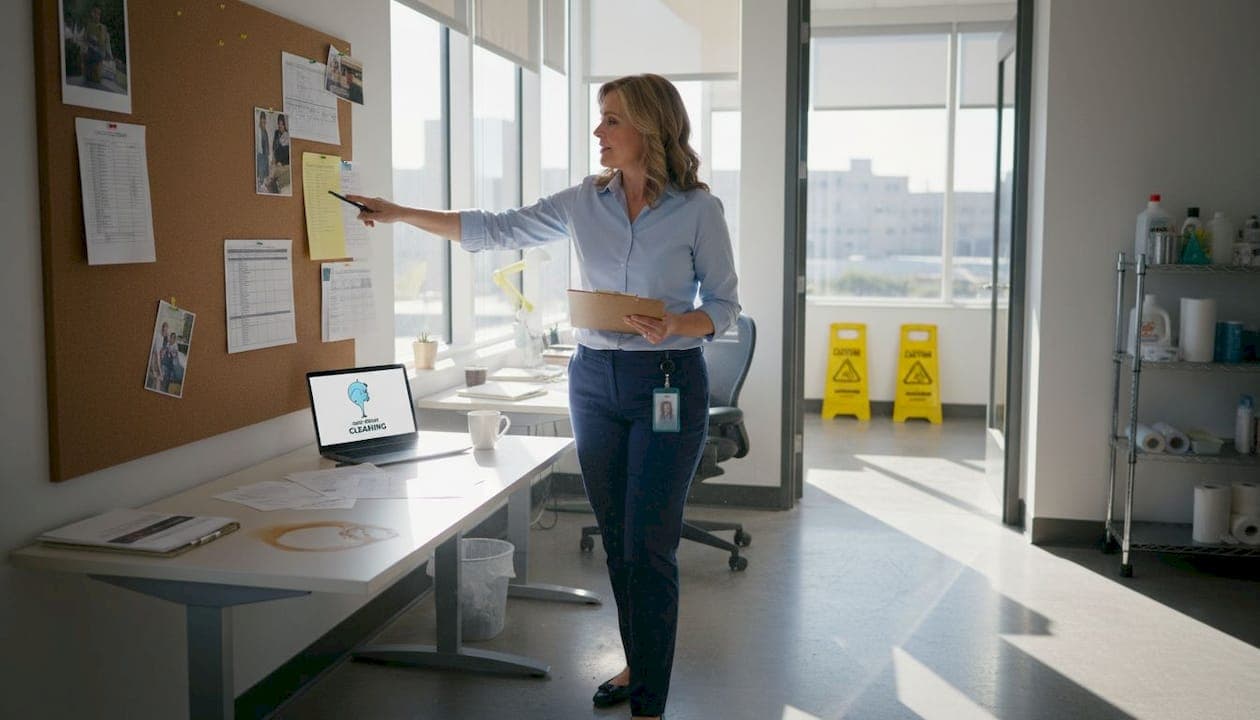
Many facility managers assume that a regular mop and wipe-down is enough to keep their workplace safe and legally compliant. It is not. Cleaning to a recognised standard is a fundamentally different practice, and the gap between the two carries real consequences. Enhanced cleaning reduces infections by 34%, according to HMRI's CLEEN Study, and non-compliance can trigger significant financial and legal exposure. This article walks facility managers and business owners through what cleaning standards actually require, why they matter for health and safety compliance, and how to apply them in your organisation to protect your people and your bottom line.
Table of Contents
- Why cleaning standards matter for your organisation
- Core elements of cleaning standards in Australia
- How standards reduce infections and boost your ROI
- Getting compliance and hygiene right: Practical steps
- What most businesses overlook about cleaning standards
- Partnering with professional cleaning experts
- Frequently asked questions
Key Takeaways
| Point | Details |
|---|---|
| Standards protect health | Cleaning standards drastically reduce illness and create safer workplaces. |
| Compliance avoids fines | Robust cleaning programs help avoid costly legal and regulatory penalties. |
| Proven business value | Investing in cleaning returns savings via lower absenteeism and hospital costs. |
| Practical frameworks matter | Colour-coding, risk-based classification, and routine schedules are essential tools. |
Why cleaning standards matter for your organisation
Cleaning standards are not simply internal housekeeping policies. They sit at the intersection of regulatory requirements, industry codes, and workplace health and safety law. In Australia, these obligations are shaped by Safe Work Australia guidelines, state-based WHS legislation, and sector-specific frameworks for industries like healthcare, childcare, and food service. Understanding what a standard actually requires is the first step toward meeting it.
The health case for proper cleaning is well established. Poorly maintained workplaces are directly linked to higher rates of absenteeism, respiratory illness, and the spread of infectious disease. Routine cleaning for healthier facilities is not optional when staff share surfaces, air handling systems, and amenities. Contaminated touchpoints like door handles, keyboards, and shared equipment are common transmission vectors that basic cleaning often misses entirely.
The legal risks are equally significant. If a worker or visitor contracts an illness or suffers an injury due to inadequate cleaning, your organisation can face workers compensation claims, civil liability, and regulatory investigation. Penalties can exceed $250,000 for corporations that fail compliance obligations under WHS law. That figure does not include reputational damage or the cost of managing an outbreak.
The financial return on investing in proper cleaning standards is also compelling. Consider these core benefits:
- Fewer sick days taken by staff, reducing productivity loss
- Lower risk of costly regulatory investigations or fines
- Reduced liability exposure from workplace injury or illness claims
- Stronger staff morale and confidence in the work environment
- Better audit outcomes for accredited or regulated facilities
Pro Tip: When defining quality cleaning standards for your facility, always cross-reference your internal policies against the relevant WHS codes for your industry. A policy that looks thorough on paper but does not align with legislative requirements offers very little protection.
Cleaning standards, properly applied, are one of the most cost-effective risk management tools available to any organisation. They reduce illness, limit liability, and signal to staff and stakeholders that your organisation takes its duty of care seriously.
Core elements of cleaning standards in Australia
Professional cleaning standards are built on a set of well-tested methodologies and frameworks. Understanding these building blocks helps facility managers assess whether their current cleaning programme meets the bar.
Colour-coded equipment systems are a foundational control measure. By assigning specific colours to tools used in different zones, such as red for toilets and blue for general surfaces, facilities prevent cross-contamination between high-risk and low-risk areas. Colour-coded systems prevent cross-contamination and are considered best practice across commercial, healthcare, and food-handling environments.
The Spaulding classification is used primarily in healthcare settings to categorise items and surfaces by infection risk. It guides decisions about whether cleaning, disinfection, or sterilisation is required. The principle of clean before disinfect applies universally: disinfectants cannot work effectively on soiled surfaces, so physical cleaning must always come first.
Tiered cleaning schedules structure frequency by risk level. High-touch surfaces require more frequent attention than storage areas or low-traffic zones. Schedules should be documented, assigned, and audited regularly.
The following table outlines key certification and accountability frameworks relevant to Australian cleaning providers:
| Framework | Purpose | Who it applies to |
|---|---|---|
| ISO 9001 | Quality management systems | Cleaning companies and contractors |
| ISO 14001 | Environmental management | Eco-focused cleaning operations |
| ISO 45001 | Occupational health and safety | All workplace cleaning operations |
| BSCAA codes | Industry conduct and standards | Building service contractors |
| CAF standard | Cleaning accountability and fairness | Cleaning industry employers |
ISO and BSCAA standards provide the accountability frameworks that separate credible cleaning providers from those simply going through the motions. When selecting a contractor, verifying these credentials is essential.
Verification methods also matter. Visual inspection alone is not sufficient for high-risk environments. ATP (adenosine triphosphate) testing measures biological residue on surfaces and provides objective, quantifiable data on cleaning effectiveness. This is increasingly used in healthcare, childcare, and food production settings.
For tasks involving hazardous chemicals, working at heights, or managing biohazard waste, a Safe Work Method Statement (SWMS) is a legal requirement. A SWMS documents the steps, risks, and controls for each high-risk task. Reviewing best practices for spotless cleaning and understanding the deep cleaning process for compliant workplaces will help you build a more robust programme. The CAF standard also sets out clear obligations for cleaning industry employers around fair work and accountability.
How standards reduce infections and boost your ROI
The evidence connecting professional cleaning standards to measurable health and financial outcomes is strong. This is not theoretical. Real-world data from Australian and international studies consistently shows that structured cleaning programmes deliver results.
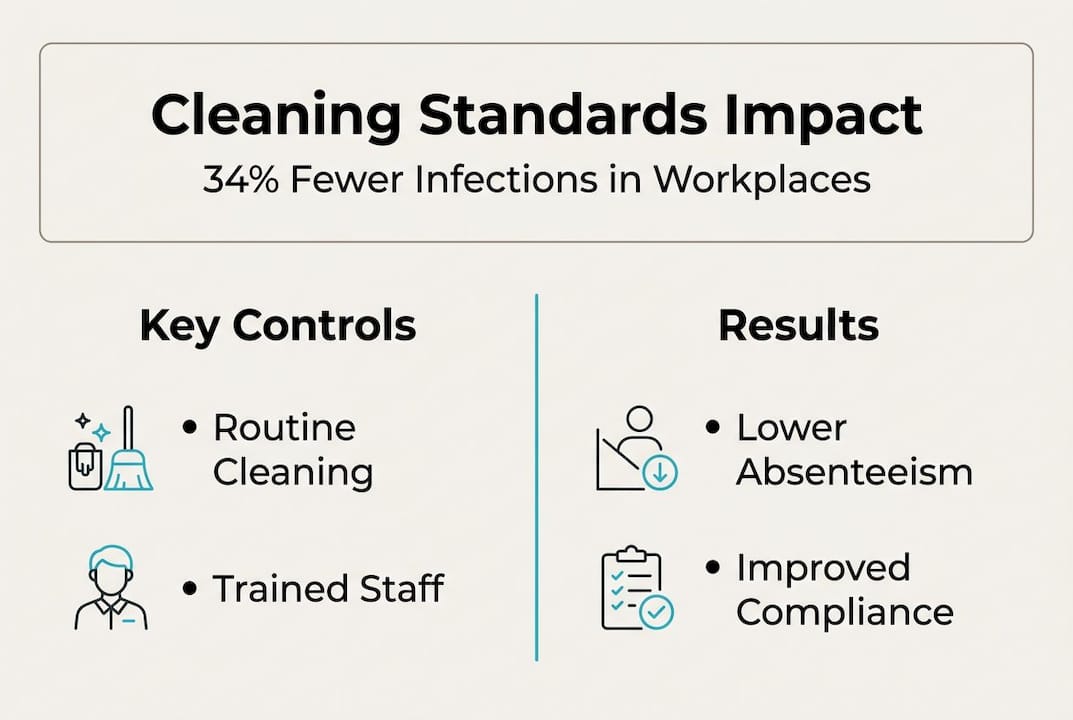
The most cited local example is HMRI's CLEEN Study, which found a 34% reduction in hospital-acquired infections after implementing enhanced cleaning protocols. While this was conducted in a healthcare setting, the underlying principle applies across all facility types: consistent, standards-based cleaning interrupts transmission pathways.
"Cleaning standards are not just about hygiene. They are about creating environments where people can work safely, recover faster, and perform at their best."
For commercial workplaces, the return on investment becomes visible through reduced absenteeism, fewer compensation claims, and improved staff retention. Robust cleaning routines can reduce workplace-related illness by up to 80% when properly implemented and maintained.
Here is a comparison of outcomes between facilities with and without structured cleaning standards:
| Outcome | Without standards | With standards |
|---|---|---|
| Staff illness rate | High, reactive management | Significantly reduced |
| Absenteeism cost | Ongoing and unpredictable | Measurably lower |
| Regulatory risk | Elevated exposure | Substantially mitigated |
| Audit performance | Inconsistent results | Consistent and documented |
| Staff confidence | Lower, particularly in shared spaces | Higher and sustained |
The measurable benefits for your business include:
- Fewer unplanned absences and associated productivity losses
- Reduced risk of costly workplace illness investigations
- Improved outcomes in health and safety audits
- Stronger compliance posture across all regulatory touchpoints
- Greater staff trust in the safety of their environment
Investing in trained cleaners is central to achieving these outcomes. Untrained staff following ad hoc routines cannot replicate the consistency that structured, standard-based cleaning delivers.
Getting compliance and hygiene right: Practical steps
Knowing that cleaning standards matter is one thing. Putting them into practice in your specific facility is another. Here is a straightforward framework to implement or audit your cleaning programme.
- Assess your current state. Conduct a facility audit to identify high-risk zones, current cleaning frequencies, and any gaps between your existing practices and applicable standards. Document what you find.
- Develop a cleaning plan. Build a schedule that assigns tasks, frequencies, responsible parties, and required products. Align it with your WHS obligations and any sector-specific requirements for your industry.
- Train your team. Cleaning staff must understand the rationale behind each procedure, not just the steps. Training should cover colour-coded systems, correct chemical dilution, SWMS requirements, and emergency response procedures.
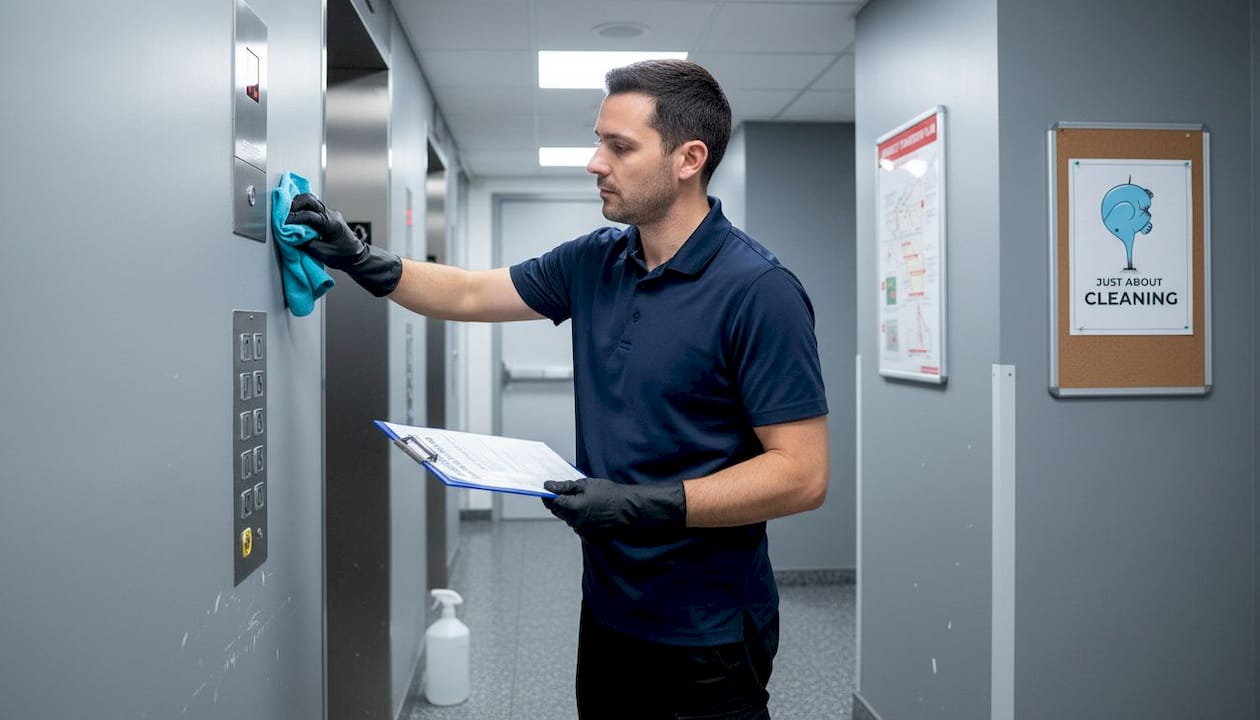
- Monitor and verify outcomes. Use a combination of visual inspection, supervisor sign-off, and ATP testing where appropriate. Record results and address failures promptly.
- Review and adjust regularly. Cleaning needs change with occupancy levels, seasonal illness patterns, and facility modifications. Schedule quarterly reviews as a minimum.
Pro Tip: Edge cases require tailored procedures, including terminal cleans after infectious illness, increased frequency during outbreak periods, and mandatory SWMS for biohazard tasks. Build these scenarios into your plan before they arise, not after.
For offices specifically, reviewing how to clean commercial offices and following an office hygiene maintenance guide tailored to Australian businesses will help you cover the most common compliance gaps. Adapting your plan to your site's actual risk profile is what separates a compliant facility from one that merely looks the part.
What most businesses overlook about cleaning standards
After working with organisations across multiple sectors, one pattern stands out clearly. Most businesses treat cleaning standards as a compliance formality rather than an operational investment. They produce a policy document, hand it to a contractor, and consider the matter closed.
The real differentiator is not the policy. It is the culture that surrounds it. Organisations that see genuine, sustained results are those where cleaning accountability is embedded at every level, where managers check outcomes rather than just inputs, and where cleaning staff are treated as skilled contributors rather than an afterthought.
Shortcut checklists and the cheapest tender rarely produce lasting results. The facilities that perform best in audits and maintain the lowest illness rates are those that invest in ongoing training, use objective verification methods, and build cleaning performance into their broader safety culture.
Why routine cleaning is essential is not a question of frequency alone. It is a question of whether your organisation genuinely owns the outcome. Standards are a lever for continuous improvement, not just a safety floor to clear once and forget.
Partnering with professional cleaning experts
Meeting cleaning standards consistently requires more than good intentions. It requires trained personnel, verified procedures, and a provider who understands your compliance obligations across your specific industry.
Just About Cleaning brings over 15 years of experience delivering compliant, tailored cleaning programmes for commercial, healthcare, education, and industrial facilities across Australia. Our trained onsite crews operate to ISO, BSCAA, and CAF standards, and we align every programme with your WHS obligations and sector-specific requirements. Whether you need a full compliance audit, a structured cleaning schedule, or specialist services for high-risk environments, we provide consistent, documented results you can rely on. Reach out today to discuss a cleaning solution built around your facility's needs.
Frequently asked questions
What is a cleaning standard in an Australian workplace?
A cleaning standard sets out the minimum processes, schedules, and outcomes required to keep a workplace compliant with health and safety laws. BSCAA codes and CAF standards define the frameworks most widely used across Australian commercial facilities.
How do cleaning standards impact staff illness rates?
Consistent cleaning according to standards can reduce workplace illness by up to 80% and significantly cut absenteeism across all facility types.
Are there different cleaning standards for offices and medical facilities?
Yes, medical facilities use risk-based frameworks like Spaulding classification and require stricter disinfection procedures than standard office environments.
Who is responsible for enforcing cleaning standards?
Facility managers and business owners carry legal responsibility for compliance and are accountable for monitoring and enforcing cleaning standards within their organisation.
What happens if cleaning standards are not followed?
Penalties can exceed $250,000 for corporate non-compliance, and organisations also face increased infection risk and potential reputational damage.