
TL;DR:
- Implementing consistent and enhanced cleaning protocols reduces infections and school absenteeism.
- Combining in-house staff for routine cleaning with professional services for deep cleaning ensures quality and compliance.
- Ongoing quality assurance with audits, ATP testing, and staff training maintains high hygiene standards in schools.
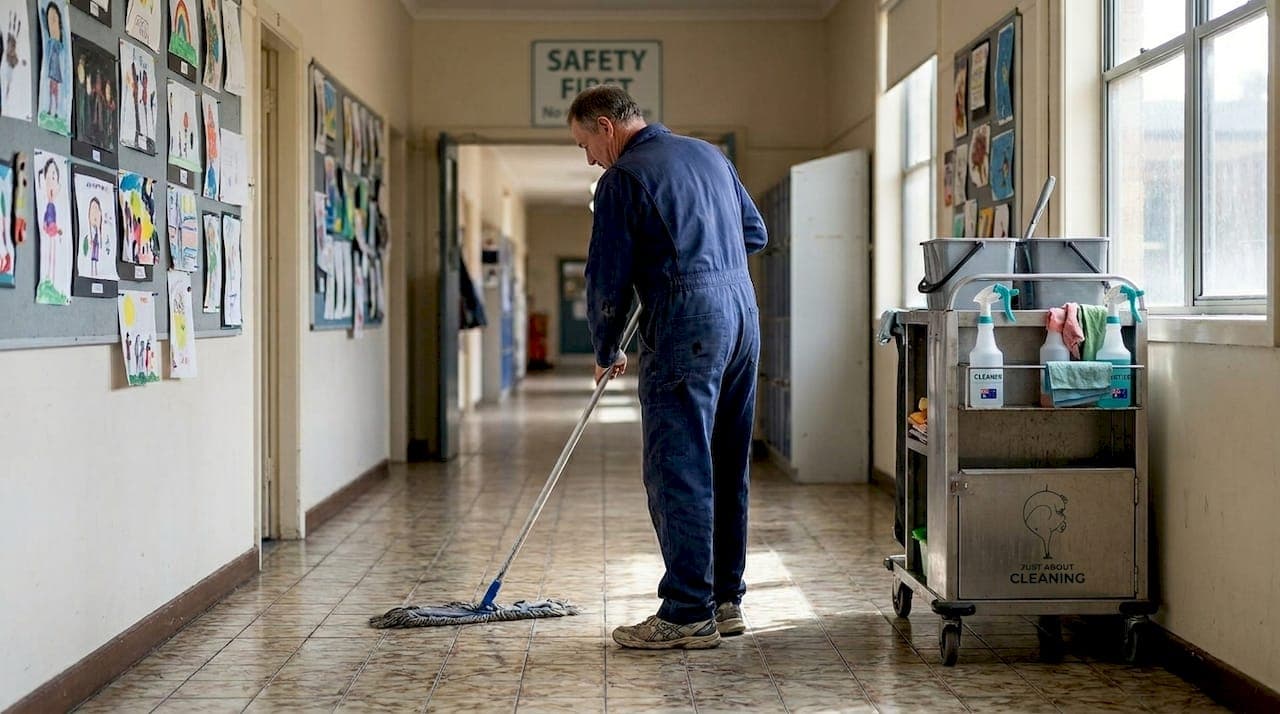
Keeping a school clean is not simply about appearances. When infections spread through classrooms, absenteeism climbs and learning outcomes suffer. Research shows that enhanced cleaning cuts infections by 34% and can reduce school absenteeism by up to 30%. For facility managers and decision-makers in Australian educational institutions, that is a compelling reason to move beyond ad hoc cleaning and adopt evidence-based protocols. This article walks you through the key criteria for effective cleaning, the top protocols that work in school environments, how to choose between professional and in-house delivery, and how to maintain quality over time.
Table of Contents
- Key criteria for effective cleaning protocols
- Top cleaning protocols: What works best in schools
- Professional vs in-house cleaning: Finding the right fit
- Quality assurance: Monitoring, training, and compliance
- A smarter approach most schools overlook
- Get expert help with your facility's cleaning protocols
- Frequently asked questions
Key Takeaways
| Point | Details |
|---|---|
| Clean protocols reduce sickness | Evidence-based cleaning is proven to lower infection rates and reduce student and staff absences. |
| Tailored approach is best | Combining in-house staff for routines and professionals for specialist cleaning yields the strongest outcomes. |
| Quality assurance matters | Regular training, audits, and ATP testing assure cleaning stays effective and compliant with standards. |
| Airflow is critical | Maintaining clean HVAC filters and ensuring proper ventilation lessens the spread of pathogens indoors. |
Key criteria for effective cleaning protocols
Before selecting any cleaning protocol, you need to know what an effective one actually looks like. Not all cleaning schedules are created equal, and in an educational setting, the stakes are higher than in most other environments. Consistent protocols, preventive cleaning, and regular assessment are directly linked to lower infection rates and fewer absences across facilities.
An effective protocol must address the following:
- Frequency and consistency: Cleaning must happen on a reliable schedule, not just when surfaces look dirty. Daily cleaning of classrooms and common areas is the baseline, with more frequent attention during peak illness periods.
- High-touch surface coverage: Door handles, light switches, shared desks, keyboards, and bathroom fixtures harbour the most pathogens. These must be prioritised in every cleaning round.
- Airflow and HVAC maintenance: Poor ventilation accelerates the spread of airborne illness. Filters and vents need regular servicing as part of any credible protocol.
- Staff training and clear checklists: Cleaners need documented procedures, not verbal instructions. Checklists reduce variability and make accountability straightforward.
- Hygiene culture support: Handwashing stations stocked with soap, visible hygiene reminders, and student education all reinforce what professional cleaning alone cannot achieve.
For foundational guidance on what a well-structured schedule looks like, reviewing routine cleaning essentials is a practical starting point. You should also align your approach with the Victorian education cleaning policy to ensure your protocols meet the minimum requirements expected of government and registered schools.
Pro Tip: Use ATP (adenosine triphosphate) testing alongside visual audits to measure surface cleanliness objectively. ATP testing detects biological residue invisible to the naked eye, giving you data to back up or challenge your current cleaning schedule.
Top cleaning protocols: What works best in schools
With your evaluation criteria in place, here are the five protocols that consistently deliver results in Australian school environments.
- Routine surface disinfection: Daily cleaning of high-touch points using TGA-approved disinfectants is the cornerstone of any school hygiene programme. This should occur after hours to avoid disrupting students, with spot-cleaning during the day for obvious contamination.
- Enhanced cleaning during outbreaks: When flu season arrives or a gastro outbreak is reported, standard protocols are not enough. Enhanced cleaning means increasing the frequency of disinfection, extending coverage to low-touch areas, and using stronger approved products where appropriate.
- Ventilation and air filter protocols: Clean HVAC filters and vents regularly and ensure proper airflow to reduce infection risk. This is often overlooked in school cleaning plans but is one of the most cost-effective interventions available.
- Restroom and hygiene area cleaning: Toilets, basins, and change rooms require multiple cleaning rounds per day in busy schools. These areas carry the highest pathogen load and must never be deprioritised.
- Specialty area cleaning: Science labs, gymnasiums, sick bays, and canteens each have unique cleaning requirements. Labs may require chemical-safe procedures, while sick bays need clinical-grade disinfection after every use.
Aligning your protocols with cleaning standards compliance ensures you are meeting the benchmarks expected by education authorities. You can also cross-reference the official cleaning guidelines to confirm your approach is current.
"Investment in thorough cleaning protocols can result in up to 30% less absenteeism, making it one of the highest-return operational decisions a school can make."
Professional vs in-house cleaning: Finding the right fit
Once you know what protocols to implement, the next question is who should deliver them. Both in-house and professional cleaning teams have a role to play, and the right answer depends on your facility's size, budget, and risk profile.
In-house teams are well-suited to routine, light-touch cleaning tasks. They know the facility, can respond quickly to spills or minor incidents, and are often more cost-effective for day-to-day maintenance. However, they typically lack the specialised training, equipment, and products needed for deep cleaning, outbreak response, or compliance-level documentation.
Professional cleaning delivers proven benefits for deep cleans, outbreak response, and protocol compliance. Professional teams bring trained staff, industrial-grade equipment, and documented quality assurance processes that in-house arrangements rarely replicate.
| Feature | Professional cleaning | In-house cleaning |
|---|---|---|
| Cost | Higher upfront, lower risk | Lower daily cost, hidden risks |
| Training | Certified, ongoing | Variable, often informal |
| Deep cleaning capability | Strong | Limited |
| Rapid outbreak response | Yes | Rarely |
| Compliance documentation | Included | Often absent |
| Flexibility | Contractual | High |
Key scenarios where professional services are worth the investment:
- Termly or biannual deep cleans across all areas
- Outbreak response requiring clinical-grade disinfection
- Compliance audits or accreditation preparation
- Specialty areas such as labs, sick bays, and canteens
For a detailed breakdown of what deep cleaning involves, the deep cleaning process guide is worth reviewing. You can also explore how in-house cleaning practices can be structured to complement professional services.
Pro Tip: A blended model, where in-house staff handle daily maintenance and a professional team manages deep cleans and audits, gives you the best of both worlds. It reduces costs while maintaining the quality and compliance that schools require.
Quality assurance: Monitoring, training, and compliance
Choosing the right delivery model is only part of the equation. Without ongoing quality assurance, even the best protocols degrade over time. This is where many schools fall short.
Audits and ATP testing are the two most reliable tools for measuring cleaning effectiveness. Visual inspections catch obvious issues, but ATP testing provides objective data on surface contamination levels. Performance-based contracts, checklists, audits, and ATP testing are essential for accountability and maintaining high standards across your facility.
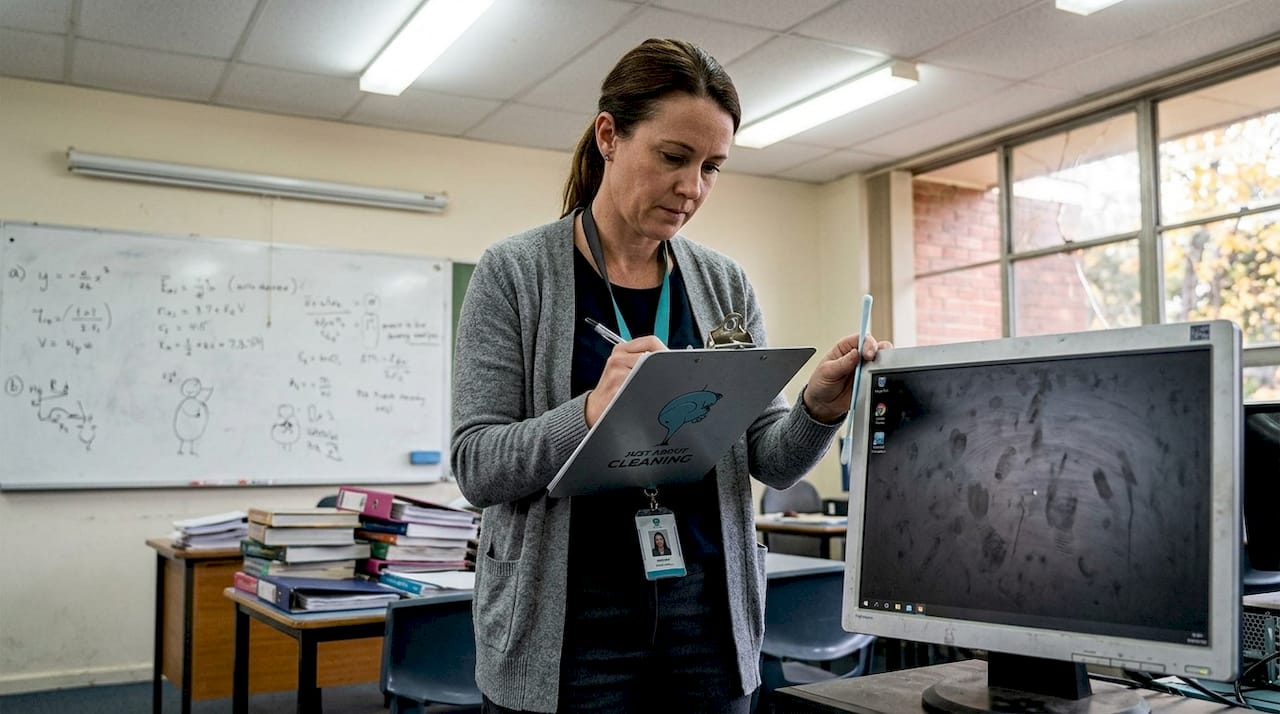
Staff training must be scheduled, not assumed. Core training content should cover correct product use, cross-contamination prevention, personal protective equipment, and how to follow and document checklists. Refresher training every six months keeps knowledge current and reinforces standards.
| QA practice | Frequency | Purpose |
|---|---|---|
| Visual audit | Weekly | Identify obvious gaps |
| ATP surface testing | Monthly | Measure contamination levels |
| Checklist review | Fortnightly | Confirm task completion |
| Staff training refresh | Every 6 months | Maintain skill standards |
| Full compliance audit | Annually | Meet policy requirements |
Steps to set up a QA system in your school:
- Define cleaning standards and document them in a written protocol.
- Create area-specific checklists for all zones, including specialty areas.
- Schedule ATP testing and assign responsibility for recording results.
- Set up a training calendar and track completion for all cleaning staff.
- Conduct a formal compliance audit annually and address any gaps immediately.
For guidance on building a capable cleaning team, the cleaning staff training resource outlines what effective training looks like. The hygiene maintenance guide also provides practical frameworks that translate well to educational settings. Aligning with official compliance policies ensures your QA system meets the expectations of education authorities.
A smarter approach most schools overlook
Most facility managers approach cleaning as a compliance exercise. Tick the boxes, sign the checklist, move on. That mindset produces average results at best and serious hygiene failures at worst.
The schools that consistently maintain lower illness rates and stronger hygiene outcomes do something different. They treat cleaning as a continuous improvement process, not a static contract. They invest in importance of cleaner training as a genuine operational priority, not an afterthought. They use ATP data to challenge assumptions and update protocols when the evidence demands it.
The other thing high-performing schools do is build hybrid models deliberately. They do not simply outsource everything or rely entirely on in-house staff. They map out which tasks require professional expertise and which can be handled internally, then they build accountability structures around both. This approach is more resilient. When a cleaner calls in sick or an outbreak hits, the system does not collapse because there is no single point of failure. Rigid, single-model approaches leave schools exposed. Flexible, data-driven hybrid strategies do not.
Get expert help with your facility's cleaning protocols
Implementing or upgrading cleaning protocols in an educational setting requires more than good intentions. It requires the right expertise, the right products, and a team that understands the compliance expectations specific to Australian schools.
At Just About Cleaning, we have worked with educational facilities across Australia for over 15 years, helping facility managers build protocols that are practical, compliant, and genuinely effective. Whether you need a full protocol review, a deep clean ahead of an audit, or ongoing professional support to complement your in-house team, we can help. Reach out today to arrange a facility assessment and find out where your current protocols can be strengthened.
Frequently asked questions
How often should high-touch surfaces in schools be cleaned?
High-touch surfaces should be thoroughly cleaned at least daily, and more frequently during outbreaks or high-risk periods such as flu season.
What quality measures ensure cleaning is effective in schools?
Quality is best ensured by combining regular audits, ATP testing and checklists verified through consistent staff training and documented outcomes.
Is professional cleaning needed, or can staff handle it?
Staff can manage routine tasks, but professional services excel in deep cleaning, outbreak response, and providing the compliance documentation that education authorities require.
How does cleaning quality impact absenteeism in schools?
Proper protocols can reduce absenteeism by up to 30% by lowering infection rates across classrooms and shared spaces.