
TL;DR:
- Effective event venue management requires comprehensive cleaning checklists covering pre-event, during-event, and post-event tasks to ensure hygiene and client satisfaction. Verification moments, role assignments, and digital tools improve accountability, streamline operations, and maintain high standards. Proper planning, compliance with health standards, and clear documentation prevent damage to reputation and ensure regulatory adherence.
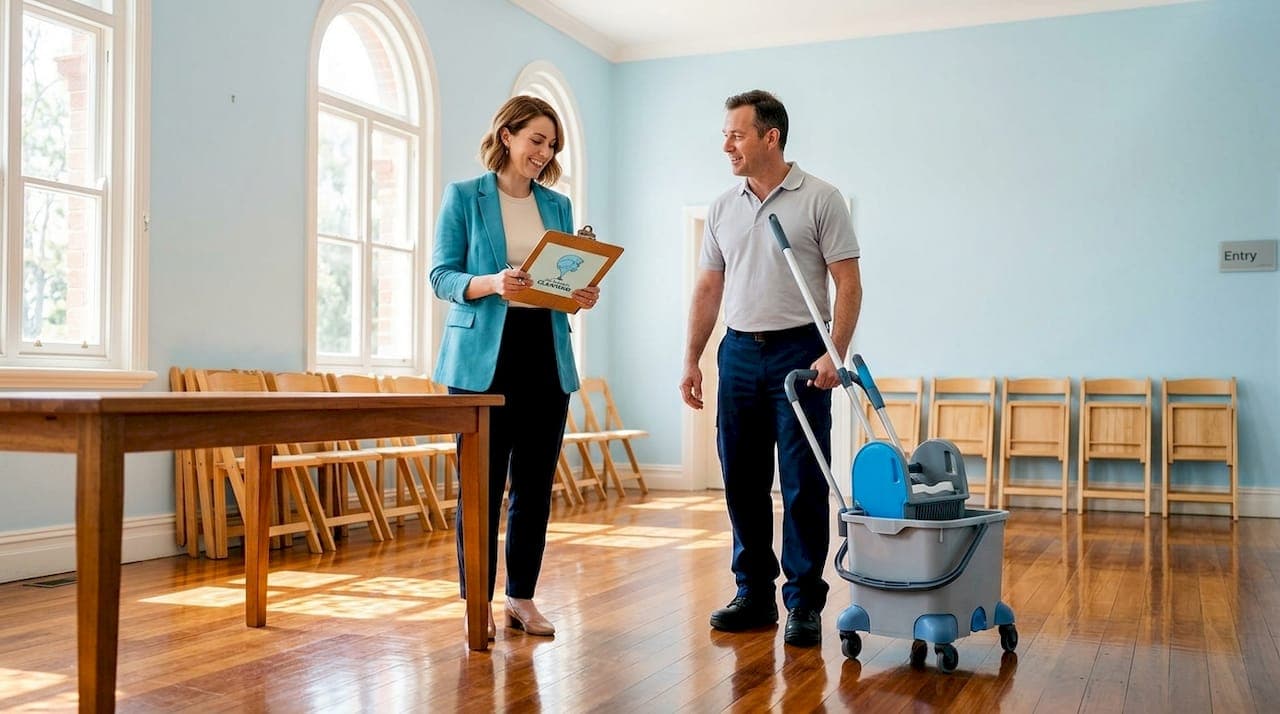
Managing a venue for an event means juggling a hundred details at once, and cleaning is too often treated as an afterthought. A poorly executed cleaning checklist for events can cost you repeat bookings, damage your reputation, and put you offside with health and safety regulations. Venue cleanliness directly impacts client satisfaction, repeat bookings, and online reviews, with guests noticing dirty restrooms, sticky floors, and dusty corners every single time. This guide gives you a structured, phase-by-phase approach to event cleaning that covers pre-event preparation, during-event maintenance, and post-event restoration.
Table of Contents
- Key takeaways
- 1. What makes a strong cleaning checklist for events
- 2. Pre-event cleaning tasks that prepare the venue properly
- 3. During-event cleaning and maintenance that keeps things running
- 4. Post-event deep cleaning checklist for venue restoration
- 5. Compliance and health standards every event planner must address
- 6. Comparing checklist approaches: manual vs digital systems
- My honest take on event cleaning checklists
- Let Just About Cleaning handle the hard work
- FAQ
Key takeaways
| Point | Details |
|---|---|
| Plan across all three phases | Your event cleaning guide must cover pre-event, during-event, and post-event tasks to be effective. |
| Build in verification moments | Rotation logs and walkthrough sign-offs create accountability that generic task lists cannot. |
| Assign roles before the event | Clear role division reduces overlap, speeds completion, and prevents tasks from being missed. |
| Prioritise waste management | Clearly marked, strategically placed stations make sorting and removal significantly faster. |
| Use digital tools where possible | Digital checklists and scheduling apps improve compliance tracking and reduce human error. |
1. What makes a strong cleaning checklist for events
A checklist is only as useful as the thinking behind it. Too many event planners work from a generic list that covers broad strokes but misses the specific conditions of their venue, event type, and guest volume.
A genuinely effective event cleaning guide is built around three core principles. First, it covers all three phases of the event: setup, operations, and breakdown. Second, it assigns tasks to specific people, not just "the cleaning team." Third, it includes verification moments such as rotation logs and final walkthrough sign-offs to confirm completion rather than just intention.
Here is what your checklist must address:
- Pre-event setup cleaning tasks with surface-level detail, not just "wipe tables"
- Restroom checks and waste monitoring schedules during the event
- Post-event deep cleaning with clear sequencing and time targets
- Compliance requirements relevant to food service, health standards, or venue contracts
- Named or role-specific task ownership for every item
- Sign-off checkpoints at the end of each phase
Pro Tip: Build your checklist in reverse from the post-event handover time. Working backwards helps you set realistic start times and identify where you need more crew.
2. Pre-event cleaning tasks that prepare the venue properly
The hour guests walk in sets the tone for everything that follows. A well-executed event preparation checklist at this stage makes during-event maintenance easier and post-event cleaning faster.
Start with function room surfaces. Wipe down every table, chair, lectern, and hard surface with an appropriate disinfectant. Check chair legs and undersides, which collect dust during storage and are almost always overlooked. If you are setting up for a seated dinner, polish glassware stations and check that linen is clean and free of stains.
Restrooms deserve particular attention before any guest arrives:
- Restock paper towels, toilet paper, soap, and hand sanitiser at every station
- Sanitise all contact points including taps, flush handles, door handles, and cubicle latches
- Mop floors and check that drains are clear
- Replace bin liners and confirm that waste bins are positioned properly
For events with food and beverage service, inspect kitchen and bar areas thoroughly. Check that benchtops are sanitised, refrigeration units are clean, and grease traps and extraction filters have been serviced if required. Confirm that all food preparation surfaces comply with relevant Australian food safety standards.
Set up waste and recycling stations before guests arrive, not during. Position bins in high-traffic areas including room entrances, catering stations, and outdoor spaces if applicable. Label each bin clearly for general waste, recycling, and organics where relevant. Confirm that ventilation is functioning and that the venue smells clean and fresh.
3. During-event cleaning and maintenance that keeps things running
Ongoing cleaning during an event is where most event cleanup strategies fall apart. Without a clear structure, crew members improvise, tasks get duplicated or missed entirely, and restrooms become a problem well before the event ends.
The solution is a scheduled maintenance rotation rather than reactive cleaning. Structure your during-event tasks as follows:
- Restroom checks every 30 to 45 minutes: One dedicated crew member inspects and restocks each restroom on rotation. Assign specific tasks including restocking, surface wiping, and floor spot checks, and log each check with the time and crew member's name.
- Waste station monitoring: Assign a crew member to monitor bins throughout the event. Clearly marked waste stations placed in high-traffic locations reduce mess significantly, but they still need regular emptying before they overflow.
- Spill response protocol: Designate who responds to spills and ensure that person carries a spill kit at all times. Wet floors in event venues are a slip hazard and a liability. Address them within two minutes.
- Food and beverage area monitoring: Check catering stations for crumbs, spills, and used serviceware every 20 to 30 minutes. Clear used plates and glassware promptly to maintain a clean appearance and free up table space.
- High-traffic corridor checks: Entrances, cloakrooms, and walkways accumulate debris quickly. A quick sweep or vacuum pass every hour prevents buildup.
Pro Tip: Use a shared digital log during the event so your entire crew can see what has been checked and when. This eliminates the guesswork and makes handover to the post-event team much smoother.
Role clarity reduces overlap, speeds task completion, and strengthens accountability across your crew. Brief every team member on their assigned zone and rotation before the event starts.
4. Post-event deep cleaning checklist for venue restoration
Post-event cleaning is where the real work happens, and sequencing matters enormously. A disorganised approach wastes time and increases the risk of missed areas.
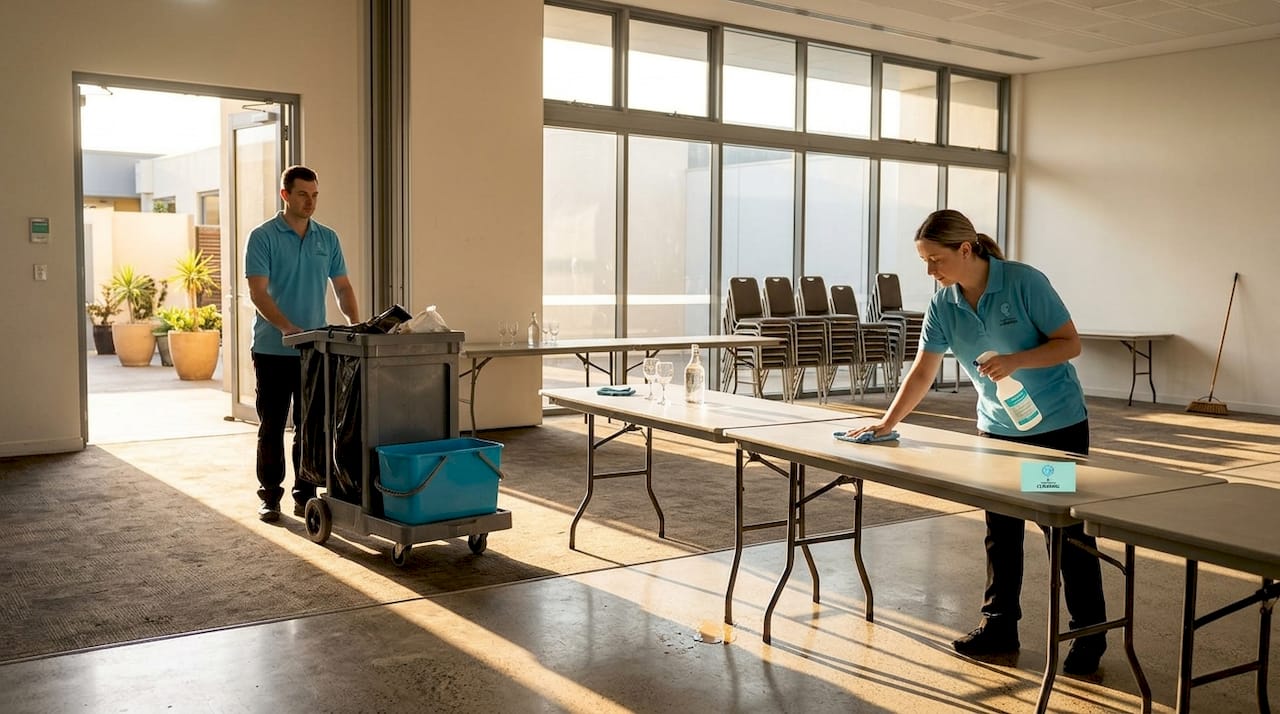
Prioritise large item removal first to open the space and make floor cleaning practical. Use rolling carts or dollies for heavy furniture and equipment. Once the floor is clear, move through the following steps:
| Task category | Specific tasks |
|---|---|
| Waste removal | Remove all bin liners, sort recycling, transport waste to designated points |
| Floor cleaning | Vacuum carpeted areas, mop hard floors, spot treat stains before mopping |
| Surface restoration | Wipe tables, chairs, bar tops, counters, and any shared surfaces with disinfectant |
| Restroom reset | Deep clean all fixtures, restock supplies, mop floors, replace liners |
| Equipment handling | Clean and store rental items correctly, check for damage before packing |
Once physical cleaning is complete, conduct a thorough venue inspection by dividing the space into sections and assigning a crew member to each. Focus on overlooked spots: behind equipment, inside cabinetry, near stage areas, and in storage alcoves. Document anything requiring repair or follow-up.
The post-event cleaning process should close with a formal walkthrough sign-off with the venue's contact person. This documents the condition of the space at handover, identifies any damage before it becomes a dispute, and protects your organisation. For more detail on conducting a thorough final inspection, the guide to event venue cleaning steps is worth reviewing.
5. Compliance and health standards every event planner must address
Cleaning at events is not only about appearance. Australian venues hosting food service, childcare activities, corporate functions, or public gatherings are subject to specific hygiene and safety obligations.
Your event cleaning guide should reference the relevant standards for your event type. For food and beverage events, this includes cleaning schedules that comply with the Australia New Zealand Food Standards Code, particularly around contact surface sanitation and temperature-sensitive storage. Venues operating under a food business licence are required to maintain cleaning records as part of their food safety programme.
For events in healthcare-adjacent or childcare settings, cleaning protocols must align with relevant state-based infection control guidelines. This includes the types of disinfectants used, contact times, and documentation requirements. Using the wrong product, even a clean-looking one, can constitute a compliance failure.
Waste handling also falls under regulatory frameworks in most Australian states. Separate general waste from recyclables and organics, use appropriate bin signage, and confirm that waste contractors are licenced where required.
6. Comparing checklist approaches: manual vs digital systems
Choosing how you manage your cleaning checklist for events affects speed, compliance tracking, and crew accountability. Both manual and digital systems have their place, and the right choice depends on your event type and crew size.
| Approach | Pros | Cons |
|---|---|---|
| Paper checklist | No tech required, easy to customise on site, familiar to all crew | No real-time visibility, easy to lose or falsify, hard to track patterns |
| Digital checklist app | Real-time updates, photo documentation, automatic logs, scalable | Requires devices and Wi-Fi, training needed, cost involved |
| Hybrid (paper log with digital summary) | Flexibility on site with a digital record created at day's end | Requires manual data entry, some delay in reporting |
Digital scheduling apps and sign-off platforms are increasingly used in professional event venue cleaning. They allow supervisors to monitor task completion in real time, flag missed rotations, and generate compliance reports after the event. For teams managing multiple events or large venues, the investment in a digital system pays off quickly.
For smaller gatherings or one-off events, a well-designed paper checklist with named fields, time slots, and sign-off boxes delivers strong results without the overhead. The key is that every item has an owner and a timestamp.
My honest take on event cleaning checklists
Having worked across dozens of events of varying scale, I have seen one pattern repeat itself more than any other. Planners spend enormous energy on décor, catering, and guest experience, then hand off cleaning to whoever is available with a vague list of jobs. The result is predictable: the post-event handover runs late, something gets missed, and someone is fielding a complaint the next morning.
The single change that makes the biggest difference is verification moments. Not just listing tasks, but requiring evidence of completion. A signed rotation log for restrooms. A timestamped photo of the kitchen after it has been cleaned. A formal walkthrough with the venue manager at the end of the night. These are not bureaucratic extras. They are the difference between assuming something was done and knowing it was done.
I also think the pre-event phase is consistently underestimated. Planners who invest properly in the event setup checklist, getting every surface clean and every bin positioned before guests arrive, find that during-event maintenance is far less reactive. The venue holds up better because it started at a higher standard.
Cleaning tips for events that actually stick are the ones tied to accountability, not just good intentions. Build the verification into the checklist from day one, and brief your team on why it matters. That conversation alone changes how seriously people take the task.
— David
Let Just About Cleaning handle the hard work
Running a tight cleaning checklist for events takes planning, the right crew, and experience across different venue types. That is exactly what Just About Cleaning delivers.
Just About Cleaning provides professional event venue cleaning services across Australia, covering every phase from pre-event preparation through to post-event deep cleaning and final inspection. With over 15 years of experience, trained onsite crews, and a commitment to eco-friendly practices, the team works around your event schedule to deliver spotless, compliant results. Whether you need a one-off clean or ongoing event support, Just About Cleaning builds a plan around your specific venue and event type. Contact the team today for a customised cleaning plan.
FAQ
What should a cleaning checklist for events include?
A complete cleaning checklist for events covers pre-event surface and restroom preparation, during-event waste and spill management, and post-event deep cleaning including floor work, surface sanitation, and a final walkthrough sign-off.
How often should restrooms be checked during an event?
Restrooms should be checked and restocked every 30 to 45 minutes during an event, with each check logged by time and crew member name to maintain accountability.
What is the best way to speed up post-event cleanup?
Removing large items first clears the floor for efficient cleaning, while assigning specific zones to crew members and using rolling carts for heavy equipment significantly reduces the overall time required.
Do event venues need to meet specific cleaning compliance standards in Australia?
Yes. Venues hosting food service must comply with the Australia New Zealand Food Standards Code, and events in childcare or healthcare settings must follow relevant state-based infection control guidelines, including approved disinfectants and documentation requirements.
Is a digital checklist better than a paper one for event cleaning?
Digital checklists offer real-time visibility, automatic logging, and photo documentation, making them well-suited for large or recurring events. Smaller, one-off gatherings can be managed effectively with a well-structured paper checklist that includes named fields and time-stamped sign-offs.