
TL;DR:
- Australian childcare centres must follow strict hygiene and safety regulations with detailed documentation.
- Proper cleaning supplies, schedules, and staff training are essential to prevent illness outbreaks.
- Cultivating a hygiene-focused culture and professional cleaning support improve compliance and child safety.
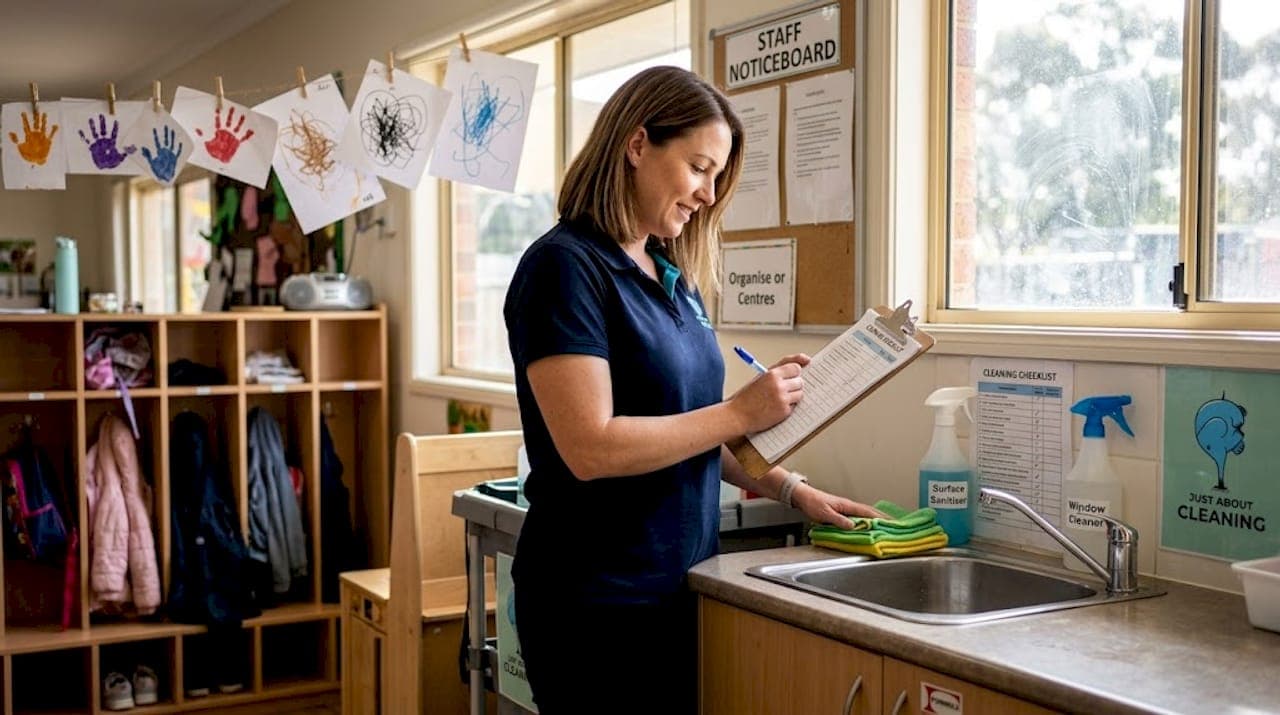
Running a childcare centre in Australia means navigating tight regulations, managing unpredictable outbreaks, and keeping every surface safe for the children in your care. The pressure is constant. One lapse in hygiene can trigger illness across your entire enrolment within days. Australian childcare centres must comply with the NQF, particularly Quality Area 2 for health and safety, and the expectations are detailed and legally binding. This guide walks you through every stage of the childcare cleaning process, from understanding your obligations to building a documentation system that will hold up under any audit.
Table of Contents
- Key regulations, standards, and why they matter
- What you need: Tools, materials, and planning
- The step-by-step childcare centre cleaning process
- Verification and documentation: proving compliance and improving practice
- Why following the process isn't enough: What most centres overlook
- Need professional help? How Just About Cleaning supports childcare centres
- Frequently asked questions
Key Takeaways
| Point | Details |
|---|---|
| Compliance is crucial | Following NQF and national regulations is mandatory to keep children safe and avoid penalties. |
| Plan and document | Use clear schedules, colour-coded supplies, and reliable documentation for consistency and audit readiness. |
| Respond to outbreaks | Increase cleaning and use bleach during outbreaks to prevent the spread of infection. |
| Focus on culture | A safety-first mindset and engaged staff go further than box-ticking for true hygiene. |
Key regulations, standards, and why they matter
Understanding your legal obligations is the first step to building a cleaning programme that actually protects children. Childcare centres must comply with the NQF and the Education and Care Services National Regulations, with Quality Area 2 setting the framework for health, safety, and wellbeing. These aren't suggestions. Failure to meet them can result in enforcement action, suspension of service approval, or worse, an outbreak that harms children in your care.
Quality Area 2 requires centres to actively promote the health and safety of every child. This includes maintaining hygiene through documented, routine cleaning practices. Inspectors from the regulatory authority expect to see written cleaning schedules, completed logs, and evidence that staff have followed procedures consistently.
So what does compliance actually look like in practice? Here are the core requirements you need to address:
- Written cleaning schedules covering daily, weekly, and periodic tasks
- Documented evidence that schedules are being followed, signed off by responsible staff
- Appropriate cleaning agents matched to the surface and contamination risk
- Clear procedures for handling spills, bodily fluids, and outbreak situations
- Staff training records showing team members understand and follow hygiene protocols
The National Health and Medical Research Council's Staying Healthy guidelines are the gold standard for infection control in Australian early childhood settings. They go beyond minimum compliance and provide practical, evidence-based guidance on cleaning frequencies, product selection, and hand hygiene. If your practices align with Staying Healthy, you're well positioned for both audits and genuine child safety.
Understanding Australian cleaning standards broadly is useful context, but childcare-specific requirements are more stringent than most commercial environments. The stakes are simply higher. Children's immune systems are still developing, which makes routine, thorough cleaning a genuine safeguard rather than an administrative burden. Staying current on compliance in 2026 is essential as standards continue to evolve.
Key fact: Young children are significantly more vulnerable to infectious disease than adults, making rigorous cleaning in childcare settings a direct health intervention, not just a regulatory formality.
What you need: Tools, materials, and planning
Having the right supplies on hand before you begin is what separates a reactive cleaning approach from a professional one. Cleaning schedules must be documented and followed as per regulations, and you can't follow a schedule you haven't properly resourced. Think of preparation as the foundation for everything that follows.
Here's a breakdown of the essential supplies your centre should stock:
- Detergent: For removing dirt and organic matter before disinfection
- Disinfectant: TGA-registered products effective against bacteria and viruses
- Chlorine bleach solution: Required for norovirus and outbreak situations
- Disposable gloves and aprons: Changed between areas to prevent cross-contamination
- Mops and buckets: Separate sets for bathroom, kitchen, and general areas
- Microfibre cloths: More effective than cotton at trapping pathogens
- Spray bottles: Clearly labelled for each chemical type
- Logbooks or digital checklists: For recording completed tasks
| Supply type | Purpose | Replacement frequency |
|---|---|---|
| Microfibre cloths | Surface cleaning | After each use or daily |
| Mop heads | Floor cleaning | Weekly or after contamination |
| Disposable gloves | Staff protection | Each task |
| Bleach solution | Outbreak disinfection | Freshly mixed daily |
| Disinfectant spray | Surface sanitising | As needed, check expiry |
Scheduling is just as important as the supplies themselves. Your cleaning plan should cover three tiers: routine daily cleans, weekly deeper tasks, and scheduled periodic deep cleans (monthly or quarterly). Build your schedule around the flow of children through the day, prioritising high-risk areas like bathrooms and eating spaces during transition periods.
Maintaining quality cleaning standards across all three tiers requires clear role allocation. Every team member should know which tasks they own and when.
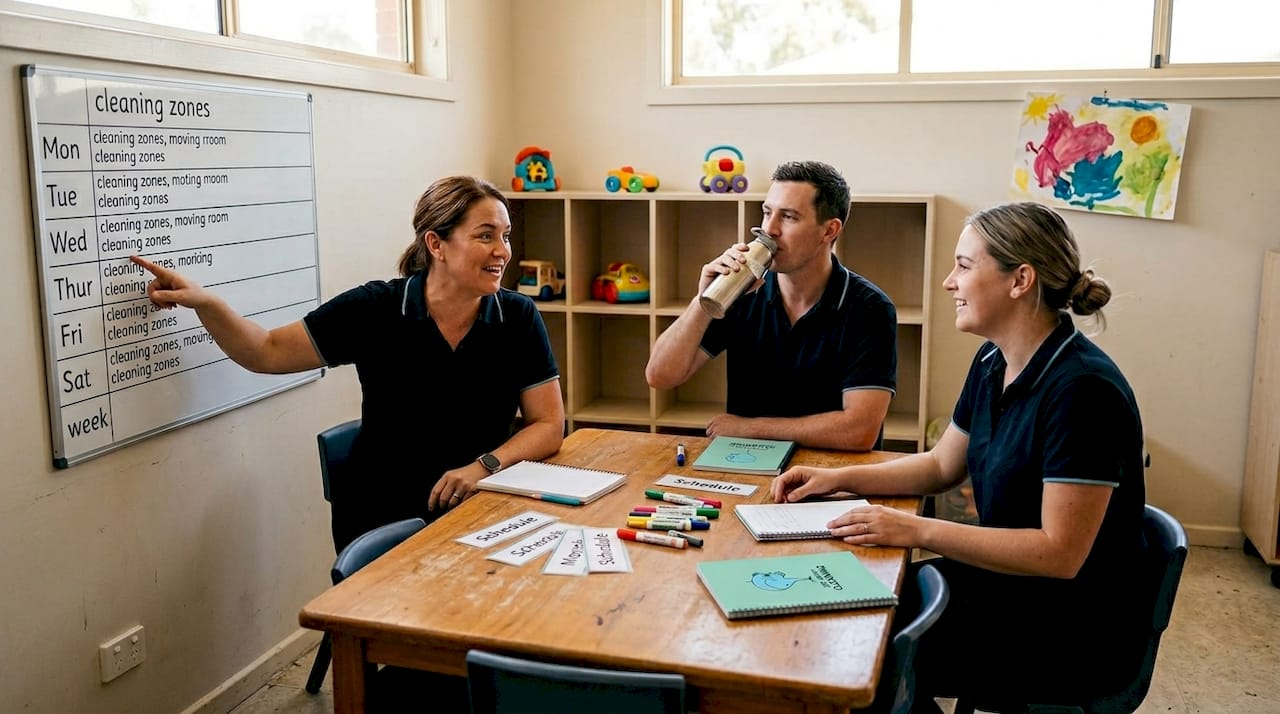
Pro Tip: Use colour-coded cloths, mops, and buckets across zones. Red for bathrooms, blue for general areas, and yellow for food preparation spaces is a widely accepted system. Colour coding removes ambiguity and significantly reduces the risk of cross-contamination between high-risk and low-risk zones.
The step-by-step childcare centre cleaning process
With your supplies organised and your schedule in place, you can move through the cleaning sequence confidently. The order in which you clean matters as much as the cleaning itself.
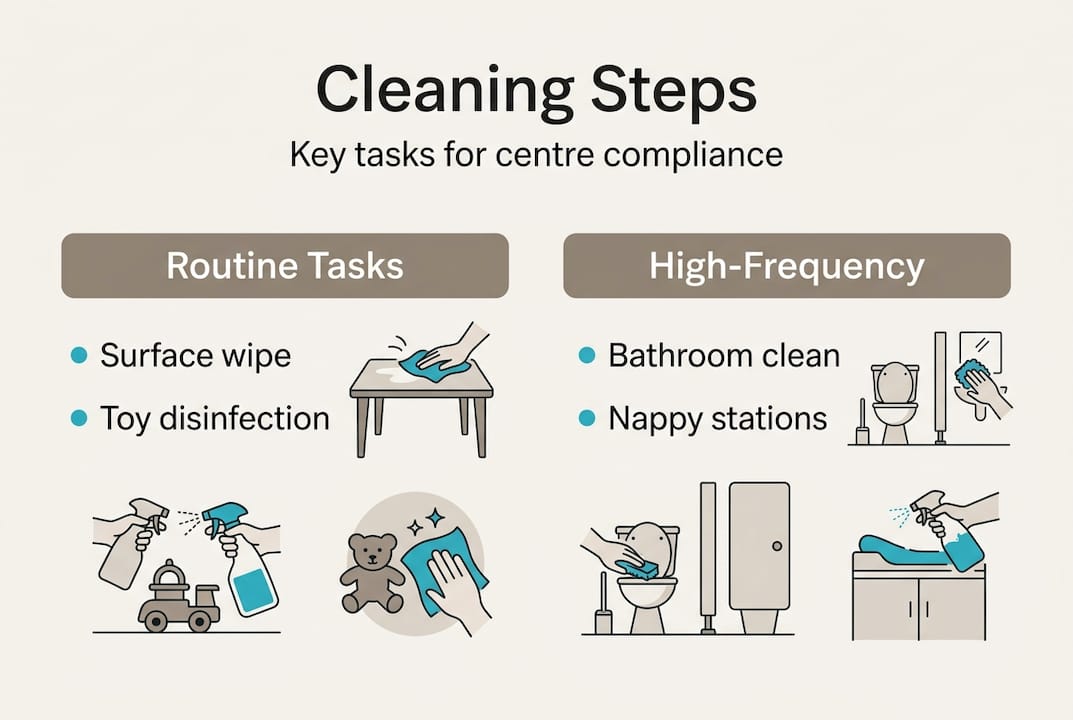
- Remove visible debris and organic matter first. Cleaning agents work far less effectively on dirty surfaces. Always wipe or scrape off food, faeces, or other matter before applying any product.
- Apply detergent and scrub. Use a detergent solution to break down grease and organic contamination. Rinse the surface thoroughly.
- Apply disinfectant. Allow the product to dwell on the surface for the contact time stated on the label. Never rush this step.
- Rinse if required. Some disinfectants, particularly those used on eating surfaces, require rinsing before the area is safe for children.
- Allow to air dry or dry with a clean cloth. Wet surfaces attract and harbour bacteria, so drying is a critical final step.
- Dispose of PPE and wash hands. Remove gloves and aprons, disposing of them immediately, then wash hands with soap and water.
High-risk areas require specific attention within this process:
| Area | Frequency | Special considerations |
|---|---|---|
| Nappy change stations | After every use | Full disinfection each time |
| Toilets and basins | At least twice daily | Separate cloths and equipment |
| Eating surfaces | Before and after every meal | Food-safe disinfectant, rinse required |
| Toys (soft) | Weekly or if soiled | Wash in hot water and dry fully |
| Toys (hard) | Daily | Disinfect and rinse |
When managing an outbreak, you need to escalate your response immediately. During gastro and norovirus outbreaks, all areas must be cleaned and disinfected twice daily, and chlorine bleach is required because norovirus can survive on surfaces for up to 28 days. Standard disinfectants are not enough.
Building infection reduction strategies into your outbreak response plan before an event occurs means your team won't be scrambling when it matters most.
Safety note: Never mix bleach with other cleaning agents. Always prepare bleach solutions fresh each day, wear PPE throughout, and ensure adequate ventilation in all areas where bleach is used.
Verification and documentation: proving compliance and improving practice
Cleaning without documentation is a significant risk. Regular cleaning protocols and documented schedules are mandatory for compliance, and during an inspection or outbreak investigation, written records are your primary evidence that procedures were followed correctly.
Your documentation system should capture the following:
- Task completed: What was cleaned, where, and with what product
- Date and time: When the task was carried out
- Staff sign-off: Who completed and, where relevant, who verified the task
- Any issues noted: Spills, damage, or areas requiring attention
- Corrective actions taken: How any identified issues were resolved
Digital systems are increasingly popular because they create a time-stamped, searchable record that's easy to present during audits. Simple apps or shared spreadsheets can work well for smaller centres. Manual logbooks remain acceptable, provided they are filled in consistently and stored securely.
Audit readiness isn't just about having documents ready. Inspectors also observe whether your practices match your written procedures. If your schedule says bathrooms are cleaned twice daily but staff have no recollection of the process, documentation alone won't save you.
Continuous improvement is where many centres genuinely lift their performance. Schedule a monthly review of your cleaning logs. Look for patterns: Are certain tasks being skipped? Are particular areas repeatedly flagged? Use this data to adjust your schedule and retrain staff where needed.
Pro Tip: Introduce brief spot audits where a senior staff member or administrator randomly checks a completed area against the cleaning log. This keeps standards high, identifies gaps early, and reinforces accountability without being punitive. Exploring the full range of cleaning service options available to childcare settings can also help you fill gaps in your internal capacity.
Why following the process isn't enough: What most centres overlook
After more than 15 years working across childcare and education settings, we've observed something consistently: centres that tick every procedural box still experience preventable outbreaks. The reason is almost never a missing form or the wrong disinfectant. It's culture.
When cleaning is treated as a low-priority task assigned to whoever is available, corners get cut quietly and consistently. Staff who don't understand why a step matters are unlikely to complete it thoroughly under time pressure. The process is only as strong as the people following it.
The most effective centres we work with treat hygiene as a shared value, not a checklist. Senior staff model the behaviour. Cleaning is built into handover conversations. When something is missed, it's addressed without blame and learned from.
Sustainability is also becoming a genuine priority. Adopting eco-friendly cleaning practices doesn't compromise safety. It often improves it by reducing harsh chemical residues in environments where children spend hours each day. A safety-first mindset and an environmentally responsible approach are not in conflict. They reinforce each other.
Need professional help? How Just About Cleaning supports childcare centres
Maintaining a fully compliant, consistently hygienic childcare centre is a significant operational commitment. If your internal capacity is stretched or you want the confidence of a specialist team, Just About Cleaning offers professional childcare cleaning services designed to meet NQF requirements and outbreak protocols.
With over 15 years of experience across education and healthcare settings, our trained crews understand the specific demands of childcare environments. We provide customisable cleaning schedules, compliance documentation support, and rapid-response outbreak cleaning when you need it most. Whether you need a regular service partner or specialist deep cleaning, we work around your centre's programme to deliver a safe, verifiable result every time.
Frequently asked questions
How often should nappy change areas be cleaned in childcare?
Nappy stations require cleaning and disinfecting after every use, as mandated by the National Regulations. This applies regardless of whether the change appeared straightforward or not.
What extra cleaning is needed during a gastro outbreak?
Gastro and norovirus outbreaks require cleaning and disinfecting all areas twice daily using chlorine bleach. High-contact surfaces and bathrooms need particular focus throughout the outbreak period.
Is hand sanitiser enough in childcare cleaning routines?
No. NHMRC guidelines emphasise hand hygiene using soap and water as significantly more effective than sanitiser, especially during gastro or norovirus outbreaks where sanitiser has limited effect.
How should outdoor equipment be cleaned in childcare settings?
Outdoor equipment contamination is 3x higher than indoors, so weekly cleaning is the minimum. During contamination events or outbreaks, increase frequency and use appropriate disinfectant on all hard surfaces.