
TL;DR:
- Many Australian households undermine hygiene by overusing cleaning products, which leave residues that attract dirt and bacteria. Proper cleaning techniques, including correct application, dwell time, and tool maintenance, are essential for effective hygiene and surface preservation. Focusing on a process-driven approach rather than shortcuts and neglecting high-touch areas improves overall cleanliness and health in homes.
Most Australians take pride in a clean home, yet a surprising number of routine cleaning habits actively work against good hygiene. The belief that more product or more effort always means better results is one of the most persistent myths in home cleaning. In reality, simple oversights, using too much detergent, skipping prep steps, or forgetting to clean your tools, can leave surfaces dirtier than before you started. This article breaks down the most common residential cleaning mistakes and gives you practical, evidence-backed fixes you can apply straight away, whether you own your home or rent.
Table of Contents
- Using too much or the wrong cleaning products
- Incorrect application: Spraying directly and workflow errors
- Overlooking dwell time when disinfecting surfaces
- Cleaning in the wrong order: Preparation is vital
- Dirty tools: Cleaning equipment maintenance mistakes
- Missing high-touch and out-of-sight areas
- Why process-first beats products and shortcuts every time
- Expert cleaning support and resources for your home
- Frequently asked questions
Key Takeaways
| Point | Details |
|---|---|
| Check cleaning product labels | Following recommended amounts prevents residue and keeps surfaces clean. |
| Master correct workflow | Avoid spraying directly; use cloth application and observe disinfectant dwell time using reliable Australian guidelines. |
| Prep before you clean | Dry dusting and vacuuming first stops dirt from being re-deposited during wet cleaning. |
| Maintain your tools | Clean and check vacuums, mops, and cloths regularly to boost the effectiveness of every clean. |
| Don’t skip high-touch spots | Include often-missed areas like switches, handles, and baseboards for true whole-home hygiene. |
Using too much or the wrong cleaning products
One of the most widespread cleaning errors is applying excessive amounts of product. It feels instinctive: if a little cleans well, surely more cleans better. The opposite is true. Too much product leaves a sticky residue on surfaces that actually attracts more dirt over time, meaning you clean more frequently but never quite get ahead.
This applies to detergents, floor cleaners, polish, and even dishwashing liquids used on surfaces. A thin film of leftover soap becomes a magnet for dust, grime, and bacteria. You will notice surfaces start to look dull or feel tacky shortly after cleaning, a classic sign of product overuse.
Choosing the wrong product for the surface is equally damaging. Some common errors include:
- Using abrasive cleaners on soft stone benchtops or laminate flooring
- Applying acidic cleaners (like vinegar) to natural stone such as marble or granite
- Using multipurpose sprays on robe cleaning mistakes delicate fabrics or soft furnishings
- Applying floor polish meant for timber on vinyl or tile, creating slippery and grimy build-up
"The best cleaning results come from using the right product in the right amount. More is rarely better, and the wrong product can cause lasting surface damage."
Australian cleaning products are often concentrated formulas. Most require far less than you would expect. Always check the product label for dosing instructions, and if you are unsure, start with less. You can always apply a little more, but you cannot easily undo residue build-up.
Pro Tip: Fill a small spray bottle with the correct dilution of your cleaning product rather than spraying directly from a concentrate. This helps you control how much product you apply and prevents overuse.
Reviewing home cleaning best practices can help you match the right product to each surface type and avoid costly mistakes.
With product selection covered, let's look at application techniques that commonly undermine results.
Incorrect application: Spraying directly and workflow errors
How you apply a cleaning product matters just as much as which product you choose. Spraying cleaner directly onto surfaces and immediately wiping is a habit most households have, but it is rarely the most effective approach.
When you spray directly onto a surface, you often apply too much product in one area and not enough in another. The spray also mists onto surrounding surfaces, furniture, and even into the air you breathe. For most cleaning tasks, the correct technique is to spray onto a cloth first, then wipe the surface. This gives you better coverage, less product waste, and more control.
There is one important exception to this rule. Disinfectants work differently from general cleaners. Follow these steps when using a disinfectant:
- Clean the surface first to remove visible dirt and grease. Disinfectants cannot penetrate through physical soiling.
- Apply the disinfectant directly to the surface, not onto the cloth. This ensures full contact with all areas.
- Allow the product to remain wet on the surface for the contact time specified on the label. Do not wipe immediately.
- Wipe away with a clean cloth once the contact time has elapsed.
- Dispose of or wash the cloth immediately to avoid cross-contamination.
Skipping any of these steps creates a false sense of cleanliness. You may have wiped the surface, but you have not disinfected it. This is a particular concern in kitchens and bathrooms where bacterial contamination is highest.
"Workflow shortcuts in cleaning, like spraying and immediately wiping, can make a surface look clean while leaving behind pathogens and residue."
Reviewing practical cleaning strategies alongside essential hygiene practices will give you a strong foundation for applying these steps consistently throughout your home.
Pro Tip: Keep a microfibre cloth folded into quarters. When one side becomes soiled, flip to a fresh side. You get up to eight clean surfaces from a single cloth before it needs washing.
Once you are applying products correctly, the order of cleaning matters more than most realise.
Overlooking dwell time when disinfecting surfaces
Dwell time, sometimes called contact time, is the period a disinfectant must remain wet on a surface to effectively kill pathogens. Most people do not know this requirement exists, let alone follow it. Not allowing disinfectants to work for the label's specified contact time is one of the most consequential mistakes in home hygiene.
Products often require a specific amount of time before wiping, ranging from 30 seconds to ten minutes or more depending on the pathogen being targeted. A quick spray and wipe may remove visible soil, but it does not achieve disinfection.
Here is a general guide to typical dwell times. Always check the specific product label, as formulations vary:
| Surface type | Typical product | Minimum dwell time |
|---|---|---|
| Kitchen benchtop | Antibacterial spray | 30 seconds to 2 minutes |
| Bathroom basin | Disinfectant spray | 1 to 5 minutes |
| Toilet seat and rim | Toilet disinfectant | 5 to 10 minutes |
| Door handles | Alcohol-based wipe | 30 seconds |
| Cutting boards | Diluted bleach solution | 2 to 5 minutes |
The key takeaway: if you wipe before the surface dries or before the stated contact time, you are simply moving the pathogen around rather than killing it. Effective disinfection around effective hygiene practices requires patience and label awareness.
Things to keep in mind when disinfecting:
- Never dilute a disinfectant further than the label specifies, as this may reduce its effectiveness below the threshold required to kill germs
- Ensure the surface is physically clean before applying the disinfectant
- Reapply if the product dries before the contact time has elapsed
- Store disinfectants according to label directions, as temperature can affect potency
Now, let's address how improper order and prep can make even the best techniques counterproductive.
Cleaning in the wrong order: Preparation is vital
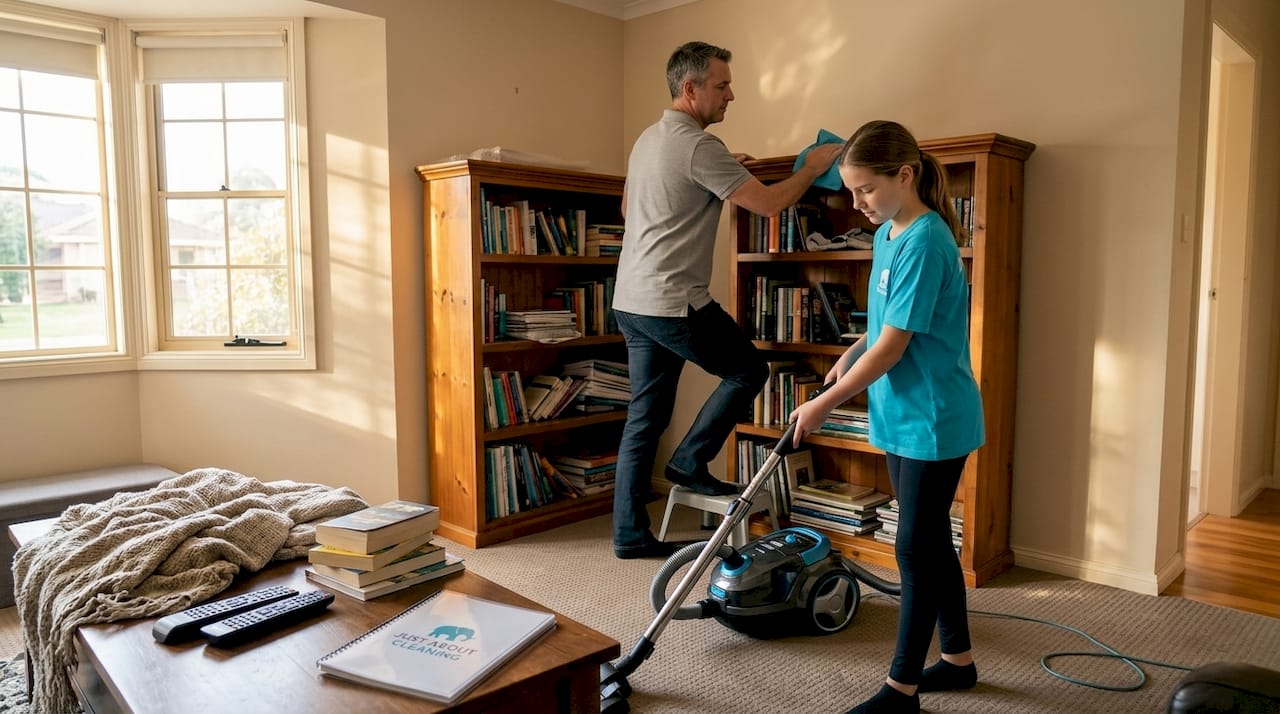
The sequence in which you clean a room is not just a matter of preference. Cleaning in the wrong order is a well-documented source of re-deposited dirt, meaning surfaces you have already cleaned end up dirty again before you are finished.
The correct approach always starts with dry preparation. Dust falls downwards, so you should work from the highest surfaces first, then progress downward. Wet cleaning should only follow once all dust, loose debris, and dry soil has been removed.
| Wrong order | Correct order |
|---|---|
| Mop the floor first | Dust ceiling fans and high surfaces |
| Then vacuum | Wipe down walls and benchtops |
| Then dust shelves | Vacuum carpets and hard floors |
| Then wipe benchtops | Mop hard floors last |
When you mop or wet-wipe before vacuuming or dusting, the loose particles settle on your wet floor or damp surfaces and stick. You have effectively glued the dust in place. This is why rooms can look clean immediately after mopping but appear grimy again within hours.
Here are the core preparation steps to follow before any wet cleaning:
- Dust ceiling fans, light fittings, and cornices first
- Wipe down wall surfaces and light switches with a dry cloth
- Remove loose items from benchtops so you can clean underneath
- Vacuum or dry-sweep all floor surfaces including under furniture
This approach applies to every room. For kitchens, a kitchen cleaning process that starts with dry prep prevents grease-and-dust combinations from forming on surfaces. When planning a full home clean, spring cleaning tips that follow this sequencing will give you far better results with less effort.
With prep and workflow squared away, maintaining your tools is the next line of defence against poor results.
Dirty tools: Cleaning equipment maintenance mistakes
Your cleaning tools are only as effective as their condition. Using dirty or overloaded cleaning tools such as a vacuum with a clogged filter, a mop head thick with old grime, or a cloth that has not been laundered, reduces cleaning effectiveness and actively spreads contaminants from one surface to another.
A dirty mop is a particularly common offender. Once a mop head becomes saturated with soiled water, every subsequent stroke pushes that contaminated water across a surface you are trying to clean. Similarly, a vacuum with a full bag or blocked filter loses suction rapidly and blows fine dust particles back into the air rather than capturing them.
Key tool maintenance habits every household should follow:
- Wash microfibre cloths after every use. These cloths trap bacteria and should not be reused without laundering
- Rinse and wring mop heads after every room and replace the mop water regularly
- Clean vacuum filters every two to four weeks, or as directed by the manufacturer
- Check the vacuum bag or canister after each session and empty before it reaches full capacity
- Sanitise sponges and scrubbing brushes weekly, or replace them monthly at minimum
- Allow all tools to dry completely before storing to prevent mould growth
Understanding maintenance cleaning matters is not just for commercial spaces. The same principles of tool care and consistent standards apply directly to residential settings, particularly for households with children, pets, or allergy sufferers.
Pro Tip: Colour-code your cleaning cloths by zone. Use blue cloths for bathrooms, yellow for kitchens, and green for general living areas. This simple system prevents cross-contamination between high-risk areas.
The last big mistake is skipping rarely touched or difficult-to-reach spots, undermining whole-home hygiene.
Missing high-touch and out-of-sight areas
Even the most diligent cleaner can fall into a routine that overlooks certain surfaces. High-touch and hard-to-reach areas are commonly skipped in regular cleaning routines, yet these are precisely the surfaces where pathogens accumulate and transfer most rapidly between household members.
Think about how many times a day your family touches the front door handle, the light switches, the kettle, or the television remote. These surfaces may never be directly cleaned in a typical weekly routine, yet they are touched dozens of times daily with hands that have been in contact with food, outdoor surfaces, and shared objects.
Build a checklist of high-touch and overlooked areas to include in your regular routine:
- Door handles and knobs on every door, including interior doors and the fridge
- Light switches and power points throughout the home
- Tap handles in the kitchen and bathroom
- Stair handrails and balustrades
- Remote controls, keyboards, and phone charging areas
- Baseboards and skirting boards that accumulate dust and pet hair
- Under furniture, particularly sofas and beds where allergens collect
- Bin lids and recycling container handles
- Pet feeding areas and water bowls
If you share your home with pets, pet-friendly cleaning tips specifically address the high-touch and floor-level areas most affected by animal activity, which requires additional frequency and the right product choices to stay safe for animals and humans alike.
A simple printed checklist posted inside a cupboard door can keep these areas front of mind without adding significant time to your routine. Rotating a few of these tasks into each weekly session means nothing is neglected for too long.
With the checklist complete, it's time for an expert perspective: what Australians often miss and why process really matters.
Why process-first beats products and shortcuts every time
After years of observing how both homeowners and renters approach cleaning, one pattern is very clear. The households that achieve consistently high hygiene standards are not the ones using the strongest chemicals or spending the most time scrubbing. They are the ones following a reliable process.
The most common mistake we see is people investing in expensive or powerful cleaning products while skipping the fundamental steps: dry prep, correct application, dwell time, and clean tools. No product, regardless of its formula, can compensate for a broken workflow. A disinfectant left on for ten seconds instead of two minutes kills almost nothing. A mop spreading old water is worse than no mopping at all.
This is especially relevant for renters. Process-first methods are safer across a range of property surfaces because they avoid the risks of aggressive chemical mixing, abrasive scrubbing on leased surfaces, and product damage that could affect your bond. Using the right technique with a modest product is almost always preferable to reaching for something harsher.
Australian guidelines from the Therapeutic Goods Administration and independent consumer research consistently reinforce the same principle: read the label, prepare the surface, apply correctly, and allow the product time to work. These steps are free. They require no special equipment. Yet they are skipped constantly.
The shift we encourage is to treat cleaning as a process rather than a task. Map out your order of operations before you start. Check your tools are clean and fit for purpose. Read product instructions once so you internalise the dosing and dwell requirements. Review evidence-backed cleaning techniques to build a routine that works with the science rather than against it.
When you treat the process as the product, results improve significantly, and you often spend less time and money doing it.
Expert cleaning support and resources for your home
Putting all of these strategies into practice can feel like a lot to take on at once, particularly if you are managing a busy household or dealing with stubborn hygiene challenges that do not respond to standard approaches.
At Just About Cleaning Australia, we have spent over 15 years helping households and businesses achieve genuinely clean, hygienic environments using evidence-backed methods and eco-responsible products. Whether you need guidance on building a better cleaning routine or would like professional cleaning advice for a more thorough approach, our team is ready to help. Explore our blog resources and service pages to find practical solutions matched to your home's specific needs, and take the guesswork out of getting it right.
Frequently asked questions
Why does using more detergent leave surfaces dirtier?
Excess detergent leaves a sticky residue on surfaces that attracts and holds more dirt, making surfaces feel grimy shortly after cleaning. Using the amount specified on the product label consistently delivers better and longer-lasting results.
How long should disinfectants be left on a surface?
Disinfectants need to remain wet on the surface for the label's specified contact time, which can range from 30 seconds to ten minutes or more depending on the product and target pathogen. Wiping before this time has elapsed significantly reduces or eliminates the disinfecting effect.
What's the best order to clean a room for maximum results?
Start with dry dusting or vacuuming from the highest surfaces downward, then follow with wet cleaning, finishing with mopping the floor last. Cleaning in the wrong order causes dust and debris to settle onto already-cleaned wet surfaces, undoing your work.
Why is cleaning your tools so important?
Dirty tools spread grime across surfaces rather than removing it, and can introduce bacterial contamination from one area of the home to another. Washing cloths after each use, emptying vacuums regularly, and replacing mop heads frequently keeps your tools working as intended.
Which areas are most often missed during routine cleaning?
High-touch spots such as door handles, light switches, tap handles, remote controls, and baseboards are frequently overlooked in standard routines. Including these surfaces in a rotating checklist ensures whole-home hygiene rather than just surface-level results.